
“`
Few entertainers can make America collectively say, “Protect him at all costs,” quite like Dick Van Dyke. So when fans learned that the beloved comedy legend had to miss a public event because he was not feeling well, the reaction was immediate, heartfelt, and very human. The man who has danced across rooftops, tripped over ottomans with mathematical precision, and turned old-fashioned silliness into an art form suddenly reminded everyone that even icons have ordinary days when rest wins.
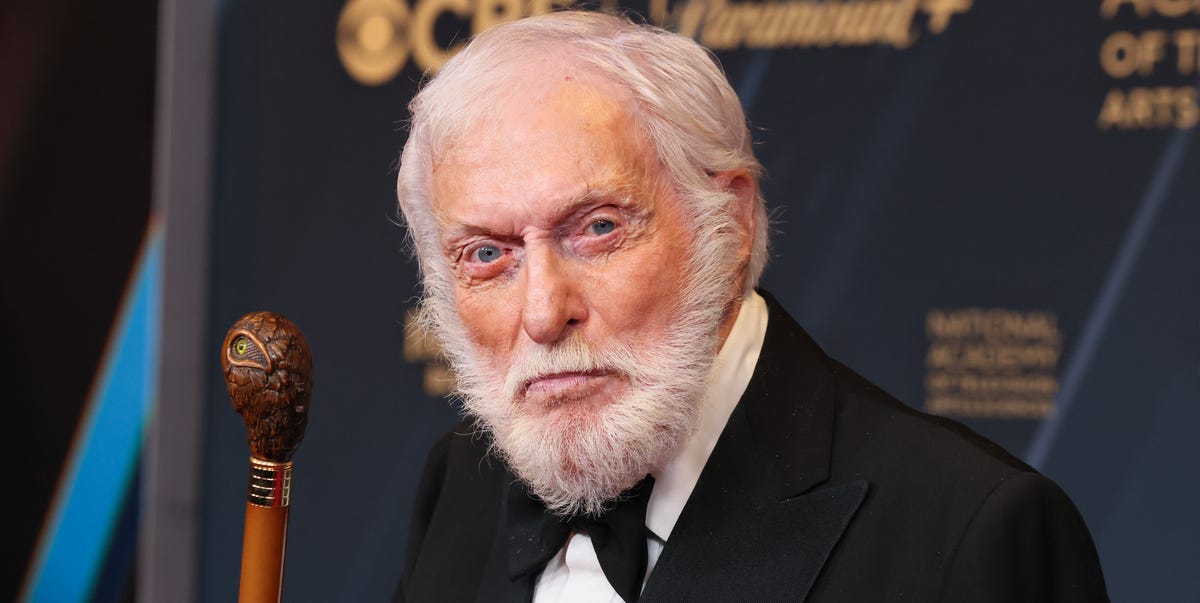
The latest wave of concern began after Van Dyke was unable to attend a Vandy Camp event at the Arlene & Dick Van Dyke Theater at Malibu High School on June 28, 2025. His wife, Arlene Silver, stepped in to address the audience and explain that he was sick and simply not up to appearing in person. At the time, Van Dyke was 99 and a half years old, and Silver framed the moment with honesty rather than drama: at that age, there are good days and bad days.
That update was enough to send fans into support mode. Online, admirers shared get-well wishes, gratitude, and gentle reminders that Van Dyke has already given generations more joy than most people could pack into three lifetimes and a tap-dance encore. The mood was not panic so much as affection. Fans were disappointed, yes, but mostly they wanted him to rest, recover, and keep his famous grin exactly where it belongs: on his face.
What Happened at Vandy Camp?
Vandy Camp is not a standard celebrity meet-and-greet where someone waves, signs a poster, and disappears behind a curtain guarded by a man with an earpiece. It is a playful celebration built around music, comedy, nostalgia, and Van Dyke’s lifelong love of performance. The event has featured entertainment, audience interaction, and the kind of old-school show-business energy that feels increasingly rare in an era when many stars communicate mainly through carefully filtered posts.
Van Dyke had been expected to appear alongside Silver, but she ultimately hosted without him. She told attendees that he was “not up to” celebrating that day and apologized to fans who had hoped to see him in person. Importantly, the public explanation did not include a specific diagnosis. It was described as an illness and a difficult health day, not a detailed medical emergency. That distinction matters, because the internet loves to sprint from “not feeling well” to “please assemble a team of dramatic violins.”
Despite missing the event physically, Van Dyke still appeared by livestream, giving fans a chance to see him and offering reassurance that he remained connected to the gathering. Silver also expressed confidence that he would be able to attend the next Vandy Camp in person. In other words, the update was concerning because everyone loves him, but it was not presented as a final bow or a reason for wild speculation.
Why Fans Reacted So Strongly
Dick Van Dyke occupies a rare place in American pop culture. He is not merely a famous actor; he is a shared memory. For some, he is Rob Petrie from The Dick Van Dyke Show, turning domestic comedy into a master class of timing. For others, he is Bert from Mary Poppins, smiling through chimney soot and dancing as if gravity were only a polite suggestion. Still others know him from Chitty Chitty Bang Bang, Diagnosis: Murder, later television appearances, award shows, interviews, and viral clips where he proves that charm can age better than most software updates.
That broad appeal explains why a simple health update made headlines. Van Dyke’s career has stretched across stage, television, film, music, and variety entertainment. He has won major honors, including Emmy, Tony, and Grammy recognition, and he has been celebrated by institutions that understand his long influence on American entertainment. But the fan response is about more than trophies. Awards are nice, but nobody cries over a résumé. People react because Van Dyke feels familiar, like the cheerful neighbor who somehow also happens to be a national treasure.
There is also something tender about seeing an entertainer famous for movement, music, and physical comedy slow down with age. Fans are not just supporting a celebrity; they are acknowledging time. Van Dyke has spent decades making aging look lighter than it is, joking about it, dancing through it, and meeting it with optimism. When his wife says he is having a bad day, it lands because people know even the brightest spirits need care.
Arlene Silver’s Role in the Update
Arlene Silver has become an important part of Van Dyke’s later-life story. The couple met in 2006 at the Screen Actors Guild Awards, where Silver was working as a makeup artist. Their relationship developed over time, and they married on February 29, 2012. The Leap Day wedding detail is almost too perfect for a man whose career has always seemed to include a little extra bounce.
Silver is often described not just as Van Dyke’s wife, but as a creative partner, supporter, and joyful presence in his daily life. Van Dyke has repeatedly credited her with helping him stay active, upbeat, and connected. Their age difference has attracted public curiosity, but both have spoken about their relationship in terms of compatibility, humor, music, and shared energy. In a celebrity landscape that can turn romance into a spreadsheet of rumors, theirs has often come across as refreshingly warm.
At Vandy Camp, Silver’s tone appeared to strike the right balance: honest but not alarmist, apologetic but not theatrical. She acknowledged the disappointment in the room while keeping the event focused on celebration. That is not easy. When someone as beloved as Van Dyke misses an appearance, the audience naturally worries. Silver had to deliver bad news, keep the program moving, and reassure fans without oversharing private medical details. In other words, she had to do public relations, caregiving, and hosting all at once. That is a lot of hats, and none of them come with a Mary Poppins bag.
The Health Update in Perspective
The most responsible way to understand the news is simple: Van Dyke had an illness that prevented him from attending one event in person. His wife explained that he was having a bad day, and he appeared virtually instead. There has been no public diagnosis tied to that specific absence, so responsible coverage should avoid guessing.
This is especially important because celebrity health stories often become a magnet for exaggeration. A missed event can turn into a rumor storm. A cautious update can be inflated into a crisis. In Van Dyke’s case, the facts are meaningful enough without decoration. He was 99 at the time. He was not feeling well. His wife said he had good and bad days. Fans wished him well. That is the story, and it is powerful because it is ordinary.
Ordinary, however, does not mean insignificant. Aging in public is complicated. Most people experience illness, fatigue, mobility changes, and changing routines privately. Van Dyke has done much of that while being adored by millions. Every public appearance becomes a small cultural check-in: How is he? Is he still joking? Is he still moving? Is he still Dick? The answer, based on his long pattern of interviews and appearances, seems to be yes, though with the natural limits that come with a century of living.
A Career Built on Joy, Not Perfection
Part of why fans are so protective of Van Dyke is that his work has always made imperfection lovable. His comedy is not cold or cruel. It is elastic, generous, and often self-mocking. He can trip, tumble, stammer, grin, recover, and somehow make the audience feel better about being human. That style creates affection that lasts.
On The Dick Van Dyke Show, he helped define the modern sitcom husband: witty, flawed, expressive, and physically hilarious. In Mary Poppins, he became part of one of Disney’s most enduring musical worlds. In Chitty Chitty Bang Bang, he helped turn family fantasy into a singalong memory. Later, he remained visible through television roles, reunions, interviews, honors, and public appearances that showed he never fully stepped away from performance.
Even in his late nineties, Van Dyke continued to make headlines for reasons that felt wonderfully on-brand. In 2024, he became the oldest Daytime Emmy winner at age 98 for a guest role on Days of Our Lives. His special Dick Van Dyke 98 Years of Magic also earned recognition at the Creative Arts Emmys. That kind of late-career visibility is extraordinary. Most people at 98 are not collecting entertainment awards; they are collecting pill organizers, puzzle books, and strong opinions about thermostat settings.
Fans Support Dick Van Dyke Because He Represents Something Rare
Support for Van Dyke is not only nostalgia. Nostalgia can be sweet, but it can also be lazy. In his case, the affection comes from a living connection between past and present. He reminds people of a style of entertainment that was physical, musical, sincere, and broadly family-friendly without being bland. His humor has always had a sparkle of mischief, but rarely a bite.
That makes his public health updates feel personal to fans who have never met him. They remember watching him with parents, grandparents, children, or siblings. They remember songs, dances, jokes, and scenes that became part of family tradition. For many, seeing Van Dyke is like finding an old photograph that still laughs back.
When those fans hear that he is unwell, they respond with the protectiveness usually reserved for relatives, favorite teachers, and dogs in commercials. The comments are not just “get well soon.” They carry decades of thanks: thank you for the laughter, thank you for the music, thank you for being silly without making silliness seem small.
What This Moment Says About Aging in the Spotlight
There is a larger lesson in the way fans responded. Public figures are often expected to appear endlessly available. If an event is scheduled, audiences assume the star will arrive, perform, smile, and deliver. But aging does not negotiate with calendars. At 99, a “bad day” can be reason enough to stay home, and that should not require apology.
Van Dyke’s absence quietly challenged the idea that beloved performers owe the public access at any cost. Fans may have bought tickets or made plans, but the overwhelming response was compassionate. That is encouraging. It suggests that audiences can love a performer deeply while still respecting the boundary between public joy and private health.
It also shows how a supportive partner can help translate difficult moments for the public. Silver did not turn the health update into a spectacle. She gave enough information to explain the absence and enough reassurance to prevent unnecessary panic. In celebrity culture, where oversharing and mystery often compete for attention, that kind of measured communication is almost radical.
How His Optimism Shapes the Conversation
Van Dyke has long been associated with optimism, movement, and play. He has spoken over the years about staying active, continuing to sing, and keeping a youthful outlook. That does not mean aging has been effortless. In later interviews, he has acknowledged physical changes, the reality of slowing down, and the emotional weight of outliving many friends and colleagues. But he has typically approached those realities with humor rather than bitterness.
That is why the health news did not erase his image of vitality. If anything, it made that vitality feel more honest. Real optimism is not pretending every day is perfect. Real optimism is being able to say, “Today is not a good day,” and still believe there may be music tomorrow. Van Dyke’s career has been one long argument for that philosophy.
Fans seem to understand this. Their support was not only about wanting him to recover from one illness. It was about honoring the way he has modeled resilience with a wink, a shuffle, and a song. He has made growing older look less like a closing door and more like a stage exit where someone might still pop back in for one more joke.
Why the Story Still Matters
Celebrity health updates come and go quickly, but this one lingered because it touched several emotional nerves at once: admiration, aging, love, caregiving, and gratitude. Van Dyke’s absence from Vandy Camp was a small event in practical terms. A performer missed a show. His wife explained why. He appeared virtually. The program continued. But symbolically, it reminded fans that the entertainers who shaped childhood memories are human beings navigating time just like everyone else.
It also highlighted how fandom can be kind. The internet is not always known for its manners. On a normal day, a comment section can resemble a raccoon fight behind a diner. Yet when the subject is Dick Van Dyke, many fans choose tenderness. They do not demand. They do not scold. They simply send love.
That public warmth says as much about Van Dyke’s legacy as any award. A performer’s true cultural impact is not measured only by ratings, box office numbers, or trophies. It is measured by the emotional weather that appears when his name trends. In Van Dyke’s case, the forecast is usually sunny with a strong chance of tap dancing.
Experiences Related to This Topic: What Fans Can Learn From the Moment
One experience many fans can relate to is the feeling of watching a beloved older family member slow down while still remaining completely themselves. A grandparent may not host every holiday anymore, but they still tell the best stories. A parent may need more rest, but their laugh still fills the room. A favorite teacher may move more carefully, yet their wisdom arrives right on time. Van Dyke’s health update stirred that same emotional recognition. People were not only reacting to a celebrity; they were thinking about the older loved ones who taught them joy, patience, humor, and resilience.
Another experience is learning how to support someone without making their health the only story. When someone has a bad day, the kindest response is often not interrogation. It is not demanding every detail, asking for private medical information, or turning concern into gossip. The healthier response is simple: rest, take your time, we are grateful for you, and we hope you feel better. Fans did that beautifully. They allowed Van Dyke to be human without treating him like a fragile museum artifact wrapped in bubble wrap.
There is also a lesson in how families and partners communicate during public moments. Silver’s update showed that honesty can be gentle. She did not pretend everything was perfect, but she also did not create unnecessary fear. Many people have faced similar situations on a smaller scale: explaining why a loved one cannot attend a birthday, reunion, wedding, or community event. The best approach is often clear, brief, and compassionate. You can protect privacy while still honoring the people who care.
Fans may also recognize the importance of adapting traditions. Vandy Camp still happened, even though Van Dyke was not physically present. He joined virtually, and the event continued as a celebration of music, memory, and community. That is a useful reminder for anyone dealing with aging or illness in a family setting. Traditions do not have to disappear because circumstances change. A dinner can become a shorter visit. A long trip can become a video call. A big gathering can become a quieter afternoon. The heart of the tradition remains intact when the love remains intact.
Finally, the moment encourages a more generous view of aging. Van Dyke has never been admired because he avoided old age. He is admired because he has met it with humor, curiosity, and an almost rebellious commitment to joy. Fans supporting him after Silver’s health update were, in a way, supporting that worldview. They were saying that a bad day does not cancel a beautiful life. It does not erase the dancing, the laughter, the songs, or the decades of delight. It simply asks everyone to pause, soften their voices, and remember that even legends deserve a nap.
Conclusion
The news that Dick Van Dyke missed a Vandy Camp appearance because of illness naturally worried fans, but the response became a moving tribute to the affection he has earned over a remarkable career. Arlene Silver’s update was honest, calm, and respectful, making clear that he was having a difficult day while also reassuring fans through his livestream appearance and the hope of future attendance.
Van Dyke’s legacy is not only that he made people laugh. It is that he made laughter seem like a form of kindness. At 99 during the Vandy Camp absence, and later as he reached 100, he continued to represent energy, gratitude, and playfulness in a world that often forgets how powerful those qualities can be. Fans supported him because he has supported generations with joy. That is a pretty good exchange rate, even by Hollywood standards.














