
Note: This article is written as original, publish-ready content based on real U.S. childcare cost data, family budgeting trends, tax guidance, and public discussion around the viral $80K childcare debate.
When Childcare Costs More Than College, People Start Yelling
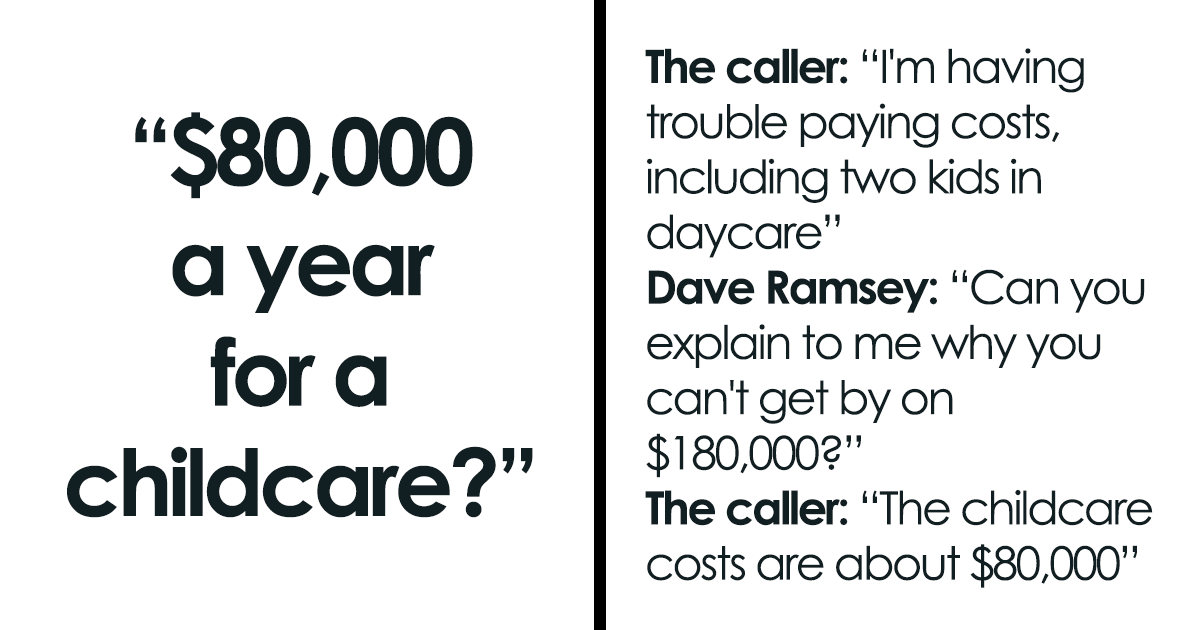
Every so often, a family finance story hits the internet so hard that parents, grandparents, accountants, and people with no children but many opinions all rush into the same comment section. One recent example: a dad explaining that his family spends about $80,000 a year on childcare. A financial expert was stunned. Viewers were divided. Some said the father was wildly out of touch. Others said the reaction proved how many people still do not understand the modern childcare crisis in America.
The headline sounds ridiculous at first glance. Eighty thousand dollars is not “a little pricey.” It is not “we skipped takeout for a month.” It is a respectable salary, a down payment in some markets, or enough money to make a budget spreadsheet start sweating through its formulas.
But this story is more than one family choosing a fancy daycare with tiny chairs and possibly a better snack program than most adults have at work. It reveals a bigger question: when does childcare spending become a rational investment, and when does it become a financial sinkhole wearing finger-paint smocks?
The Viral Childcare Budget: What Happened?
The widely discussed case involved a father who said his household earned around $180,000 per year, with one parent earning about $110,000 and the other in medical residency earning about $70,000. The couple reportedly spent roughly $80,000 annually on childcare, including base tuition, before-care, after-care, and summer nanny costs. The financial expert’s reaction was blunt: the family needed to reassess their choices.
The internet, being the internet, immediately split into two teams. Team One said, “Yes, obviously. You cannot spend nearly half your gross income on childcare and then act surprised when money feels tight.” Team Two said, “Have you tried finding available, reliable, safe childcare lately? It is not exactly a clearance rack at Target.”
Both sides have a point. The family’s spending level is extreme compared with national averages. At the same time, childcare in the United States has become so expensive that even high-earning families can feel squeezed, especially in major metro areas where rent, student loans, transportation, and preschool costs all seem to gather in a dark room and plan financial chaos.
How Expensive Is Childcare In America Right Now?
Childcare costs vary dramatically depending on location, age of the child, type of care, and schedule. Infant care is usually the most expensive because babies require more hands-on supervision. Center-based care in major cities can cost far more than family-based care in smaller towns. A nanny can be convenient and flexible, but full-time nanny care often costs significantly more than daycare.
National childcare reports show that families commonly spend thousands of dollars per year per child, and many spend far more than the federal affordability benchmark of 7% of household income. In some states, full-time care for one child can rival rent, college tuition, or a car payment that somehow learned how to multiply.
The U.S. Department of Labor has reported that full-day care for one child can take a substantial share of median family income, while Child Care Aware of America has found that childcare prices have risen faster than overall inflation in recent years. Care.com’s cost reports also show that many parents spend a major portion of household income on care, with some tapping savings or taking on debt to keep working.
So no, parents are not imagining it. Childcare is expensive. It is stressful. It can be hard to find. It often requires waitlists, deposits, registration fees, supply fees, late pickup fees, and emotional fees, which are not printed on the invoice but absolutely exist.
Still, Is $80K A Year On Childcare Normal?
No. Let’s be clear: $80,000 per year is not typical childcare spending for most American families. It is far above national averages and would usually suggest a premium childcare arrangement, multiple children in private programs, extended care hours, nanny coverage, summer gaps, or some combination of all of the above.
If a family is paying $25,000 per child for daycare or preschool, plus early care, after-care, and summer nanny help, the final number can climb quickly. Add two children, a long workday, no grandparent backup, and a childcare calendar that closes more often than a boutique bakery, and suddenly the math becomes less mysterious.
However, “explainable” does not always mean “financially wise.” A cost can be real and still be unsustainable. A family can choose quality care and still need to admit that the budget has become a runaway stroller rolling downhill toward a luxury SUV.
The Real Budget Problem: Gross Income Is Not Take-Home Pay
One reason this story created so much debate is that people heard “$180,000 income” and assumed the family should be living comfortably. In many parts of the country, that income is strong. But gross income is not the same as spendable money.
After federal taxes, state taxes, payroll taxes, health insurance premiums, retirement contributions, student loan payments, housing, food, transportation, and emergency savings, the actual monthly breathing room may be much smaller than the headline income suggests.
Now subtract $80,000 in childcare. That is about $6,667 per month before considering whether any portion is paid pre-tax through a dependent care flexible spending account. For many households, that single line item would be larger than the mortgage. It is not a budget category anymore. It is a second household living inside the first household and demanding organic crackers.
Why Parents Pay Premium Childcare Prices
Outsiders often ask, “Why not just pick a cheaper daycare?” That question sounds simple until you actually try to do it. Parents may pay more because the cheaper centers have no openings, unsafe ratios, inconvenient hours, long commutes, poor reputations, or schedules that do not match work demands.
In dual-career households, especially where one parent works in medicine, law, finance, tech, or another demanding field, childcare must cover more than a standard 9-to-5 day. Residency schedules can be unpredictable. Shift work can start before daycare opens. Meetings run late. Sick days happen. Summer programs may not match the school calendar.
For some families, expensive childcare is not just babysitting. It is the support system that allows both parents to remain employed, build long-term earning power, keep health insurance, and avoid stepping out of the workforce during critical career years.
The Career Math: Childcare Is Not Always A Simple Expense
A common mistake is comparing childcare costs only to one parent’s current income. For example, if one parent earns $70,000 and childcare costs $80,000, people may say, “Just stay home.” But that calculation can be too shallow.
Work has long-term value beyond one year’s paycheck. Staying employed can preserve career momentum, retirement contributions, professional licensing, health benefits, future promotions, and earning potential. For a medical resident, the current salary may be modest compared with future attending physician income. In that case, expensive childcare may be a temporary bridge to a much higher household income later.
That does not mean every expensive daycare bill is justified. It means families need to compare the total short-term cost against long-term financial outcomes. Sometimes the answer is “keep working and survive the brutal years.” Sometimes the answer is “this specific childcare setup is way too expensive.” Often, annoyingly, the answer is both.
Where The Dad May Need A Reality Check
The father in the viral story may deserve empathy, but the critics have a point too. Spending $80,000 on childcare while struggling financially should trigger a serious household review. Not a gentle review. A full kitchen-table, calculator-out, snacks-available review.
1. Premium Care Should Be Compared With Real Alternatives
The family should price multiple options: traditional daycare, church-based preschool, family childcare homes, nanny shares, au pairs where appropriate and legal, adjusted work schedules, part-time preschool, local camps, and employer-sponsored care. Even if every option is imperfect, the family needs actual numbers, not assumptions.
2. Summer Coverage Needs Its Own Budget
Many parents forget that preschool and daycare calendars can have gaps. Summer nanny coverage can turn a manageable tuition bill into a financial jump scare. Planning for summer in January, not May, can prevent panic spending.
3. The Family Should Avoid Borrowing For Lifestyle-Based Care
Borrowing money for childcare may occasionally happen during a temporary career bottleneck, but it should not become a lifestyle strategy. If a household with a high income is taking on debt because of premium care choices, something needs to change.
4. “Best” Does Not Always Mean “Most Expensive”
Parents want the best for their children. That instinct is beautiful. It is also financially dangerous when “best” becomes code for “the most expensive option within driving distance.” Children need safe, loving, reliable care. They do not necessarily need toddler Mandarin immersion with a meditation garden and imported wooden blocks.
Where The Financial Expert May Need A Reality Check Too
At the same time, dismissing modern childcare costs as simple overspending can sound out of touch. Many parents are not choosing between luxury and thrift. They are choosing between expensive care and no care, between keeping a job and leaving the workforce, between a long waitlist and a center that actually has a spot.
Childcare providers also face serious cost pressures. Staffing is expensive. Regulations require safe ratios. Rent, insurance, food, supplies, training, background checks, and facility maintenance all cost money. Meanwhile, childcare workers are often underpaid compared with the importance of their work. The system manages to be expensive for parents and underpaid for workers at the same time, which is the kind of economic puzzle that makes everyone want to lie down on a preschool nap mat.
So the expert’s core financial concern may be valid, but the tone matters. Parents already know childcare costs are painful. Many do not need a lecture as much as they need a realistic plan.
Smart Ways Families Can Reduce Childcare Costs
Families facing high childcare bills should start with a full childcare audit. List every cost: tuition, registration fees, activity fees, supplies, meals, transportation, early pickup penalties, late pickup fees, summer care, backup babysitters, and days when care is closed.
Compare Care Types
Center-based daycare may offer structure and reliability, while family childcare homes may be more affordable. A nanny share can reduce the cost of private care. Some families combine preschool with part-time family help. Others stagger work schedules to reduce the number of paid care hours.
Use Tax Benefits
Families should review the Child and Dependent Care Credit and dependent care flexible spending accounts. These tools will not magically turn an $80,000 bill into pocket change, but they can soften the blow. Parents should check IRS rules, employer benefits, and state tax credits before assuming they have no options.
Ask Employers About Benefits
Some employers offer dependent care FSAs, backup care benefits, childcare discounts, flexible schedules, or hybrid work options. Many workers overlook these benefits because they are hidden inside the employee portal, a place most people visit only when changing a password or searching for dental coverage.
Plan For Temporary Pain
Childcare costs are often highest before kindergarten. A family might decide to endure two or three expensive years if income is expected to rise. But the plan should be written down. “We’ll figure it out” is not a financial strategy. It is a sentence people say right before ordering emergency pizza.
A Better Budget Framework For High Childcare Costs
Instead of asking only, “Is this too expensive?” families should ask five practical questions:
- What percentage of our take-home pay goes to childcare?
- Are we still saving for emergencies and retirement?
- Are we using debt to cover recurring care?
- Is this expense temporary or indefinite?
- Have we compared at least three realistic alternatives?
If childcare is consuming so much income that the family cannot save, pay basic bills, or avoid credit card debt, the arrangement probably needs adjustment. If the cost is painful but temporary, and both parents’ careers are growing, the family may decide the expense is worth it for a season.
Specific Example: The $80K Childcare Math
Imagine a family earning $180,000 gross income. After taxes and deductions, their take-home pay might be far lower, depending on their state, benefits, and retirement contributions. If they pay $6,667 per month for childcare, that could consume an enormous share of their net income.
Now add a mortgage or rent payment, student loans, car payments, groceries, utilities, insurance, medical bills, and basic family spending. Suddenly, the household that looked “rich” on paper may feel squeezed in real life.
Still, if the family can find a safe alternative for $40,000 per year, they free up $40,000 annually. That money could build an emergency fund, reduce student loans, fund retirement accounts, or simply stop the monthly budget from screaming into a pillow.
What This Debate Says About Modern Parenting
The $80K childcare story went viral because it hit several cultural nerves at once: the cost of raising kids, the gap between older financial advice and modern expenses, the pressure on dual-income families, and the guilt parents feel when making childcare decisions.
Parents are told to work hard, build careers, save money, raise emotionally healthy children, never miss school events, maintain a clean house, cook balanced meals, and somehow not spend too much on childcare. This is a lot to ask from people who are often operating on cold coffee and four hours of sleep.
The reality is that childcare is both a private family expense and a public economic issue. When care is unaffordable, parents reduce hours, delay career growth, leave jobs, or have fewer children than they might otherwise want. Businesses lose productivity. Families lose income. Children lose access to early learning environments. Everyone loses except maybe the spreadsheet industry.
Experience-Based Reflections: What Parents Learn When Childcare Takes Over The Budget
Families who have lived through expensive childcare years often describe them as financially intense but temporary. The early years can feel like paying a second mortgage for people who are too small to reliably put on shoes. Parents may look at their bank account and wonder how someone who eats banana slices and throws socks can require such a large operating budget.
One common experience is the shock of hidden costs. A family may budget for tuition, then discover registration fees, annual supply fees, lunch add-ons, field trip charges, teacher gifts, backup care, snow-day coverage, and summer programs. None of these costs may be outrageous alone, but together they become the financial equivalent of being pecked by a flock of tiny, invoice-shaped birds.
Another lesson is that convenience has a price. A daycare close to work may cost more but save an hour of commuting each day. A nanny may be expensive but prevent constant schedule breakdowns. A cheaper center may look attractive until parents realize it closes earlier than their workday ends. Real childcare decisions are rarely made in a perfect world. They are made in the messy middle, where parents balance safety, cost, time, career demands, and trust.
Many parents also learn that guilt is a terrible financial advisor. Some feel guilty choosing a cheaper program because they worry they are shortchanging their child. Others feel guilty spending too much because the budget suffers. The better approach is to define what the child truly needs: safety, warmth, consistency, developmentally appropriate activities, and caregivers who communicate well. Anything beyond that may be valuable, but it should be weighed honestly against the family’s financial health.
Families who successfully manage high childcare costs often treat the expense like a temporary campaign. They reduce discretionary spending, pause major upgrades, avoid new car loans, use employer benefits, build a small emergency cushion, and revisit the plan every few months. They do not pretend the situation is painless. They simply give it structure.
The biggest practical lesson is to start planning before the bill arrives. Parents expecting a baby should research childcare during pregnancy, join waitlists early, estimate real monthly costs, and understand tax benefits. Families with preschoolers should plan for summer before summer arrives. Parents considering a career change should calculate childcare impact before accepting a role with longer hours or less flexibility.
In the end, the $80K childcare debate is not just about one dad, one expert, or one viral moment. It is about how families survive a stage of life where love is infinite, time is scarce, and every solution seems to cost $300 a week. A reality check is useful, but so is compassion. Parents need both: clear math and a little grace.
Conclusion: The Dad Is Not Crazy, But The Budget Might Be
Spending $80,000 a year on childcare is far beyond normal for most families, and any household carrying that bill should carefully review alternatives. The financial expert was right to question whether the spending matched the family’s income and goals. But the public reaction also revealed something important: childcare in America really is expensive, confusing, and emotionally loaded.
The fairest answer is not “the dad is foolish” or “the expert is clueless.” The truth is more nuanced. The family may be paying too much, but they are also navigating a childcare system that leaves many parents with bad options, worse options, and waitlists that feel longer than a toddler’s bedtime routine.
A reality check should not shame parents. It should help them make better decisions. In this case, the best decision is to compare alternatives, use available tax benefits, avoid debt, protect long-term career value, and remember that premium childcare is only worth it if the rest of the family’s financial life can still breathe.














