
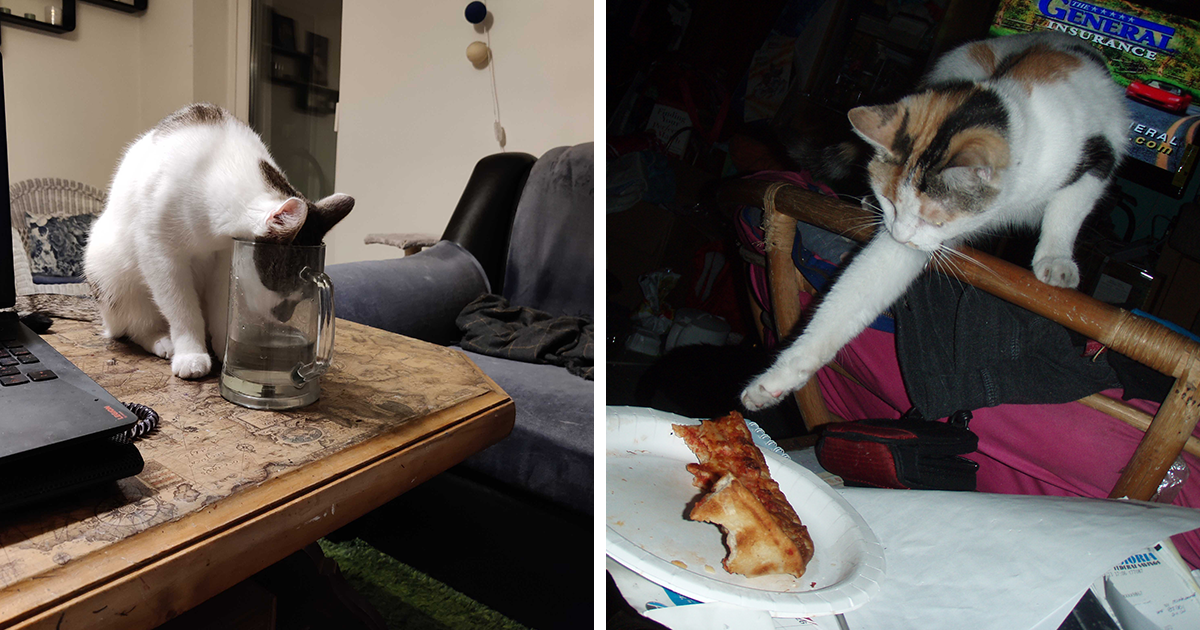
Every at dinner belongs to the humans, snacks stay on the counter, and nobody touches the pizza until everyone is seated. The unofficial rules, written entirely by dogs, cats, and other four-legged opportunists, say that unattended food automatically enters the public domain.
That conflict is the deliciously chaotic heart of “Fluffy Food Thieves,” a Bored Panda community collection featuring pets caught reaching, staring, climbing, licking, and occasionally committing a complete snack-related felony. The gallery developed from a community challenge inviting people to share photographs of their mischievous animals attempting to steal food or drinks. ese funny pet photos are more than a parade of guilty faces. They capture the remarkable determination of animals who can sleep through a vacuum cleaner, a thunderstorm, and three alarm clocksbut somehow hear a cheese wrapper opening from two rooms away.
Why Photos of Pets Stealing Food Are So Funny
A good food-thief photograph usually contains three characters: the pet, the forbidden snack, and the human who has arrived approximately half a second too late. Sometimes the evidence is obvious. A paw is inside the chip bag. A nose is buried in the crockpot. A cat is performing an unauthorized inspection of a pizza.
Other pictures are built around plausible deniability. The animal is sitting beside the empty plate with an expression that says, “This is certainly a mystery, and I will cooperate fully with the investigation.”
Dogs often steal because food is intensely rewarding and because successful theft reinforces the behavior. If a dog once discovers a sandwich on a reachable counter, checking that counter again becomes a sensible strategy from the dog’s point of view. Cats have their own reasons for exploring countertops, including curiosity, access to elevated spaces, food smells, and a natural interest in observing household activity. other words, your pet is not necessarily plotting against you personally. It is simply conducting a highly motivated search for resources while wearing a face that makes prosecution nearly impossible.
38 Classic Fluffy Food-Thief Moments
The Panda Community’s collection offers nearly every major category of culinary mischief. Viewed together, the 38 photos form an unofficial field guide to how pets approach a food heist.
- The Crockpot Inspector: A determined animal stretches toward the slow cooker as if dinner requires an urgent quality-control review.
- The Popcorn Bandit: A paw enters the bowl during movie night, proving that shared entertainment apparently includes shared concessions.
- The Pizza Specialist: A cat approaches an exposed slice with the concentration of a bomb-disposal technician.
- The Casual Table Reach: One paw rises slowly toward a plate while the pet maintains suspiciously intense eye contact.
- The Possum-Convention Guest: An unexpected animal joins the buffet, reminding everyone that free snacks can create unusual diplomatic gatherings.
- The Soda Investigator: A curious nose examines a cup that should never have been left unattended near the edge of a table.
- The Chip Licker: This thief does not remove the chip. It merely licks the evidence and leaves the victim to discover the crime later.
- The Successful Sneak: Only a tail, whisker, or suspiciously moving bag reveals that the operation is already underway.
- The “Dexter Ate It” Defense: The plate is empty, the pet is full, and the household has reached a remarkably fast verdict.
- The Serving-Hatch Ambush: A strategically positioned animal waits near the precise location where food appears from the kitchen.
- The Karma Photo: The thief reaches for a snack and immediately encounters a harmless but embarrassing obstacle.
- The Senior Spaghetti Enthusiast: Age may slow the body, but it does not weaken the desire to lick the final traces of sauce from a bowl.
- The Milk Thief: A feline face enters a glass, carton, or cereal bowl with the confidence of someone paying the grocery bill.
- The “Paws Off” Standoff: A human hand and a pet paw arrive at the same snack, creating a tense ownership dispute.
- The Beverage-with-a-Side-of-Fish Incident: Curiosity about a drink becomes much stronger when something interesting is floating nearby.
- The Tequila Guardian: A cat poses beside a bottle like a tiny nightclub bouncer who absolutely should not be trusted with inventory.
- The Chicken Menu Negotiator: The pet has smelled poultry and is prepared to renegotiate every household boundary.
- The Red-Pawed Capture: There is no need for fingerprints when the suspect is photographed with its entire face inside the food container.
- The Cocktail Supervisor: A cat sits beside a fancy drink, looking less like a thief and more like someone judging the bartender.
- The Salmon Search: A nose explores a bag or plate with the focus of a professional treasure hunter.
- The Hopeful Observer: No physical theft occurs. The animal simply watches each bite until guilt becomes more powerful than hunger.
- The Donut Romance: Human and pet approach the same pastry from opposite directions, producing a less sanitary version of Lady and the Tramp.
- The Chair-Climbing Strategist: Furniture becomes a ladder, and the dining table becomes newly accessible territory.
- The Under-the-Table Tax Collector: A dog waits below every diner, expecting mandatory contributions from each plate.
- The Grocery-Bag Auditor: Before the groceries can be unpacked, a pet checks whether anything edible has entered the building.
- The Sandwich Extraction: The filling disappears while the bread remains behind, suggesting a criminal with surprisingly specific standards.
- The Refrigerator Opportunist: An open refrigerator door becomes an invitation to browse without adult supervision.
- The Counter-Surfing Champion: Two paws land on the counter while the nose scans the horizon for unprotected carbohydrates.
- The Trash-Can Archaeologist: Yesterday’s dinner is carefully excavated from layers of paper towels and packaging.
- The Birthday-Cake Crisis: Candles, frosting, and distracted guests create the perfect conditions for an attempted celebration robbery.
- The Barbecue Shadow: Wherever grilled meat travels, a hopeful dog follows exactly six inches behind it.
- The Cheese-Wrapper Response Team: The sound of plastic packaging activates animals that appeared to be deeply asleep moments earlier.
- The Breakfast Interception: Toast, eggs, or bacon briefly crosses an unguarded section of table and immediately attracts attention.
- The Tiny-Pet Infiltration: A smaller animal uses its size to enter bags, boxes, or containers that larger thieves cannot access.
- The Team Operation: One pet distracts the human while another approaches the plate, demonstrating disturbing organizational potential.
- The Innocent-Looking Accomplice: One animal appears blameless but is clearly benefiting from another pet’s successful raid.
- The Frozen-Treat Pursuit: Ice cream inspires a level of concentration normally reserved for stalking prey.
- The Post-Heist Portrait: Crumbs cover the face, the food is gone, and the suspect still insists that nothing unusual happened.
The Famous “Guilty” Face Is Not a Confession
Many of the best pet-stealing photos include flattened ears, lowered heads, wide eyes, or a sudden refusal to look at the camera. Humans naturally interpret this expression as guilt. However, animal-behavior specialists caution that pets are not necessarily reflecting on the morality of stealing a meatball.
The so-called guilty look is often a response to human posture, facial expression, voice, or previous experiences. The pet may recognize that its owner is upset without understanding the situation as an ethical violation. A dog is unlikely to think, “I betrayed the household’s values.” It is more likely thinking, “The tall food provider has entered Serious Voice Mode.” hen a Funny Food Heist Becomes Dangerous
The photos may be adorable, but real food theft can create genuine health risks. Many ordinary kitchen items are unsafe for dogs or cats. Chocolate, caffeine, alcohol, grapes, raisins, onions, garlic, macadamia nuts, unbaked yeast dough, and products containing xylitol can cause serious illness. The exact risk depends on the substance, the amount consumed, the animal’s species, its body size, and its health. rinks Are Not Automatically Harmless
Coffee, tea, energy drinks, and some sodas contain caffeine. Alcoholic beverages can also be dangerous, even when a pet only reaches a partly finished glass. Drinks are especially easy to overlook at parties because cups may be placed on low tables, spilled on the floor, or abandoned while guests move around the room. atty Leftovers Can Cause More Than an Upset Stomach
A stolen piece of rich meat, greasy skin, or buttery food may lead to vomiting or diarrhea. In some animals, a large fatty meal can contribute to pancreatitis, a painful condition that may require urgent veterinary treatment. Bones, skewers, wrappers, and packaging introduce additional risks such as choking, obstruction, or internal injury. When a pet consumes something potentially toxic, owners should contact a veterinarian or animal poison-control service promptly rather than experimenting with home remedies. Pet Poison Helpline specifically advises against inducing vomiting unless a veterinary professional directs you to do so. hy Too Many Stolen Snacks Add Up
One stolen bite may appear insignificant, but extra calories can accumulate quicklyespecially in smaller animals. Veterinary nutrition guidance generally recommends that treats and other foods outside a complete and balanced diet account for no more than about 10% of a pet’s daily calories. The remaining calories should come from food formulated to meet the animal’s nutritional requirements. intaining a healthy weight can reduce the risk of problems involving mobility, breathing, blood pressure, and metabolic health. Owners should also remember that a snack that seems tiny to a person may represent a substantial portion of a cat’s or small dog’s daily energy needs. ow to Discourage a Four-Legged Food Thief
The most effective first step is management. Keep countertops clear, place food inside cabinets or sealed containers, use trash cans with secure lids, and avoid leaving plates within reach. Every successful robbery strengthens the pet’s belief that checking the kitchen is worthwhile. During cooking, parties, or holiday meals, consider keeping a persistent counter surfer behind a gate or in another comfortable area with a toy or food puzzle. This prevents both theft and accidents involving hot cookware. each an Alternative Behavior
Instead of repeatedly shouting “no,” teach the animal what to do. A dog can learn to settle on a mat while the family eats. Useful cues include “leave it,” “drop it,” and “place.” Cats can be encouraged to use an appealing perch away from food-preparation surfaces. Reward the correct behavior with praise, play, or a portion of the pet’s normal daily food. Humane, reward-based training is more useful than frightening an animal after the theft has already occurred. If stealing causes everyone to run after the pet, the event can become an exciting game. Chasing may also encourage an animal to swallow the item quickly or defend it. A calm trade for a safe, high-value reward is generally a better approach, particularly when the pet has taken packaging or another dangerous object. xperiences and Lessons From Living With Fluffy Food Thieves
Life with a food-motivated pet changes the way a household operates. At first, owners often treat each incident as a surprising one-time event. The dog takes half a sandwich, the cat licks a bowl, and everyone laughs. Then the family realizes the animal has been collecting data. A chair left near the counter is not merely a chair. It is infrastructure. A grocery bag on the floor is not storage. It is an interactive mystery box. A guest who slips the dog one piece of chicken is not being generous. That guest is opening negotiations for a lifelong dining arrangement. One of the most common experiences is discovering that prevention requires consistency from every person in the home. A dog may ignore the table when one family member is eating but transform into a professional beggar around the relative who secretly shares bacon. Pets are excellent observers of human behavior. They learn who drops food, who leaves plates unattended, and who can be persuaded by one dramatic sigh. Another lesson involves speed. People assume they will have enough time to answer the phone, grab a napkin, or turn toward the refrigerator. Experienced pet owners know that a food heist can be completed during a blink. The safest habit is to move the food first and handle the distraction second. Living with a cat adds vertical complexity. A meal may appear secure because it is several feet above the floor, but cats do not recognize height as a meaningful security feature. Shelves, stools, chairs, and nearby appliances can form a convenient route to the target. Providing legal elevated spaces can help, but it does not replace the need to remove edible temptations. Owners also learn that laughter can accidentally reward mischief. When a puppy puts its paws on the table and the whole family reacts with amusement, the puppy receives attention. Months later, the same behavior from a larger dog may be much less charming. Establishing calm mealtime routines early prevents confusion for both the pet and the people. A particularly useful experience is converting the pet’s motivation into training power. An animal that cares deeply about snacks may learn cues quickly when rewards are planned carefully. Portions of the normal meal can be used for training, puzzle feeders, scent games, or a designated mat routine. The goal is not to eliminate the animal’s interest in food. That would be like asking a human to stop noticing fresh bread. The goal is to give that interest a safer direction. Finally, food-thief households become unusually skilled at reading silence. Loud pets are often innocent pets. When the kitchen suddenly becomes quiet, experienced owners begin an immediate inspection. There may be no emergency. The cat may simply be sitting near the toaster. The dog may merely be studying the trash can. Still, everyone understands the rule: suspicious silence deserves attention. These experiences explain why photographs of pets stealing food are so relatable. Behind every image is a familiar mixture of affection, frustration, admiration, and disbelief. The pet has broken a rule, but it has also demonstrated creativity, patience, and comic timing. Owners secure the food, clean the crumbs, and promise to be more carefulusually while saving the photograph to show everyone they know. “Fluffy Food Thieves” succeeds because the collection turns an ordinary household struggle into a comedy gallery. Dogs stretch toward dinners they were never offered. Cats inspect drinks they have no business approaching. Tiny pets infiltrate containers, while larger ones rely on height, speed, and emotional manipulation. The photographs celebrate the mischievous side of pet ownership, but they also offer a useful reminder: food theft should be prevented rather than encouraged. Secure human food, learn which ingredients are hazardous, manage calories, and teach practical alternative behaviors. Then, when your pet launches another hopelessly obvious operation, you can safely take the picture before escorting the suspect away from the evidence.Call for Professional Help After a Suspected Poisoning
Remove the Reward
Do Not Turn Retrieval Into a Chase
Conclusion: Cute Criminals, Serious Appetites













