
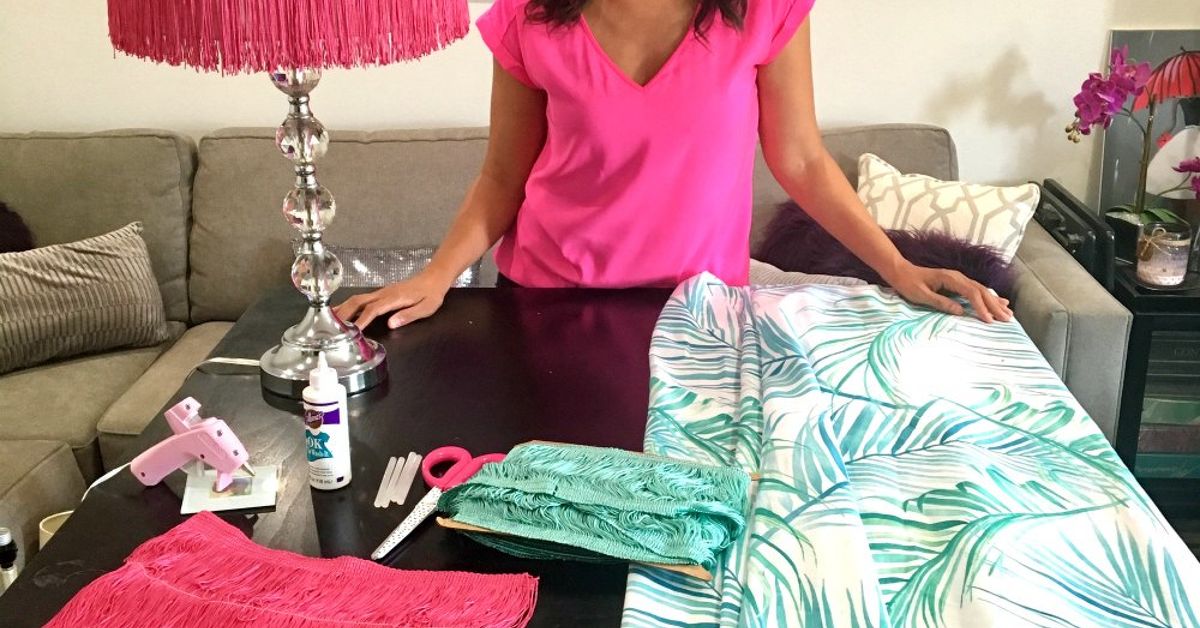
Fringe lamp shades and shower curtains may seem like distant decorating relatives. One lives beside the sofa, looking glamorous; the other spends its days preventing your bathroom from becoming an indoor swimming pool. Yet both are large, highly visible textile elements that can establish color, texture, and personality without requiring expensive renovations.
Used together throughout a home, these accessories can create a wonderfully cohesive look. The trick is coordination, not exact matching. A burgundy tasseled lamp shade does not require a burgundy tasseled shower curtain marching in formation down the hall. Instead, repeat a color, material, pattern, or historical influence so the rooms feel related while retaining their own identities.
Why Fringe and Fabric Make Such a Strong Design Pair
Fringe introduces movement. Even when a lamp is switched off, tassels soften its silhouette and give it a sense of life. When illuminated, they create small shadows that make the light feel warmer and more atmospheric. That is why fringed shades appear so naturally in Victorian, Art Deco, Hollywood Regency, bohemian, and eclectic interiors.
A shower curtain plays a similarly important role. In many bathrooms, it is the largest uninterrupted surface after the walls and floor. Replacing it can change the room faster than repainting, with substantially less time spent wondering how paint landed on the toilet.
Recent interior-design coverage has also emphasized decorative shades, layered materials, and soft ambient lighting as statement-making elements. Meanwhile, designers continue to use shower curtains for affordable color, texture, and visual height. Together, these pieces offer an accessible way to build a collected, textile-rich home.
Choosing the Right Fringe Lamp Shade
Begin With Proportion, Not Tassels
The fringe may attract your eye, but the shade still has to fit the lamp. Start by measuring the top width, bottom width, vertical height, and slanted side of the existing shade. Shade dimensions are commonly listed in that order, although retailers may use slightly different systems.
A useful starting point is to select a shade roughly twice as wide as the lamp base. For many table lamps, the shade itself will be around one-third of the lamp’s total height or approximately two-thirds the height of the visible base. These are guidelines rather than sacred decorating law. A dramatically oversized shade can look fabulous on a simple base, provided it remains stable and does not expose the bulb.
Check the fitter before buying. Common options include spider fitters that rest on a harp, uno fitters that sit around the socket, and clip-on shades that attach directly to a compatible bulb. A beautiful shade with the wrong fitting is merely a fancy hat with nowhere to go.
Select a Shape That Supports the Style
Bell and scalloped shades produce the most traditional fringe-lamp appearance. Their curved outlines suit porcelain, brass, carved wood, and ornate glass bases. Empire shades feel slightly cleaner because their sides taper in a simple line. Drum shades combine fringe with a more contemporary profile, while rectangular shades work well with architectural or angular bases.
Matching the general contour of the shade to the base is a dependable approach: rounded bases usually suit curved shades, while square bases often pair naturally with angular ones. Contrast can also be effective. A plain cylindrical ceramic lamp topped with a lavish pleated and tasseled shade creates controlled drama rather than full costume-party chaos.
Consider Fabric, Fringe Length, and Light
Velvet and dense jacquard shades produce a moody glow and suit bedrooms, libraries, and evening-oriented living spaces. Silk-look fabric, pleated cotton, and linen blends transmit more light. Pale shades generally brighten a room more effectively, while dark shades direct light upward and downward for a theatrical effect.
Short bullion fringe feels tailored. Long tassels look more romantic and may partially conceal the lower edge of the shade. Multicolored fringe supports bohemian interiors, whereas tone-on-tone trim feels quieter. For a practical table lamp, keep the fringe short enough that it does not brush the tabletop, block the switch, or tangle around nearby objects.
Keep the Lamp Safe
Always follow the lamp’s maximum-wattage label and the shade manufacturer’s instructions. The U.S. Consumer Product Safety Commission has documented lighting incidents involving overheating and excessive wattage, so this is not the moment for creative interpretation.
An LED bulb usually produces less heat than an incandescent bulb delivering comparable brightness, but its actual wattage, size, socket, and enclosed-fixture rating still matter. Leave adequate space between the bulb and the shade, keep fringe away from the bulb, and replace damaged sockets, frayed cords, scorched liners, or loose fittings.
Do not place an ordinary plug-in table lamp beside a bathtub, shower, or wet counter. Bathrooms require electrical products and installation methods suitable for their location. If decorative lighting will be used in a bathroom, choose an appropriately rated fixture and consult a qualified electrician when necessary.
Selecting a Shower Curtain That Complements the Look
Measure the Opening Before Shopping
A frequently sold shower-curtain size is about 70 or 72 inches wide by 72 inches long, but shower stalls, vintage tubs, high rods, and custom enclosures vary. The Home Depot lists common examples ranging from approximately 54 by 78 inches for stalls to 72 by 96 inches for extra-long installations.
Measure the width of the opening and the distance from the rod to the point where the curtain should end. The curtain should contain splashes without dragging on the floor or bunching inside the tub. If you raise the rod for a taller visual effect, purchase a correspondingly longer curtain and liner rather than leaving an awkward ankle-high gap.
Hanging the rod closer to the ceiling can elongate the walls and make a small bathroom appear more polished. It also turns the shower curtain into a deliberate focal point instead of something that appears to have been installed during a commercial break.
Choose the Right Curtain and Liner
A decorative fabric curtain offers softness and a furniture-like appearance. Cotton and linen blends create a relaxed look, while polyester is often easier to wash and dries quickly. Heavy woven fabrics can look luxurious but usually need a separate water-resistant liner.
The liner belongs inside the tub and handles most of the water. Look for reinforced holes or rust-resistant grommets, a washable construction, and sufficient weight to prevent the liner from drifting inward. Magnets or weighted hems can help on compatible tubs.
Follow the care label rather than assuming every curtain can tolerate hot water, bleach, or a dryer. Some polyester, nylon, and vinyl liners can be machine-washed on a gentle setting, but materials and finishes differ. Never mix household cleaning chemicals unless their labels explicitly say the combination is safe.
Use Pattern With Restraintor With Great Confidence
If the lamp shade has pleats, embroidery, and long fringe, consider a shower curtain with one related feature rather than all three. A solid curtain with a narrow tasseled border can echo the lamp without turning the bathroom into the backstage area of a 1920s theater.
Conversely, a simple cream fringe shade can comfortably coexist with a bold floral, geometric, or scenic shower curtain. The balance works because one textile takes the lead while the other provides support.
Four Coordinated Decorating Schemes
1. Vintage Hotel Glamour
Pair a pleated ivory lamp shade with champagne-colored fringe and a long white shower curtain featuring a narrow black border. Add aged brass rings, a warm brass lamp base, black-framed artwork, and creamy towels. The repeated metals and neutral fabrics create an elegant connection without making both rooms identical.
2. Moody Art Deco
Choose an emerald or burgundy fringe lamp shade with a dark bronze base. In the bathroom, use a geometric curtain containing the same jewel tone alongside cream, charcoal, or gold. Ribbed glass accessories and rounded mirrors reinforce the period influence.
3. Relaxed Bohemian
Use a patterned shade with multicolored fringe, then select a shower curtain in washed cotton with block-print motifs. Repeat only two or three colors across both textiles. Rattan baskets, terracotta accessories, and warm wood prevent the arrangement from feeling overly coordinated.
4. Playful Modern
Top a simple ceramic lamp with a drum shade edged in bright pom-poms. Choose a white shower curtain with one graphic stripe in the same color. Matte-black hardware keeps the scheme crisp, while the trim supplies just enough mischief.
How to Coordinate Color Without Creating a Theme Park
Select one dominant neutral, one repeated color, and one metal finish. For example, cream can be the neutral, dusty rose the repeated accent, and aged brass the shared finish. The lamp shade might contain all three, while the bathroom uses a cream curtain, rose towels, and brass-colored rings.
Pattern scale also matters. Pair a small floral shade with a wide-striped shower curtain, or combine a large botanical curtain with a mostly solid shade. Two busy patterns of identical scale can compete so aggressively that neither wins.
Remember that artificial light changes color. A deep red shade can cast a warm tint, while cool bathroom lighting may make the same red appear sharper. Compare textile samples during the day and under the bulbs you actually use. Warm white light around 2700K to 3000K generally supports cozy, vintage styling, although task lighting around a bathroom mirror must still provide clear visibility.
DIY Fringe and Trim Ideas
Adding Fringe to a Plain Lamp Shade
A plain fabric shade can be upgraded with purchased fringe, gimp braid, fabric adhesive, clips, scissors, and patience. Work in short sections around the lower edge instead of covering the entire circumference with glue at once. Temporary clips can hold the trim while it dries, and decorative braid can conceal the fringe tape.
Keep glue away from the shade liner and ventilation openings. Once finished, inspect the inside for loose threads or adhesive near the bulb. DIY embellishment should improve the shade’s appearance without compromising its structure or heat clearance.
Trimming a Shower Curtain
Tassels, pom-poms, and contrasting borders can also customize a fabric shower curtain. Sew trim to the outer decorative panel, not the waterproof liner. A vertical border along the leading edge or a band near the top remains drier than long fringe hanging near the tub floor.
Choose washable trim and prewash both the curtain and embellishment when appropriate. Natural fibers can shrink at different rates, producing a curtain that develops unexpected interpretive dance moves after its first laundry cycle.
Cleaning and Maintenance
Dust a fringe lamp shade regularly using a clean, soft brush, low-suction vacuum attachment, or cool-air setting on a hair dryer. Support delicate tassels with one hand while cleaning. Avoid saturating silk, paper, glued trim, or vintage fabrics. When stains appear, consult the maker or a professional cleaner before experimenting.
In the bathroom, spread the curtain and liner open after showering so the surfaces can dry. Run the exhaust fan or open a window during and after bathing. The Environmental Protection Agency identifies moisture control and ventilation as important defenses against mold.
Wash the shower curtain and liner according to their labels, and clean rings before rust or residue becomes conspicuous. A diluted vinegar solution may be suitable for some materials and soap-scum buildup, but test first and never combine vinegar with chlorine bleach. Replace a liner that remains stained, cracked, odorous, or visibly moldy after proper cleaning.
Common Decorating Mistakes to Avoid
- Matching every detail: Repeating color or mood is usually more sophisticated than buying identical patterns.
- Ignoring measurements: An undersized shade exposes hardware, while a short curtain invites water onto the floor.
- Using fringe in a splash zone: Decorative trim that stays wet can become difficult to clean.
- Choosing beauty over function: A shower curtain still has to move easily, dry properly, and contain water.
- Overlooking hardware: Rust-resistant rings, the correct shade fitter, and a secure rod affect both appearance and performance.
- Exceeding the lamp rating: No decorating effect is worth overheating a fixture.
Experiences With Fringe Lamp Shades and Shower Curtains
One of the most useful lessons from decorating with fringe is that a small sample can be misleading. A few inches of tassel trim may look tasteful in your hand, yet a full circumference of it can transform a lamp into a very enthusiastic showgirl. Before attaching anything permanently, pin or clip the fringe around the entire shade and view it from across the room. Photographing the lamp is helpful because a picture makes disproportionate trim surprisingly obvious.
It is also worth switching the lamp on during the test. Dense fabric and dark fringe can reduce useful light more than expected. In a reading corner, that may mean keeping the decorative lamp for ambient light and adding a separate task lamp. In a bedroom, however, the softer glow can be exactly right. Long fringe casts intricate shadows against the wall, creating a cozy effect that plain shades rarely deliver.
Shopping for a replacement shade teaches another practical lesson: bring measurements and a photograph of the base. Memory has a remarkable ability to turn a modest lamp into a much larger object somewhere between the living room and the store. Knowing the fitter type prevents the particularly annoying experience of finding the perfect shade and discovering that it cannot attach to the lamp.
Shower curtains produce their own set of revelations. Raising a curtain rod just a few inches can make a bathroom feel noticeably taller, but only when the new curtain is long enough. A curtain hovering well above the tub looks less like intentional design and more like trousers that shrank in the wash. Measure from the final rod position before ordering.
Fabric shower curtains usually look richer than thin plastic ones, especially after their packaging creases have been removed. A handheld steamer can improve the drape, provided the care label permits it. A separate liner also makes maintenance easier: the decorative curtain can remain in place while the liner is cleaned or replaced, especially when double-sided hooks are used.
In daily use, the most important habit is opening the curtain fully after every shower. A liner left collapsed in damp folds dries slowly and collects residue along its lower edge. Good ventilation, regular washing, and a few seconds spent straightening the fabric accomplish more than an impressive collection of cleaning sprays.
The best coordinated rooms often evolve through trial rather than a single shopping trip. A successful combination might begin with a cherished green fringe shade, followed months later by a shower curtain containing a similar green in a botanical print. Brass rings may then connect with the lamp base, while cream towels quiet the overall palette. Because the relationship is gradual, the home feels collected instead of packaged.
Finally, restraint makes decorative fringe more enjoyable. When the lamp shade supplies tassels, pleats, and saturated color, the shower curtain may need only a small border or related hue. Letting each item play a different role produces rooms that feel connected, functional, and personalthe decorating equivalent of relatives who get along beautifully without wearing matching outfits.
Conclusion
Fringe lamp shades and shower curtains can carry a surprising amount of decorating responsibility. Both introduce fabric, color, scale, and movement, making them ideal tools for refreshing a home without remodeling it. Measure carefully, coordinate through selected details, respect lighting and moisture requirements, and choose materials you can realistically maintain.
The final result should not look like a matching set. It should feel like a conversation: the lamp shade offers a little glamour, the shower curtain answers with texture or color, and the rest of the home quietly enjoys the exchange.













