
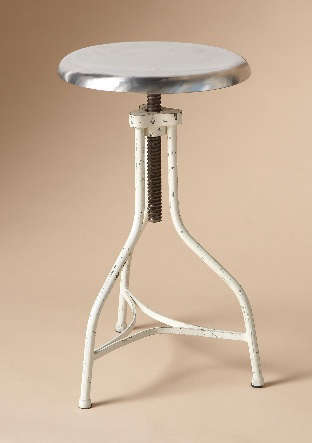
The Sundance Modern Times Factory Stool is the kind of furniture piece that walks into a room wearing work boots, a weathered jacket, and absolutely no interest in pretending to be fancy. It is practical, compact, adjustable, and charming in that “I might have once belonged in a workshop, but now I live next to a quartz kitchen island” kind of way. For homeowners who love furniture with a story, this stool offers the visual language of early industrial seating without requiring anyone to actually clock in at a factory.
Historically associated with Sundance Catalog’s vintage-inspired home collection, the Modern Times Factory Stool was described in archived references as a backless, adjustable steel stool with a tripod base, a hammered steel seat, distressed painted finishes, and a height range suitable for counter-height use. Its appeal comes from a clever balance: it is sturdy without looking bulky, nostalgic without looking like a museum prop, and decorative without becoming too precious to use. In other words, it is not a stool that wants to be admired from across the room. It wants someone to sit down, drink coffee, and maybe make strong opinions about cabinet hardware.
What Is the Sundance Modern Times Factory Stool?
The Sundance Modern Times Factory Stool is best understood as an industrial-style adjustable stool inspired by the utilitarian seats once used in workshops, laboratories, drafting rooms, and assembly-line environments. Archived product coverage identified it as having a tripod-style base, a round hammered steel seat measuring about 14.5 inches across, and an adjustable seat height of roughly 22 to 28 inches. That range places it in a flexible zone between casual work stool and counter stool, making it useful for kitchens, craft rooms, studios, and informal dining areas.
The stool’s finish options were part of its personality. Distressed black, red, and white finishes gave the frame an aged appearance, helping it look less like a brand-new metal object and more like a piece that had already lived through a few decades of useful service. The distressed treatment is important because industrial furniture works best when it does not look overly polished. A scratch on a glossy stool feels tragic. A scratch on a distressed factory stool looks like character development.
Why Industrial Stools Became Popular in Modern Homes
Industrial furniture has remained popular because it solves two design problems at once: it looks interesting, and it works hard. The style grew from furniture made for factories, warehouses, medical offices, machine shops, and other practical settings where durability mattered more than decoration. Over time, the same traits that made these pieces useful in workspaces became desirable in homes: metal frames, simple silhouettes, adjustable mechanisms, visible hardware, and honest materials.
Today, industrial stools are used far beyond loft apartments and converted warehouses. They appear in farmhouse kitchens, modern condos, creative offices, breakfast nooks, mudrooms, home bars, and studio corners. Their raw materials add contrast to softer spaces, while their compact profiles make them easier to tuck under counters than bulky upholstered seating. The Sundance Modern Times Factory Stool fits neatly into this category because it offers a vintage factory look in a format that feels practical for everyday living.
Design Details That Make the Stool Stand Out
The Adjustable Screw Mechanism
The most recognizable feature of a factory-style stool is the central screw-lift seat. Instead of hiding the adjustment mechanism, this design celebrates it. Turning the seat raises or lowers the sitting height, creating a tactile interaction that feels delightfully mechanical. It is furniture with a little bit of choreography: spin, adjust, sit, repeat.
This adjustability is not just decorative. Kitchen counters, worktables, islands, and studio benches vary in height. A fixed-height stool can be perfect in one room and awkward in another. An adjustable stool gives the owner more flexibility, especially in homes where the same piece may move between a counter, desk, craft station, or entryway.
The Hammered Steel Seat
The round hammered steel seat gives the stool its rugged personality. Hammered metal catches light in a softer, more irregular way than flat polished steel. That texture helps reduce the sterile feel that metal furniture can sometimes have. It also reinforces the handmade or workshop-inspired mood associated with Sundance-style home decor.
Because the seat is backless and compact, it is visually light. It does not block sightlines across a kitchen island or clutter a small room. This is one of the quiet advantages of backless stools: they provide seating when needed and then nearly disappear when pushed under a counter.
The Tripod Base
The tripod base is both functional and stylish. Three-legged stools have long been appreciated for their stability on slightly uneven surfaces, and the tripod form gives the Modern Times Factory Stool a sculptural profile. It also keeps the footprint relatively open, which helps the stool feel less heavy than a four-legged chair with arms, upholstery, and a tall back.
Is the Height Right for Your Kitchen or Workspace?
Before buying any stool, measure first and admire later. Standard kitchen counters are typically around 34 to 36 inches high, and counter stools often work best when the seat is roughly 24 to 27 inches from the floor. Bar-height surfaces are taller, usually around 40 to 42 inches, and typically require seats closer to 28 to 33 inches high. Since archived details list the Sundance Modern Times Factory Stool as adjustable from about 22 to 28 inches, it can suit many counter-height setups and some lower bar or worktable situations.
A good rule is to leave about 10 to 12 inches between the top of the stool seat and the underside of the counter or table. That space allows knees to exist peacefully, which is an underrated luxury. If the stool is too high, people hunch. If it is too low, they feel like children at the grown-up table. The adjustable design helps reduce that risk, but measuring is still essential.
Best Places to Use the Sundance Modern Times Factory Stool
Kitchen Islands
The most obvious home for this stool is a kitchen island. Its backless design keeps the island visually open, while the industrial frame adds a point of contrast against wood cabinets, stone counters, or painted millwork. In a white kitchen, a red or black distressed stool can create a strong accent. In a darker kitchen, a white distressed base can lighten the look without feeling too delicate.
Craft Rooms and Studios
This stool makes even more sense in creative workspaces. Painters, jewelry makers, model builders, sewing enthusiasts, and hobbyists often need seating that can move between tasks. A factory stool feels right at home near a drafting table or workbench. It is not fussy, and it does not panic at the sight of pencils, glue, thread, or the occasional mysterious smudge.
Entryways and Mudrooms
A single stool near the door can be surprisingly useful. It gives people a place to sit while putting on shoes, dropping a bag, or negotiating with a stubborn boot. Because the stool is compact, it can fit into narrow entryways where a bench might be too large.
Home Bars and Breakfast Corners
For casual entertaining, the Modern Times Factory Stool works well in small clusters. It gives guests a perch without making the room feel crowded. However, because it is backless and metal-seated, it is better for coffee, cocktails, and quick meals than for three-hour dinner conversations about everyone’s complicated relationship with open shelving.
How to Style an Industrial Stool Without Making Your Home Look Like a Warehouse
The trick with industrial furniture is balance. Too much metal, too many exposed bulbs, and too many distressed finishes can make a room feel like it is auditioning for a gritty detective show. The Sundance Modern Times Factory Stool looks best when paired with warmer textures and cleaner shapes.
In a farmhouse kitchen, combine it with butcher-block counters, ceramic bowls, woven baskets, and simple linen towels. In a modern kitchen, let the stool add grit against flat-panel cabinets and smooth stone. In a bohemian space, pair it with patterned rugs, plants, handmade pottery, and wood shelving. In a rustic cabin or mountain home, the distressed finish connects naturally with reclaimed wood and leather accents.
Color matters, too. A red stool can act as a playful focal point, especially in neutral rooms. A black base feels classic and grounded. A white distressed finish can look fresh, especially against darker floors or natural wood cabinetry. If using multiple stools, matching finishes create order; mixing finishes creates a collected, flea-market mood.
Comfort: What to Expect From a Factory-Style Stool
Let’s be honest: this is not a plush lounge chair. It does not invite you to curl up with a blanket and read 400 pages of historical fiction. A metal, backless factory stool is designed for active sitting, quick meals, creative tasks, and flexible use. The seat is firm. The posture is upright. The mood is productive.
That said, comfort depends on how the stool is used. For short sessions, the curved or textured metal seat can feel perfectly fine. For longer sitting, some users may prefer a removable cushion or seat pad. A thin leather or felt pad can soften the experience without hiding the industrial character. Just make sure the pad does not slide around, because surprise furniture movement is only funny in cartoons.
Durability and Care Tips
Metal stools are generally easy to maintain, but they still deserve basic care. Dust the frame with a soft cloth, wipe spills quickly, and clean the seat with mild soap and water when needed. Avoid abrasive pads, harsh chemical cleaners, and bleach, which can damage finishes or encourage corrosion. After cleaning, dry the metal thoroughly, especially around seams, screws, and joints.
If the stool has rubber feet or glides, check them occasionally. Worn or missing feet can scratch wood floors and make the stool wobble. Felt pads or replacement glides are inexpensive ways to protect flooring. Also check the adjustment mechanism from time to time. If the screw seat becomes stiff, inspect it for dust, grime, or misalignment before forcing it.
Pros and Cons of the Sundance Modern Times Factory Stool
Pros
- Adjustable height makes it more versatile than many fixed stools.
- Backless design keeps kitchens and workspaces visually open.
- Industrial styling adds character without needing much decoration.
- Distressed finishes help minor wear look natural rather than accidental.
- Compact footprint works well in small homes, studios, and apartments.
Cons
- Metal seats are firm and may not suit long, relaxed dining.
- Backless seating offers less support than a traditional counter chair.
- Vintage-inspired finishes may not match highly formal interiors.
- Archived pricing and availability may not reflect current resale or market conditions.
Buying Advice: What to Check Before You Purchase
If you find a Sundance Modern Times Factory Stool on the resale market, inspect it carefully. Confirm the seat height range, check that the seat raises and lowers smoothly, and look for excessive rust, bent legs, missing glides, or unstable joints. Some wear is part of the charm; structural wobble is not. A distressed finish should look intentionally aged, not neglected beyond rescue.
Also measure the seat diameter and base footprint. A 14.5-inch round seat is compact, which is great for tight spaces but may feel small for some users. If buying multiple stools, confirm that all pieces match in height range and finish. Industrial reproductions can vary, and similar-looking stools from different brands may not be identical.
Experience Notes: Living With a Stool Like This
Using a stool like the Sundance Modern Times Factory Stool changes the rhythm of a room in small but noticeable ways. In a kitchen, it encourages quick, casual moments: morning coffee while toast is still deciding whether to become breakfast, a five-minute conversation while dinner simmers, or a place for a friend to sit while pretending not to supervise your chopping technique. It is not the chair you choose for formal dining. It is the seat you choose when life is moving, the counter is busy, and everyone naturally gathers in the kitchen anyway.
In a creative workspace, the stool feels even more at home. The adjustable screw seat is useful when moving between a low storage cabinet, a standard desk, and a taller worktable. Instead of dragging in different chairs, you spin the seat up or down and continue working. There is something satisfying about that mechanical adjustment. It makes the furniture feel like a tool, not just an object. For people who sew, sketch, repair small items, pack orders, paint miniatures, or work on laptops at changing surfaces, that flexibility becomes more than a charming detail.
The stool also brings a certain emotional texture to a room. Many modern interiors are smooth, quiet, and perfectly coordinated. That can be beautiful, but it can also feel a little too controlled. A factory stool breaks the spell in a good way. Its visible screw, hammered seat, and distressed base add a practical edge. It says, “This room is designed, but it is also used.” That difference matters. Homes feel warmer when not every object looks terrified of fingerprints.
There are practical lessons, too. First, place the stool where people naturally pause, not where they need deep comfort. It shines at islands, workbenches, narrow counters, and small corners. Second, use floor protection from day one. Metal stools get moved often, and a small glide or felt pad can save a hardwood floor from unnecessary drama. Third, consider adding one soft element nearby: a woven runner, a cushion, a wood counter, or warm lighting. The stool’s industrial look becomes more inviting when surrounded by texture.
Finally, expect guests to notice it. Factory stools have a way of starting conversations because they look familiar and unusual at the same time. Someone may say it reminds them of an art classroom, a science lab, a grandfather’s garage, or a favorite old café. That is the real strength of the Sundance Modern Times Factory Stool. It is not merely a place to sit. It is a small piece of functional nostalgia, ready to work in a modern home without losing its old-soul attitude.
Conclusion
The Sundance Modern Times Factory Stool is a memorable piece of vintage-inspired furniture because it blends practical design with strong visual character. Its adjustable height, compact backless form, tripod base, hammered steel seat, and distressed finish options make it especially useful for kitchens, studios, craft rooms, and casual seating areas. It is not the softest stool in the world, and it does not try to be. Its charm lies in honesty: metal, mechanics, patina, and purpose.
For anyone drawn to industrial furniture, this stool offers a smart lesson in balance. A single factory-style stool can add history and texture to a polished room. A set can define a kitchen island or workshop zone. With the right measurements, basic care, and thoughtful styling, the Sundance Modern Times Factory Stool can feel both practical and personal. It is furniture with a little grit, a little humor, and a lot of usefulnesswhich is more than can be said for many decorative objects that just sit around looking expensive.













