
Most wall clocks are polite little machines. They tick once per second, nudge the hands forward, and quietly pretend that time is a simple thing. Then a project like the Crazy Clock walks into the room, smiles suspiciously, and asks, “But what if a second didn’t have to behave?”
Hackaday Prize Entry: A Clock For Alternate Timebases is not just a quirky clock story. It is a wonderfully nerdy reminder that timekeeping is part science, part engineering, and part cultural agreement. A normal analog clock is built around Earth’s familiar 24-hour solar day. But astronomers, oceanographers, Mars mission planners, science fiction fans, and hardware hackers all know that “a day” depends on what you are measuring. A day can follow the Sun, the stars, the Moon, or even another planet.
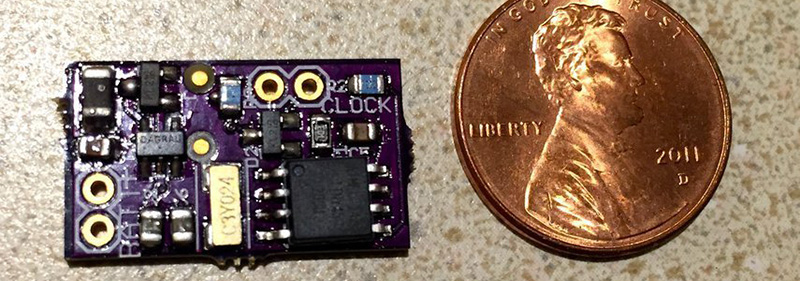
That is where Nick Sayer’s Crazy Clock becomes fascinating. The project was designed as a replacement controller for common Lavet stepper clock movementsthe type found inside many inexpensive quartz wall clocks. Instead of simply replacing a broken movement with another boring one, the Crazy Clock replaces the brain of the clock and gives it a personality. Sometimes that personality is astronomical. Sometimes it is Martian. Sometimes it is tidal. And sometimes it is simply the kind of thing that makes guests stare at your wall and wonder whether your clock is having a tiny mechanical crisis.
What Is the Crazy Clock?
The Crazy Clock is an open hardware-style maker project built around the idea of controlling a standard stepper clock movement in unusual ways. In a typical quartz wall clock, a tiny circuit pulses a coil at a regular interval. That pulse moves a small magnet and gear train, which advances the second hand. Repeat that every second and, congratulations, you have the humble wall clock: reliable, cheap, and usually about as exciting as dry toast.
The Crazy Clock changes the story by swapping in a microcontroller-based board. The clock hands still move through the same mechanical system, but the timing of the electrical pulses becomes programmable. That means the same physical clock can be turned into a sidereal clock, a Martian clock, a tidal clock, or a novelty clock that appears lazy, nervous, drunk on espresso, or suspiciously theatrical.
The beauty of the project is that it does not require reinventing the entire clock. It respects the existing mechanism and modifies the part that matters most: the timing controller. This is classic Hackaday thinking. Take a mass-produced object, understand how it works, and then make it do something the original manufacturer probably never put in a quarterly planning deck.
Why Alternate Timebases Matter
To most people, time is what the phone says. To engineers, astronomers, and scientists, time is a measurement system with assumptions hiding under the floorboards. The standard civil day is based on the average solar day: roughly the time it takes the Sun to appear in the same position in the sky from one day to the next. That works beautifully for meetings, school bells, coffee breaks, and being late in a socially acceptable way.
But other timebases are useful because they measure different natural cycles. A sidereal day tracks Earth’s rotation relative to distant stars, not the Sun. It is about 23 hours, 56 minutes, and 4 seconds. That makes it roughly four minutes shorter than a solar day, which is why stars rise a little earlier each night. For astronomy, sidereal time is not a party trick; it helps observers know what part of the sky is overhead.
A Martian sol is the solar day on Mars. It lasts about 24 hours, 39 minutes, and 35 seconds, which is close enough to Earth time to feel familiar but different enough to make scheduling awkward. Mars rover teams have used sol-based planning because machines on Mars do not care about your local time zone or your morning commute.
A tidal day, or lunar day, is tied to the Moon’s apparent cycle over a location on Earth. It lasts about 24 hours and 50 minutes. Coastal areas commonly experience two high tides and two low tides during that period, making tidal timing important for boating, fishing, coastal work, and anyone who has ever parked too close to the water and learned humility.
By supporting these alternate rates, a clock becomes more than a household object. It becomes a physical explanation of astronomy, planetary science, and ocean cycles. It turns abstract timekeeping into something you can hear and watch.
How a Normal Quartz Clock Works
Inside many analog quartz clocks is a Lavet-style stepper motor. It is a clever little motor that moves in discrete steps when the control circuit sends alternating electrical pulses through a coil. A magnetized rotor turns, gears reduce that motion, and the hands move around the dial.
Most quartz timekeeping circuits rely on a 32.768 kHz crystal because that frequency is convenient for division into one-second intervals. Divide 32,768 by powers of two and you eventually land on one pulse per second. It is elegant, efficient, and cheapthree words that make hardware designers nod like they have just smelled fresh solder.
In a standard clock movement, the timing circuit does one job: keep the pulses regular. The Crazy Clock asks a better question: What if regularity is optional? By controlling when those pulses happen, the board can speed up, slow down, pause, catch up, or follow a completely different daily rhythm.
The Engineering Behind the Hack
The Crazy Clock project used small AVR microcontrollers such as the ATtiny family, a watch crystal for timing, and power circuitry designed to run from a single AA battery. That last part matters. A standard wall clock is expected to sip power, not chug it like a gaming PC rendering a dragon. If the replacement controller drained the battery quickly, the joke would get old fast.
Because a single AA cell starts around 1.5 volts and declines as it discharges, the design uses a boost converter to provide a stable operating voltage for the microcontroller. Stability is important not only for running the chip but also for maintaining predictable timing. The firmware can put the controller to sleep most of the time, waking it only when it needs to decide whether the next tick should happen.
This is where the project becomes more than a novelty. It is a compact lesson in embedded systems: low-power operation, clock sources, interrupt timing, calibration, mechanical compatibility, and manufacturability. The clock may look like a joke on the wall, but the board behind it is doing real engineering work.
Sidereal Mode: A Clock for the Stars
One of the most practical alternate modes is the sidereal clock. In sidereal mode, the hands complete their cycle according to star time rather than solar time. That means the clock runs slightly faster than a normal clock by about 3 minutes and 56 seconds per solar day.
For amateur astronomers, this is genuinely useful. A sidereal clock can help connect right ascension on a star chart with the sky above. It is also a fantastic conversation starter. Hang one near a telescope and suddenly the wall is not just decoration; it is part of the observing setup.
Of course, a sidereal wall clock in a kitchen may confuse visitors. That is not a bug. That is ambience.
Martian Mode: Timekeeping for Red Planet Dreamers
Martian time is another standout use case. A Mars sol is roughly 39 minutes and 35 seconds longer than an Earth day. A Martian clock therefore needs to run slower than a normal Earth clock if it is using the same familiar dial style.
This mode appeals to space fans, educators, and anyone who has watched Mars mission coverage and wondered how engineers keep their schedules straight when the planet itself refuses to fit neatly into Earth’s calendar. A Martian wall clock makes the idea tangible. You can glance at it and see that Mars is not simply “far away”; it runs on a different daily rhythm.
That physicality matters. A web app can display Mars time, but an analog clock gives the concept a charming mechanical presence. It says, “Yes, I am measuring another planet from your living room. Please respect my tiny orbital authority.”
Tidal Mode: A Clock That Listens to the Moon
Tidal mode follows the longer lunar day, roughly 24 hours and 50 minutes. This makes it relevant to the rhythm of tides rather than the rhythm of office calendars. It is easy to imagine such a clock in a coastal workshop, boathouse, science classroom, or beach rental where the ocean is more important than the next calendar alert.
A tidal clock is not a full tide prediction system because real tides depend on coastline shape, local geography, weather, and many other factors. Still, as a conceptual clock, it makes the Moon’s influence visible. It reminds people that Earth time is not one single universal beat. It is a collection of overlapping cycles, and some of them are wet.
Vetinari and Novelty Modes: When Accuracy Gets Weird
The Crazy Clock also connects to the famous “Vetinari clock” idea, inspired by Terry Pratchett’s Discworld. The concept is simple and mildly wicked: the clock remains accurate over the long term, but the ticks are irregular enough to unsettle anyone listening closely.
That is a brilliant design joke because it separates two ideas people usually combine: accuracy and regularity. A clock can keep correct time over the day while still refusing to tick politely every second. It can pause, sprint, hesitate, and recover. The result is a clock that is technically doing its job while emotionally behaving like a cat near a cucumber.
Novelty modes give the project its personality. They make people notice time as an experience, not just a number. In a world where clocks usually disappear into the background, a slightly mischievous analog clock can become the most memorable object in the room.
Why This Was a Strong Hackaday Prize Entry
The Hackaday Prize has always celebrated projects that combine creativity, technical skill, and open documentation. The Crazy Clock fits that spirit because it is accessible yet surprisingly deep. It begins with a familiar object: a wall clock. Then it opens the case and reveals a playground of embedded timing, motor control, power design, and firmware behavior.
Good hardware hacks often share three qualities. First, they teach. The Crazy Clock teaches how quartz movements work and why alternate timebases exist. Second, they reuse. Instead of discarding the entire clock, the project modifies the control electronics. Third, they invite customization. Different firmware loads can produce different personalities, from scientifically useful to delightfully absurd.
That combination makes the project feel like a product, a teaching tool, and a joke with a circuit board. That is not easy to pull off. Many projects are useful but dull. Others are funny but fragile. Crazy Clock manages to be both educational and ridiculous in exactly the right proportions.
Lessons for Makers and Hardware Designers
Start With a Common Object
One reason this project works so well is that everyone understands a clock. You do not need a PhD to notice when the second hand starts acting suspicious. By hacking a familiar object, the project makes advanced concepts easier to explain.
Respect the Mechanical System
The project does not replace the entire movement with a flashy overbuilt mechanism. It keeps the low-cost mechanical gear train and changes the controller. That is smart design. It reduces complexity, keeps the form factor familiar, and makes the result easier to install.
Power Matters
Battery-powered projects live or die by current consumption. A wall clock that needs a new battery every week is less a product and more a cry for help. The Crazy Clock’s low-power approach shows how important sleep modes, efficient regulators, and careful timing are in embedded design.
Make the Weird Useful
The best novelty projects have a real technical backbone. Sidereal and Martian modes are not just jokes; they connect to astronomy and space exploration. Tidal mode connects to lunar cycles and coastal life. The humorous modes then become extra seasoning rather than the entire meal.
Experience Notes: Building, Testing, and Living With Alternate-Time Clocks
Working with a project like Hackaday Prize Entry: A Clock For Alternate Timebases changes the way you look at ordinary objects. At first, a quartz wall clock seems too simple to be interesting. There is a battery, a plastic case, a few gears, and hands that go around in circles. But once you open it up and think about the timing controller, the clock becomes a tiny embedded system with a mechanical display. That shift in perspective is one of the most rewarding experiences in hardware hacking.
The first lesson is patience. Clock movements are small, light, and often built to be manufactured cheaply rather than lovingly disassembled by curious humans. Plastic clips can be stubborn. Hands can bend if you treat them like pry bars. Wires need to be routed neatly so they do not interfere with the gears. Even when the electronics are simple, the mechanical parts demand respect. The clock is basically saying, “I am inexpensive, not indestructible.”
The second lesson is that timing errors become emotionally visible. In many electronics projects, a small drift or jitter hides in a log file. In a clock, it stares back at you from the wall. If a sidereal clock is off, an astronomy user will notice. If a novelty clock pauses too long, people may think the battery died. If a Martian clock is displayed next to a normal one, the difference becomes a daily demonstration of planetary mechanics. Testing is not just about whether the firmware compiles; it is about whether the behavior feels intentional.
The third experience is pure delight: people react to physical time differently than they react to digital time. A phone can show any timebase instantly, but it does not have the same charm as an analog hand moving in an unfamiliar rhythm. Visitors may glance once, look away, then look back because something feels slightly off. That moment is the payoff. The clock has started a conversation without saying a word.
For classrooms, maker spaces, observatories, and science clubs, an alternate-timebase clock can be a surprisingly effective teaching prop. Instead of explaining sidereal time with a dry diagram, you can point to a clock that actually runs at the sidereal rate. Instead of describing a Martian sol as “about forty minutes longer,” you can let students watch two clocks slowly drift apart. Instead of treating tides as a textbook chart, you can show that the Moon’s cycle does not fit neatly into the 24-hour box we use for daily life.
The final lesson is that useful weirdness has staying power. A gimmick gets one laugh. A well-made hack keeps teaching, annoying, amusing, and inspiring people for years. That is why the Crazy Clock concept remains memorable. It takes a boring object, changes one deep assumption, and suddenly the wall has opinions about astronomy.
Conclusion
Hackaday Prize Entry: A Clock For Alternate Timebases is a perfect example of what makes hardware hacking so engaging. It starts with a simple questionwhat if a clock did not have to tick in ordinary Earth seconds?and turns that question into a practical, programmable, low-power device. Along the way, it explains sidereal time, Martian sols, tidal cycles, quartz clock movements, embedded firmware, and the joy of making everyday objects slightly stranger.
The Crazy Clock proves that innovation does not always require a giant robot, a satellite, or a budget that scares accountants. Sometimes it begins with a wall clock, a microcontroller, and the willingness to ask whether time itself could use a firmware update. For makers, educators, astronomers, and lovers of beautifully unnecessary machines, that is time well spent.













