
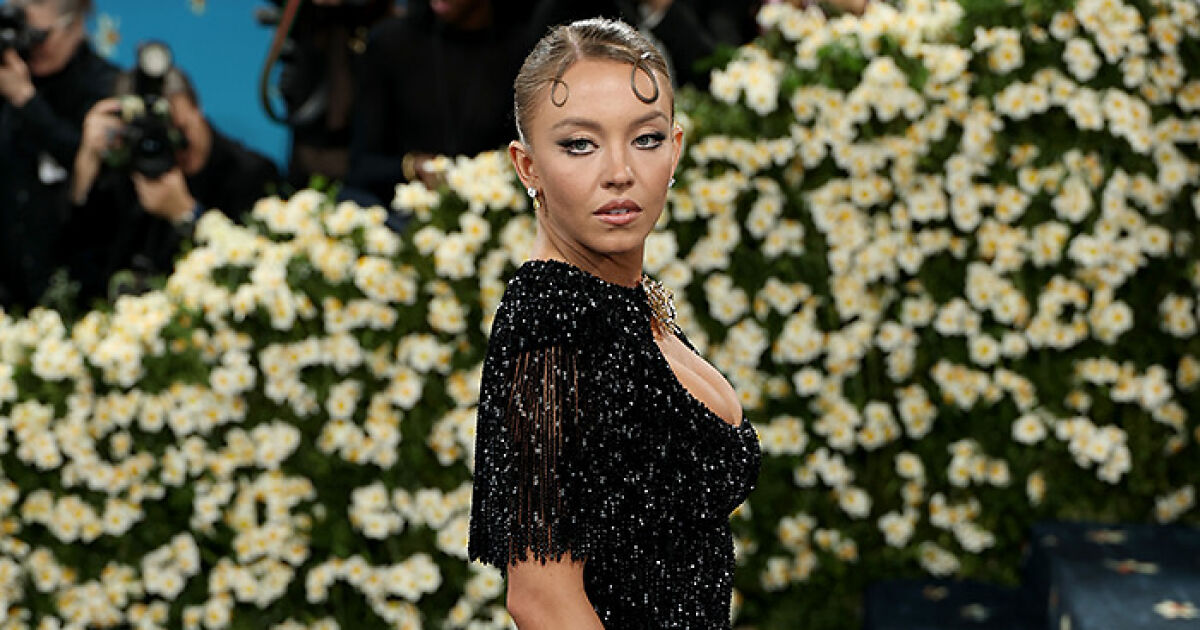
Sydney Sweeney walked into the 2025 Met Gala wearing a sparkling black Miu Miu gown, and the internet did what the internet does best: it pulled up a chair, put on reading glasses, and began a full courtroom trial in the comments section. Within minutes, her look became one of the night’s most debated celebrity fashion moments, with some fans calling her glamorous and others insisting, rather dramatically, that “her stylist did her dirty.”
The reaction was not just about whether the dress was pretty. On a purely red-carpet level, the gown had plenty going for it: black sequins, beaded fringe, a fitted silhouette, a keyhole neckline, and a gold brooch detail. It was classic Hollywood with a glossy modern finish. But the Met Gala is not a normal awards show. At the Met, “pretty” is only the entry fee. The real question is whether the outfit understands the assignment.
For 2025, that assignment was especially meaningful. The Costume Institute exhibition was titled “Superfine: Tailoring Black Style”, with the dress code “Tailored for You.” The theme celebrated Black dandyism, menswear, tailoring, self-expression, and the historical role of clothing in shaping Black identity. Against that rich cultural backdrop, Sweeney’s Kim Novak-inspired gown landed in a complicated place: beautiful to some, off-theme to others, and absolutely irresistible to the internet’s harshest fashion referees.
What Sydney Sweeney Wore to the 2025 Met Gala
Sweeney arrived at the Metropolitan Museum of Art in New York City wearing a custom black Miu Miu gown covered in shimmer. The dress featured short fringed sleeves, a body-skimming shape, a dramatic keyhole cutout, and a gold floral-style brooch placed near the collar. Her hair was slicked into a neat updo with curled, vintage-inspired tendrils on her forehead, giving the full look a retro screen-star mood.
The styling was intentional. Sweeney said the look was a tribute to Kim Novak, the Hollywood actress she is set to portray in Scandalous!, a film connected to Novak’s relationship with Sammy Davis Jr. The dress referenced Novak’s look in The Legend of Lylah Clare, which itself echoed old Hollywood glamour. In other words, this was not a random “black sparkly dress because black sparkly dresses are safe” situation. There was a story behind it.
That story, however, was exactly where the debate began. Critics argued that honoring a white Hollywood actress at a gala dedicated to Black style and Black dandyism felt like a detour from the theme. Supporters countered that the film connection to Sammy Davis Jr. and Colman Domingo gave the outfit more context than a first glance suggested. The result was a fashion debate with more layers than a celebrity stylist’s garment rack.
Why the Internet Said “Her Stylist Did Her Dirty”
The phrase “her stylist did her dirty” became a shorthand for the harshest reactions. It did not necessarily mean the gown was ugly. In fact, many critics admitted Sweeney looked polished. The complaint was that the look felt too safe, too literal, or too disconnected from the night’s larger cultural message.
At the Met Gala, fans expect risk. They want drama, wit, tailoring, research, theatricality, and at least one accessory that requires its own security team. Sweeney’s gown, while glamorous, looked to some viewers like it belonged at a film premiere, a Golden Globes after-party, or a luxury perfume campaign. The Met Gala crowd wanted “Superfine.” Some felt they got “very nice black dress.”
Another common criticism focused on the neckline and silhouette. Sweeney has often been styled in bombshell-coded fashion, and viewers who follow her red-carpet history argued that this outfit leaned once again into the same image rather than challenging it. For those critics, the problem was not Sweeney’s body or beauty, but the repetitive styling narrative around her. They wanted a sharper, more inventive interpretation of tailoringperhaps a suit, sculptural jacket, dramatic hat, or menswear-inspired silhouette.
The Theme: Why “Superfine” Raised the Stakes
The 2025 Met Gala theme was not a vague concept like “glamour” or “fantasy.” It was specific. “Superfine: Tailoring Black Style” explored Black dandyism and the importance of clothing in the formation of Black identity across history. The dress code, “Tailored for You,” invited guests to bring their own interpretation to tailoring, menswear, and personal style.
That specificity made the red carpet harder to fake. A guest could not simply arrive in a dazzling gown and hope the sparkle did the homework. The most praised looks of the night often incorporated strong tailoring, suiting, hats, canes, lapels, waistcoats, sharp shoulders, historical references, or direct nods to Black designers and style icons. Zendaya, Colman Domingo, Lewis Hamilton, A$AP Rocky, Janelle Monáe, Doechii, and others were widely discussed because their outfits appeared to speak fluently to the theme.
Sweeney’s look, by comparison, spoke a different language: Hollywood starlet. That language can be gorgeous, but it was not what many viewers expected from a night centered on Black tailoring and dandyism. It was like bringing an excellent cheesecake to a chili cook-off. Delicious? Yes. On brief? That is where the group chat starts fighting.
The Kim Novak Reference: Clever Context or Missed Opportunity?
The most important defense of Sweeney’s gown is the Kim Novak reference. The actress is set to portray Novak in Scandalous!, a project connected to Novak’s relationship with Sammy Davis Jr. Because the 2025 Met Gala was co-chaired by Colman Domingo, who is attached to the film, the styling choice seemed designed to create a bridge between Sweeney’s upcoming role and the evening’s broader celebration of Black cultural history.
That is not a meaningless connection. Sammy Davis Jr. was a major Black entertainer navigating fame, racism, image control, and public scrutiny in mid-century America. A look tied to that story could have worked beautifully if the styling had leaned deeper into the Davis-Novak context, the Hollywood studio system, or the tension between public image and private identity.
The issue is that most viewers saw the dress before they heard the explanation. Fashion at the Met Gala has to communicate fast. The carpet is crowded, photos spread instantly, and online audiences rarely pause to read a footnote before posting “not on theme.” If the reference requires a paragraph to understand, the look may already be in trouble.
Why Some Fans Still Loved the Look
Not everyone joined the roast. Many fans praised Sweeney’s gown as elegant, flattering, and beautifully fitted. Some called it one of her stronger red-carpet moments because the tailoring worked with her figure rather than fighting it. Others loved the Old Hollywood mood, the glossy black beading, and the gold brooch as a dramatic focal point.
There is also a fair argument that the Met Gala dress code “Tailored for You” allowed personal interpretation. Sweeney’s team could claim that the gown was tailored to her current career moment: an actress stepping into the role of Kim Novak while connecting that role to a film about a relationship involving Sammy Davis Jr. That is a more subtle reading, but subtlety at the Met Gala is risky. The carpet tends to reward bold punctuation, not whispering.
Still, the positive reactions mattered. They showed that the criticism was not universal. The dress had fans. The problem was not that everyone hated it. The problem was that the strongest negative reactions were louder, funnier, and more shareable. Online fashion discourse often rewards the sharpest joke, not the most balanced analysis.
Was the Dress Actually Bad?
No, the dress was not bad. That is the funny part. If Sweeney had worn the same Miu Miu gown to a movie premiere, many people would have called it a win. It photographed well, matched her established style, and carried a recognizable vintage reference. The craftsmanship and overall polish were not the issue.
The issue was placement. The Met Gala is fashion’s most high-pressure theme party, and every outfit is judged against the assignment. A strong dress can become a weak Met Gala look if it does not engage clearly enough with the theme. That is exactly what happened here. Sweeney’s gown was glamorous, but the night demanded more than glamour.
Think of it like showing up to a black-tie event in a perfect cocktail dress. You may look wonderful, but someone will still whisper, “Was there an email she missed?” In Sweeney’s case, the whisper became a viral comment section.
What the Backlash Says About Celebrity Styling
The reaction to Sydney Sweeney’s Met Gala 2025 dress says a lot about how celebrity styling works now. A stylist is no longer just dressing a star for the camera. They are dressing a star for TikTok breakdowns, Instagram carousels, fashion historians, fan accounts, meme pages, and thousands of strangers who can identify a theme violation faster than airport security spots a full-size shampoo bottle.
That means a Met Gala outfit has to do several jobs at once. It has to flatter the celebrity. It has to photograph well. It has to please the brand. It has to connect to the theme. It has to produce a narrative. It has to survive comparison with dozens of other celebrities. And ideally, it has to be interesting enough that people discuss it without turning it into a roast.
Sweeney’s look checked some boxes but not all. It was flattering and glamorous. It supported a film narrative. It aligned with Miu Miu’s polished, feminine identity. But it did not fully convince critics that it belonged to the world of “Superfine: Tailoring Black Style.” That gap became the story.
The Bigger Conversation: Theme, Race, and Red-Carpet Responsibility
Part of the backlash came from the sensitivity of the theme. “Superfine” was not simply an aesthetic mood board. It was a celebration of Black style, Black identity, Black history, and the tradition of dandyism as both fashion and resistance. For many viewers, that deserved careful engagement from every attendee.
When a white celebrity appears in a look inspired by a white actress at an event centered on Black style, people are going to ask questions. That does not automatically make the look offensive, but it does make it vulnerable to criticism. The Met Gala is not just about looking expensive. It is about interpretation, context, and cultural literacy.
This is where Sweeney’s team may have underestimated the audience. Fashion fans are not passive anymore. They know the theme. They read the exhibition notes. They compare references. They know which designers were available, which silhouettes made sense, and which stars took real creative risks. The bar is high, and the comment section owns a ladder.
How Sydney Sweeney Could Have Made the Look Stronger
The Kim Novak inspiration did not need to be abandoned. It simply needed a clearer bridge to the theme. A sharper tailored jacket over the gown, a menswear-inspired cape, a dramatic hat, structured shoulders, or styling that referenced Sammy Davis Jr.’s stage elegance could have made the concept feel more connected to Black dandyism.
Even the brooch could have been pushed further. Brooches were a major accessory language on the 2025 carpet, and a more intentional jewelry story might have strengthened the look. The hair, too, could have moved beyond vintage starlet curls into something more architecturally tailored. The dress was beautiful, but the styling needed one more ideaone more wink that said, “Yes, we read the invitation.”
That is why the “stylist did her dirty” comment stuck. It captured the feeling that Sweeney herself looked good, but the overall concept did not serve her as well as it could have. The internet was not just judging fabric. It was judging strategy.
Experience-Based Takeaways: What This Fashion Moment Teaches Us
There is a surprisingly useful lesson in this whole Met Gala debate for anyone who has ever dressed for a major event, whether it is a wedding, gala, work conference, birthday dinner, or awkward family function where one aunt treats the buffet line like a cross-examination. The lesson is simple: a great outfit is not only about looking good. It is about looking right for the moment.
Most people have had some version of the Sydney Sweeney problem. You put on something that fits well, makes you feel confident, and looks fantastic in the mirror. Then you arrive and realize the room is speaking a different fashion language. Everyone else is relaxed and beachy while you look ready to accept an Oscar. Or the invitation said “creative cocktail,” and you interpreted that as “black pants and emotional support blazer.” Suddenly, the outfit is not badit is just having the wrong conversation.
That is why context matters. Before dressing for an event, it helps to ask three questions: What is the occasion? What is the message? What will everyone else understand when they see this? Sweeney’s gown answered the first question with glamour and the second with a personal film reference, but the third question became complicated. Many viewers did not immediately understand the connection, so they judged the look by the most obvious visual cues.
Another experience-based takeaway is that safe choices are not always safe. A black sequined gown is usually a reliable red-carpet weapon. It is elegant, photogenic, and difficult to truly ruin. But at a theme-heavy event, safe can read as undercooked. The same is true in everyday style. Wearing the “nice” option is not always the same as wearing the right option. Sometimes the bolder jacket, the more thoughtful accessory, or the slightly unexpected silhouette tells a stronger story.
The final lesson is about criticism. People can dislike an outfit without attacking the person wearing it. The best fashion commentary focuses on styling, construction, theme, proportion, and conceptnot cruelty. Sweeney’s Met Gala look is worth discussing because it sits at the intersection of celebrity image-making, cultural themes, brand strategy, and internet reaction. It does not require body-shaming or personal insults to be interesting. In fact, the smarter critique is much more fun: the dress was glamorous, the reference was real, the styling was polished, and yet the whole thing still felt like it arrived one chapter late to the book club.
Conclusion
Sydney Sweeney’s 2025 Met Gala dress became controversial not because it was a disaster, but because it was almost too easy to understand as a normal glamour look and too hard to understand as a Met Gala theme statement. The black Miu Miu gown was sleek, sparkly, and carefully tied to Kim Novak, but the night’s focus on Black dandyism demanded a stronger visual connection to tailoring, menswear, and cultural storytelling.
In the end, the viral “her stylist did her dirty” reaction says less about one dress and more about the modern Met Gala machine. Celebrities are no longer judged only on beauty. They are judged on research, relevance, risk, and whether the outfit can explain itself before the memes arrive. Sweeney looked polished, but at the Met Gala, polished is not always enough. Sometimes fashion’s biggest night requires not just a beautiful gown, but a thesis statement with better lighting.










