
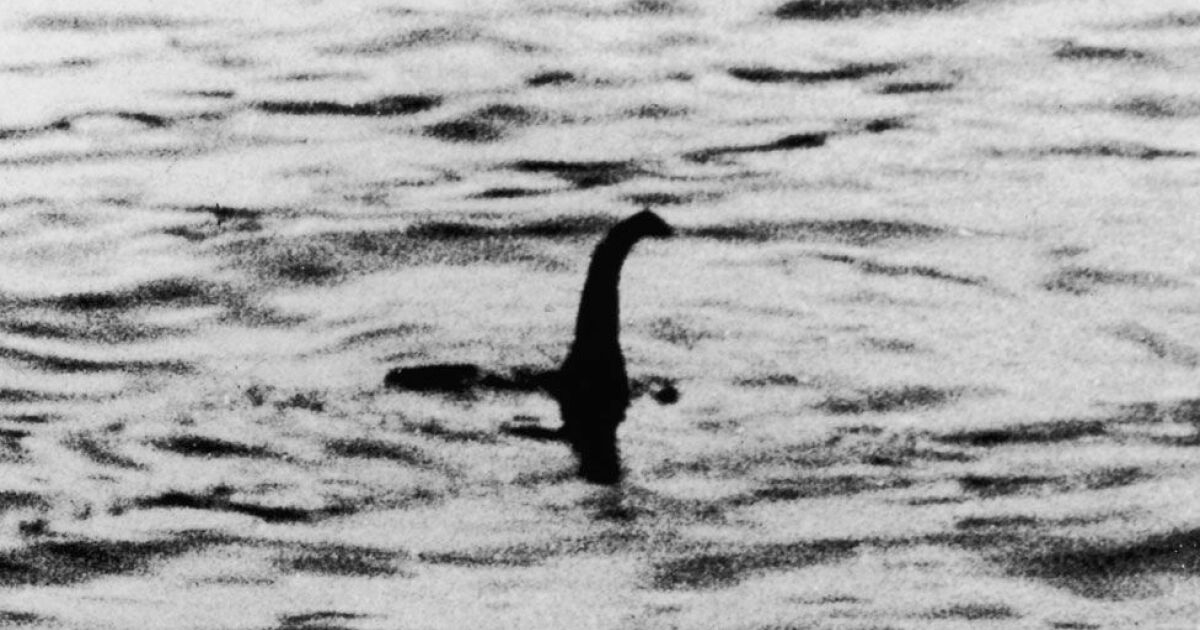
If the internet had a family group chat, someone would eventually type, “Hey Pandas, put a picture of Nessie on here,” and honestly, the request would make perfect sense. Few legendary creatures are as camera-ready, meme-friendly, mystery-flavored, and politely uncooperative as the Loch Ness Monster. Nessie is the celebrity who never shows up to interviews, never confirms rumors, and still somehow remains famous after nearly a century of blurry photos.
The phrase “Hey Pandas” has the playful feel of an online community prompt: friendly, informal, and designed to make people share something visual, weird, funny, nostalgic, or surprisingly meaningful. Add Nessie to the mix, and you get a perfect internet recipe: one part folklore, one part photography challenge, two parts “enhance that pixel,” and a generous splash of Scottish lake water.
But behind the fun is a genuinely fascinating story. Nessie is not just a monster-shaped doodle in the public imagination. The legend connects ancient folklore, early newspaper sensationalism, famous photographic hoaxes, scientific searches, environmental DNA studies, tourism, skepticism, and our very human desire to believe that somewhere beneath the surface, something wonderful is still hiding.
Why Nessie Pictures Still Grab Our Attention
A picture of Nessie is rarely just a picture. It is a tiny invitation to argue, laugh, zoom in, squint, and say, “Wait, is that a monster or a floating log with excellent public relations?” That is the magic of the Loch Ness Monster. The evidence has never been strong enough to settle the mystery, but the story has always been strong enough to keep people looking.
In online culture, Nessie works because the legend is instantly recognizable. Even people who have never visited Scotland know the basic image: dark water, misty hills, a long neck, a mysterious hump, and a camera that apparently had the resolution of a potato in a raincoat. The creature is spooky without being too scary, mysterious without being too complicated, and funny enough to survive as a meme.
That makes Nessie perfect for community-driven photo prompts. A real Nessie image might be a painting, a toy, a sculpture, a cartoon, a travel snapshot from Loch Ness, a suspicious ripple in a pond, or a dog wearing a sea-monster costume and looking emotionally unavailable. The point is not always proof. Sometimes the point is participation.
The Real History Behind the Loch Ness Monster
Stories of a strange creature near Loch Ness are often traced back to early accounts involving Saint Columba in the sixth century. That older tale belongs more to religious legend and regional folklore than modern cryptid hunting, but it helped create the sense that the waters around Loch Ness had always been a little mysterious.
The modern Nessie phenomenon, however, truly exploded in 1933. That year, reports of a strange animal in Loch Ness appeared in the Inverness Courier and soon attracted attention far beyond the Scottish Highlands. A newly improved road along the loch also gave travelers better views of the water, which may have helped increase reported sightings. Suddenly, newspapers had a monster story, readers had a mystery, and Loch Ness had a new global identity.
Then came the image that changed everything: the famous 1934 “surgeon’s photograph.” It appeared to show a long-necked creature rising from the water, and for decades it became the visual shorthand for Nessie. The picture looked simple, eerie, and convincing enough to become legendary. Unfortunately for monster fans, it was later exposed as a hoax involving a small model attached to a toy submarine. In other words, Nessie’s most famous headshot had more in common with craft night than zoology.
What Science Says About Nessie
Scientists have approached Loch Ness with sonar, underwater cameras, environmental DNA sampling, thermal imaging, drones, hydrophones, and the kind of patience normally reserved for assembling furniture without instructions. The results have been fascinating, but not exactly monster-confirming.
One of the most widely discussed modern studies involved environmental DNA, or eDNA. Researchers collected water samples from Loch Ness and analyzed genetic material left behind by organisms living in the lake. The study found plenty of evidence for known species, including a notable amount of eel DNA, but no evidence of a prehistoric reptile, giant unknown fish, or secret plesiosaur family reunion.
The eel theory is one of the more reasonable explanations for some sightings. Eels live in Loch Ness, and large eels moving near the surface could create shapes that seem strange from a distance. Other possible explanations include floating logs, waves, boat wakes, birds, optical illusions, seals that occasionally enter connected waterways, and the timeless human habit of seeing patterns where our imagination has already booked a room.
That does not mean every witness was lying. Many people may have genuinely seen something unusual. The key question is whether “unusual” means “unknown monster” or “ordinary object in dramatic lighting.” Loch Ness is deep, dark, cold, and atmospheric. On the right day, even a wave can look like it has secrets.
Why a “Hey Pandas” Nessie Prompt Works So Well
A prompt like “Hey Pandas, put a picture of Nessie on here” is simple, but it taps into several strong content signals. It invites user-generated content, encourages visual participation, and creates an easy theme that almost anyone can interpret. People do not need a verified monster photograph to join in. They just need a Nessie-related image and a sense of humor.
That flexibility is powerful. Someone might share a photo from a trip to Loch Ness. Someone else might upload a child’s drawing of a smiling lake monster wearing sunglasses. Another person could post a meme of a garden hose sticking out of a kiddie pool and announce, with full scientific seriousness, “Evidence found.” The fun comes from the range of responses.
Community prompts also perform well because they reduce pressure. Instead of asking people to write a deep essay or defend a theory, the prompt says, in effect, “Show us something.” Visual content is quick to understand, easy to react to, and highly shareable. Add a famous cryptid, and you have a comment section ready to transform into a tiny monster museum.
What Counts as a Great Nessie Picture?
1. The Classic Silhouette
The most recognizable Nessie image features a long neck rising from dark water. Even though the famous version was a hoax, the shape remains iconic. A simple silhouette can still work beautifully for artwork, memes, stickers, posters, or social media graphics.
2. The Suspicious Ripple
This is the minimalist option. Take a photo of a lake, river, pond, bathtub, or bowl of soup. Add one strange ripple. Now everyone must decide whether it is Nessie, a fish, the wind, or your spoon. This style is funny because it imitates the uncertainty of many real monster sightings.
3. The Tourist Snapshot
Pictures from Loch Ness itself have natural storytelling power. The lake is long, deep, and surrounded by dramatic Highland scenery. Add Urquhart Castle, mist, gray skies, or a moody shoreline, and the photo already feels like Nessie could appear at any moment to complain about the weather.
4. The Handmade Nessie
Drawings, clay figures, crochet monsters, paper cutouts, and plush toys all count. In fact, handmade Nessie pictures may be the most charming because they do not pretend to be evidence. They simply celebrate the creature as a beloved symbol of mystery.
5. The Meme Nessie
Meme Nessie is a flexible creature. She can be hiding from tourists, avoiding paparazzi, reviewing blurry photos of humans, or asking why everyone keeps calling her “monster” when she clearly prefers “aquatic introvert.” This version works especially well for social media and light entertainment blogs.
The Photo Problem: Why Nessie Is Always Blurry
One reason Nessie stays funny is that the photographic evidence has a long tradition of being vague. The images are often distant, grainy, dark, cropped, or conveniently unclear. In the old days, that could be blamed on basic camera equipment. Today, when phones can capture individual crumbs on a sandwich, blurry monster photos feel suspiciously theatrical.
Still, the blurry-photo tradition is part of the charm. A crystal-clear Nessie image would either solve the mystery or ruin the game. The fuzziness gives people room to speculate. Is that a neck? A wave? A log? A seal? A goose having a dramatic morning? The uncertainty keeps the discussion alive.
Modern technology has made hoaxes easier as well as easier to detect. AI-generated images, editing apps, and filters can create convincing fake monsters in seconds. That means viewers need more skepticism than ever. A good Nessie post can be playful, but it should not pretend that a digitally created image is real evidence. The best approach is simple: enjoy the legend, label art as art, and let the monster breathe.
Nessie as a Symbol of Harmless Wonder
Part of Nessie’s staying power comes from the fact that the legend feels oddly wholesome. Unlike many monsters, Nessie is not usually imagined as a villain. She is more like a shy lake neighbor who occasionally photobombs Scotland. People want to find her, but they also want to protect her. Even skeptics often speak about Nessie with affection.
That is why Nessie can appeal to children, adults, travelers, artists, scientists, and meme-makers at the same time. She lives in the space between belief and doubt, where curiosity is allowed to have a sense of humor. You do not have to believe in a giant creature to enjoy the story. You only have to enjoy the possibility that the world is not finished surprising us.
How to Create a Fun Nessie Post for the Web
If you are building an article or community thread around “Hey Pandas, put a picture of Nessie on here,” keep the tone welcoming and visual. Start with a brief explanation of Nessie, then invite readers to share their own version. Make it clear that photos, drawings, memes, crafts, travel images, and playful edits are all welcome.
For SEO, use natural related keywords such as Loch Ness Monster, Nessie picture, Nessie photo, Loch Ness legend, cryptid image, Scottish folklore, monster sightings, and mythical creature. Do not force the keywords into every paragraph like a sea serpent trying to squeeze through a mail slot. Search engines reward clarity, usefulness, and natural language. Readers do too.
Also consider accessibility. Every image should include descriptive alt text. Instead of writing “Nessie,” use something more helpful, such as “cartoon drawing of the Loch Ness Monster rising from dark blue water” or “misty photo of Loch Ness with a suspicious ripple near the center.” That helps readers using screen readers and gives search engines better context.
Why People Still Want to Believe
The Loch Ness Monster survives because it satisfies a deep human craving: the wish for mystery in a mapped world. We have satellite images, underwater drones, DNA testing, and cameras in our pockets, yet Nessie still slips through the conversation like a shadow. That does not prove she exists. It proves the story does.
Belief in Nessie is often less about biology and more about imagination. People like the idea that a deep lake could hold a secret. They like the ritual of looking. They like the playful debate between skeptics and believers. They like the possibility that a vacation photo might accidentally become famous. And yes, they like zooming in on suspicious blobs. Humanity has many hobbies; blob analysis is apparently one of them.
Experiences Related to “Hey Pandas, Put A Picture Of Nessie On Here”
Imagine opening a community thread with that title. At first, it looks like a casual request. Then the pictures begin to arrive. The first person posts a classic cartoon Nessie with big eyes and a cheerful smile. Someone else uploads a photo of a lake with a caption that says, “I saw nothing, but I felt judged.” A third person contributes a blurry backyard pool shot featuring a pool noodle bent into a suspicious curve. The comments immediately declare it “scientifically promising.”
That is the beauty of the prompt. It does not demand perfection. It invites play. In a world where online spaces can feel tense, competitive, and overly polished, a Nessie picture thread feels refreshingly low-stakes. Nobody has to be a professional photographer. Nobody has to prove the existence of a cryptid before lunch. People can simply share, laugh, and build a tiny gallery of collective imagination.
One of the best experiences connected to Nessie content is the way it brings together believers and skeptics without needing a winner. The believer can say, “You never know what is down there.” The skeptic can say, “That is clearly a duck.” The artist can say, “I made her purple and gave her a scarf.” All three can be right in the context of a fun community post. The mystery becomes a shared playground rather than a courtroom.
A Nessie-themed image prompt also works well for families, classrooms, fan communities, travel blogs, and social media pages. Kids can draw their own lake monster. Travelers can share photos from Scotland. Amateur designers can create stickers or posters. Meme fans can invent captions. Even people who have never thought about Loch Ness before may join because the assignment is easy: put a picture of Nessie on here. That is not homework. That is internet recess.
The experience becomes even richer when the images include little stories. A photo of a handmade Nessie plush might come with a note about a grandmother who loved monster legends. A travel shot from Loch Ness might describe standing beside the cold water and understanding why the place inspires stories. A silly doodle might reveal that someone first learned about Nessie from a childhood book, a documentary, or a late-night TV special. Suddenly, the thread is not only about a monster. It is about memory.
For publishers, this kind of topic is valuable because it encourages engagement without feeling forced. Readers are not just consuming information; they are invited to participate. That participation can increase time on page, comments, shares, and repeat visits. But the real reward is simpler: people enjoy seeing what others create when given a strange, charming prompt. Nessie becomes less of a question and more of a mascot for curiosity.
So, should you put a picture of Nessie on here? Absolutely. Make it spooky, cute, ridiculous, dramatic, or suspiciously eel-shaped. Put her in Loch Ness, a coffee cup, a rain puddle, or a medieval tapestry if your creativity is feeling theatrical. The legend has survived ancient stories, newspaper headlines, hoaxes, sonar hunts, DNA studies, and countless debates. It can definitely survive your meme folder.
Conclusion
“Hey Pandas, Put A Picture Of Nessie On Here” is more than a quirky title. It is a perfect example of how folklore, photography, humor, and online community culture can swim together without sinking the boat. Nessie remains one of the world’s most beloved mysteries because she gives people permission to wonder. Whether she is a real creature, a misidentified eel, a floating log, a clever hoax, or simply the most successful lake-based brand ambassador in history, she continues to inspire curiosity.
The smartest way to enjoy Nessie is with both imagination and common sense. Celebrate the legend, appreciate the science, laugh at the memes, and treat every “definitive” photo with a friendly squint. A good Nessie picture does not need to prove anything. Sometimes it only needs to make someone smile, zoom in, and say, “Okay, but what if?”
Note: This article is written as web-ready SEO content based on widely reported historical, scientific, and cultural information about Nessie, Loch Ness, monster sightings, image-sharing prompts, and online community engagement.














