
A late-night DoorDash order is supposed to end with curly fries, a paper bag, and maybe a mild debate over who stole the last mozzarella stick. It is not supposed to end with a sheriff’s investigation, felony charges, vomiting, a viral doorbell video, and an explanation involving a spider that apparently had the worst timing in Indiana.
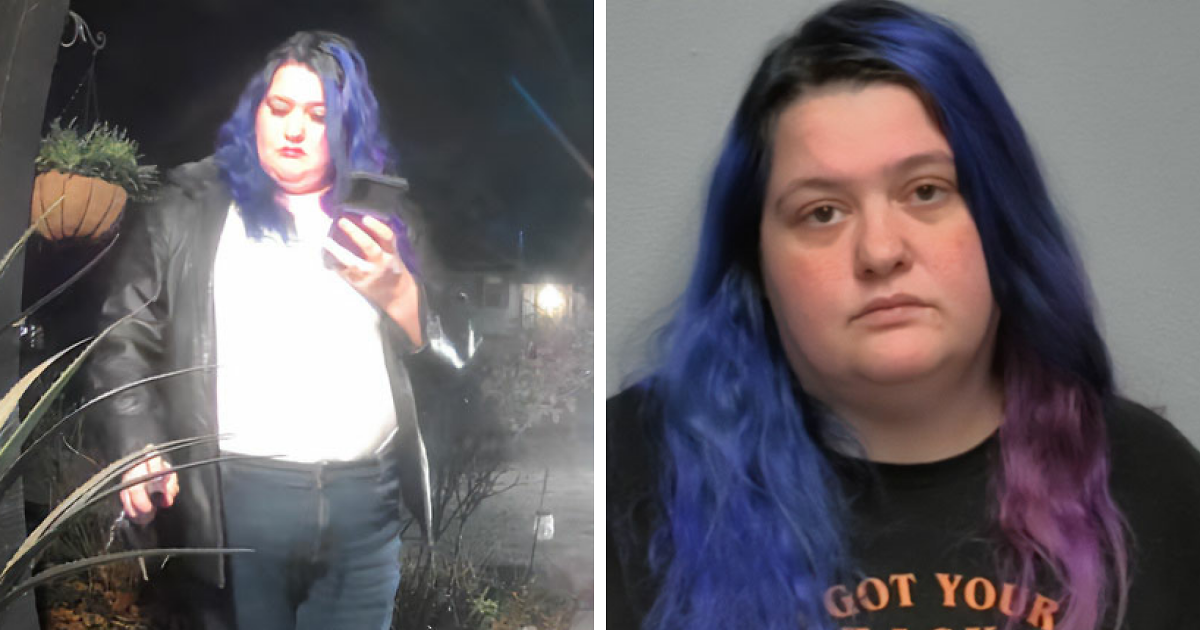
According to the Vanderburgh County Sheriff’s Office, Kourtney N. Stevenson, a Kentucky woman who was working as a DoorDash driver, was arrested after allegedly spraying a substance toward a customer’s food delivery in Evansville, Indiana. The incident reportedly happened shortly after midnight on December 7, 2025, after Mark Cardin and his wife ordered Arby’s through DoorDash. Authorities said the couple became sick after eating the food and later reviewed doorbell camera footage that appeared to show the Dasher placing the order, taking a confirmation photo, and then spraying a substance in the direction of the food from a small aerosol canister attached to her keychain.
The story quickly spread online because it hit a nerve bigger than one delivery gone wrong. Food delivery runs on trust. Customers trust restaurants to prepare the meal, drivers to transport it safely, and platforms to respond quickly when something feels off. When that chain breaks, the whole system suddenly feels less like dinner and more like a suspense movie with dipping sauce.
What Authorities Say Happened
The sheriff’s office said one of the two victims contacted law enforcement on December 7 after both he and his wife experienced burning sensations in their mouth, nose, throat, and stomachs, along with vomiting. They reviewed their doorbell camera video and saw what they believed was the delivery driver spraying something toward the order before leaving. Detectives later subpoenaed DoorDash records and identified the Dasher as Stevenson, according to the sheriff’s office release.
Local reporting from WFIE/14 News described the delivery as an Arby’s order placed just after midnight in Vanderburgh County. Cardin told reporters that his wife began choking, gasping, and vomiting after a few bites. He then looked at the bag, noticed signs that something had been sprayed or tampered with, and checked his doorbell camera footage.
That footage became the center of the case. In food delivery disputes, customers and drivers often argue over missing fries, cold burgers, bad tips, or mysterious “delivered” photos showing a porch that belongs to someone three blocks away. This was different. The allegation was not inconvenience. It was food tampering, and authorities treated it as a serious public safety issue.
The Bizarre “Spider” Excuse
According to authorities and multiple reports, Stevenson allegedly told investigators she had been trying to spray a spider near the food because she was afraid of spiders. The sheriff, however, did not appear impressed by the eight-legged defense. Officials noted that the low temperature that night was around 35 degrees, making the spider explanation difficult to accept.
Could a spider theoretically appear at the wrong place, at the wrong time, beside a fast-food bag in the cold? Nature is weird. But investigators were not writing a children’s book called The Very Suspicious Porch Spider. They were reviewing footage, symptoms, delivery records, and the sequence of events. The result was an arrest warrant.
The sheriff’s office said Stevenson first agreed to an in-person interview, then later said she would not attend. Detectives prepared an arrest affidavit, and a warrant was issued. She was arrested by the McCracken County Sheriff’s Office in Kentucky on felony charges including battery resulting in moderate injury and consumer product tampering.
What Charges Were Reported?
Authorities said Stevenson faced two counts of battery resulting in moderate injury as Level 6 felonies and two counts of consumer product tampering as Level 5 felonies. These charges are allegations, and Stevenson is presumed innocent unless proven guilty in court. Still, the case shows how seriously law enforcement can treat alleged food contamination, especially when people report illness after eating.
Consumer product tampering is serious because it attacks something basic: the belief that a person can safely consume a product after buying it. That principle matters whether the item is a sealed grocery product, a takeout bag, or a late-night sandwich delivered to a front porch. The U.S. Food and Drug Administration advises consumers who suspect food tampering at home to report it to local police and avoid eating food that looks unusual or damaged.
DoorDash’s Response
DoorDash reportedly removed the driver’s access to the platform and said it had zero tolerance for the alleged behavior. Local and national reports also said the company was cooperating with law enforcement.
DoorDash’s public safety guidance tells customers to report safety issues through customer support, online chat, or in-app prompts after an order is completed. The company also advises people to call 911 first if they are in immediate danger.
That matters because gig delivery platforms move fast. A driver can complete dozens of deliveries across a city in one night. If something dangerous happens, speed matters: save the order, keep the packaging, document what happened, contact the platform, and involve authorities when safety is at stake. The app refund button is useful, but it is not a police report.
Why This Story Went Viral
The DoorDasher pepper spray story exploded online because it combined three ingredients the internet cannot resist: a shocking video, a strange excuse, and a familiar everyday activity. Millions of people order delivery. Most have had a bag left in the wrong place, a missing drink, or fries that arrived with the emotional temperature of a wet sock. But deliberate food tampering is another universe.
The case also struck a nerve because doorbell cameras have become unofficial referees of modern life. They catch package thieves, wandering pets, awkward delivery photos, and now, allegedly, a delivery driver spraying a customer’s food. Without that footage, the couple may have had symptoms, suspicion, and a very strange bagbut far less evidence.
Food Delivery Trust Is Fragile
Most DoorDash drivers, Uber Eats couriers, Grubhub drivers, and independent delivery workers are simply trying to earn money, finish orders, and get through traffic without losing their minds. One alleged incident should not define an entire workforce. However, high-profile cases like this can damage trust quickly because food is personal. You can replace a late package. You cannot un-eat a contaminated meal.
Trust in food delivery depends on several small promises: the restaurant seals the bag, the driver transports it without interference, the app records the handoff, and the customer receives what they paid for. When those promises hold, delivery feels effortless. When one promise breaks, every paper bag suddenly looks suspicious.
What Customers Can Learn From the Case
Check the Packaging Before Eating
Before digging into a delivery order, take a quick look at the bag, seal, lids, and containers. If something smells strange, looks wet, appears opened, or seems damaged, stop. Do not taste-test mystery contamination like a detective in a low-budget crime show.
Keep Evidence If Something Seems Wrong
If you suspect tampering, keep the food, packaging, receipt, delivery photo, and any camera footage. Take screenshots inside the app. Write down the timeline while it is still fresh. Small details can matter later.
Report Safety Concerns Quickly
Contact the delivery platform, the restaurant, and local authorities when the issue involves possible contamination or illness. For serious symptoms, seek medical help. Pepper spray and similar irritants can cause burning of the eyes, skin, mouth, throat, and lungs, and ingestion or close exposure can be especially concerning. Poison Control notes that pepper spray is a lacrimator, meaning it can cause intense irritation and temporary incapacitation.
What Drivers Can Learn From the Case
For delivery drivers, the lesson is simple: never tamper with food, never joke with food safety, and never let frustration turn into a criminal investigation. Gig work can be exhausting. Customers can be rude. Tips can be disappointing. GPS can send you to a dark road named something like “Old County Road 17 1/2.” None of that justifies risking someone’s health.
Drivers also need to remember that cameras are everywhere. Doorbell cameras, dashcams, business cameras, apartment lobby cameras, and platform records can all become part of an investigation. The modern porch is basically a small courtroom with a welcome mat.
The Bigger Issue: Food Safety in the App Economy
This case is not only about one alleged act. It also raises bigger questions about the app-based food economy. Food delivery platforms have made convenience almost magical. Tap a screen, and a cheeseburger appears at your door like a greasy little miracle. But convenience also creates distance between the customer and the food chain.
Customers may never see the restaurant staff. They may never meet the driver. They may not know whether the order sat in a car, on a porch, or beside five other bags in a crowded pickup area. Most of the time, the system works. But when something goes wrong, the customer needs clear safety steps and fast support.
Restaurants can help by using tamper-evident packaging. Platforms can help by making safety reporting easier and faster. Customers can help by checking orders before eating. Drivers can help by treating every delivery like someone’s dinner, not just another ping on the app.
Why “Allegedly” Matters
Because the case involves criminal charges, it is important to use careful language. Reports say Stevenson was arrested and charged, but charges are not convictions. Courts determine guilt. That distinction matters for accuracy, fairness, and responsible publishing.
At the same time, the seriousness of the allegations is undeniable. Two customers reported becoming sick. Doorbell footage appeared to show a substance being sprayed. Detectives used DoorDash records to identify the driver. A warrant was issued. The platform removed the driver’s access. Those details explain why the story drew national attention.
Experience Section: What This Teaches Anyone Who Orders Food Delivery
Anyone who has ordered food delivery knows the small ritual. You track the driver on the map. You watch the little car icon take one wrong turn, then another, then somehow circle a gas station like it is searching for buried treasure. Finally, the app says the order is arriving. You open the door, grab the bag, say “thanks” to no one in particular, and begin the sacred ceremony of checking whether the sauce made it.
This case changes that ritual a little. It reminds customers that convenience should not mean turning off common sense. Most deliveries are perfectly normal, and most drivers are honest workers. But a quick inspection is not paranoia; it is basic food safety. Look at the seal. Check whether the bag appears wet, opened, crushed, punctured, or unusually stained. If the delivery photo shows one thing and the porch shows another, pause. Your stomach is not a laboratory.
It also teaches the value of home cameras. A doorbell camera is not required for every household, and not everyone can afford one. But for people who use delivery often, camera footage can provide useful documentation if a serious issue happens. In this case, the footage reportedly helped turn a confusing illness into a clear investigation. Without it, the customers may have been left arguing with support chat while wondering whether the food was spoiled, mishandled, or intentionally contaminated.
Another practical lesson is to keep the evidence. Many people throw away the bag immediately, especially when upset or sick. But if tampering is suspected, the packaging matters. Save it. Photograph it. Keep the receipt. Screenshot the order details. Record the time of delivery and the time symptoms began. If medical attention is needed, share the timeline with health professionals. If police become involved, those details help them understand what happened.
For families, this story is also a reminder to talk about what to do when food seems wrong. Kids and teens may eat quickly without checking packaging. Adults may assume a weird smell is just sauce, seasoning, or the ghost of fast-food regret. A simple household rule helps: if a delivery looks strange, smells unusual, or appears tampered with, nobody eats it until an adult checks it.
For drivers, the experience lesson is just as important. Delivery work can be stressful, but the food is never the place to express anger, frustration, or panic. Decline bad orders when allowed. Contact support when a situation feels unsafe. Step away from conflict. But do not touch, open, spray, damage, or “teach a lesson” through someone’s meal. Food safety is not a suggestion. It is the whole job.
In the end, this DoorDash pepper spray case is disturbing because it turns a normal modern convenience into a trust problem. Still, it should not make people assume every delivery is dangerous. It should make people smarter: inspect the bag, report serious concerns, save evidence, and remember that dinner should come with napkinsnot a police report.
Note: This article is written for publication and treats all criminal claims as allegations unless resolved by a court. Core facts were verified through the Vanderburgh County Sheriff’s Office, local reporting, national coverage, DoorDash safety guidance, FDA food tampering guidance, and poison exposure references.













