
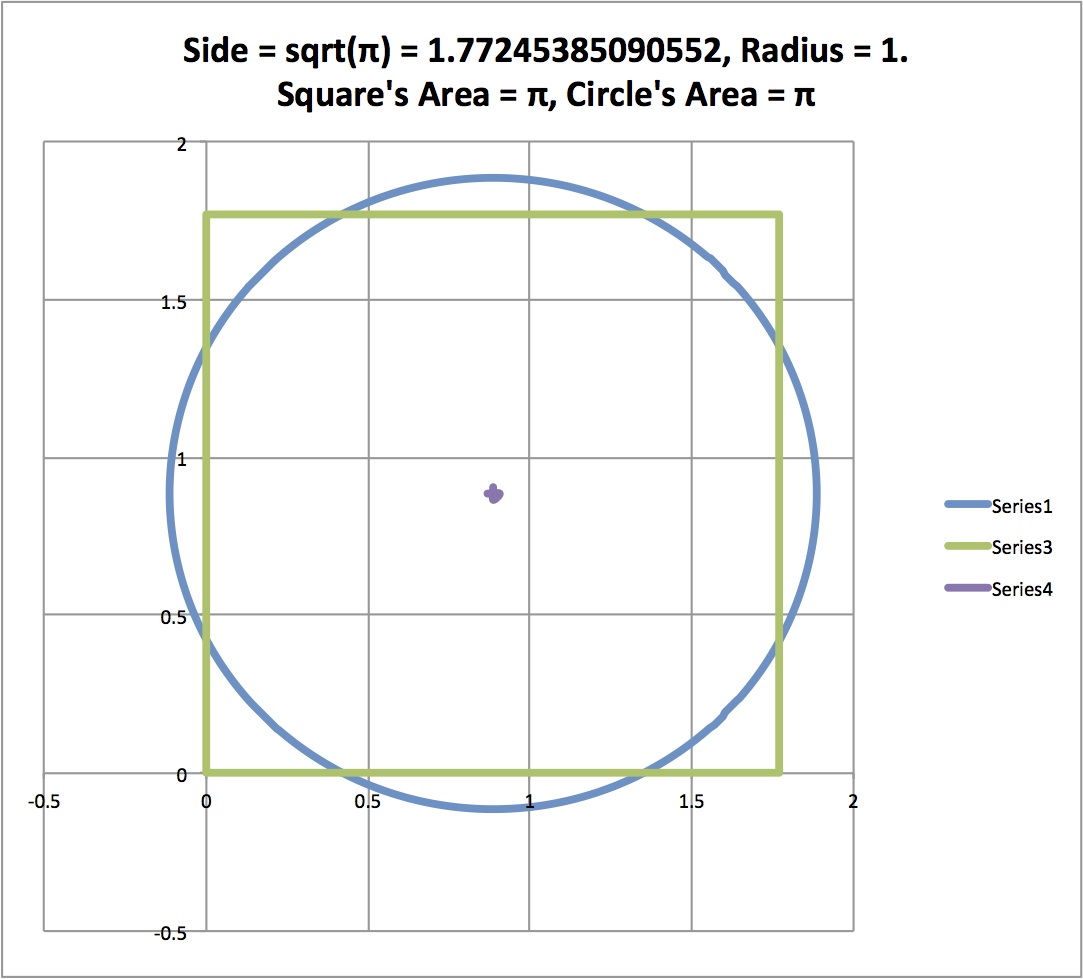
Some math problems arrive wearing a tuxedo. This is one of them. At first glance, figuring out a square and a circle with the same area sounds fancy, mysterious, and slightly likely to involve a chalkboard, a compass, and a dramatic soundtrack. In reality, it is a clean geometry problem with a very practical idea: make the space inside a square match the space inside a circle.
If you know how to compare areas, the whole thing becomes manageable. Whether you start with the square, the circle, the radius, the diameter, or the area itself, you can move from one shape to the other without breaking a sweat. Well, maybe a tiny sweat if pi shows up uninvited, but that is just geometry being geometry.
In this guide, you will learn how to determine a square and circle of equal area in 9 simple steps, including the exact formulas, quick approximations, common mistakes, and worked examples. By the end, you will be able to look at either shape and confidently build its equal-area partner.
Why Equal Area Matters
When two shapes have equal area, they cover the same amount of flat space, even if they look completely different. A square has straight sides and stubborn corners. A circle is all curve and no drama. But if their areas match, one is not “bigger” than the other in terms of surface coverage.
This idea shows up in geometry classes, design layouts, puzzle books, construction planning, manufacturing, and test problems that love making students compare unlike shapes. The key is to ignore appearances and trust the formulas.
Step 1: Know the Area Formula for a Square
The area of a square is found by multiplying the side length by itself:
Area of square = side × side = s²
So if a square has side length 8, its area is:
8² = 64
That means the square covers 64 square units. Easy. Squares are wonderfully predictable like that.
Step 2: Know the Area Formula for a Circle
The area of a circle is:
Area of circle = πr²
In this formula, r is the radius, and π is pi, approximately 3.14159. If a circle has radius 5, then its area is:
π × 5² = 25π ≈ 78.54
The circle covers about 78.54 square units. Same idea as the square: we are measuring how much space is inside the figure, not how long its boundary is.
Step 3: Set the Two Areas Equal
This is the whole game. If the square and circle have equal area, then:
s² = πr²
That equation is your golden ticket. It connects the side length of the square to the radius of the circle. Once you have this relationship, you can solve for whichever measurement you do not know.
Think of it as geometry peace talks. The square says, “I have corners.” The circle says, “I have elegance.” The equation says, “Wonderful. You still need the same area.”
Step 4: Solve for the Square When the Circle Is Known
If you know the radius of the circle and want the side length of the equal-area square, start with:
s² = πr²
Take the square root of both sides:
s = r√π
This means the side of the square is the radius multiplied by the square root of pi.
Example
Suppose the circle has radius 6.
s = 6√π ≈ 6(1.772) ≈ 10.63
So a square with side length about 10.63 units has the same area as a circle with radius 6 units.
Check it:
Circle area = π(6²) = 36π ≈ 113.10
Square area = 10.63² ≈ 113.00
The tiny difference comes from rounding. Pi loves to remind us that decimals are never fully finished.
Step 5: Solve for the Circle When the Square Is Known
If you know the side length of the square and want the radius of the equal-area circle, start with the same equation:
s² = πr²
Now solve for r:
r² = s² / π
r = s / √π
This means the radius of the equal-area circle is the square’s side length divided by the square root of pi.
Example
Suppose the square has side length 10.
r = 10 / √π ≈ 10 / 1.772 ≈ 5.64
So the equal-area circle has radius about 5.64 units.
Check it:
Square area = 10² = 100
Circle area = π(5.64²) ≈ π(31.81) ≈ 99.93
Again, rounding causes the slight difference. In exact form, the relationship is perfect.
Step 6: Use Diameter or Area When That Is What You Are Given
Sometimes a problem does not hand you the radius or the square’s side neatly wrapped with a bow. It may give you the diameter of the circle or the area of one shape instead. No problem.
If You Know the Diameter of the Circle
Since radius = diameter / 2, substitute that into the formula:
s = r√π = (d/2)√π
So if the diameter is 12:
s = (12/2)√π = 6√π ≈ 10.63
If You Know the Area Directly
If the area is already given, life gets even easier.
For a square: s = √A
For a circle: r = √(A/π)
Example: if both shapes must have area 144 square units:
Square side = √144 = 12
Circle radius = √(144/π) ≈ 6.77
Same area. Different attitude.
Step 7: Memorize the Quick Conversion Shortcuts
If you do this kind of problem often, a few shortcuts save time.
From Circle Radius to Square Side
s = r√π ≈ 1.772r
From Square Side to Circle Radius
r = s/√π ≈ 0.564s
From Square Side to Circle Diameter
d = 2r = 2s/√π ≈ 1.128s
These approximations are useful for mental math, quick estimates, and exam situations where you want to know whether your answer is in the right neighborhood. If your circle radius comes out larger than your square side in an equal-area problem, something has gone sideways.
Step 8: Avoid the Most Common Mistakes
Equal-area problems are not hard, but they do have a few classic traps.
Mistake 1: Mixing Up Radius and Diameter
The formula for circle area uses the radius, not the diameter. If you plug the diameter directly into πr², your answer will be way off.
Mistake 2: Confusing Area with Perimeter or Circumference
Equal area does not mean equal perimeter. A square and circle can cover the same space while having very different boundary lengths.
Mistake 3: Forgetting to Square the Measurement
Area formulas involve squares for a reason. If you forget the exponent, your answer will look suspiciously tiny and your math teacher will look suspiciously concerned.
Mistake 4: Rounding Too Early
Keep pi and square roots as exact as possible until the last step. Early rounding can make your final answer drift more than it should.
Step 9: Work a Full Example from Start to Finish
Let’s do a complete example in both directions.
Problem A: Find the Equal-Area Square for a Circle of Radius 9
Step 1: Write the circle area.
A = π(9²) = 81π
Step 2: Set square area equal to that value.
s² = 81π
Step 3: Solve for the side length.
s = √(81π) = 9√π ≈ 15.95
Answer: the equal-area square has side length about 15.95 units.
Problem B: Find the Equal-Area Circle for a Square of Side 14
Step 1: Find the square’s area.
A = 14² = 196
Step 2: Set circle area equal to 196.
πr² = 196
Step 3: Solve for the radius.
r² = 196/π
r = √(196/π) ≈ 7.90
Answer: the equal-area circle has radius about 7.90 units.
What About “Squaring the Circle”?
You may have heard the phrase squaring the circle. Historically, that means trying to construct, using only a compass and straightedge, a square with exactly the same area as a given circle. That classical construction problem is famous because it cannot be done exactly.
But do not let that scare you off this article. In algebra and everyday geometry, you absolutely can determine a square and circle of equal area using formulas. The old impossibility result is about strict geometric construction rules, not about finding the measurements numerically.
So yes, ancient mathematicians wrestled with it for centuries. You, meanwhile, can solve it in a few lines with algebra and a calculator. Progress is a beautiful thing.
Practical Ways to Check Your Answer
Once you calculate the missing measurement, plug it back into both area formulas. If the areas match exactly in symbolic form or closely in decimal form, you are done.
You can also use estimation. Since √π ≈ 1.772, the equal-area square side should be noticeably larger than the circle’s radius. On the flip side, the equal-area circle radius should be a little more than half the square’s side. Those quick comparisons help catch errors fast.
Final Thoughts
Determining a square and circle of equal area is really about one simple principle: set their areas equal and solve carefully. Once you know s² = πr², the rest becomes a matter of algebra, attention to units, and resisting the urge to let the diameter pretend it is the radius.
Remember the two most useful forms:
s = r√π
r = s/√π
Those two formulas do most of the heavy lifting. Whether you are solving homework, building a lesson, writing a test prep guide, or just enjoying the strange thrill of making a square and a circle agree on something, these steps will get you there.
Experiences and Real-World Learning Moments Related to Equal-Area Square and Circle Problems
One reason this topic sticks with people is that it creates a genuine “wait, really?” moment. Students often assume a circle and a square with similar widths should also have similar areas. Then they work through the numbers and discover that geometry does not care about vibes. It cares about formulas. That surprise is actually useful, because it trains people to stop guessing based on appearance and start reasoning with measurements.
In classroom settings, equal-area problems are often where learners finally see why formulas matter. A teacher can draw a square on the board, sketch a circle beside it, and ask which one covers more space. The room usually splits. Some pick the square because of the corners. Others pick the circle because it looks fuller. Then the formulas come in like the adults in the room. Suddenly, the debate becomes something students can prove.
There is also a practical design angle. People working with logos, signage, print layouts, flooring patterns, garden beds, tabletops, or decorative stonework sometimes compare circular and square shapes that need to occupy nearly the same footprint. They may not call it an “equal-area geometry conversion,” but that is exactly what they are doing. A designer switching a square badge to a circular badge, for example, may want the new shape to feel comparable in size instead of shrinking visually or taking over the whole layout like an attention-seeking moon.
Tutors also see this topic as a confidence builder. It combines familiar formulas with a slightly unusual goal, so students get to practice algebra in a way that feels less repetitive. The problem has just enough twist to be interesting but not so much that it becomes impossible. When a student correctly turns a square’s side length into a circle’s radius, checks the areas, and sees them match, that little victory feels earned.
Another common experience is realizing that exact values and decimal values behave differently. A student may write s = 6√π and feel uncertain because it looks unfinished. But in math, that exact form is often better than a rounded decimal. Later, when the decimal approximation appears, the student sees why both forms are useful: one is precise, the other is practical. That is a valuable lesson well beyond this topic.
Finally, equal-area square and circle problems make math feel historical in a fun way. Once learners hear about the old challenge of squaring the circle, the modern algebra version feels like joining a very old conversation with much better tools. You may not be using a compass and straightedge on a marble floor, but you are still exploring one of geometry’s most famous ideas. And honestly, doing it with less dust and more coffee is probably an upgrade.













