
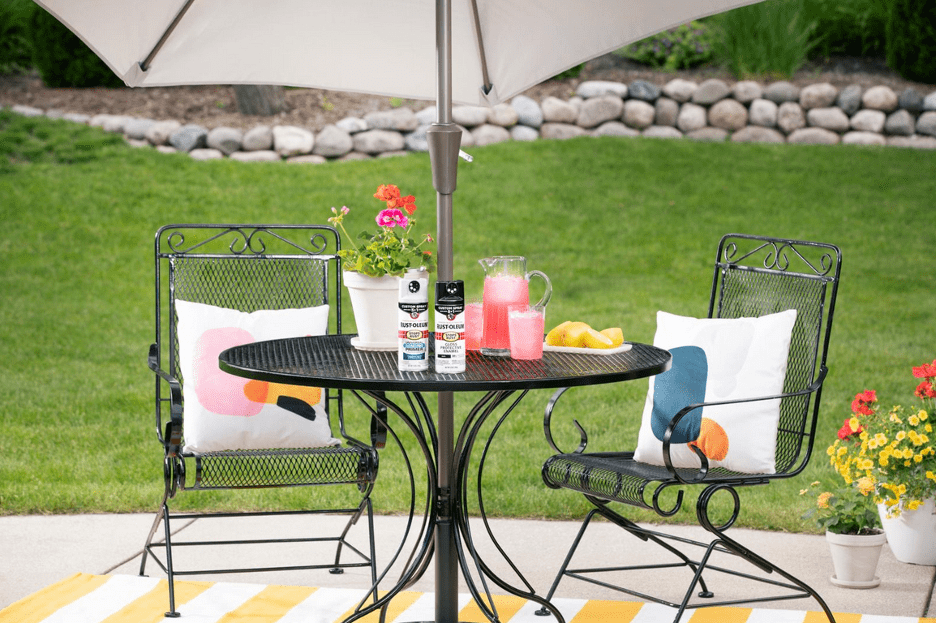
Old metal patio furniture has a special talent: it can look one thunderstorm away from the scrap yard while still being surprisingly valuable. A rusty wrought-iron chair, faded aluminum table, or neglected bistro set may need more elbow grease than money to become something buyers happily put on their deck.
That makes flipping metal patio furniture an appealing side project. Instead of building furniture from scratch, you find structurally sound pieces at yard sales, estate sales, thrift stores, online marketplaces, or even curbside, restore them, improve their appearance, photograph them well, and resell them for more than your total investment.
The secret is not simply spraying black paint over rust and hoping nobody looks closely. A profitable furniture flip starts with buying the right piece, preparing the metal correctly, using outdoor-rated coatings, fixing practical problems, and presenting the finished furniture like something worth paying for.
What Does It Mean to Flip Metal Patio Furniture?
Furniture flipping is basically real-estate flipping’s much smaller, less mortgage-heavy cousin. You purchase an undervalued item, improve it, and resell it at a higher price.
With metal patio furniture, the improvement may involve cleaning, rust removal, sanding, tightening hardware, replacing missing feet, priming, repainting, refreshing cushions, and making the piece look dramatically better than it did when you bought it.
Wrought iron, steel, cast aluminum, tubular aluminum, and metal mesh furniture can all make good candidates. The best pieces are usually ugly because of cosmetic neglect rather than serious structural damage.
A chair covered in surface rust can be promising. A chair with a frame cracked through at a load-bearing joint is another story entirely. Paint is talented, but welding itself while you sleep is not among its known abilities.
Step 1: Learn What Metal You Are Buying
Before paying for a patio set, identify what you are dealing with. Different metals behave differently during restoration.
Wrought Iron and Steel
Iron-containing furniture is generally heavier and is vulnerable to rust when its protective coating becomes damaged. A magnet will usually stick strongly to steel or iron.
Surface rust is often manageable. Deep corrosion, badly weakened joints, or metal that has rusted completely through should make you much more cautious.
Aluminum Patio Furniture
Aluminum is considerably lighter and does not develop red iron rust. However, oxidation, chalky finishes, scratches, and peeling coatings can still make it look terrible.
Aluminum also needs appropriate surface preparation. Aggressive steel wire brushing can scratch softer non-ferrous metals, so gentler sanding methods are generally preferable.
Powder-Coated Metal
Many modern outdoor furniture pieces receive durable powder-coated finishes from the factory. Powder coating offers excellent resistance to weather, wear, moisture, and sunlight, which explains why quality patio furniture can remain structurally useful even after years outdoors.
If the original coating is still firmly attached, you may only need cleaning, scuff sanding, spot treatment, and a compatible coating rather than stripping every square inch to bare metal.
Step 2: Buy Furniture With Profit Potential
The money in flipping is usually made when you buy, not when you paint.
Imagine finding a four-chair metal dining set for $40. If comparable restored sets in your area regularly sell for $150 to $250, you have room for supplies and labor. If the seller wants $175 before restoration, your exciting new side hustle has become volunteer furniture cleaning.
Before buying, inspect:
- Chair legs and load-bearing joints
- Welds and connection points
- Tabletop stability
- Swivel and rocking mechanisms
- Bolts, screws, and brackets
- Missing feet or end caps
- Deep corrosion
- Cracks or bent frames
- Torn metal mesh
- Brand or manufacturer labels
Sit carefully in chairs when appropriate and check whether they wobble. Push gently against frames to find loose joints. Look underneath seats, where corrosion and damage are easy to miss.
For identifiable products, checking Consumer Product Safety Commission recalls before resale is also smart. Patio chairs have been recalled over the years for problems including broken bases, collapsing frames, defective legs, and dangerous pinch points. A beautiful finish does not make recalled furniture safe to sell.
Step 3: Calculate Your Flip Before Starting
Do not evaluate a project based solely on purchase price. Your actual cost includes everything needed to make the furniture sale-ready.
Possible expenses include:
- Purchase price
- Degreaser or cleaner
- Sandpaper
- Wire brushes
- Rust remover or converter
- Metal primer
- Exterior metal paint
- Replacement hardware
- Furniture feet or end caps
- Cushions
- Transportation
For example, a $40 set requiring another $35 in supplies represents a $75 cash investment before considering your labor. Selling it for $150 leaves a reasonable gross spread, while selling it for $90 probably makes the project less exciting.
Keep labor in mind too. Spending six hours restoring a $20 chair that sells for $45 may produce a fantastic chair and a terrible business.
Step 4: Clean Before You Sand
Dirty furniture should be cleaned before serious surface preparation. Outdoor pieces collect oils, pollen, mildew, dust, bird droppings, spiderwebs, sunscreen residue, and years of mysterious backyard grime.
Start by removing cushions and detachable pieces. Wash the frame with warm water and a suitable household cleaner or degreaser. A soft brush helps reach decorative details and corners.
Rinse everything thoroughly.
Then allow the metal to dry completely. Painting damp iron is practically an engraved invitation for future corrosion.
For aluminum, avoid unnecessarily aggressive abrasives. For iron and steel, tougher cleaning and rust-removal tools can usually be used where necessary.
Step 5: Remove Loose Paint and Rust
Preparation is where good patio furniture flips separate themselves from the classic “I sprayed it yesterday and it’s peeling today” makeover.
Remove loose, bubbling, or flaking paint rather than coating over it. Sand rusty areas until unstable corrosion has been eliminated and the transition between old paint and exposed metal feels reasonably smooth.
Useful tools include:
- Sandpaper and sanding blocks
- Wire brushes for appropriate ferrous metals
- Detail brushes
- Scrapers
- Drill-mounted wire wheels for tougher projects
- Commercial rust removers
- Rust-converting products
You do not necessarily have to strip every project to shiny bare metal. Stable factory coating can often remain after cleaning and scuff sanding. Your goal is a clean, dry, dull, stable surface that gives the new coating something dependable to grab.
Be Careful With Unknown Vintage Paint
If you are flipping genuinely old furniture with an unknown coating, treat sanding more seriously. Older painted furniture may contain lead. Disturbing lead-containing finishes through sanding, scraping, or similar work can create contaminated dust.
For questionable vintage pieces, investigate the coating before aggressively disturbing it and follow appropriate lead-safe practices. Work-area containment, personal protection, careful cleanup, and avoiding uncontrolled dust are considerably more important than saving ten minutes with a power sander.
Step 6: Deal With Remaining Rust
Light surface rust can often be mechanically removed during sanding. More stubborn corrosion may benefit from a dedicated rust-removal product.
A rust converter is another option when small traces of firmly attached corrosion remain in difficult areas. These products chemically stabilize rust and create a surface that can be coated according to the manufacturer’s instructions.
However, rust converter is not a substitute for repairing metal that has lost structural strength. If a chair leg looks as though a determined squirrel could snap it, chemistry is not the answer.
Step 7: Repair the Furniture Before Painting
Do functional repairs while the furniture is still unfinished.
Tighten loose bolts. Replace badly corroded fasteners with compatible replacements. Add missing plastic feet or end caps. Lubricate moving parts where appropriate without contaminating surfaces that will be painted.
Inspect welded joints carefully. If structural welding is necessary, it should be completed properly before finishing.
Flippers sometimes focus so heavily on color that they forget buyers are purchasing furniture, not sculpture. A chair ultimately needs to perform its ancient and highly technical function of allowing a person to sit down without suddenly meeting the patio.
Step 8: Prime Metal Patio Furniture Correctly
Primer can improve adhesion, help isolate prepared corrosion, make color coverage more consistent, and provide another layer of protection.
Choose a primer intended for the specific metal and outdoor conditions involved. Rust-inhibiting metal primers are particularly useful for iron and steel projects with corrosion history.
Not every modern coating system requires a separate primer on every properly prepared surface. Some direct-to-metal or paint-and-primer products are designed for specific applications. Follow the technical directions for the exact system you choose rather than assuming every can works the same way.
If you do prime, use even coverage and respect the listed drying and recoating times.
Step 9: Choose the Best Paint for Metal Patio Furniture
Outdoor furniture faces rain, condensation, temperature changes, ultraviolet exposure, scratches, and people dragging it across concrete as though furniture feet were somehow optional.
Use coatings specifically rated for metal and appropriate for exterior exposure.
Common options include exterior acrylic metal coatings, alkyd coatings, direct-to-metal paints, rust-resistant enamels, and exterior spray paints formulated for metal.
Spray Paint
Spray paint is especially convenient for ornate wrought iron, expanded metal, mesh, narrow tubing, and other complicated shapes. Spraying reaches corners and edges that can become frustrating with a brush.
It can also provide a smoother-looking finish when applied correctly.
Brush or Roller
Brush-on coatings can make sense for broad surfaces, certain professional metal coatings, large projects, or situations where overspray would be difficult to control.
A small fine-finish roller combined with a quality brush can work well on tables and simple frames.
Step 10: Apply Several Light Coats
One of the easiest ways to ruin an otherwise good flip is trying to achieve complete coverage in one heroic coat.
Thick spray coats tend to run, sag, collect around corners, and dry unevenly. Several lighter coats generally produce better results.
When using aerosol paint, move smoothly past the surface rather than starting and stopping directly over one spot. Slightly overlap passes and approach intricate furniture from multiple angles.
Mesh chairs deserve special attention because it is easy to paint the front beautifully while leaving the reverse side looking like the furniture’s embarrassing family secret.
Paint the underside, legs, edges, backs, and difficult corners. Buyers notice incomplete coverage quickly when inspecting furniture in person.
Step 11: Allow the Finish to Cure
“Dry to the touch” does not necessarily mean “ready for someone to host a barbecue on it.”
Paint may feel dry while remaining relatively soft underneath. Observe the manufacturer’s handling, recoating, and full-cure instructions before stacking chairs, attaching cushions, or listing the furniture for immediate pickup.
Rushing this stage can create dents, fingerprints, stuck surfaces, or marks from cushions.
Step 12: Make the Furniture Look More Valuable
A successful flip is not necessarily the most complicated restoration. Often, modest details produce the strongest visual improvement.
Popular colors such as satin black, charcoal, dark bronze, warm white, muted green, navy, and other versatile finishes can appeal to broad groups of buyers. Textured or hammered coatings can also complement certain vintage or industrial pieces while making surface imperfections less obvious.
New cushions can transform a set, but calculate their cost carefully. Four premium outdoor cushions can consume your profit faster than four hungry teenagers near an unattended pizza.
Sometimes selling the frame without cushions is smarter. Other times, inexpensive coordinated cushions make the photographs substantially more attractive and justify a higher asking price.
Step 13: Photograph the Finished Patio Furniture Properly
Great refinishing with terrible photos is an unnecessarily difficult business model.
Stage the furniture outdoors in clean surroundings. Sweep the patio or driveway. Remove buckets, garden hoses, trash cans, children’s toys, and the half-empty bag of potting soil photobombing your masterpiece.
Use natural daylight without harsh midday glare when possible.
Photograph:
- The complete set
- Each furniture type
- The tabletop
- Seats and backs
- Decorative details
- Any visible brand label
- Any remaining imperfections
Honest close-ups build trust. If a restored table still has a small dent, show it rather than arranging every photograph with the precision of a government cover-up.
Step 14: Write a Listing That Sells
Your listing should describe what the buyer actually receives.
A useful title might be:
Refinished Black Wrought Iron Patio Dining Set – Table + 4 Chairs
Then explain that the furniture was cleaned, prepared, primed if applicable, and refinished with an exterior metal coating. Include dimensions, number of pieces, cushion information, condition, and pickup requirements.
Avoid exaggerated phrases such as “BETTER THAN BRAND NEW” unless your restoration somehow resulted in a patio chair acquiring heated seats, satellite navigation, and a manufacturer’s warranty.
How Much Can You Make Flipping Metal Patio Furniture?
Profit varies dramatically by market, season, furniture style, brand, condition, acquisition cost, and restoration quality.
Complete dining sets often provide more earning potential than individual generic chairs because buyers appreciate the convenience of purchasing an entire coordinated arrangement.
Vintage wrought-iron sets, quality cast-aluminum furniture, unusual bistro sets, and recognizable premium brands may command significantly more than inexpensive mass-market furniture.
Spring and early summer can be particularly useful selling seasons because people are actively improving decks, patios, porches, and backyards.
Your ideal flip usually combines a low acquisition price with high perceived improvement. Turning a filthy but solid $50 set into a crisp, attractive patio arrangement is generally more promising than buying a nearly perfect $300 set and attempting to squeeze another $30 from it.
Common Metal Patio Furniture Flipping Mistakes
Painting Directly Over Loose Rust
Paint cannot create a durable foundation when everything underneath it is already separating from the metal.
Ignoring the Underside
Rust frequently develops under chairs, around feet, near welds, and beneath table frames. Inspect and finish areas customers may not immediately see.
Using the Wrong Coating
Interior decorative paint is not automatically suitable for outdoor metal furniture. Match the coating to the substrate and exposure.
Buying Structurally Damaged Furniture
Cosmetic deterioration is desirable because you can fix it cheaply. Severe structural damage can require welding, fabrication, replacement components, or professional work that destroys your margin.
Ignoring Product Recalls
If the manufacturer and model can be identified, check whether safety recalls exist before reselling the furniture.
Underestimating Supplies
Intricate metal furniture has much more paintable surface area than its dimensions suggest. Mesh chairs are especially talented at consuming spray paint.
Pricing Based on Your Labor Instead of the Market
You may have spent an entire Saturday achieving the world’s most emotionally significant patio chair. Buyers still compare it with alternatives available locally.
Experience-Based Lessons From Flipping Metal Patio Furniture
After working through enough outdoor furniture restoration projects, several practical lessons become obvious. The first is that ugly furniture is not necessarily bad furniture. In fact, visually neglected pieces often create the best flips because their purchase price reflects their appearance rather than their actual structural condition.
A faded black wrought-iron set covered with light orange rust can frighten away casual buyers. To a flipper, that same rust may represent an opportunity. If the welds are solid and corrosion is superficial, a thorough cleaning, sanding, rust treatment, primer, and fresh satin finish can completely change how people perceive the set.
The second lesson is that preparation almost always takes longer than painting. Beginners frequently budget an hour for sanding and several hours for spraying. Reality can be the opposite. Painting is the glamorous portion that produces dramatic before-and-after photographs, while preparation involves patiently cleaning corners nobody will ever compliment you for.
Unfortunately, those boring corners determine whether the finish survives.
Another lesson is to inspect furniture before transporting it home. When a cheap patio set appears online, there is a temptation to race across town before another buyer grabs it. Take five minutes at pickup to examine every chair. Rust can hide below seats, underneath decorative scrollwork, and inside tubular frames. A single badly damaged chair can reduce the value of what appeared to be a complete dining set.
Sets are also easier to merchandise when every component matches. If you buy six chairs but discover two are unsafe, your impressive six-person dining set has suddenly become four chairs plus two complicated recycling decisions.
Color selection matters more than many beginners expect. Bold colors can create spectacular transformations, but neutral finishes generally appeal to more buyers. Satin black is popular for a reason: it works with numerous patio styles, hides minor imperfections reasonably well, and immediately makes many iron pieces appear intentional rather than abandoned.
That does not mean every project should become black. A small vintage bistro set can look fantastic in deep green, navy, warm white, muted blue, or a period-inspired finish. The key is considering who is likely to buy the piece rather than choosing a color solely because you found three discounted cans.
Another valuable habit is photographing the furniture before restoration. Before-and-after images are useful for your own records and can help you evaluate which projects produce the best return. Over time, you may discover that simple three-piece bistro sets sell quickly while enormous seven-piece dining sets occupy half your garage for three weeks.
Track your numbers as well. Record the purchase price, materials, replacement parts, transportation, selling price, and approximately how long the project took. A flip that generated $120 may sound excellent until you realize it consumed two full weekends. Meanwhile, a tiny side table purchased for $10, refinished using leftover materials, and sold for $55 in an afternoon may deliver a better return on your time.
Do not become emotionally attached to inventory. Furniture flippers occasionally experience a strange phenomenon in which sanding an object for several hours causes them to believe it has become a priceless family heirloom. Price according to your market and business goals, not according to the number of mosquitoes that attacked you while refinishing it.
Finally, quality and honesty build repeatable results. Fix what needs fixing. Disclose remaining defects. Do not hide structural problems behind paint. Let coatings cure properly, and clean the furniture before the buyer arrives.
A customer who picks up a sturdy, clean, accurately described patio set is far more likely to leave happy than one who discovers wet paint underneath the chair on the way home.
The best furniture flips therefore combine three skills: recognizing overlooked value, completing dependable restoration work, and understanding what local buyers actually want. Once those skills improve, rusty outdoor furniture starts looking less like junk and more like inventory waiting for a second life.
Conclusion
Learning how to flip metal patio furniture is less about performing miraculous restorations and more about making smart decisions repeatedly. Buy structurally sound furniture cheaply, identify the metal, remove unstable rust and paint, repair functional problems, use compatible exterior primers and coatings, and allow everything to cure before selling.
Equally important, know when to walk away. Severe corrosion, cracked load-bearing parts, expensive missing components, or recalled furniture can transform an apparently cheap purchase into a liability.
When you find the right candidate, however, the transformation can be remarkable. A neglected wrought-iron dining set that looked destined for disposal can become an attractive centerpiece for somebody else’s patioand a profitable weekend project for you.
Note: Restoration methods and drying times vary by metal and coating product. Follow the manufacturer’s current instructions, use appropriate ventilation and protective equipment, investigate unknown vintage coatings before sanding, and verify identifiable used furniture against current safety recalls before resale.













