
Suede is the diva of the leather world. It looks luxurious, feels velvety, and somehow manages to attract oil stains like a magnet at a bacon festival. The good news? An oil spot on suede is not automatically a farewell tour for your favorite boots, jacket, bag, or couch cushion. The trick is to act fast, stay gentle, and resist the universal human urge to panic-scrub.
If you have been searching for the best way to get oil out of suede, this guide breaks down what actually works, what to avoid, and how to rescue suede without turning it into a crunchy, discolored science experiment. Whether the culprit is cooking oil, body oil, lotion, salad dressing, or a mystery spot that appeared out of nowhere like bad Wi-Fi, these expert tips and tricks will help you clean suede the smart way.
Why Oil Is So Hard to Remove From Suede
Suede is made from the underside of leather, which gives it that soft, fuzzy texture known as the nap. That texture is beautiful, but it is also porous and absorbent. Oil does not just sit on top of suede the way it might on a glossy material. It sinks in, clings to the fibers, and darkens the surface.
That is why oil stains on suede need a different approach than mud, salt, or dry scuffs. Water alone usually does not solve the problem, and aggressive cleaners can flatten the nap, spread the stain, or leave a ring. In other words, suede needs a light touch and a little patience. Not glamorous, but effective.
What You Will Need
- A clean, dry microfiber cloth or paper towel
- Cornstarch, talcum powder, baby powder, or baking soda
- A suede brush or soft-bristled toothbrush
- A suede eraser or clean pencil eraser
- A suede-safe cleaner for stubborn stains
- Paper to stuff inside shoes or bags, if needed
- A suede protector spray for aftercare
You do not need every tool on Earth. You just need the right ones. Suede responds much better to gentle absorbents and soft brushing than to dramatic cleaning products with “industrial power” on the label.
How to Get Oil Out of Suede: Step-by-Step
1. Blot the stain immediately
If the oil stain is fresh, your first job is simple: blot. Use a dry cloth or paper towel to lift as much surface oil as possible. Press lightly. Do not rub. Rubbing pushes the oil deeper into the suede and spreads it wider, which is the opposite of helpful.
If the stain is old and already set, do not worry. Skip the dramatic sigh and move to the next step. Old stains are harder, but not always hopeless.
2. Cover the stain with an absorbent powder
This is the star move. Sprinkle a generous layer of cornstarch, talcum powder, baby powder, or baking soda directly over the oil spot. The powder helps pull oil out of the suede fibers instead of forcing you to scrub the stain around like a bad rumor.
For a small fresh stain, let the powder sit for at least one hour. For a darker or larger stain, let it sit several hours or overnight. If the oil spot is especially stubborn, a longer wait can help. The powder may start to look clumpy or oily. That is actually good news. It means the powder is doing its job.
3. Brush away the powder gently
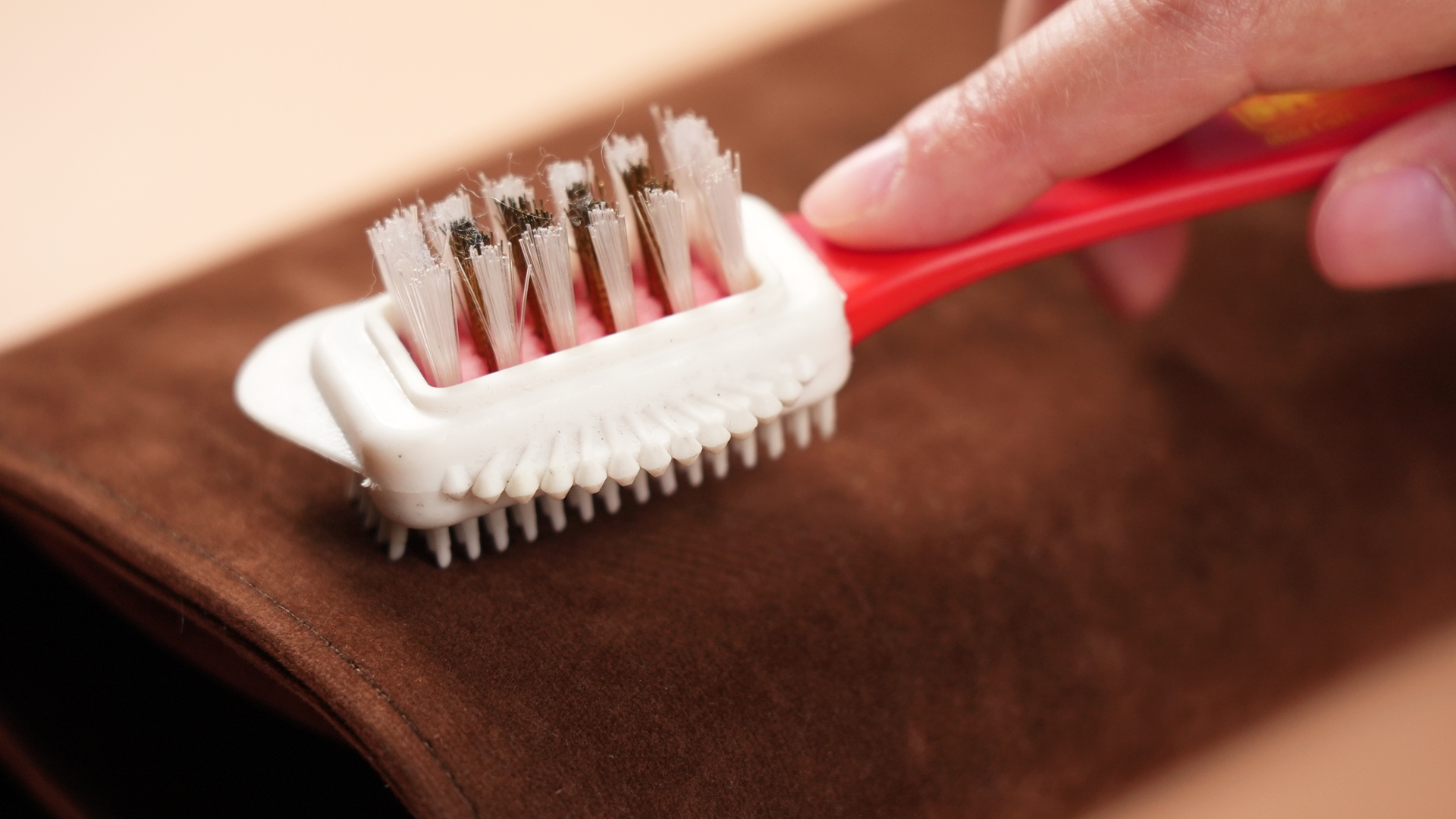
Once the powder has had time to absorb the oil, use a suede brush or soft toothbrush to remove it. Brush gently and follow the direction of the nap. You are not sanding a deck. You are restoring a delicate surface.
At this point, inspect the stain in natural light if possible. If the mark is still visible, repeat the powder treatment. Many oil stains need more than one round. Suede cleaning is often a “rinse and repeat” situation, except without the rinse.
4. Use a suede eraser for any remaining mark
If the oily darkness is mostly gone but the surface still looks slightly dull or marked, use a suede eraser. Rub gently over the dry area to lift residue and refresh the fibers. A suede eraser is especially useful when the stain has left behind a faint outline or when the nap looks matted after cleanup.
No suede eraser? A clean, colorless pencil eraser can help in a pinch. Skip pink erasers or anything dyed, because the last thing you need is a second stain showing up for the party.
5. Try a suede-safe cleaner for stubborn oil stains
If repeated powder treatments do not fully solve the problem, use a cleaner specifically labeled safe for suede or nubuck. Always spot-test it in a hidden area first. That means the inside edge of a shoe, the underside of a bag flap, or a tucked-away section of a jacket.
Apply the cleaner sparingly. Avoid soaking the material. Work in light motions, let the suede dry naturally, and then brush the nap back up. If the care label says the item is dry-clean-only, or if the item is expensive, vintage, or deeply stained, let a professional cleaner handle it. Some heroics are better left to experts.
6. Let suede dry naturally
After any cleaning step involving moisture or product, let the suede air-dry away from direct sunlight, radiators, heaters, and hair dryers. Heat can dry out the leather, warp the shape, or leave the nap looking rough. For shoes and boots, stuff them lightly with paper to help hold their shape while drying.
7. Brush to restore the nap
Once the suede is fully dry, brush it gently to restore that soft, even finish. This is what helps cleaned suede look like suede again instead of flattened velvet that has seen things.
What Not to Do
Knowing what to avoid is half the battle. Here are the biggest mistakes people make when trying to remove oil from suede:
- Do not rub a fresh stain. It spreads the oil.
- Do not soak suede with water. Too much moisture can leave rings and distortion.
- Do not blast it with heat. Air-dry only.
- Do not use regular shoe polish. It is made for smooth leather, not fuzzy suede.
- Do not use harsh all-purpose cleaners. Suede likes specialized care, not chaos.
- Do not scrub aggressively. You can damage the nap and change the texture permanently.
Best Methods by Item Type
Suede shoes and boots
Oil stains on suede footwear are the most common because shoes live adventurous lives. For footwear, powder first, brush second, eraser third, and cleaner last. If the shoes are wet after cleaning, stuff them with paper and let them dry in a ventilated room. Finish with a suede protector spray once they are fully dry.
Suede jackets
Jackets need extra care because body oils, lotion, and food splatters often hit larger areas. For small spots, use the powder method. For broad stains or heavily worn collars and cuffs, a professional cleaner is usually the smarter move. A suede jacket is not the best place to start your “I watched one video and now I am an expert” era.
Suede bags
Bags often pick up hand oils and mystery smudges from daily use. Use powder on the stain, brush gently, and keep moisture minimal. Structured bags should be supported while cleaning so they do not lose shape.
Suede furniture
For couches or chairs, vacuum first to remove dust before treating the oil stain. Then use the same absorbent-powder approach. Work on a small section at a time and avoid saturating upholstery. If the stain is large or old, upholstery professionals are worth considering.
Does Baking Soda Work on Suede?
Yes, baking soda can help with oil on suede because it absorbs grease. That said, cornstarch and talcum powder are often preferred because they tend to feel a little gentler and brush off more easily. If baking soda is what you have at home, it is a solid backup. Just use it lightly and brush carefully afterward.
Can You Use Vinegar or Dish Soap?
For oil stains specifically, absorbent powder is usually the better first move. Vinegar is more commonly used for certain water marks or surface grime, and dish soap can be risky on suede because it may leave residue or require more water than the material likes. If you do try a liquid-based method, use only a suede-safe product or test first in an inconspicuous area.
How to Prevent Oil Stains on Suede
Suede will never be a low-maintenance material, but you can absolutely make life easier:
- Apply a suede protector spray before wearing new suede items
- Reapply protector periodically, especially in heavy-use seasons
- Brush suede regularly to remove dirt before it gets ground in
- Store suede in a cool, dry place
- Avoid handling suede with greasy hands or lotion-covered fingers
- Keep suede away from kitchen splatter zones if possible
Prevention is not as exciting as stain removal, but it is cheaper and much less stressful.
When to Call a Professional
Sometimes the most expert move is knowing when to stop. Consider professional cleaning if:
- The stain covers a large area
- The suede item is expensive or sentimental
- The stain is old and deeply set
- The care label says dry-clean-only
- You already tried home methods and the color changed
- The item is vintage, delicate, or lined with special materials
A professional cleaner has products and techniques that go beyond home care, especially for garments and upholstery.
Common Questions About Getting Oil Out of Suede
Can oil stains come out of suede completely?
Often, yes. Fresh stains usually respond best. Older stains may lighten significantly even if they do not disappear 100 percent.
How long should cornstarch sit on suede?
At least an hour for small fresh stains. Several hours or overnight is often better for darker or more established spots.
Can I use baby powder instead of cornstarch?
Yes. Baby powder, talcum powder, and cornstarch are all commonly used as absorbents for oil on suede.
Will water ruin suede?
Not always, but too much water can leave marks, flatten the nap, and make stain removal harder. Minimal moisture is the safer route.
What is the best brush for suede?
A suede brush is ideal, but a clean soft toothbrush can work for light jobs. The key is gentle pressure.
Real-World Experiences and Lessons From Oil-Stained Suede
One of the most common experiences people have with suede is discovering that the stain looked tiny at first and somehow doubled in emotional impact within five minutes. A drop of salad dressing on a suede shoe, a smudge of hand lotion on a bag strap, or body oil on the collar of a suede jacket can seem minor until light hits it and the dark patch announces itself to the entire room. In real-life cleaning situations, the people who get the best results are usually the ones who slow down instead of going into scrub mode. Blotting first and using powder right away tends to make a major difference.
Another common lesson comes from people cleaning suede shoes after a dinner out, a weekend event, or a commute. They often try to wipe the stain with a damp cloth because that feels intuitive. Then the stain spreads, the area darkens, and now there is both an oil mark and a water mark. It is a frustrating experience, but it teaches an important suede rule: oil needs absorption before it needs cleaning. Powder is boring, yes, but boring wins this game surprisingly often.
People who deal with older stains usually report a different experience. The stain does not vanish after one treatment, and that can be discouraging. But repeated rounds of cornstarch or talc often improve the look more than expected. Many suede owners find that the first round removes the obvious surface oil, the second round lifts more from the fibers, and the final brushing makes the area blend far better than it did at the start. This is especially true on medium-tone suede, where texture restoration can visually hide what little discoloration remains.
Owners of suede bags and jackets often notice that oil buildup is not always caused by a dramatic spill. Sometimes it is just everyday life. Hands naturally carry oil. Necklines collect skin products. Bag handles absorb sunscreen, lotion, and summer humidity. In those cases, the “stain” may really be gradual darkening from repeated contact. The experience here is less about emergency stain rescue and more about maintenance. Gentle brushing, occasional targeted powder treatment, and a suede-safe cleaner used carefully can make a huge difference over time.
There is also the experience of learning when not to DIY. Many people do a great job on shoes and small accessories, then get overly confident and try the same approach on a vintage suede jacket or large couch cushion. That is usually when regret shows up wearing expensive shoes. For delicate garments, lined items, and large upholstery pieces, professional cleaning can save both the suede and your peace of mind.
The biggest takeaway from real-world suede cleaning is simple: success usually comes from patience, not force. The people who treat suede gently, repeat the process as needed, and let the material dry naturally tend to get the best-looking results. In other words, suede rewards calm behavior. It is basically the cat of fabrics.
Final Thoughts
If you want to know how to get oil out of suede without ruining the texture, the formula is refreshingly simple: blot, absorb, brush, repeat, and stay gentle. Start with cornstarch or a similar absorbent powder, give it time to pull out the oil, then restore the nap with a suede brush. For tougher stains, move up to a suede-safe cleaner or a professional. The biggest mistake is rushing the process or attacking suede like it owes you money.
Handled correctly, suede can recover from many oil stains and go right back to looking rich, soft, and stylish. So no, your suede is not doomed. It is just asking for a smarter cleanup strategy and maybe a little less drama.













