
One minute, you are peacefully admiring a new le circles your coffee, and disappears into the jungle of pots on your windowsill. Congratulations: your indoor garden may have fungus gnats.
These delicate, mosquito-like insects are among the most common houseplant pests. Adult fungus gnats are mostly annoying rather than destructive, but their larvae live in damp potting mix, where they feed on fungi, decaying organic material, and sometimes tender plant roots. Seedlings, cuttings, and stressed plants are especially vulnerable.
The good news is that you can usually eliminate fungus gnats without turning your living room into a pesticide testing facility. Successful fungus gnat control depends on breaking their life cycle, correcting excess moisture, catching adults, and targeting larvae when necessary.
What Are Fungus Gnats?
Fungus gnats are small, dark flies commonly associated with moist soil and decomposing organic matter. Most adults measure approximately 1/16 to 1/8 inch long. They have slender legs, long antennae, and clear or grayish wings, giving them the appearance of miniature mosquitoes that have forgotten how to bite.
Adults are weak fliers. Instead of confidently crossing a room like a housefly, they usually hover around pots, run across the soil surface, or gather near lamps and windows. You may notice them when you water a plant and several tiny flies rise from the potting mix like an irritated committee.
Fungus Gnats vs. Fruit Flies
Fungus gnats are frequently mistaken for fruit flies, but their preferred neighborhoods are different. Fruit flies are usually attracted to fermenting produce, sugary spills, garbage, and drains. Fungus gnats are more closely associated with damp potting soil.
If flies gather around bananas and the kitchen trash, suspect fruit flies. If they scatter when you move or water a houseplant, fungus gnats are the more likely culprit. This distinction matters because a vinegar trap may catch fruit flies but usually performs poorly against fungus gnats.
What Fungus Gnat Larvae Look Like
The larvae are small, slender, legless, and translucent to whitish, with shiny black heads. They are difficult to see unless you examine the upper layer of moist potting mix closely. A simple monitoring trick is to place a thin slice of raw potato on the soil. Check beneath it after three or four days. Fungus gnat larvae may gather there to feed.
Why Fungus Gnats Invade Indoor Gardens
Fungus gnats do not appear because your plants are dirty or because you have failed some secret houseplant ownership exam. They appear because your indoor garden provides a suitable breeding environment.
Female fungus gnats lay eggs in moist organic material. Damp potting mixes rich in peat, compost, fine bark, or decomposing roots can provide food and shelter for developing larvae. Common conditions that encourage infestations include:
- Watering before the upper soil has begun to dry
- Using pots without effective drainage holes
- Leaving water in plant saucers or decorative cachepots
- Growing plants in oversized containers that remain wet for long periods
- Allowing dead flowers or fallen leaves to accumulate on the soil
- Storing opened potting mix in a damp location
- Bringing infested plants indoors without quarantining them
An infestation may also originate in wet drains, condensation trays, propagation stations, or other continuously damp areas. If sticky traps near the plants stay empty while gnats continue touring the house, expand your investigation.
Understanding the Fungus Gnat Life Cycle
Fungus gnats develop through four stages: egg, larva, pupa, and adult. Depending on temperature and other conditions, a generation may be completed in roughly three to four weeks, although development can be faster in warm, consistently moist media.
The adults you see are only the visible part of the infestation. Eggs, larvae, and pupae may already be present in the soil at the same time. Killing a few flying adults does not remove the next generation waiting below the surface.
This is why fungus gnat treatment requires patience. Continue your control routine for at least several weeks after the population begins to fall. Stopping as soon as the first sticky trap looks quiet is how the sequel gets approved.
How to Get Rid of Fungus Gnats Step by Step
1. Identify and Isolate Infested Plants
Inspect every plant in your indoor garden rather than treating only the pot where you first noticed a gnat. Tap the side of each container gently or disturb the soil surface. Watch for adults running or flying from the growing medium.
Place suspected plants away from the rest of your collection when possible. Isolation will not contain every adult, but it makes monitoring easier and reduces the chance that females will lay eggs in neighboring pots.
Put a small yellow sticky trap in each questionable container. Labeling the traps with the date can help you identify which plants are producing the most adults.
2. Let the Soil Surface Dry Appropriately
Moisture management is the most important part of fungus gnat control. Larvae need damp growing media, particularly near the soil surface. Allowing the upper inch of potting mix to dry between waterings makes the environment less suitable for egg laying and larval survival.
Do not interpret this advice as permission to dehydrate every plant in the house. Ferns, calatheas, seedlings, and other moisture-sensitive plants may suffer if allowed to become excessively dry. Adjust the drying period to the needs of each species.
Instead of watering according to the calendar, test the soil. Insert a finger into the upper inch, use a wooden skewer, or judge the weight of the pot. Water when the plant needs it, not simply because Tuesday has arrived.
3. Improve Drainage
Make sure every container has an unobstructed drainage hole. After watering, empty the saucer or outer decorative pot so the plant is not sitting in runoff.
If a container remains wet for many days, the pot may be too large, the mix may be too dense, or the plant may be receiving too little light. Compacted soil can also create waterlogged pockets around the roots.
For appropriate plants, consider repotting into a better-aerated mix containing materials such as bark, perlite, or pumice. The ideal recipe depends on the species, but the goal is a medium that holds enough moisture without behaving like a swamp.
4. Try Bottom Watering
Bottom watering can help keep the upper surface drier while delivering moisture to the root zone. Place the pot in a shallow container of water and allow the growing medium to absorb moisture through the drainage holes. Remove the pot after the soil has taken up sufficient water and let it drain completely.
This method is not a cure by itself, and the surface may eventually become moist through capillary movement. However, it can support a broader fungus gnat treatment plan, especially when combined with sticky traps and careful watering intervals.
5. Catch Adult Gnats With Yellow Sticky Traps
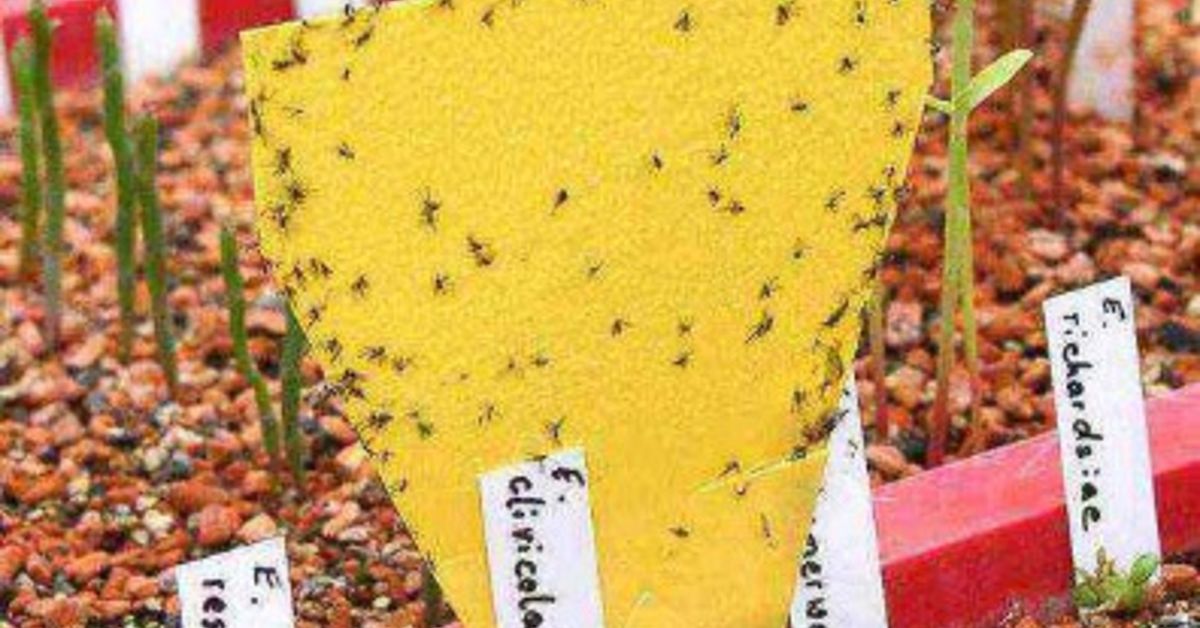
Yellow sticky traps attract and capture flying adults. Place them close to the soil or just above the plant canopy. Small traps on stakes are convenient for individual houseplants, while larger cards may work better in propagation areas or indoor grow tents.
Sticky traps serve two purposes. They reduce the number of egg-laying adults and help you measure whether the infestation is improving. Replace traps when they become dusty, crowded, or no longer sticky.
Keep traps away from curious pets, long hair, and loose sleeves. Nothing adds dignity to pest control like walking through the house with a yellow card attached to your elbow.
6. Remove Decaying Organic Material
Pick up dead leaves, fallen blossoms, moss, and other decomposing debris from the potting mix. Clean plant shelves, humidity trays, saucers, and propagation equipment. Wash tools and containers before reusing them.
Avoid adding unfinished compost, tea leaves, coffee grounds, or kitchen scraps directly to indoor containers. These materials may remain wet and provide additional food for fungi and fungus gnat larvae.
7. Use Bti to Target the Larvae
For persistent infestations, consider a product containing Bacillus thuringiensis subspecies israelensis, commonly abbreviated as Bti. This naturally occurring bacterium targets the larval stages of certain flies, mosquitoes, and gnats.
Bti is generally applied to the growing medium as a soil drench. It affects fungus gnat larvae but does not kill eggs, pupae, or flying adults. Consequently, repeated treatments may be required as additional eggs hatch.
Choose a product whose label permits the intended use, and follow its mixing, application, storage, and retreatment instructions exactly. Product formulations vary, so a homemade concentration copied from an unrelated online comment is not a reliable substitute for the label.
8. Consider Beneficial Nematodes
Beneficial nematodes can provide biological control in larger collections, grow rooms, and propagation setups. Steinernema feltiae is commonly used against fungus gnat larvae because it is adapted to searching for insect hosts in moist growing media.
These microscopic organisms must be alive when applied. Storage temperature, soil moisture, water quality, and application conditions can affect performance. Buy from a reputable supplier, check the expiration information, and follow the package directions carefully.
Nematodes are often most practical when many pots require treatment at once. For two small houseplants, changing the watering routine and using sticky traps may be considerably simpler.
9. Repot Severely Infested Plants
If the soil remains compacted, sour-smelling, or heavily infested despite treatment, repotting may be the fastest solution. Remove as much old mix as you can without causing excessive root damage. Trim dead or rotting roots with sanitized tools.
Wash the container thoroughly or replace it. Replant in fresh, commercially prepared potting mix suited to the plant. Do not reuse the infested soil elsewhere in your indoor garden.
Repotting is stressful, so it should not be the automatic first response to three flying gnats. Reserve it for serious cases, failing plants, or growing media that clearly need replacement.
10. Discard Plants That Cannot Be Saved
Occasionally, a low-value plant becomes such a productive gnat factory that keeping it is no longer worth the effort. Seal the plant and its soil in a bag before carrying it through the house. Clean the surrounding area and continue monitoring nearby pots.
This may feel ruthless, but indoor gardening sometimes requires executive decisions. The plant served bravely. The gnats do not inherit the windowsill.
Fungus Gnat Remedies That May Not Work as Expected
Apple Cider Vinegar Traps
Vinegar traps are popular because they work reasonably well for fruit flies. Fungus gnats, however, are more attracted to moist growing media and light than to fermenting fruit odors. A vinegar trap may catch an occasional insect, but yellow sticky cards are generally more useful for monitoring fungus gnats.
Spraying the Air
Spraying insecticide into the room does not address larvae in the soil and can create unnecessary exposure for people and pets. If a pesticide is used, it must be labeled for indoor use and for the intended site. Apply it only as directed.
Hydrogen Peroxide Soil Drenches
Diluted hydrogen peroxide is frequently promoted online as a universal fungus gnat cure. Results can be inconsistent, and excessive concentrations may damage roots or disrupt organisms in the growing medium. Established controls such as moisture correction, Bti, sticky traps, sanitation, and properly selected biological agents are more predictable.
Decorative Gravel Alone
A coarse surface layer may discourage egg laying by helping the surface remain dry, but decorative stones can also make it difficult to judge soil moisture. Fine materials may stay damp or become mixed into the potting medium. Treat a top dressing as a supporting measure, not a replacement for proper watering.
Cinnamon, Matches, and Other Internet Folklore
Household remedies may sound appealing because they are inexpensive and already sitting in a cabinet. Unfortunately, sprinkling cinnamon, inserting matchsticks, or surrounding a plant with strongly scented ingredients does not reliably interrupt every stage of the fungus gnat life cycle.
How Long Does It Take to Eliminate Fungus Gnats?
A light infestation may decline noticeably within one or two weeks after you correct overwatering and install sticky traps. Complete control commonly takes three to four weeks or longer because eggs, larvae, pupae, and adults can overlap.
Large plant collections may require repeated Bti or nematode applications, continued sanitation, and ongoing monitoring. Do not judge success solely by whether you see one adult gnat. A few insects may continue emerging while the remaining life stages are being eliminated.
Look for a steady decline in the number of adults caught each week. When sticky traps remain nearly empty through an entire life-cycle period, the infestation is probably under control.
How to Prevent Fungus Gnats From Returning
- Quarantine new houseplants for two to four weeks.
- Place a sticky trap near new plants during quarantine.
- Inspect potting mix before bringing it into the growing area.
- Store unused soil in a sealed, dry container.
- Use containers with functional drainage holes.
- Empty saucers and cachepots after watering.
- Remove dead plant material promptly.
- Increase light or airflow when appropriate for the plant.
- Check moisture before watering instead of following a rigid schedule.
- Clean pots and tools before reusing them.
One yellow sticky trap left discreetly among a large houseplant collection can act as an early-warning system. It may not deserve a place in an interior design magazine, but neither does a cloud of gnats above the fiddle-leaf fig.
Experience-Based Notes From a Realistic Indoor Garden Cleanup
The following is a composite scenario based on common indoor-gardening experiences, not a claim of personal hands-on plant care.
Imagine an indoor gardener with approximately 25 plants grouped around two bright windows. The collection includes pothos, philodendrons, calatheas, succulents, herbs, and several trays of young cuttings. The first sign of trouble is not a damaged plant. It is a tiny fly landing on a laptop screen every evening.
The gardener initially places bowls of apple cider vinegar near the plants. After three days, the bowls contain one unfortunate fruit fly, a small amount of dust, and no meaningful reduction in gnats. Meanwhile, yellow sticky traps reveal that the heaviest activity is coming from the propagation trays and one large decorative planter.
The planter has no drainage hole. It contains a smaller nursery pot, but nearly an inch of runoff water has accumulated inside the outer container. The propagation trays are also being misted twice a day, keeping the surface permanently damp. In other words, the gnats have not merely found a home. They have found a luxury resort with complimentary breakfast.
The gardener begins by emptying every saucer and cachepot. Dead leaves are removed, and the plant shelf is cleaned. Watering stops until each plant is assessed individually. The succulents are allowed to dry substantially, while the calatheas receive more cautious treatment so they do not wilt severely.
Yellow traps are placed horizontally near the worst pots and vertically among the foliage. Within the first week, dozens of adult gnats are captured. This looks alarming, but it is useful information: the traps are removing reproductive adults and identifying the main breeding containers.
The gardener then applies a properly labeled Bti soil treatment to the affected pots and propagation trays. The application is repeated according to the product directions because the first treatment cannot kill unhatched eggs or pupae. The cuttings are watered from below when possible, and unnecessary misting of the growing medium is discontinued.
After ten days, adults are still present, but trap counts are clearly lower. This is the stage when many people assume the treatment has failed. In reality, some adults are emerging from pupae that were already present before the cleanup began. The gardener continues rather than switching randomly to cinnamon, dish soap, peroxide, and three other remedies in the same afternoon.
By the third week, only a few adults appear on the traps. The large decorative planter is repotted because its old mix remains wet for more than a week and smells stale. The replacement container has drainage, and the new mix contains more bark and perlite.
At the end of the fourth week, the traps are nearly empty. More importantly, the gardener has learned that fungus gnats were a symptom of the watering system, not simply an invading insect. Sticky traps reduced the adults, and Bti targeted the larvae, but correcting drainage and moisture prevented the infestation from rebuilding.
The most valuable lesson is consistency. Fungus gnat control is rarely about finding one dramatic overnight remedy. It is about applying several ordinary steps long enough to interrupt the entire life cycle. The process is not glamorous, but neither is accidentally inhaling a gnat while admiring your basil.
Final Thoughts
To get rid of fungus gnats in an indoor garden, begin with the condition that supports them: persistently moist growing media. Let the soil surface dry as much as the plant safely allows, improve drainage, remove decomposing debris, and use yellow sticky traps to catch and monitor adults.
For stubborn infestations, target the larvae with a properly labeled Bti product or beneficial nematodes such as Steinernema feltiae. Continue treatment and monitoring for several weeks so newly emerging generations do not restart the population.
Once the infestation is gone, maintain good watering habits and quarantine new plants. Your indoor garden should feel like a peaceful green retreatnot an airport for tiny, badly organized mosquitoes.










