
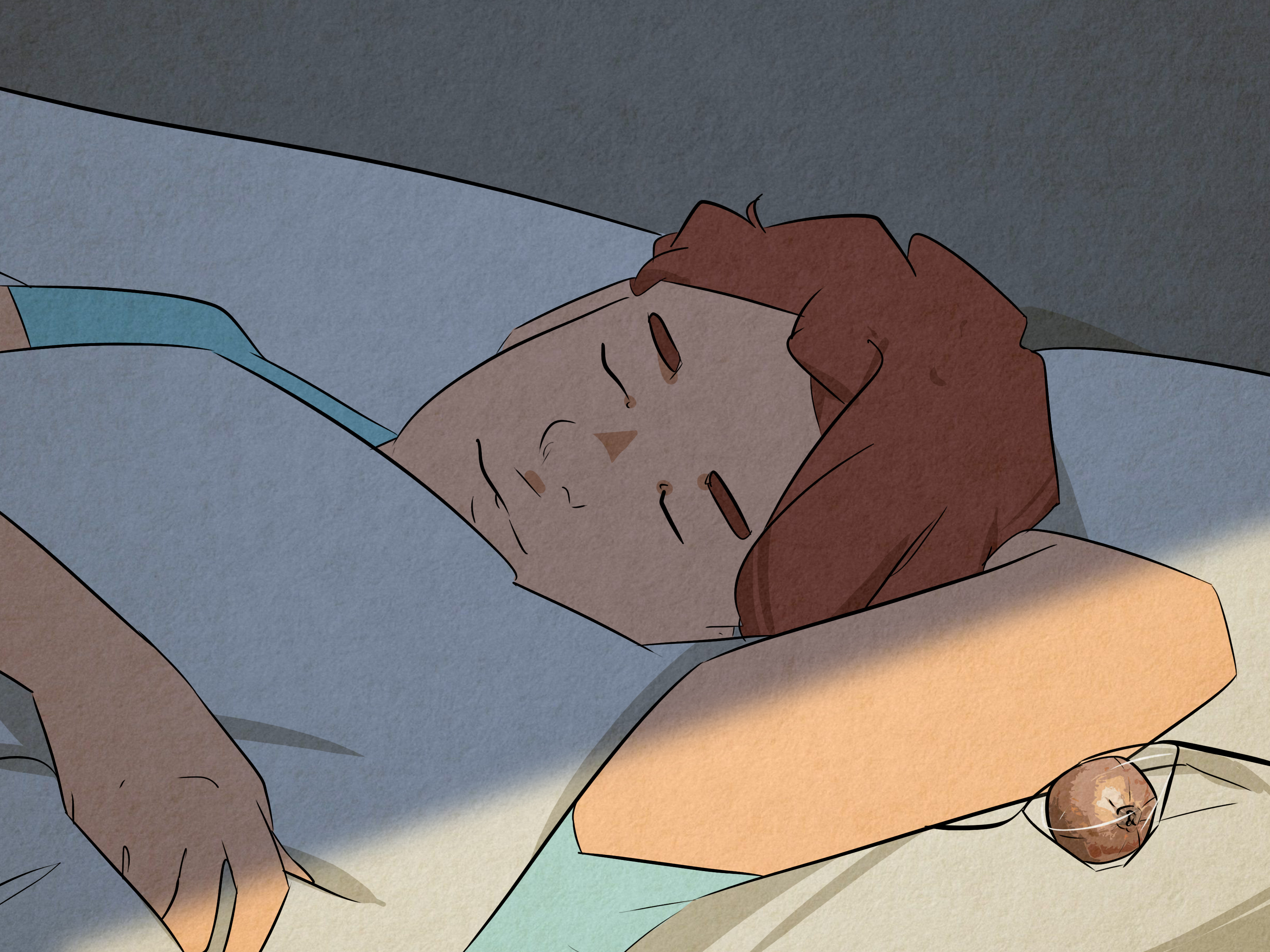
You’re here for the classic “onion + pins = instant doom” recipe. I get it. It’s dramatic. It’s cinematic.
It’s also the kind of thing that gets people arguing on the internet at 2 a.m. while clutching a grocery bag
like it contains forbidden knowledge.
But I’m not going to teach you how to harm, curse, hex, jinx, or otherwise spiritually drive-by somebody.
What I can do is break down where this idea comes from, why it persists, what parts are folklore vs. fact,
and how to use the same tools (an onion and safety pins) in a safer, non-harmful way: for boundaries, protection,
and getting your own peace back.
The Not-So-Fun (But Necessary) Part: Ethics & Safety
A “hex” is commonly understood as an act of malevolent magicbasically, a spiritual wish for someone to have a bad time.
Even if you treat witchcraft as metaphor, the intent matters: plotting someone’s downfall tends to keep you marinating
in the same stress, anger, and obsession you’re trying to offload.
Safety notes (because pins + produce = chaos potential)
- Don’t put pins where kids or pets can reach. Curious mouths don’t care about your spiritual boundaries.
- Dispose carefully. Pins go in a sealed container before trashing. No “loose pin roulette.”
- Don’t use folk remedies as medical care. An onion is great in salsa. It’s not a substitute for a clinician.
- Don’t use rituals to harass or threaten. If conflict is escalating, choose real-world support.
Think of the rest of this article as: “Yes, this tradition exists in various forms. No, you shouldn’t weaponize it.
Here’s how to use the symbolism to protect your peace instead.”
Where the Onion-and-Pin “Hex” Idea Came From
The onion has been a superstar in folk belief for centuries because it’s intense: strong smell, layered structure,
and a reputation in traditional home remedies. Across different traditions, onions were sometimes treated like a
“house filter” for bad luck, illness, or spiritual nastinesshung near doors, placed in rooms, or used in symbolic
“drawing out” rituals.
Onions: the tear-jerking talisman
In folklore, onions show up in a few recurring roles:
- Protection: The onion’s pungency made it feel like a natural “ward.” If it can clear a room, it can clear a viberight?
- Absorption: A long-running belief says cut onions “absorb” sickness or negativity from the air.
- Divination and signs: Onions appear in weather lore and omen-style folk practices (because humans love predicting winter like it’s a sport).
Modern reality check: the “onions absorb germs/toxins from the air” claim is popular, but it’s widely disputed by health sources.
Still, the belief sticks because it’s simple, vivid, and feels like something your great-aunt would swear is “what kept our family alive.”
Safety pins: small metal, big symbolism
Pinsespecially safety pinscarry symbolism that’s almost too perfect for folk magic:
they fasten, secure, close, and “hold things together.” In different cultural contexts, pins also show up in protective
practices against the “evil eye” (the idea that envy or a hostile gaze can bring misfortune).
So when you combine onion (absorb/ward) + pin (bind/protect/secure),
you get a tidy folk formula that people interpret as spiritual defense… or, in its darker retellings, a “hex.”
How this turns into a “hex” story
Folklore evolves like a game of telephone played at a haunted farmer’s market. A protective charm becomes a curse rumor.
A “keep bad energy out” practice gets retold as “make bad energy happen to them.” Add social media and suddenly
everyone has a cousin who “totally saw it work.”
Why It “Makes Sense” in Folk Magic
A lot of spellcraft traditions (and plenty of everyday superstitions) lean on a concept often called
sympathetic magic: the idea that symbols and representations can influence reality because humans
treat meaning as a kind of power.
Three folk-magic mechanics at play
-
Correspondence: onions are associated with layers, protection, and “drawing out.”
Pins are associated with binding, fastening, and “locking in” an intention. -
Contagion/connection (in belief, not biology): people sometimes treat an object as “linked” to a person or situation
through intention, proximity, or representation. -
Psychology: rituals create a sense of closure and control. Sometimes that alone changes behavior,
decisions, and boundariesaka the stuff that actually determines outcomes.
If you’re reading this because someone wronged you, here’s the honest truth: the most reliable “magic” is the kind that
changes what you tolerate, what you choose, and what you reinforce. That’s why the safest version of onion-and-pin work
focuses on your boundariesnot on harming someone else.
A Safer Alternative: Onion & Safety Pins Boundary Ritual
This is a non-harmful protection ritual that uses the same iconic ingredients (onion and safety pins)
but aims at one target only: your stress and your space. It’s part symbolism, part mindfulness, part
“I’m done letting this live rent-free in my head.”
What you’ll need
- 1 onion (any kindwhite, yellow, red; pick the one that looks like it means business)
- 3 to 9 safety pins (small is fine; just make sure they’re clean and functional)
- A small plate or bowl
- Paper + pen
- Optional: salt (for a classic “cleanse” symbol), and a glass of water (to ground yourself)
Step-by-step (protective, not punitive)
-
Name the problem without naming a person.
On your paper, write the situation you want to stop feeding: “endless arguing,” “feeling unsafe,” “obsessing,”
“people-pleasing,” “doom-scrolling their profile,” etc. -
Set the onion on the plate.
Say (out loud or in your head): “This represents the boundary between me and what drains me.” -
Open each safety pin and close it with an intention.
With each pin, state a boundary in plain English. Examples:- “I do not engage after 9 p.m.”
- “I block what I can’t fix.”
- “I don’t argue with people committed to misunderstanding me.”
- “I choose calm over comeback lines.”
Then close the pin. You’re “locking” the boundarynot locking a person into suffering.
-
Place the pins around the onion.
Think of them like a tiny fence: not a trap, not a weaponjust a perimeter. -
Fold the paper and place it under the plate.
This is the “I’m setting this down” move. -
Leave it overnight somewhere safe.
A high shelf, a quiet corner, or anywhere pets won’t treat it like a new toy. -
In the morning, do one real-world action.
Send the boundary text. Unfollow. Schedule the therapy consult. Move the lock. Cancel the “maybe I’ll go” plan.
Ritual without action is just arts and crafts. -
Dispose respectfully.
Remove pins carefully, store them, and toss the onion. If you want symbolism:
rinse the plate and imagine the stress going down the drain with the onion smell.
Why this works better than a “hex”
Because it aims your energy at what you can control: your boundaries, your attention, your choices. That’s not just safer
it’s also more effective in the world where consequences are real and onions do not have Bluetooth.
If You’re Angry: 7 Practical Moves That Beat a Hex
If you’re tempted to hex someone, you’re probably dealing with pain, betrayal, or powerlessness. That’s human.
Here are options that won’t boomerang into more drama:
1) The “mute + move” method
Block, mute, unfollow. Not to punish thembecause your nervous system deserves less input. Peace is an algorithm too.
2) Document, don’t doom
If the issue involves harassment, workplace conflict, or threats, keep records. Screenshots beat spells in court.
3) Replace rumination with a boundary script
Write a two-sentence script and stick to it. Example: “I’m not available for this conversation. If it continues, I’m leaving.”
4) Ask: “What do I want back?”
Time? Respect? Safety? Closure? A hex rarely delivers those. A plan might.
5) Use “return to sender” as a mindset, not an attack
Translate it into: “I refuse to carry what isn’t mine.” Then put it down. Repeatedly.
6) Recruit your allies
Friends, HR, a mediator, a counseloryour support network is basically the grown-up version of a protective circle.
7) Choose repair where possible
Sometimes the best “spell” is a hard conversation with clear consequences and a willingness to walk away.
FAQ: Onion Hex Myths, Pins, and What’s Actually Real
Is the onion-and-safety-pin hex “real”?
It’s real as folklore: a set of beliefs and practices people pass down. Whether it’s real as a supernatural mechanism
depends on your worldview. What’s measurable is that ritual can change attention, emotions, and behaviorwhich changes outcomes.
Do onions actually absorb germs or toxins?
The “cut onion absorbs germs/toxins from the air” claim is popular, but many modern health sources dispute it.
Onions have interesting compounds, surebut that’s not the same as acting like a magical air purifier.
Why safety pins specifically?
Symbolically, they’re perfect: they close, secure, and fasten. In some traditions, pins are also used as protective charms
(often discreetly worn or pinned inside clothing) against envy or “bad eye” energy.
Is this the same as voodoo dolls or poppets?
Not exactly. Poppets are effigies used in forms of sympathetic magicsometimes for healing or protection, sometimes for harm.
The onion-and-pin practice is more often described as a household charm or folk superstition, though modern retellings blur lines.
What if I still want revenge?
Then name it honestly: you want them to hurt like you hurt. That feeling is valid. The strategy is optional.
If you want a ritual, aim it at release: “I let go of the need to punish. I reclaim my energy.” That’s not saintly.
It’s efficient.
Experiences: What People Say Happens (and Why)
Let’s talk about the “I tried it and it worked” storiesbecause they’re everywhere. You’ll hear versions like:
“I stuck pins in an onion, put it on the windowsill, and the toxic coworker finally stopped bothering me,” or
“After I did the onion thing, the neighbor moved out,” or the always-iconic, “My ex texted me at 3 a.m. and I knew
the onion had spoken.”
Here’s the pattern behind many of these experiences: the ritual becomes a turning point.
People do it when they’re fed upwhen they’ve reached the emotional tipping point that makes them act differently.
They block. They say no. They stop responding. They stop “being nice” in a way that’s actually self-abandonment.
The onion and pins become a symbol of that internal shift. And the world responds to the shift.
Another common report is a sense of relief: “I slept better,” “I felt calmer,” “I stopped thinking about them for a day.”
That’s not nothing. Even skeptics admit rituals can work like a psychological containeryour brain loves a clear “before/after.”
If you’ve been looping in anger, doing a concrete action can signal closure. It’s why people love deleting old texts,
rearranging furniture, or cleaning the kitchen like they’re auditioning for a detergent commercial.
Some people also report “signs” the next day: the onion smells stronger, looks dried out, or gets gross quickly. (It’s an onion.
It’s doing onion things.) But the interpretation becomes meaningful: “It absorbed a lot,” or “That negativity was intense.”
Meaning-making is a very human feature, not a bug. The key is not to let the symbolism replace reality:
if someone is unsafe, you still need real protections, real boundaries, and sometimes real authorities.
There’s also the social side. When you do a ritual, you often tell a friend. Friends then hype you up:
“You’re not taking that anymore!” That encouragement matters. People act differently when they feel supported.
In that sense, your “spell” might be less about onion magic and more about finally stepping into a version of yourself
who enforces consequences.
And yesoccasionally people report that things got messier first: sudden drama, a surprise confrontation, an awkward run-in.
That can happen when you set boundaries. Pushback is common when you stop being convenient. It’s not proof of a curse;
it’s proof that boundaries change dynamics. The protective way to handle that isn’t doubling down on revenge rituals
it’s planning: what you’ll say, what you’ll do, and what you’ll no longer negotiate.
If you want the “spooky” takeaway without the harm: the onion-and-pin tradition works best as a personal signal.
A tiny ceremony that says, “I’m done.” Then you back it up with one brave, boring, real-life step. That’s the part
people forget to put on TikTok.
Conclusion
The onion-and-safety-pin “hex” is a classic bit of folklore: pungent symbolism, protective pin energy, and a story that spreads
because it’s vivid (and a little deliciously creepy). But if you’re tempted to use it to harm someone, that’s your cue to zoom out:
what you really want is relief, justice, or controlthings you’re far more likely to get through boundaries, support, and action.
Use the onion and safety pins as a boundary ritual, a protection charm, or a personal reset. Let the onion symbolize what you’re releasing.
Let the pins symbolize what you’re securing: your time, your peace, and your standards. Then do the unglamorous magicfollow through.













