
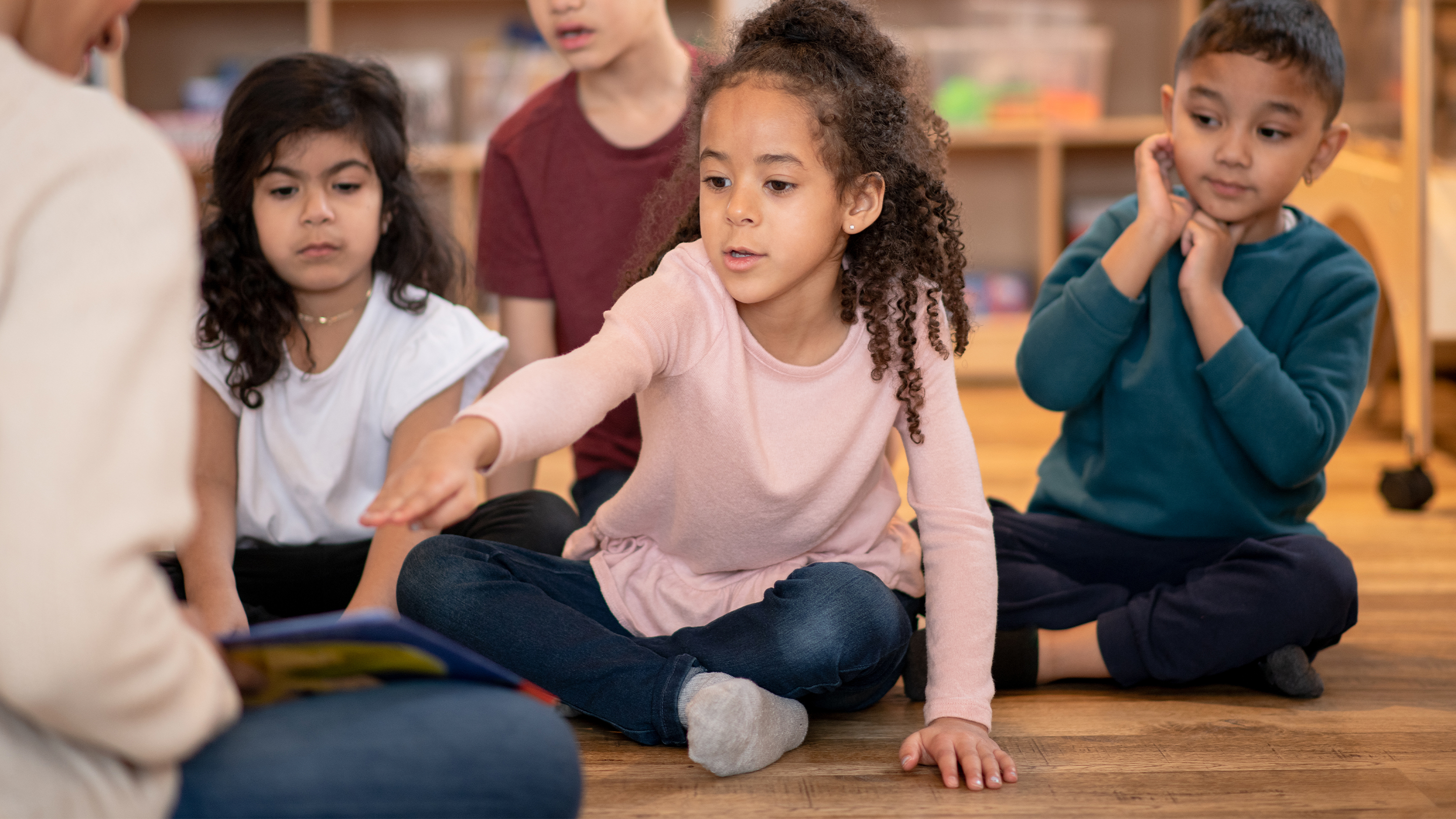
Children today live in a world that speaks fluent “image.” Before many young learners can decode a paragraph, they can already interpret a stop sign, recognize a favorite app icon, follow picture directions, and judgeoften with impressive confidencewhether a character in a picture book is happy, sneaky, worried, or about to make a spectacular mess. That is visual literacy at work.
Visual literacy is the ability to read, interpret, evaluate, and create meaning from images. In Pre-K and elementary school instruction, it is not an extra decoration sprinkled on top of “real” literacy. It is part of how children build vocabulary, comprehension, critical thinking, storytelling, observation skills, background knowledge, and confidence. A picture may be worth a thousand words, but in the classroom, it can also launch a thousand questions.
When teachers intentionally incorporate visual literacy, students learn to slow down and notice details. They practice explaining their thinking with evidence. They connect images to words, ideas, emotions, numbers, science concepts, historical events, and personal experiences. Best of all, visual literacy gives every child an entry point, including emergent readers, multilingual learners, students with disabilities, and children who may not yet feel comfortable jumping into text-heavy work.
What Is Visual Literacy in Early Childhood and Elementary Education?
In simple classroom terms, visual literacy means teaching students to “read” images the way they read words. That includes photographs, illustrations, charts, maps, diagrams, picture books, artworks, videos, comics, infographics, icons, symbols, and digital media.
For a Pre-K student, visual literacy might sound like, “I see a dog hiding under the table. I think it is scared because its ears are down.” For a third grader, it may become, “The map uses darker colors to show places with more rainfall.” For a fifth grader, it might grow into, “This advertisement uses bright colors and a smiling child to make the product seem fun and trustworthy.”
The goal is not to turn every five-year-old into an art critic wearing a tiny scarf. The goal is to help children observe carefully, interpret thoughtfully, support ideas with evidence, and create visual messages with purpose.
Why Visual Literacy Matters in Pre-K and Elementary School
Visual literacy supports the same big skills educators already care about: reading comprehension, oral language, writing, inquiry, media literacy, creativity, and critical thinking. Young children naturally pay attention to pictures. Teachers can use that interest as a bridge into deeper learning.
It Builds Language and Vocabulary
Images give children something concrete to talk about. A photograph of a rainy playground can introduce words such as drizzle, puddle, soggy, reflection, shelter, and forecast. A picture book illustration can help children describe character traits, emotions, actions, and settings. For multilingual learners, images lower the language barrier because students can point, gesture, describe, and gradually add academic vocabulary.
It Strengthens Reading Comprehension
In early literacy, illustrations are not just pretty borders around the text. They carry meaning. Students can use images to predict what may happen next, infer how a character feels, identify the setting, sequence events, and notice details that the words do not directly explain.
It Encourages Evidence-Based Thinking
One of the most powerful classroom questions is also one of the simplest: “What do you see that makes you say that?” This question teaches students to support their ideas with visual evidence. Instead of saying, “The girl is nervous,” a student learns to say, “The girl is nervous because her hands are covering her mouth and her eyes are wide.” That habit transfers beautifully to reading, writing, science observation, and social studies inquiry.
It Prepares Students for a Media-Saturated World
Children are surrounded by screens, videos, emojis, signs, logos, thumbnails, and images designed to catch attention. Elementary students need age-appropriate practice asking who made a visual, what it shows, what it leaves out, and how it makes the viewer feel. Visual literacy becomes the early foundation for responsible digital citizenship and media literacy.
Start with Picture Books: The Friendliest Doorway
Picture books are a natural starting point for visual literacy instruction because they combine text, images, story structure, emotion, and design. Even wordless picture books can support powerful reading and writing lessons.
During a read-aloud, pause before reading the words on a page. Ask students to study the illustration first. What do they notice? Where are the characters? What is happening? What might happen next? What details give clues? Then read the text and compare their predictions with the author’s words.
For Pre-K and kindergarten, use simple prompts:
- What do you see?
- Who is in the picture?
- How does the character feel?
- What is happening first, next, and last?
- What colors do you notice?
For grades 1–5, stretch the thinking:
- What clues tell you about the setting?
- How does the illustrator show movement?
- What do the facial expressions reveal?
- What is shown in the picture that is not stated in the text?
- How do the images change the mood of the story?
A strong visual literacy lesson does not require a complicated script. Sometimes the best plan is simply: look closely, talk thoughtfully, connect ideas, and write one sentence about what the image helped you understand.
Use the “See, Think, Wonder” Routine
The “See, Think, Wonder” routine is one of the easiest ways to bring visual literacy into any subject. It works with artwork, photographs, science images, maps, historical pictures, book covers, short videos, and classroom objects.
How It Works
Show students an image and guide them through three steps:
- See: What do you notice? Stick to observable details.
- Think: What do you think is happening? What might the image mean?
- Wonder: What questions do you have?
For example, show a photograph of children planting seeds. A kindergarten student might say, “I see dirt, cups, and small seeds. I think they are growing plants. I wonder how long it takes.” A fourth grader might add, “I notice different soil levels in each cup. I think they may be testing which condition helps seeds grow best.”
This routine teaches students to separate observation from interpretation. That distinction is a big deal. It helps children avoid jumping to conclusions and gives them a clear path from noticing to reasoning.
Bring Visual Literacy into Every Subject
Visual literacy should not live only in art class or during Friday afternoon “fun time,” although Friday afternoon could probably use all the help it can get. Images are part of every subject area.
English Language Arts
Use illustrations to discuss character, setting, plot, theme, point of view, and mood. Ask students to compare a book cover with the story. Have them create storyboards before writing narratives. Let them draw a scene and then write a caption, dialogue, or paragraph explaining it.
Math
Visual literacy in math includes reading graphs, number lines, shapes, diagrams, arrays, ten-frames, patterns, and measurement tools. Students can explain what a chart shows, identify missing information, or create visual models to solve word problems. A second grader who draws equal groups for multiplication is already using visual literacy to make mathematical meaning.
Science
Science is packed with visuals: diagrams of plant parts, weather maps, life cycles, animal habitats, microscope images, food chains, and engineering sketches. Teach students to label diagrams, compare before-and-after images, observe photographs carefully, and draw scientific models. A science notebook is a perfect place for visual thinking.
Social Studies
Maps, timelines, photographs, portraits, political cartoons, artifacts, and primary source images help students understand people, places, and events. Even young students can ask: Who is in this picture? Where might this be? What details show the time period? What questions would we ask the people in the image?
Art and Music
In visual arts, students can examine color, line, shape, texture, space, and composition. In music, students can respond to album covers, performance photos, or visual representations of rhythm and sound. Arts integration allows children to demonstrate understanding through drawing, movement, drama, and designnot just worksheets marching in single file.
Teach Students to Notice Design Choices
Visual literacy becomes richer when students learn that images are made of choices. Someone chose the color, size, angle, layout, symbol, background, and focus. Even young children can begin to notice these decisions.
Try questions such as:
- Why do you think the illustrator used dark colors here?
- What is the biggest thing in the image? Why might it be important?
- Where does your eye go first?
- How does the picture make you feel?
- What is missing from the image?
For younger learners, keep the language playful. “Where does your eyeball want to go first?” is not fancy, but it works. Students quickly understand that visuals guide attention.
Use Photographs for Inquiry and Discussion
Photographs are excellent tools for visual literacy because they feel real and immediate. Use classroom-safe images from museums, libraries, educational media collections, and teacher-approved resources. Choose photos connected to your unit: community helpers, animal habitats, weather, transportation, family traditions, landforms, historical moments, or classroom routines.
Begin with silent looking. Give students 30 seconds to study the photograph before anyone speaks. This tiny pause makes a big difference. Children notice more when they are not racing to be the first hand in the air.
Then invite observations:
- “I notice…”
- “I think…”
- “This reminds me of…”
- “My question is…”
For older elementary students, add a claim-evidence-reasoning structure. Students make a claim about the image, cite visual evidence, and explain their reasoning. This prepares them for analytical writing without making the lesson feel like a tiny courtroom drama.
Make Anchor Charts for Visual Thinking
Anchor charts help students remember how to read images. Create charts with sentence stems, visual vocabulary, and question prompts. Keep them simple and reusable.
Helpful Sentence Stems
- I notice…
- I see evidence that…
- I think this because…
- The image makes me wonder…
- The illustrator shows…
- The chart helps me understand…
- One detail that changed my thinking is…
For Pre-K and kindergarten, use icons next to the words: an eye for “I see,” a brain for “I think,” and a question mark for “I wonder.” The visuals on the chart become a visual literacy lesson themselves. Very meta. Very useful.
Let Students Create Visuals, Not Just Read Them
Students deepen visual literacy when they create images with purpose. After analyzing visuals, invite children to make their own. This helps them understand that visuals communicate ideas, feelings, information, and opinions.
Classroom creation tasks might include:
- Drawing a character’s feelings before writing about them
- Creating a comic strip to retell a story
- Designing a poster about classroom rules
- Making a diagram of a plant, insect, or simple machine
- Building an infographic about weather data
- Creating a map of the classroom, school, or neighborhood
- Using photos to document a science experiment
Always connect the visual product to a learning goal. Instead of saying, “Make a pretty poster,” try, “Design a poster that teaches first graders three ways to save water.” The second task gives students a purpose, audience, and message.
Support Multilingual Learners and Diverse Classrooms
Visual literacy is especially powerful for multilingual learners because images help build background knowledge and vocabulary. Before reading a text about farms, oceans, habitats, weather, or historical communities, show related images. Let students discuss what they know in pairs, point to details, act out verbs, and label objects.
Use bilingual labels when possible. Encourage students to share words from their home languages. A classroom image walk can become a language-rich activity where students connect visual meaning to oral language, academic vocabulary, and writing.
Visual literacy also helps students with different learning needs. Some children process information more easily through diagrams, drawings, photographs, or visual schedules. When teachers pair spoken instructions with icons, images, gestures, and models, more students can participate successfully.
Teach Media Literacy in Age-Appropriate Ways
Elementary students do not need a college seminar on propaganda, but they do need early practice understanding that images can inform, entertain, persuade, and sometimes mislead. Keep it simple and developmentally appropriate.
For younger students, ask:
- Who made this picture?
- What does it want us to notice?
- How does it make us feel?
For older elementary students, ask:
- What is the purpose of this image?
- Who is the audience?
- What information is included?
- What information is left out?
- How do color, size, and placement affect the message?
Use examples such as cereal boxes, classroom flyers, book covers, public service posters, weather graphics, and educational videos. Students can compare two visuals about the same topic and discuss which one is clearer, more accurate, or more persuasive.
Assess Visual Literacy Without Making It Complicated
Assessment does not need to be a giant rubric wearing a cape. Teachers can assess visual literacy through quick, authentic tasks.
Simple Assessment Ideas
- Ask students to describe three details they notice in an image.
- Have students explain what they think is happening and cite evidence.
- Invite students to label a diagram accurately.
- Ask students to match captions to images.
- Have students create a visual that teaches a concept.
- Use exit tickets: “One detail I noticed was…” and “One question I still have is…”
Look for growth over time. Are students noticing more specific details? Are they using evidence? Are they asking better questions? Are their own visuals clearer and more purposeful? That is visual literacy progress.
Sample Mini-Lesson: Reading an Image Like a Text
Here is a practical 20-minute lesson for grades K–3 that can be adapted for older students.
Objective
Students will observe an image closely, make an inference, and support their idea with visual evidence.
Materials
Choose one rich illustration, photograph, or artwork. Look for an image with people, action, setting, and enough details to invite conversation.
Steps
- Silent look: Students study the image for 30 seconds.
- Partner talk: Students share one thing they notice.
- Whole-group chart: Record observations under “I see.”
- Inference: Ask, “What do you think is happening?”
- Evidence: Ask, “What do you see that makes you say that?”
- Writing or drawing: Students complete: “I think ___ because I see ___.”
This lesson works because it is short, structured, and repeatable. Use it weekly, and students will begin to internalize the thinking process.
Common Mistakes to Avoid
Visual literacy is simple to begin, but a few common mistakes can weaken the lesson.
Moving Too Fast
Teachers sometimes show an image and immediately explain it. Pause first. Let students observe before you provide background information. Curiosity needs a little breathing room.
Accepting Guesses Without Evidence
It is fine for students to make creative guesses, but always bring them back to evidence. “What do you see that supports your idea?” helps children connect imagination with reasoning.
Using Images Only as Decoration
Classroom visuals should do more than make the walls cheerful. Use charts, diagrams, labels, and student-created visuals as active learning tools.
Choosing Images That Are Too Busy or Too Bland
A good instructional image has enough detail to discuss but not so much clutter that students feel lost. For young learners, start with clear images and gradually increase complexity.
of Classroom Experience: What Visual Literacy Looks Like in Real Teaching
In real classrooms, visual literacy often begins with a small moment. A teacher holds up a picture book and asks, “What do you notice?” Suddenly, the room wakes up. One child notices the tiny mouse in the corner. Another points out that the sky is getting darker. Someone else says the character looks worried because the eyebrows are “doing that upside-down thing.” The teacher has not yet read a single sentence, but students are already predicting, inferring, describing, and using evidence.
One of the best experiences with visual literacy is watching quiet students find their voice. Some children hesitate when the task begins with printed text, especially if they are still developing decoding skills. But when the task begins with an image, they often have something to contribute right away. They can point to a detail, name a color, describe an action, or share a question. That early success matters. It tells the child, “Your thinking belongs here.”
Visual literacy also changes the way students write. Before asking children to write a story, invite them to sketch the beginning, middle, and end. Their drawings become a rehearsal for language. A child who might write only “The dog ran” may, after drawing, add that the dog ran through the wet grass, past the red fence, because it heard thunder. The picture gives the writer more to say. It is not a shortcut around writing; it is a ramp into writing.
In science, visual literacy makes observation feel serious and exciting. Give students a photograph of a seed sprouting and ask them to draw what they notice before labeling parts. They begin to look carefully at roots, stems, leaves, color, size, and direction. In social studies, a historical photograph can turn into a detective activity. Students notice clothing, tools, buildings, transportation, and facial expressions. They learn that images are evidence, not just “old pictures.”
There is also a classroom management bonus. Visual routines help young learners understand expectations. Picture schedules, illustrated directions, labeled materials, and visual checklists reduce confusion. When students can see what to do next, the teacher does not have to repeat directions until the classroom begins to sound like a malfunctioning robot.
The most successful visual literacy lessons are not fancy. They are consistent. Teachers use the same prompts again and again: What do you see? What do you think? What do you wonder? What makes you say that? Over time, students begin asking those questions on their own. They notice details in book illustrations, diagrams, videos, math models, and classmates’ drawings. They become more careful viewers and more thoughtful communicators.
Visual literacy works because children are already visual thinkers. The teacher’s job is to make that thinking visible, name it, strengthen it, and connect it to reading, writing, speaking, listening, and creating. When that happens, images stop being classroom decoration and become engines for learning.
Conclusion
Incorporating visual literacy in Pre-K and elementary school instruction is one of the most practical ways to deepen learning across the curriculum. Children naturally notice images, but they need guidance to interpret them carefully, question them thoughtfully, and create them purposefully. By using picture books, photographs, artwork, diagrams, maps, videos, comics, and student-created visuals, teachers can build vocabulary, comprehension, writing, inquiry, and critical thinking.
The best part is that visual literacy does not require expensive materials or complicated programs. A single image, a few strong questions, and a classroom culture of curiosity can do remarkable work. When students learn to read the visual world, they become better readers of text, better thinkers, better creators, and more aware citizens. Not bad for something that can start with, “Take a close look at this picture.”














