
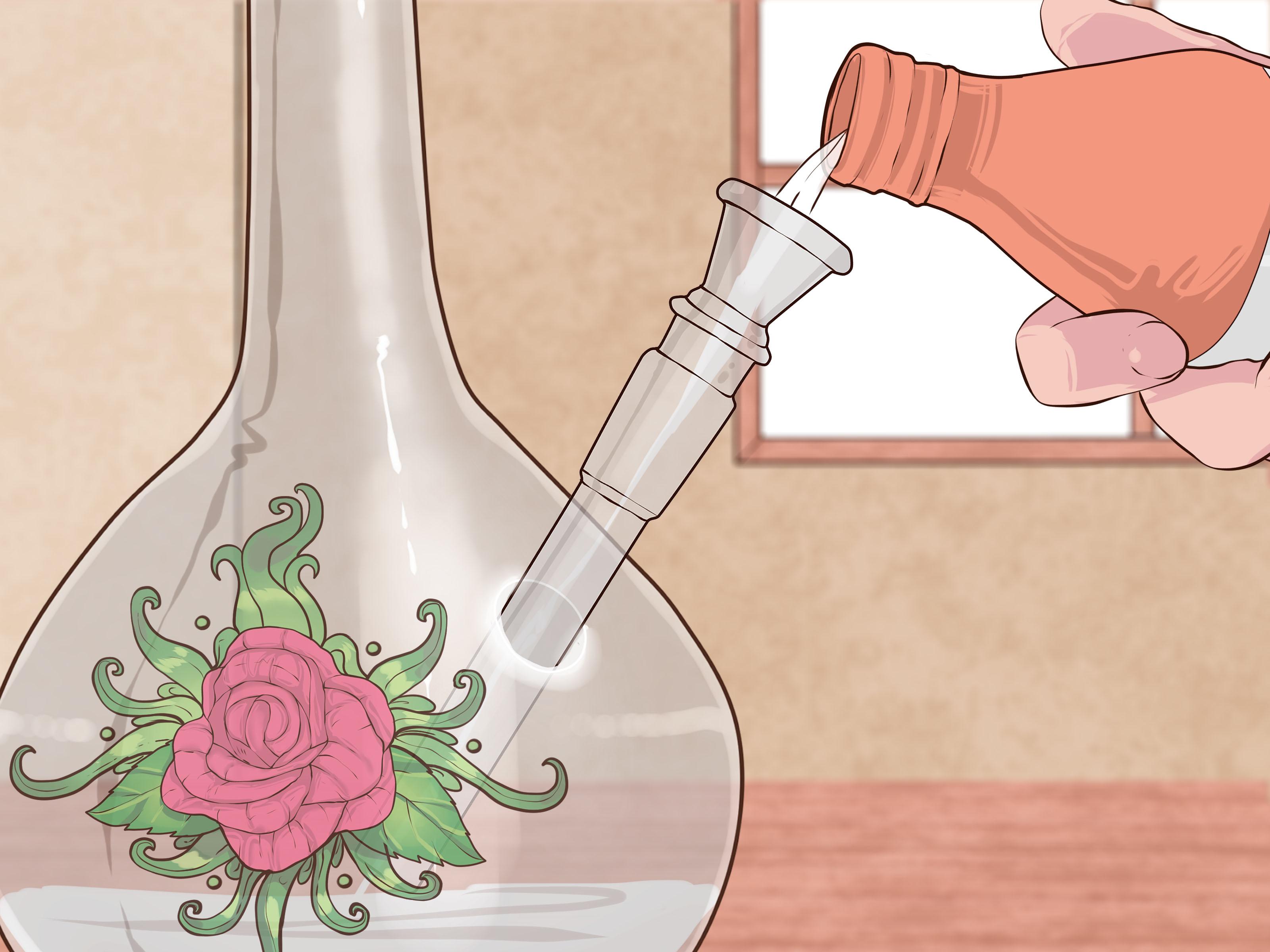
Editor’s note: This safety-focused article does not provide instructions for constructing drug paraphernalia. Instead, it explains why converting a liquor bottle into a smoking device is risky and presents 11 safer, practical steps for handling the bottle, protecting your health, and avoiding preventable injuries.
An empty liquor bottle can look like the beginning of a clever weekend project. It is sturdy, decorative, and already shaped like something a movie prop designer might place in a mysterious laboratory. Unfortunately, attempting to turn that bottle into a bong introduces several hazards that glossy social-media videos tend to edit out: shattered glass, flying particles, cuts, contaminated surfaces, indoor smoke, legal problems, and the possibility of inhaling substances that water does not magically remove.
The central misconception is that smoke becomes harmless after bubbling through water. It may feel cooler and less irritating, but “smoother” is not the same as “safe.” The Centers for Disease Control and Prevention states that smoked cannabis can damage lung tissue regardless of how it is smoked. The American Lung Association similarly notes that marijuana smoke contains many of the toxins, irritants, and carcinogens found in tobacco smoke.
There is also the bottle itself. Liquor containers are manufactured to store beverages, not to withstand power-tool vibration, concentrated pressure, repeated heating, or sudden temperature changes. A project can go from “upcycled décor” to “why is there blood on the kitchen counter?” with impressive speed.
Rather than offering a construction tutorial, the following 11 steps help you respond to the idea safely and sensibly. Your lungs, fingers, roommates, security deposit, and favorite bottle will all appreciate the change of plan.
11 Safer Steps to Take Instead of Making a Liquor Bottle Bong
Step 1: Pause Before Modifying the Bottle
Do not start by reaching for a drill, torch, rotary tool, nail, or improvised glass cutter. Put the bottle on a stable surface and reconsider what the project requires. Glass can crack unpredictably when scratched, struck, heated, or placed under concentrated pressure. A fracture may travel around the container before the person holding it has time to react.
The danger is not limited to one dramatic break. Tiny fragments can land on clothing, counters, floors, food-preparation areas, or nearby furniture. Some pieces may be difficult to see until they end up in a hand or bare foot. OSHA requires suitable eye protection in workplaces where flying particles create an eye or face hazard, which illustrates how seriously particle-producing work should be treated.
Step 2: Recognize That Water Does Not Make Smoke Safe
A water pipe can cool smoke, making it feel less harsh during inhalation. That sensation often creates a false sense of security. Cooling does not mean that harmful gases and fine particles have disappeared.
According to the CDC, smoking cannabis can damage the lungs and cardiovascular system. Poison Control also warns that smoking cannabis with a bong may contribute to lung damage and mental-health effects. In other words, water is not a tiny lifeguard stationed inside the bottle, heroically rescuing your lungs from everything unpleasant.
Research on water-pipe smoke in general has identified toxic and carcinogenic compounds that can remain in inhaled smoke after it passes through water. Although different substances and devices produce different emissions, the broader lesson is straightforward: visible bubbling is not proof of meaningful protection.
Step 3: Do Not Inhale Through Altered or Damaged Glass
A bottle that appears intact can still have microscopic cracks, chipped edges, internal stress, or loose particles after modification. Pulling air through a damaged homemade device may bring the mouth and face close to weakened glass. It can also expose the user to residue from adhesives, coatings, metal fittings, sealants, paint, labels, or cleaning products that were never designed for inhalation.
Commercial beverage glass is food-contact material in its original form. That does not mean it remains suitable for breathing hot smoke through after being drilled, heated, glued, or fitted with miscellaneous hardware. “The bottle held bourbon for five years” is not a safety certification for its second career as respiratory equipment.
Step 4: Keep Smoke Out of Indoor Shared Spaces
Secondhand cannabis smoke is not merely an odor problem. The CDC reports that it contains many of the same toxic and cancer-causing chemicals found in tobacco smoke, sometimes in greater amounts.
A University of California, San Francisco summary of indoor bong-smoking research described very high concentrations of fine particulate matter during monitored sessions. These small particles can remain suspended in indoor air and affect people who were not participating.
Opening a window, spraying air freshener, or turning on a household fan does not eliminate exposure. The Environmental Protection Agency explains that ventilation and filtration may reduce indoor smoke exposure but cannot completely remove it. Avoiding smoking or vaping in homes, vehicles, and other enclosed spaces is the effective way to prevent secondhand exposure.
Step 5: Never Combine Intoxication with Power Tools
Modifying thick glass requires judgment, coordination, a controlled workspace, and the ability to notice warning signs such as slipping equipment or spreading cracks. Cannabis and alcohol can impair reaction time, coordination, attention, and decision-making. Beginning a project after drinking from the bottle you plan to modify is therefore an especially bad plot twist.
NIDA notes that THC-containing cannabis products can change mood, thought, perception, and physical functioning. SAMHSA also describes impaired judgment and other cognitive or mental-health risks associated with marijuana use.
If tools are already on the table, put them away while sober and clearheaded. If broken glass is present, keep other people away from the area until it has been safely cleaned.
Step 6: Protect Children, Visitors, and Pets
Do not leave cannabis, residue, sharp tools, loose glass, or a homemade smoking device where children or animals can reach them. An unusual bottle may look like a toy, a drink container, or an object worth investigating. A curious child does not understand the difference between decorative glassware and drug paraphernalia.
Poison Control warns that cannabis exposure can produce serious and occasionally life-threatening effects in children. Symptoms may include severe sleepiness, difficulty walking, abnormal heart rate, weakness, confusion, or impaired coordination.
Call Poison Control in the United States at 1-800-222-1222 when accidental exposure is suspected. Call emergency services immediately if someone is unconscious, has trouble breathing, experiences a seizure, or cannot be awakened.
Step 7: Check Applicable Laws Before Possessing Paraphernalia
Cannabis and paraphernalia laws vary by jurisdiction, age, intended use, location, and other circumstances. A state may permit some adult cannabis activity while a city, landlord, employer, university, or federal authority imposes different restrictions.
Federal law defines drug paraphernalia and prohibits certain activities involving its sale, interstate transportation, import, or export. State and local rules may address possession or use separately.
Do not assume that an item is automatically legal because it began life as a liquor bottle or because similar products are sold in stores. Intent and surrounding circumstances can matter. For advice about a specific situation, consult a qualified local attorney rather than a comment section populated by people named “420GlassWizard.”
Step 8: Reuse the Bottle Without Turning It into an Inhalation Device
A distinctive bottle can still have a second life. Use an undamaged, thoroughly cleaned container as a flower vase, shelf decoration, coin holder, paintbrush container, or bottle-light display that does not require cutting or heating the glass. Confirm that any decorative lights are designed for enclosed use and do not generate significant heat.
Avoid turning beverage containers into drinking vessels for unidentified liquids, chemicals, or homemade mixtures. Remove or alter the label when reuse could cause someone to mistake the contents for alcohol. The goal of upcycling is to create less waste, not a household guessing game called “Is This Tequila or Furniture Cleaner?”
Step 9: Recycle or Discard Damaged Glass Carefully
If the bottle is chipped, cracked, or partially modified, do not continue experimenting with it. Keep people and pets away, wear sturdy footwear, and follow your local waste authority’s instructions for broken-glass disposal. Many curbside recycling programs do not accept loose broken glass because it can injure collection and sorting workers.
Do not place shards directly into a thin trash bag. A punctured bag can expose anyone who lifts it. Use a rigid, puncture-resistant container when local guidance permits, close it securely, and label it clearly. Requirements differ by municipality, so follow the rules provided by the waste service in your area.
Step 10: Know When an Injury Needs Medical Attention
For a minor superficial cut, wash your hands, gently rinse the wound, apply steady pressure with clean material, and cover it with a sterile dressing. Do not probe a wound for glass with tweezers or another tool.
Seek urgent medical care for heavy bleeding, a deep or gaping wound, numbness, reduced movement, an eye injury, suspected embedded glass, or a cut over a joint or tendon. Emergency evaluation is also appropriate after inhalation if there is chest pain, severe coughing, confusion, fainting, blue or gray lips, or difficulty breathing.
The American Thoracic Society warns that inhaled marijuana is harmful to lung health, particularly for people who already have respiratory disease or other medical conditions. The American Cancer Society also notes that inhaled cannabis can affect the lungs and expose nearby people to harmful substances.
Step 11: Get Support When Cannabis Use Is Becoming a Problem
Some people can stop or reduce cannabis use without professional assistance, while others experience cravings, repeated unsuccessful attempts to cut down, relationship problems, reduced motivation, or continued use despite health consequences. These are legitimate reasons to speak with a health-care professional.
Start with a primary-care clinician, licensed behavioral-health provider, or substance-use counselor. In the United States, SAMHSA’s National Helpline at 1-800-662-HELP provides confidential treatment information and referrals. MedlinePlus and NIDA also provide medically reviewed information about marijuana, its effects, and substance-use concerns.
Seeking help does not require adopting a dramatic new identity or delivering a speech in the rain. It can begin with one honest sentence: “This habit is affecting me more than I expected.”
Why Homemade Liquor Bottle Bongs Are More Complicated Than They Look
Online clips often compress a long, messy process into a few satisfying seconds. The video begins with a pristine bottle, skips past several questionable decisions, and ends with a polished object under flattering lighting. Missing from the frame may be failed bottles, dull tools, cracked glass, damaged countertops, fumes from unsuitable materials, and the cleanup required after the “easy DIY” goes wrong.
Appearance also says little about hygiene. Homemade devices can contain narrow, inaccessible spaces where moisture and residue collect. Sharing mouthpieces can spread saliva and respiratory germs. The American Thoracic Society advises against sharing smoking and vaping products because contaminated items can transmit infectious droplets directly to another user.
Finally, a cooler inhalation can encourage deeper or larger draws because the smoke feels less immediately irritating. That smoother sensation should not be interpreted as evidence that the lungs are receiving clean air. The CDC’s guidance remains direct: smoking cannabis can injure lung tissue regardless of the smoking method.
Experience-Based Lessons People Commonly Learn the Hard Way
The following are composite, illustrative scenarios based on common DIY hazards. They are not presented as firsthand personal experiences or instructions.
The “Perfect Bottle” Often Stops Being Perfect
A person saves an attractive bottle because it has thick glass, an unusual shape, and a label that looks expensive enough to wear a tiny tuxedo. The assumption is that thick glass must be strong glass. Once modification begins, however, a small crack appears near the stressed area. The bottle may remain in one piece for several minutes, creating false confidence, before the fracture spreads and ruins the entire container.
The lesson is that strength during normal beverage storage does not guarantee safe performance under concentrated mechanical pressure. Decorative value can also encourage someone to keep handling a damaged bottle rather than discarding it promptly. Sentimentality and fractured glass make a surprisingly poor team.
A Small Mess Can Spread Across an Entire Room
Another common realization is that glass debris does not remain politely beside the work area. Fine particles can cling to towels, sleeves, footwear, rugs, and pet paws. A quick sweep may collect the obvious pieces while leaving nearly invisible fragments behind.
The project then consumes more space and time than expected. Food must be moved, surfaces must be cleaned, pets must be kept out, and everyone in the household must remember not to walk barefoot through the area. What began as a ten-minute craft suddenly becomes an evening devoted to inspecting the floor with a flashlight.
“Smoother” Smoke Can Still Cause Rough Consequences
Some users expect water-cooled smoke to eliminate coughing or chest irritation. The first inhalation may feel cooler, but repeated exposure can still produce coughing, throat discomfort, wheezing, headache, dizziness, or an unpleasant feeling of chest tightness. People with asthma or other lung conditions may be especially sensitive.
The American Lung Association emphasizes that combustion releases toxins and carcinogens whether the burning material is wood, tobacco, or marijuana. A pleasant temperature and fewer immediate throat sensations do not transform smoke into fresh mountain air.
The Smell Does Not Respect Bedroom Doors
Indoor smoking can affect roommates, neighbors, family members, and visitors who did not agree to participate. Odor can travel through hallways, ventilation systems, shared walls, and fabrics. Smoke particles may remain even after the visible cloud disappears.
The practical consequences can include complaints, damaged relationships, cleaning costs, lease violations, or workplace and school disciplinary issues. Air freshener may add “synthetic tropical waterfall” to the odor profile, but it does not remove the underlying pollutants. The EPA notes that the absence of a visible cloud or noticeable smell does not mean smoking-related chemicals are gone.
Homemade Devices Are Difficult to Keep Hygienic
A narrow-necked bottle is convenient for pouring a drink but inconvenient for inspecting and cleaning every internal surface. Residue and moisture may remain in places that ordinary brushes cannot reach. If the device is shared, the mouth-contact area adds another hygiene problem.
People sometimes respond by using stronger cleaning products. That can introduce a new risk if the bottle is not rinsed completely or if the chemical is unsuitable for the materials attached to it. Mixing household cleaners can also release hazardous gases. The safest solution is not to create an inhalation device that demands improvised chemical maintenance in the first place.
The Finished Object Can Create Problems Even When It Is Not Used
A homemade bong may be discovered by a landlord, parent, employer, campus official, police officer, child, or guest. Its presence can prompt uncomfortable questions about possession, use, house rules, or local law. Explaining that it is “technically an art project” may not produce the enthusiastic gallery review the maker hoped to receive.
The lasting lesson from these experiences is that the project’s risks are broader than whether the bottle cracks during construction. Health, hygiene, indoor air quality, relationships, legal exposure, and safe storage all become part of the equation. Once those costs are considered, recycling the bottle or placing flowers in it begins to look considerably more sophisticated.
Conclusion
The search phrase “how to make a bong from a liquor bottle” promises a clever 11-step craft, but the real project involves more than glass and imagination. Modifying a beverage bottle can expose the maker to sharp fragments, eye injuries, contaminated surfaces, inappropriate materials, secondhand smoke, legal concerns, and a device that is difficult to inspect or clean.
Water may cool smoke, but major public-health organizations agree that smoking cannabis can still harm the lungs. Homemade construction adds risks without removing the hazards created by combustion.
The safer approach is simple: do not drill, heat, cut, or convert the bottle into drug paraphernalia. Recycle it according to local rules or reuse an undamaged bottle for a non-smoking purpose. When cannabis use is affecting health, work, school, finances, or relationships, confidential professional support is available.
Sometimes the smartest DIY decision is knowing which project should remain a search result rather than becoming a Saturday afternoon emergency-room anecdote.













