
Foosball looks simple until the ball starts ricocheting around the table like it has unpaid parking tickets. One second you are confidently holding the handles; the next, your opponent has scored from midfield, your goalie is facing the wrong direction, and somebody is laughing a little too hard. The good news? Table football is not just chaos with handles. It is a fast, tactical, wonderfully addictive game built on control, timing, rules, and smart strategy.
This guide explains how to play table football, also called foosball or table soccer, in a beginner-friendly but useful way. You will learn the basic foosball rules, how scoring works, what spinning really means, how to serve legally, how to pass from rod to rod, and how to build strategies that make you harder to beat. Whether you are playing in a game room, office break area, college lounge, bar, family basement, or a more serious table soccer setting, the fundamentals are the same: control the ball, protect your goal, pass with purpose, and stop treating the rods like helicopter propellers.
What Is Table Football?
Table football is a tabletop version of soccer played with miniature players attached to rotating rods. Each side controls several rows of figures: usually a goalie rod, defensive rod, midfield or five-bar rod, and forward or three-bar rod. Players use the handles to move, block, pass, and shoot the ball into the opponent’s goal.
The game is commonly played one-on-one or in doubles. In singles, one player controls all rods on one side. In doubles, one teammate usually plays offense, controlling the five-bar and three-bar, while the other plays defense, controlling the goalie and two-bar. Doubles can feel like a tiny sports marriage: communication helps, blame does not.
Most casual games are played to five goals, although house rules may use seven, ten, or a best-of-series format. Competitive table soccer uses stricter rules, but beginners can still benefit from learning the official principles early. Good habits are easier to build than bad habits are to unlearn.
Basic Foosball Rules Every Player Should Know
1. Decide Who Serves First
A coin toss, quick agreement, or friendly “rock, paper, scissors” usually decides the first serve. In more formal play, the winner may choose either the first serve or table side. After a goal is scored, the team that was scored on typically serves the next ball. This keeps the match balanced and gives the trailing player a chance to regain control.
2. Put the Ball Into Play Properly
On many tables, the ball is served through a side hole into the midfield area. On tables without a serving hole, players may place the ball at the center. In casual play, the key is fairness: do not secretly angle the serve so it rolls directly to your own five-bar unless everyone has agreed that trick serves are allowed. A good serve should start the rally, not start a courtroom drama.
3. No Spinning the Rods
The most famous foosball rule is also the one beginners break most often: no spinning. Spinning means rotating a rod more than a full turn before or after hitting the ball. It may feel powerful, but it reduces control, damages the table, annoys opponents, and is illegal in standard rules. A legal shot comes from a controlled wrist movement, not from launching the handle like you are starting a lawn mower.
4. A Goal Counts Even If the Ball Bounces Out
If the ball enters the goal and comes back out, it still counts as a goal. Do not pretend you did not see it. Everyone saw it. The table saw it. The tiny plastic players saw it. Count the point and move on.
5. Any Rod Can Score
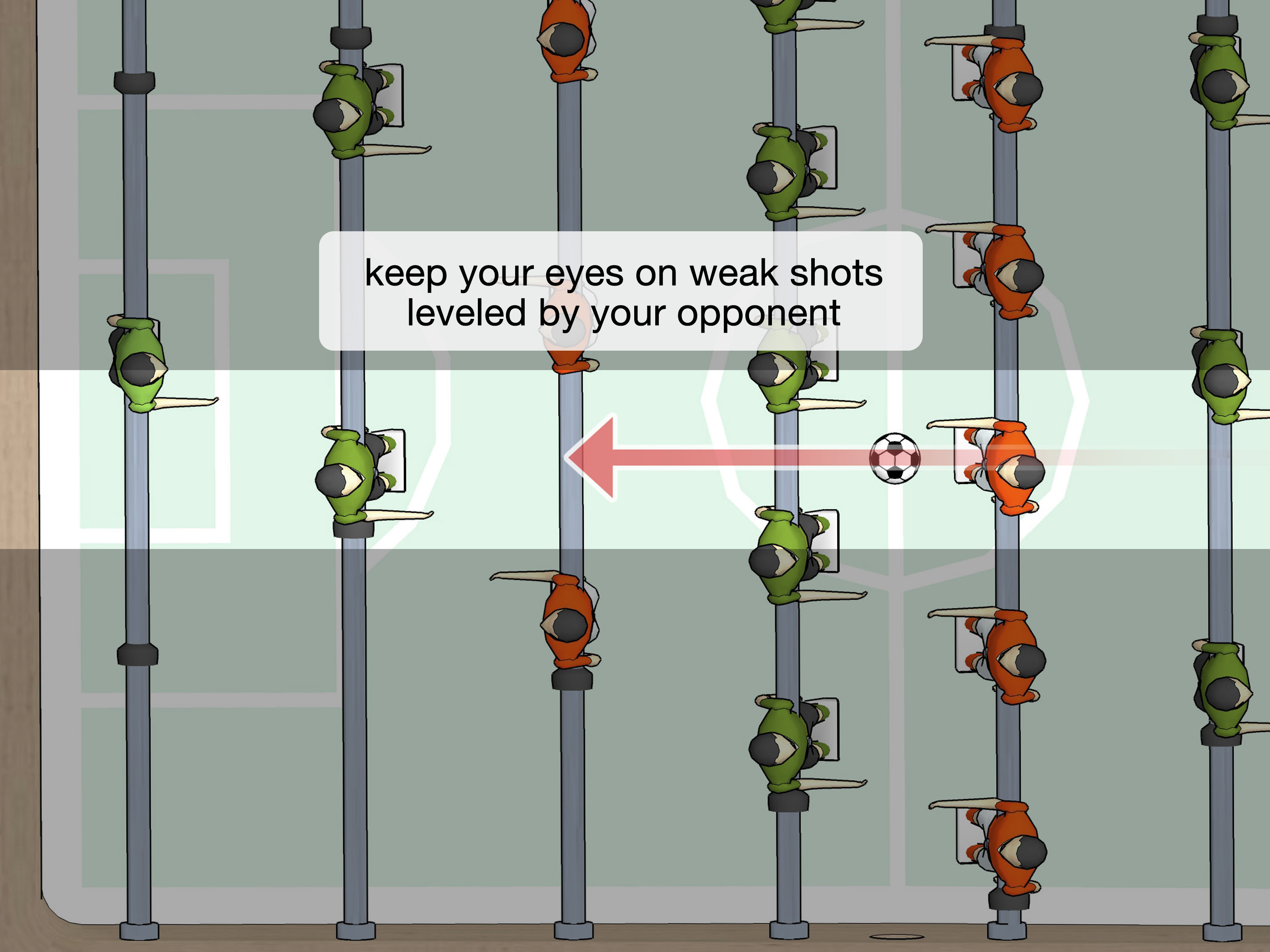
You can score from the goalie, defenders, midfield, or forwards. However, relying only on long defensive shots is not a dependable strategy. They can surprise casual opponents, but better players will block them and punish the open spaces you leave behind.
6. Respect Possession Time Limits
Formal foosball rules limit how long you may hold the ball on a rod. A common structure allows less time on the five-bar and slightly more time on other rods. Casual players do not always enforce exact seconds, but the spirit matters: do not trap the ball forever while you plan your life, your taxes, and your next shot. Keep the game moving.
7. Dead Balls and Balls Off the Table
A dead ball is a ball that stops where no figure can reach it. If it dies between the midfield rods, it is usually re-served. If it dies near a defensive area, it may be put back into play from the nearest defensive rod, depending on the rule set being used. If the ball jumps off the table, return it according to your agreed house rules, usually by re-serving or giving it to the team that did not cause the ball to leave.
8. No Jarring, Banging, or Table Shaking
Jarring means slamming rods, shaking the table, or using force to disrupt the opponent’s possession. It is poor etiquette and usually a foul. Good defense comes from positioning, timing, and reading the playnot from treating the table like a vending machine that owes you a snack.
9. Doubles Players Should Switch Positions Only Between Balls
In doubles, teammates generally cannot swap offense and defense during active play. Switch between points, during timeouts, or when the ball is not in play. This rule prevents confusion and keeps the match fair.
Understanding the Rods and Their Jobs
The Goalie Rod
The goalie rod protects the goal and starts counterattacks. Some tables have one goalie; others have three. Your main job is to block direct shots and clear the ball safely. Keep the goalie centered, avoid overcommitting, and do not pull every defensive figure away from the goal at the same time.
The Two-Bar Defense
The two-bar works with the goalie rod to cover angles. Beginners often line up their goalie and defenders in the same lane, which leaves big holes. Instead, stagger them slightly so they cover more space. Think of your defenders as a moving wall, not decorative furniture.
The Five-Bar Midfield
The five-bar is the engine of foosball strategy. It blocks opponent clears, controls possession, and passes to the three-bar. If you can win the midfield battle, you will get more shots and give up fewer easy attacks. Strong five-bar passing is one of the biggest differences between casual and skilled players.
The Three-Bar Attack
The three-bar is your main scoring rod. From here, players use controlled shots such as push shots, pull shots, pin shots, brush shots, and quick straight shots. Power helps, but accuracy and timing matter more. A slow shot into an open hole beats a rocket directly into a defender.
How to Hold the Handles
A relaxed grip is one of the simplest ways to improve quickly. Beginners squeeze the handles too tightly, which makes their movements stiff and slow. Hold each handle firmly enough to control the rod but loosely enough for your wrist to move naturally. Your hand should guide the rod, not wrestle it.
Use your wrists for quick shots and blocks. Avoid using your whole arm for every movement, because big motions are slower and easier to read. Stay light on your feet, keep your body balanced, and position yourself so you can reach all your rods without leaning like a collapsing lawn chair.
How to Pass in Foosball
Passing is where table football becomes a strategy game. Random shooting may work against brand-new players, but controlled passing wins against anyone who knows how to defend.
Five-Bar to Three-Bar Pass
The classic beginner goal is to pass from the five-bar to the three-bar. Start by learning simple lane passes and wall passes. A lane pass moves the ball through a gap between the opponent’s midfield figures. A wall pass sends the ball along the side wall into your forward row. Practice both so your opponent cannot camp on one option.
In stricter rules, a stopped ball on the five-bar cannot simply be passed forward without meeting legal movement requirements. For casual play, the practical lesson is still valuable: keep the ball moving, use more than one figure, and make your pass look intentional rather than accidental.
Defense to Midfield Pass
From the defensive rods, avoid blasting the ball straight into the opponent’s five-bar over and over. Instead, look for controlled clears and passes to your own midfield. If you cannot pass cleanly, clear toward safe areas and reset your defense.
Essential Foosball Shots
Push Shot
A push shot moves the ball away from your body before shooting. It is simple, legal, and useful for beginners. Set the ball beside a forward, push the rod laterally, then strike when the lane opens.
Pull Shot
A pull shot moves the ball toward your body before the strike. Many experienced players love the pull shot because it creates sharp timing changes and can attack several holes. The trick is not just speed; it is selling the fake, reading the defense, and shooting where the opponent is not.
Pin Shot
In a pin shot, the player figure traps the ball under its toe before releasing and shooting. This gives you control and lets you pause long enough to read the defense. It is excellent for players who want more accuracy and less panic.
Bank Shot
A bank shot uses the wall to angle the ball toward the goal. It can be useful from defense or midfield, but do not rely on it too much. Good opponents will adjust quickly if every shot announces, “Hello, I am going to the wall again.”
Foosball Defense Strategies
Cover Zones, Not Just the Ball
Many beginners chase the ball with every rod. This creates gaps. Instead, think in zones. Your goalie and defenders should cover different lanes. Move them together but not on top of each other. If your goalie blocks the middle, your defenders should help cover the sides.
Keep Your Players Angled Down
After you shoot or block, return your figures to useful defensive positions. If your players are left horizontal or facing backward, they cannot block low shots. A lazy rod is basically a welcome mat for goals.
Do Not Overreact to Fakes
Better players fake before shooting. If you jump at every twitch, you will open the exact hole they want. Stay patient. Move enough to make scoring difficult, but do not abandon your structure.
Clear With Purpose
When the ball reaches your defense, your first job is safety. Clear away from danger, avoid passing directly to the opponent’s forwards, and take controlled shots only when a lane is visible. A defensive goal is fun; a blocked defensive shot that bounces back into your own net is comedy for everyone except you.
Beginner Strategy: How to Win More Games
Slow Down Before You Speed Up
Fast hands are helpful, but fast mistakes are still mistakes. Focus first on trapping the ball, making clean passes, and choosing open shots. Once your technique improves, speed will naturally follow.
Develop One Reliable Serve
A consistent serve helps you begin points with control. Practice releasing the ball so it reaches your five-bar fairly and predictably. In casual play, agree on serving rules before the match so nobody starts arguing after the first point.
Use Patterns, Then Break Them
Foosball is full of patterns. If you always pass along the wall, your opponent will block the wall. If you always shoot straight, they will sit in the middle. Build two or three reliable options, then rotate them. Make your opponent guess.
Watch the Opponent’s Rods
Do not stare only at the ball. Watch how your opponent defends. Are they leaving the far post open? Are they moving too early? Are their midfield players always tilted up? Those tiny habits are invitations. Politely accept them by scoring.
Practice Transitions
The best players switch quickly from defense to offense. When you block a shot, look immediately for a pass or controlled clear. When your five-bar wins possession, look for your three-bar. When your forwards trap the ball, pause, read, and shoot with intention.
Common Foosball Mistakes
Spinning Instead of Shooting
Spinning feels dramatic but destroys accuracy. Learn wrist-based shots. You will score more and look less like you are trying to summon a weather event.
Ignoring the Five-Bar
Beginners often treat midfield as an obstacle instead of a weapon. Your five-bar should block, pass, and control tempo. If you improve only one area this week, make it five-bar control.
Leaving the Goal Open
After attacking with your goalie or defenders, reset them. Many easy goals happen because a player forgot their goalie was parked somewhere near midfield, emotionally but not physically involved.
Shooting Without Looking
Before you shoot, glance at the defensive shape. Even a half-second of observation can reveal an open lane. Random shots are fun, but chosen shots win.
Simple Foosball Practice Drills
Wall Pass Drill
Place the ball on your five-bar and practice passing along the wall to your three-bar. Repeat until you can complete ten clean passes in a row. Then practice blocking your own passing lane with the opposing five-bar to make it harder.
Lane Pass Drill
Practice passing through the middle lanes instead of the wall. Alternate between wall and lane passes so your muscle memory does not become predictable.
Three-Shot Drill
From the three-bar, practice one straight shot, one push shot, and one pull shot. Do not worry about power at first. Aim for specific holes in the goal. Accuracy before thunder.
Defensive Reset Drill
Take a shot from defense, then immediately return your goalie and defenders to blocking position. This trains you to avoid open-goal disasters after clears.
Foosball Etiquette: How Not to Be “That Player”
Good table football etiquette makes games more enjoyable. Do not spin, shake the table, distract your opponent during shots, argue every close goal, or celebrate like you just won the World Cup after scoring on someone playing their first match. Be competitive, but keep it friendly.
Before playing, agree on house rules: score limit, serving method, whether banks from defense are allowed without restriction, how to handle dead balls, and whether you are playing casual or strict rules. Most conflicts disappear when expectations are clear before the first serve.
Experience Notes: What Actually Happens When You Learn Foosball
The first real lesson in foosball is humility. Most new players walk up to the table thinking, “How hard can this be?” Then the ball disappears under the opponent’s three-bar and reappears in the goal before their brain has finished loading. That early stage is normal. You are not bad; you are simply learning that table football rewards touch more than enthusiasm.
One of the most useful experiences for beginners is playing against someone slightly better, not wildly better. If your opponent is too advanced, the game can feel like trying to solve a crossword puzzle while someone sprays you with a garden hose. But a player who is just one level above you will expose fixable mistakes. You will notice that they trap the ball more often, pass instead of panic, and reset their defense after every shot. Copy those habits.
Another real-world lesson: office and bar foosball tables often play differently. Some balls are slick and fast. Some tables are slightly uneven, causing the ball to drift like it has personal goals. Some rods are heavy, some handles are loose, and some goalies have clearly lived a difficult life. Do not use equipment as an excuse, but do adjust. On a fast table, shorten your movements and focus on blocking. On a slower table, trap more and use controlled passes.
In doubles, communication matters more than beginners expect. The defensive player should tell the offensive player when a shot is blocked, when the opponent has a weak pass, or when the ball is loose. The offensive player should avoid blaming the goalie after every goal. A doubles team that stays calm usually beats a more talented team that spends half the match holding a tiny committee meeting after every mistake.
One practical habit that changes everything is learning to pause. Not forever, of course; possession limits still matter. But a brief pause after trapping the ball lets you read the defense. Beginners rush because silence feels awkward. Skilled players use that moment. They look at the goalie, check the defender spacing, fake once, and shoot at the open lane. The table suddenly feels slower because they are making decisions instead of reactions.
Finally, the best way to improve is to choose one skill per session. Spend one night focusing only on legal shooting. Spend another on five-bar passing. Spend another on defense. Trying to fix everything at once usually creates a delightful soup of confusion. Small improvements stack quickly. After a few sessions, you will stop spinning, start passing, block more shots, and experience the quiet joy of scoring on purpose. That is the moment foosball becomes dangerously fun.
Conclusion
Learning how to play table football is about more than memorizing foosball rules. The rules give the game structure, but strategy gives it flavor. Start with the essentials: no spinning, serve fairly, count goals honestly, avoid jarring, and keep the ball moving. Then build your skills rod by rod. Use the five-bar to control the match, the three-bar to finish attacks, and the goalie and defenders to block with discipline.
The fastest path to better foosball is not wild power. It is controlled movement, smart passing, patient defense, and a few reliable shots you can use under pressure. Practice those basics, respect your opponent, and keep your sense of humor nearby. You will still give up silly goals sometimes. Everyone does. The difference is that now, when the ball flies into your net, you will know exactly what to fix before the next serve.














