
Note: This guide is based on widely accepted outdoor sanitation practices, Leave No Trace principles, campground etiquette, and public health guidance. Always check the rules for the specific park, forest, campground, desert, canyon, beach, or wilderness area before you go, because bathroom rules can change by location.
Introduction: Yes, We’re Going There
Camping is magical. You get fresh air, starry skies, crackling campfires, and the rare joy of eating breakfast while wearing yesterday’s hoodie. But at some point, nature will calland nature does not care that you are miles from a flush toilet, wearing hiking boots, or pretending you are “more outdoorsy than this.” Learning how to use the bathroom while camping is not just a funny campfire topic. It is a real outdoor skill that protects your health, keeps campsites clean, prevents water contamination, and saves the next camper from discovering a surprise no one ordered.
The good news? Going to the bathroom while camping is not complicated once you know the basics. The right method depends on where you are camping, whether toilets are available, what local rules require, and whether you are car camping, backpacking, overlanding, paddling, or hiking in a high-use wilderness area. Sometimes the answer is a clean campground restroom. Sometimes it is a portable camping toilet. Sometimes it is a cathole dug 6 to 8 inches deep and at least 200 feet from water, trails, and camp. And sometimes, especially in fragile or heavily visited areas, you must pack everything out in a waste bag. Yes, everything. Outdoor adventure has range.
This in-depth guide explains how to pee, poop, clean up, manage toilet paper, use portable toilets, handle periods, teach kids, avoid awkward moments, and follow camping bathroom etiquette without turning your trip into a survival documentary. Let’s make the least glamorous part of camping simple, sanitary, and maybe even a little less weird.
Why Bathroom Etiquette Matters in the Outdoors
Human waste may feel like a private problem, but outdoors it quickly becomes a public one. Poorly disposed waste can contaminate streams, lakes, and groundwater. It can spread germs, attract insects and animals, create terrible smells, and make beautiful places feel more like badly managed festival parking lots. No camper wants to hike three miles to a scenic overlook only to find toilet paper fluttering in the bushes like the world’s saddest prayer flags.
Good camping bathroom habits protect three things: people, water, and the land. People stay healthier when hands are washed and waste is handled correctly. Water stays safer when bathroom spots are far from lakes, rivers, springs, and drainage areas. Land stays cleaner when waste is buried properly or packed out where required. This is the heart of Leave No Trace bathroom practice: do your business in a way that does not become someone else’s business.
It also matters because more people are camping, hiking, and visiting public lands. A single careless bathroom break may not seem like much, but popular trails and campsites receive thousands of visitors. Multiply one bad habit by a busy season, and suddenly the forest has a problem that no pine-scented candle can fix.
Before You Go: Know the Bathroom Rules for Your Camping Area
The first rule of using the bathroom while camping is simple: know the rules before your digestive system starts making executive decisions. Different public lands have different requirements. A developed campground may have flush toilets, vault toilets, or portable restrooms. A backcountry campsite may allow catholes. A desert canyon, alpine zone, river corridor, or heavily visited wilderness area may require campers to pack out solid human waste in approved waste bags or portable toilet systems.
Check the official campground or land manager website
Before your trip, look for bathroom instructions from the national park, state park, national forest, Bureau of Land Management area, private campground, or trail organization. Pay attention to words like “pack out,” “WAG bag required,” “portable toilet required,” “no catholes,” or “use designated toilets.” These are not suggestions written by someone with too much clipboard energy. They usually exist because the soil, climate, water sources, wildlife, or visitor traffic makes normal burial unsafe or ineffective.
Ask about waste disposal
If you are using a portable toilet or waste bags, find out where they can be disposed of. Do not toss human waste into a random vault toilet unless the rules specifically allow it. Some areas prohibit dumping bagged waste into pit toilets because it damages facilities and creates extra work for maintenance crews. The glamorous life of outdoor recreation includes reading bathroom rules. Bring snacks; it helps.
Build a Camping Bathroom Kit
A camping bathroom kit is your best friend when nature calls. Keep it packed in a dedicated dry bag, stuff sack, or resealable plastic bag so you can grab it quickly. When the moment arrives, you do not want to be rummaging through your backpack while whispering, “Where is the trowel?” with increasing urgency.
Basic bathroom kit for camping
- Small camp trowel for digging catholes where allowed
- Toilet paper or unscented wipes
- Resealable bags for packing out toilet paper and hygiene products
- Hand sanitizer with at least 60% alcohol
- Small bottle of biodegradable soap
- Water for handwashing
- Headlamp for nighttime bathroom trips
- Waste bags or WAG bags if required
- Menstrual supplies, if needed
- Lightweight privacy cloth, bandana, or small towel
For car camping, you can expand the kit with a portable toilet, privacy tent, extra trash bags, disinfecting wipes for surfaces, a handwashing station, and a small shovel. For backpacking, keep it compact and lightweight. The best bathroom kit is the one you actually carry, not the one that looks impressive in your garage and stays there.
Using Campground Toilets
If your campground has toilets, use them. Flush toilets, vault toilets, pit toilets, and composting toilets are generally the most sanitary and lowest-impact options when available. They concentrate waste in managed facilities instead of spreading it around the campground like a very unpleasant treasure hunt.
How to be a decent human in campground bathrooms
Campground restroom etiquette is not complicated. Leave the bathroom cleaner than you found it. Do not throw wipes, diapers, food trash, tampons, pads, bottles, or random campsite debris into toilets unless signage says it is allowed. Close the lid when one exists, especially in vault toilets, because it helps reduce flies and odor. Use only the amount of toilet paper you need. If the restroom is out of supplies, use your own and pack out anything that does not belong.
At busy campgrounds, expect morning bathroom traffic. People tend to wake up, brew coffee, and collectively discover urgency. If you dislike standing in line while holding a toothbrush and a look of quiet desperation, go earlier, go later, or choose a campsite not too far from the restroom. Not next to it, though. Close enough for convenience, far enough that your tent does not smell like the opening scene of a cautionary tale.
How to Pee While Camping
Peeing outdoors is usually easier than dealing with solid waste, but it still requires some thought. Urine can attract animals because of the salt content, and concentrated pee near camp can create odors. The basic rule is to pee well away from your tent, cooking area, and water sources.
Choose the right spot
Walk at least 200 feet from streams, lakes, springs, and camp whenever practical. Pick durable ground such as soil, gravel, or leaf litter. Avoid peeing directly on plants in sensitive alpine or desert environments. In some areas, land managers recommend peeing on rocks or bare ground so wildlife is less likely to dig up vegetation for salts.
Tips for nighttime bathroom trips
Nighttime bathroom walks deserve respect. Put your headlamp, shoes, and bathroom kit in the same spot every night. Choose a safe route before bed so you are not stumbling through roots, rocks, and existential regret at 2:13 a.m. In bear country, avoid wandering far with scented items. If you use a pee bottle, label it clearly and choose a shape that cannot be confused with a water bottle. This is not a lesson anyone should learn twice.
How to Poop While Camping When No Toilet Is Available
When toilets are not available and local rules allow burial, the standard method is a cathole. A cathole is a small hole dug in soil to bury solid human waste. Done correctly, it helps waste decompose while keeping it away from water, trails, campsites, and other campers.
Step 1: Walk far enough away
Move at least 200 feet from water sources, trails, campsites, picnic areas, and dry washes. Two hundred feet is roughly 70 adult steps, or about two-thirds of a football field. Yes, it is farther than most people think. No, the bush 12 feet behind your tent does not count as “basically wilderness.”
Step 2: Pick a good cathole location
Look for organic soil that is easy to dig and likely to support decomposition. Forest soil with leaf litter is often better than rocky ground, sand, or hard-packed dirt. Avoid fragile desert crusts, alpine meadows, areas near water, and places where rain could wash waste downhill. Choose privacy, but not at the expense of sanitation.
Step 3: Dig the cathole
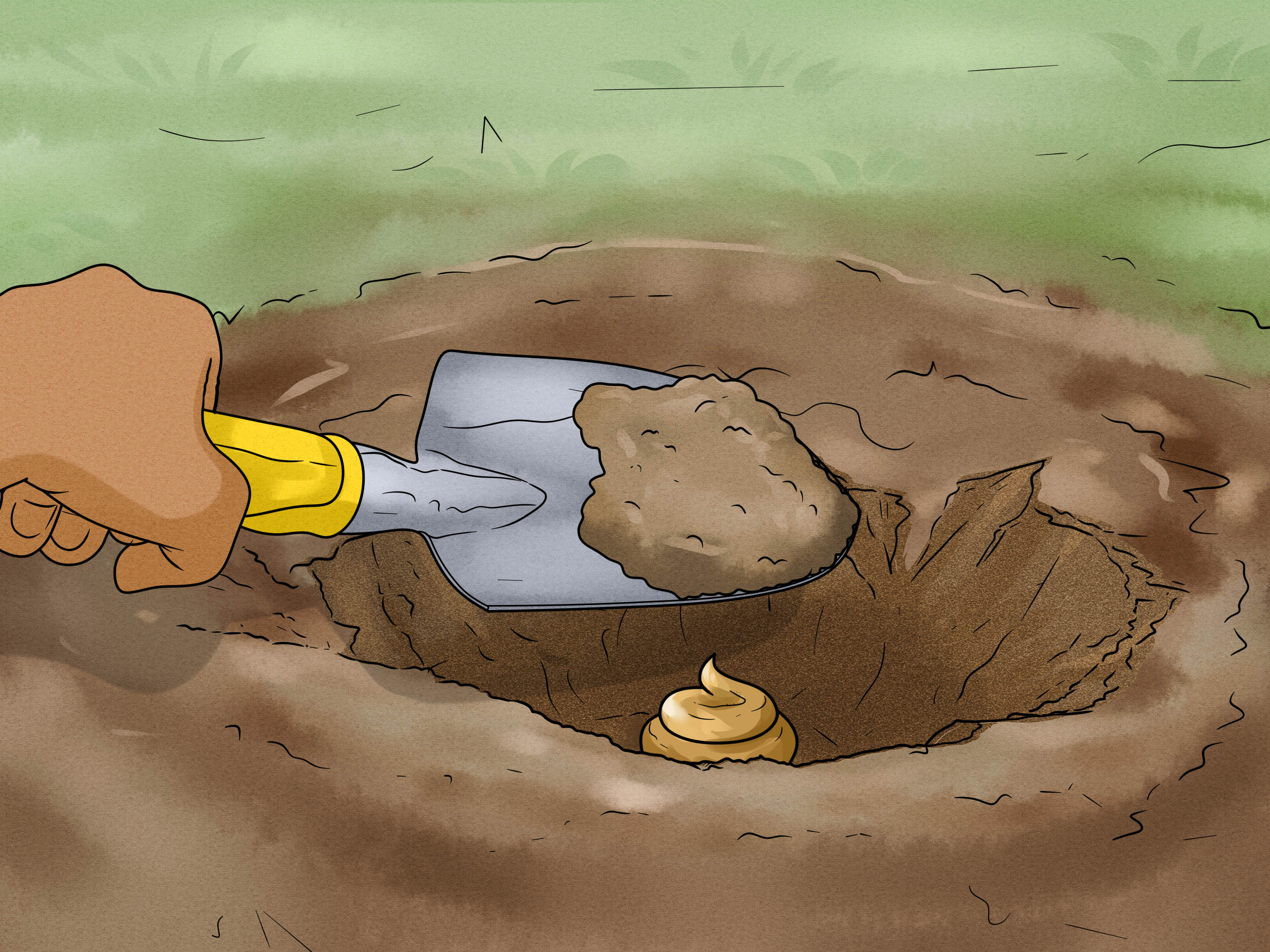
Use a trowel to dig a hole about 6 to 8 inches deep and 4 to 6 inches wide. This depth is important. Too shallow, and animals or erosion may expose the waste. Too deep, and decomposition slows because the most active soil organisms are usually closer to the surface. A lightweight backpacking trowel makes this job much easier than trying to dig with a tent stake, spoon, or your dignity.
Step 4: Aim, go, and cover
Squat carefully over the hole, do what you came to do, and keep your clothing clear. Some campers hold onto a tree or sturdy rock for balance. Others prefer a wider stance. Practice is not glamorous, but it does improve accuracy. Afterward, cover the waste with the original soil and disguise the spot with leaves, pine needles, or natural debris. Do not build a monument. Future hikers do not need a memorial plaque.
Step 5: Pack out toilet paper when possible
The best low-impact practice in many places is to pack out used toilet paper in a resealable bag. You can make the bag less visually dramatic by wrapping it with duct tape or storing it inside an opaque pouch. Wet wipes, even those labeled “flushable” or “biodegradable,” should always be packed out. They break down slowly outdoors and can remain in the environment for a long time.
When You Must Pack Out Human Waste
Some camping areas do not allow catholes. This is common in fragile deserts, narrow canyons, snowfields, alpine areas, river corridors, beaches, and heavily used public lands. In these places, campers may be required to use WAG bags, waste bags, or portable toilet systems. It may sound intimidating, but it is straightforward once you understand the process.
What is a WAG bag?
A WAG bag, often called a waste bag or pack-out bag, is a portable human waste disposal system. Most include an inner bag, an outer sealable bag, toilet paper, a hand wipe, and powder or gel that helps solidify waste and reduce odor. You use the bag, seal it, carry it out, and dispose of it according to local instructions. It is not the fanciest object in your pack, but it may be the most responsible.
How to use a waste bag
Open the bag carefully, place it on stable ground or inside a portable toilet seat if you have one, and use it as directed. Afterward, add any included powder if it is not already inside, seal the inner bag, then seal the outer bag. Store it in a hard-sided container, odor-resistant bag, or dedicated compartment away from food. Wash or sanitize your hands immediately. Do not abandon the bag, bury it, burn it, or toss it into a pit toilet unless the land manager specifically says that is allowed.
Portable Camping Toilets: A Comfort Upgrade Worth Considering
For car camping, family camping, hunting camps, overlanding, beach camping, or group trips, a portable toilet can be a game changer. Not everyone wants to squat behind a shrub while mosquitoes treat them like a buffet. A portable camping toilet provides stability, privacy, and convenience, especially for kids, older adults, people with mobility concerns, or anyone who simply prefers a more civilized throne.
Common types of portable toilets
- Bucket toilet: A 5-gallon bucket with a snap-on toilet seat and liner bag. Simple, cheap, and surprisingly effective.
- Folding toilet: A lightweight frame that holds waste bags. Easy to pack and useful for short trips.
- Flush-style portable toilet: A self-contained unit with fresh water and a waste tank. Comfortable, but bulkier and heavier.
- Composting-style camp toilet: More common in longer-term camps, vans, cabins, and off-grid setups.
Always use liners, gelling agents, or waste treatment products recommended for your toilet system. Keep the toilet away from cooking areas and water sources. If you set up a privacy tent, stake it down well. Nothing humbles a camper faster than chasing a bathroom tent across a windy meadow.
Handwashing and Hygiene: The Part You Cannot Skip
Bathroom hygiene while camping is about more than feeling fresh. It helps prevent stomach bugs, food contamination, and the rapid downfall of group morale. Wash hands after using the bathroom, before cooking, before eating, and after handling waste bags or bathroom supplies.
Soap and water are best
When possible, wash with soap and water for at least 20 seconds. Use a small amount of biodegradable soap, but do not wash directly in lakes, streams, or rivers. Carry water at least 200 feet away from natural water sources, wash there, and scatter the wastewater over a broad area. Biodegradable soap still does not belong in waterways.
Use sanitizer as backup
Hand sanitizer with at least 60% alcohol is useful when water is limited, but it should not be your only hygiene plan. Some germs are more resistant to sanitizer, and dirt or grime can reduce its effectiveness. A smart camping setup includes both soap and sanitizer. Your stomach will thank you, probably in a quiet and dignified way.
What to Do With Toilet Paper, Wipes, and Hygiene Products
Toilet paper is one of the most common signs of poor camping bathroom etiquette. It is also one of the easiest problems to prevent. The safest habit is to pack it out. Use a resealable bag, double-bag if needed, and store it with your trash. Add a little baking soda, dry tea leaves, or a small amount of powdered waste treatment if odor is a concern.
Do not bury wet wipes
Wet wipes should always be packed out. They may say “biodegradable,” but outdoors that word can move at the speed of a sleepy turtle. Wipes often remain visible, attract animals, and create messes for other people. The same rule applies to tampons, pads, liners, diapers, and applicators. Pack them out in a secure, opaque bag.
Consider a backcountry bidet
Some campers use a small backcountry bidet bottle or squeeze bottle to reduce toilet paper use. It takes a little practice, but it can be cleaner, lighter, and more environmentally friendly. Use clean water, wash your hands thoroughly, and still pack out any paper or wipes you use for drying.
Bathroom Tips for Menstruation While Camping
Camping on your period is completely manageable with planning. Pack more supplies than you think you will need, store them in a clean waterproof bag, and bring a separate opaque waste bag for used products. If using a menstrual cup, wash your hands before and after handling it, and empty it into a toilet, cathole, or waste bag according to local rules. Do not rinse blood or hygiene products directly into natural water sources.
For comfort, bring unscented wipes, extra underwear, pain relief if you normally use it, and a small “night kit” so you are not searching for supplies in the dark. Scented products are not recommended because they can irritate skin and may attract animals. In bear country, store used menstrual products with other trash and scented items according to local food-storage rules.
Camping Bathroom Privacy Without Drama
Privacy is one of the biggest concerns for new campers. The trick is to plan before panic. At a developed campsite, choose a location near enough to bathrooms for convenience but not so close that every door slam becomes your lullaby. In dispersed camping, identify a few safe bathroom routes during daylight. If camping with a group, create a simple signal, such as “I’m taking a walk,” so people know not to follow.
A lightweight privacy tent can be helpful for car camping. Backpackers can use natural cover, a rain jacket tied between trees, or simple communication. The wilderness may be wild, but your friends do not need to be. Respect space, do not make jokes at someone else’s expense, and never walk toward a person who has clearly gone off trail for bathroom privacy. That is how friendships become shorter than the hike.
Bathroom Tips for Camping With Kids
Kids can absolutely learn good camping bathroom habits, but they need simple instructions and patient adults. Explain the bathroom plan before the trip. Show them where the campground restroom is, how to use a portable toilet, or what a cathole is if they are old enough for backcountry camping. Keep supplies easy to reach and build in extra time. A child announcing “I have to go now” rarely means “after you finish organizing the cooler.”
For younger kids, a portable toilet is often the easiest option. Bring extra bags, wipes, handwashing supplies, and a nighttime flashlight routine. For older kids, teach the 200-foot rule, how to pack out toilet paper, and why bathroom waste should never be left near trails or water. Keep the tone matter-of-fact. The less weird adults make it, the less weird kids will feel.
Common Camping Bathroom Mistakes to Avoid
- Going too close to water: Waste near streams, lakes, or springs can contaminate water and harm other campers.
- Digging a shallow cathole: A shallow hole can be exposed by animals, weather, or unlucky boots.
- Leaving toilet paper behind: Pack it out whenever possible, especially in popular or dry areas.
- Assuming biodegradable wipes disappear quickly: They do not. Pack them out.
- Forgetting hand hygiene: Dirty hands can turn dinner into a gastrointestinal plot twist.
- Ignoring local rules: Some areas require packing out waste. Know before you go.
- Setting up a portable toilet too close to camp: Convenience is nice; odor management is nicer.
Real-Life Camping Bathroom Experiences and Practical Lessons
Every experienced camper has at least one bathroom story. Some are funny later, some are educational immediately, and some are never spoken of again except through haunted eye contact. The most useful lesson is that preparation prevents most awkward moments. A well-packed bathroom kit can turn a stressful situation into a quick errand. A missing trowel, on the other hand, can make you question every choice that brought you to the woods.
One common beginner experience is underestimating distance. Many campers hear “go 200 feet away” and imagine a short stroll. In reality, 200 feet is far enough that your tent should no longer feel socially involved. On a forest trip, that means counting steps, watching landmarks, and bringing a headlamp if it is even slightly close to dusk. The first time you walk far enough, it may feel excessive. The first time you discover someone else did not walk far enough, you understand the rule forever.
Another real-world lesson is that digging takes longer than expected in bad soil. Soft forest duff? Lovely. Rocky mountain ground? Suddenly your lightweight trowel feels like a decorative spoon. Desert hardpan? Congratulations, you are now an amateur archaeologist with urgent motivation. This is why experienced campers do not wait until the last possible second. If you think you might need to go soon, gather your kit and start looking for a spot early. Your future self will applaud, quietly, from behind a tree.
Car campers often learn that a portable toilet can dramatically improve group happiness. Families with kids, mixed-age groups, and campers who dislike midnight walks often appreciate having a simple bucket toilet or folding toilet inside a privacy tent. The key is managing it properly. Use strong liner bags, add absorbent or gelling material, keep the lid closed, and empty or dispose of waste according to campground rules. A portable toilet is only luxurious if it is maintained. Otherwise, it becomes a plastic monument to poor planning.
Backpackers often learn to pack out toilet paper after seeing what happens when others do not. Even plain white toilet paper can remain visible for a long time in dry climates or busy areas. It ruins the natural experience and signals to everyone that someone treated the trail like a poorly supervised restroom. Packing it out may sound unpleasant at first, but double-bagging makes it simple. Use one bag for clean supplies and another opaque, sealable bag for used paper. After one trip, it feels normal. Outdoor maturity is strange, but useful.
Nighttime bathroom trips are another classic camping teacher. The lesson: organize before bed. Place shoes where you can find them. Keep your headlamp within reach. Know where your bathroom kit is. Zip your tent carefully so bugs do not join the sleeping arrangements. If you are in a campground, note the route to the restroom before darkness turns every picnic table into a suspicious bear shape. If you are dispersed camping, choose a safe pee spot in advance. Half-asleep navigation is not the time for bold exploration.
Weather also changes everything. In heavy rain, catholes can flood or runoff can move waste toward water, so site selection matters even more. In snow, many areas require packing out waste because burial in snow only delays the problem until melt season. In desert environments, decomposition is slow and soil may be fragile, so waste bags are often the better or required option. The best campers adapt to the landscape instead of forcing one method everywhere.
The final experience most campers share is embarrassment fading into confidence. The first outdoor bathroom trip can feel awkward. By the third or fourth, it becomes another camping routine, like filtering water or hanging a lantern. The goal is not to pretend bathroom needs do not exist. The goal is to handle them cleanly, respectfully, and without leaving evidence. That is the quiet art of camping well: the best bathroom break is the one no one else ever has to notice.
Conclusion: Camp Clean, Camp Smart, Leave No Surprises
Learning how to use the bathroom while camping is one of those unglamorous skills that makes every outdoor trip better. It protects clean water, keeps campsites pleasant, reduces the spread of germs, and shows respect for wildlife, land managers, and fellow campers. Whether you are using a campground restroom, digging a proper cathole, packing out waste in a WAG bag, or setting up a portable toilet for a family camping trip, the goal is the same: handle your business without making it the landscape’s problem.
Remember the basics. Use toilets when available. Follow local rules. Stay at least 200 feet from water, trails, and camp when going outdoors. Dig catholes 6 to 8 inches deep where burial is allowed. Pack out toilet paper, wipes, and hygiene products. Wash your hands like someone who wants to enjoy the rest of the trip. And above all, leave the campsite so clean that the next person never knows you were thereat least not because of bathroom evidence.
Camping gives us freedom, beauty, quiet, and occasionally a squirrel staring directly into our souls. The least we can do is bring a trowel, a plan, and a little humility.













