
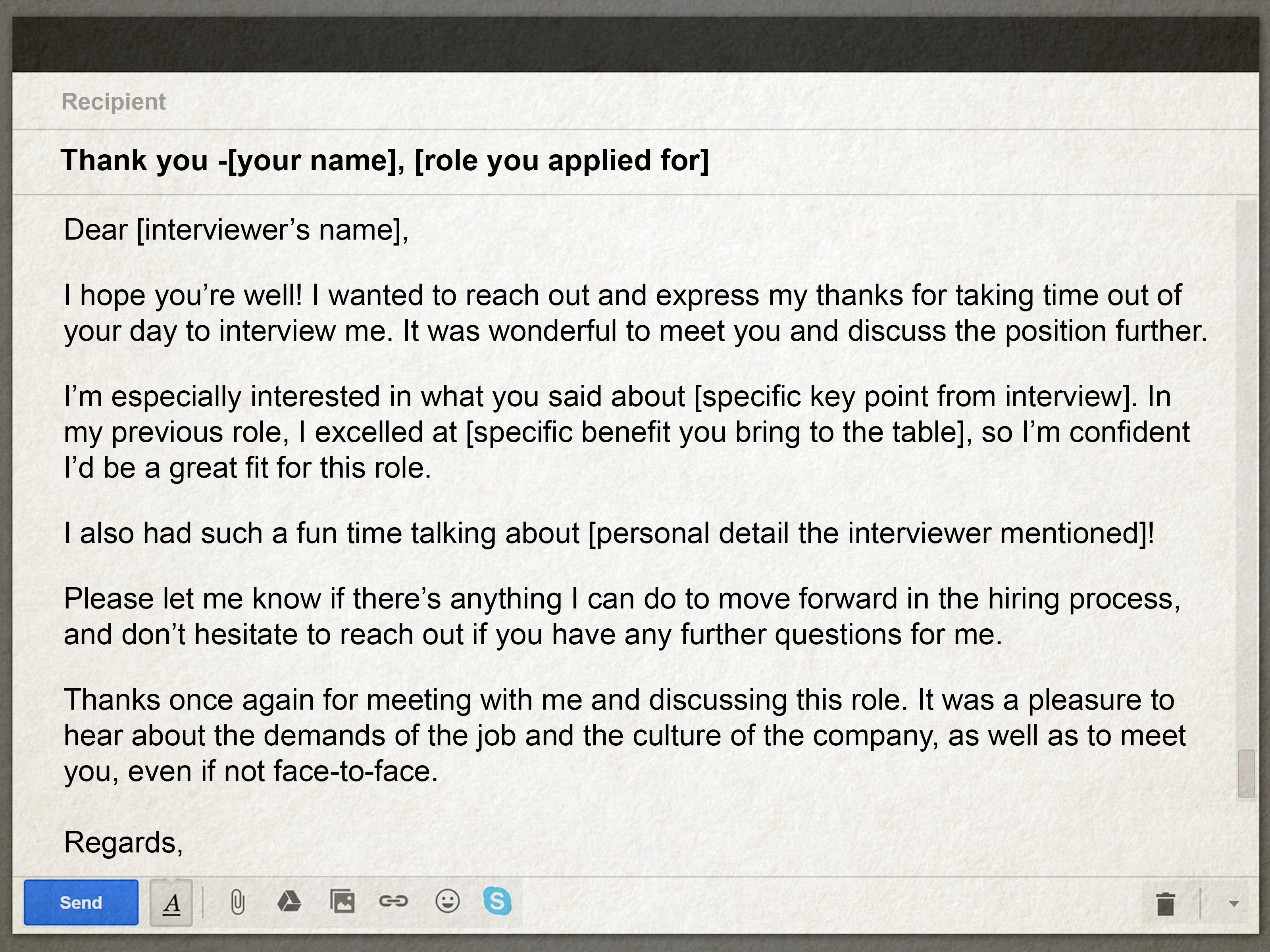
A Zoom interview may end when everyone clicks the red “Leave” button, but your opportunity to make a strong impression is not over. A thoughtful thank you email can reinforce your interest, remind the interviewer why you fit the role, and prove that your communication skills work even when you are not wearing your carefully positioned interview headphones.
The best post-interview message is not a miniature cover letter, an autobiography, or a desperate plea disguised as gratitude. It is a brief, personalized follow-up that connects your qualifications to the conversation you just had. Here is how to write one that sounds professional, confident, and unmistakably human.
Why Send a Thank You Email After a Zoom Interview?
A thank you email serves several purposes at once. It shows appreciation for the interviewer’s time, confirms that you remain interested in the position, and gives the hiring team another reason to remember you. It also provides a natural opportunity to mention an important qualification, clarify an answer, or follow up on something discussed during the video call.
Career advisers generally recommend sending a concise thank you message within approximately 24 hours of an interview. Email is especially appropriate after a virtual interview because it matches the speed and format of the hiring process.
A thank you email will not magically transform an unqualified candidate into the company’s next superstar. It can, however, strengthen an already positive impression. When two candidates have similar experience, professional follow-through may help one appear more attentive, enthusiastic, and prepared.
When Should You Send the Email?
Aim to send your thank you email within 24 hours of the Zoom interview. For a morning interview, sending it later that afternoon is usually appropriate. After an afternoon interview, you can send it that evening or the following morning.
Do not send the email 45 seconds after leaving the meeting. That can make the message look copied, automated, or written before the conversation occurred. Give yourself enough time to review your notes, identify a meaningful detail, and check the spelling of everyone’s name.
If more than 24 hours have already passed, send the message anyway. A sincere email that arrives slightly late is usually better than no email at all. Avoid opening with a dramatic apology. Briefly thank the interviewer, refer to the conversation, and move forward.
What if the Interview Was on a Friday?
You can send the email on Friday afternoon or Saturday morning. Waiting until Monday is also acceptable, although an earlier message may reach the interviewer while the conversation is still fresh. The important point is to be timely without appearing as though you spent the entire weekend monitoring the hiring manager’s inbox from a darkened room.
What to Include in a Thank You Email After a Zoom Interview
1. A Clear Subject Line
Your subject line should tell the recipient exactly what the email contains. This is not the place for mystery, suspense, or marketing copy worthy of a late-night infomercial.
Effective subject lines include:
- Thank You for the Zoom Interview
- Thank You – Marketing Manager Interview
- Great Speaking With You Today
- Thank You for Your Time, Jordan
- Follow-Up on Our Product Designer Interview
Including the position title can be helpful when the interviewer is meeting several candidates for different openings. Straightforward subject lines are easier for busy recruiters and hiring managers to recognize.
2. A Professional Greeting
Address the interviewer by the name used during the Zoom meeting. “Hi Sarah” is appropriate for many modern workplaces, while “Dear Ms. Rivera” may suit a more traditional organization.
Double-check the spelling. Calling Catherine “Katherine” after her name was displayed on the screen for 40 minutes is not the memorable detail you want to create.
3. Genuine Appreciation
Begin by thanking the interviewer for speaking with you. Be specific enough to sound sincere:
Thank you for taking the time to speak with me this morning about the customer success manager position.
Avoid excessive praise. You do not need to describe the interview as a life-changing conversation or the greatest 30 minutes since the invention of indoor plumbing.
4. A Specific Detail From the Conversation
Personalization is the most important difference between a memorable thank you email and a generic template. Mention a project, challenge, company goal, team structure, or idea discussed during the interview.
For example:
I especially enjoyed learning about the team’s plan to redesign the customer onboarding process and reduce the time required for new clients to reach their first milestone.
This detail proves that you listened. It also helps the interviewer connect your email with the actual conversation rather than mentally filing it under “Polite Message Number 17.” Career guidance from major employment publications and university career centers consistently emphasizes keeping the note brief while referring to meaningful parts of the interview.
5. A Brief Reminder of Your Value
Connect one relevant skill or experience to the employer’s needs. Keep this section to one or two sentences. The interviewer already has your resume; there is no need to send the director’s-cut version.
For example:
Our discussion strengthened my interest in the role, particularly because my experience building automated onboarding campaigns could support the team’s retention goals.
The strongest value statement responds directly to something mentioned during the Zoom interview. Instead of announcing that you are hardworking, show how your experience addresses a specific challenge.
6. Continued Interest and a Simple Closing
Make your enthusiasm clear without sounding as though you have already ordered a personalized nameplate for your future desk.
You might write:
I remain very interested in the opportunity and would be excited to contribute to the team.
Close by offering to provide additional information, then use a professional sign-off such as “Best,” “Best regards,” or “Sincerely.” Include your full name, phone number, email address, and relevant portfolio or LinkedIn profile when appropriate.
A Simple Formula That Works
Use this five-part structure when writing your email:
- Thank the interviewer for the conversation.
- Mention the position and company.
- Reference one specific topic from the interview.
- Connect your experience to the employer’s needs.
- Confirm your interest and close professionally.
The finished email will usually be between 100 and 200 words. Senior-level, technical, or highly detailed interviews may justify a slightly longer note, but brevity remains your friend.
Sample Thank You Email After a Zoom Interview
Subject: Thank You – Account Manager Interview
Hi Ms. Patel,
Thank you for speaking with me today about the account manager position at Brightline Solutions. I enjoyed learning more about the team’s consultative approach to client relationships and its plans to expand the healthcare portfolio.
Our conversation reinforced my interest in the role. My experience managing enterprise accounts and developing quarterly retention plans would allow me to contribute to the team’s growth objectives while maintaining strong client partnerships.
Please let me know if I can provide any additional information. I appreciate your time and look forward to hearing about the next steps.
Best regards,
Taylor Morgan
555-555-0148
[email protected]
How to Follow Up After a Zoom Panel Interview
When several people participated in the interview, send an individual message to each person when you have their contact information. The basic structure can remain the same, but each email should contain a different detail based on that interviewer’s questions or responsibilities.
For example, thank the hiring manager for explaining the team’s priorities, thank a future coworker for discussing the daily workflow, and thank the department director for sharing the organization’s long-term strategy.
Avoid sending identical emails to everyone. Interviewers may compare notes or forward messages internally. Discovering that each person received the same “personalized” paragraph can make your thoughtful gesture look like a mail merge wearing a fake mustache.
If you do not have everyone’s email address, ask the recruiter to share the contact details or forward a short message to the group. Guidance for panel interviews generally favors acknowledging each participant while keeping every note personal and concise.
What if There Were Technical Problems?
A frozen screen, delayed audio, or surprise software update does not automatically ruin a Zoom interview. If the issue was minor, you usually do not need to mention it. Focus the thank you email on the substance of the conversation.
If a serious connection problem interrupted an important answer, briefly acknowledge it and provide the missing information:
I also wanted to complete my response regarding project planning, as our connection dropped during that portion of the conversation. In my current role, I coordinate timelines across design, engineering, and compliance teams using weekly milestone reviews.
Keep the explanation calm and factual. Do not blame the interviewer, your internet provider, Mercury retrograde, or the neighbor who apparently chose that exact moment to test a leaf blower.
Zoom’s own interview guidance recommends a concise, personal follow-up and notes that the message can be used to clarify a point or add information that was missed during the video meeting.
Can You Correct a Weak Interview Answer?
Yes, but do it carefully. A thank you email can clarify an incomplete answer or add a relevant example. It should not become a written attempt to repeat the entire interview.
Use one short paragraph:
After reflecting on your question about resolving team disagreements, I wanted to add that I recently facilitated a planning session between sales and operations that resulted in a shared launch schedule and reduced last-minute revisions.
This approach adds useful evidence without announcing, “I have replayed every sentence I said and would now like a complete do-over.” Professional career guidance recognizes the thank you message as an appropriate place to clarify an omission when the additional information is concise and relevant.
Common Thank You Email Mistakes
Sending a Generic Template
Templates provide structure, but the final message should reflect your actual conversation. Replace vague phrases with details about the role, team, and challenges discussed.
Writing Too Much
A thank you email is not a second cover letter. Long messages can bury your strongest point and create extra work for the recipient. Keep the note focused.
Repeating Your Entire Resume
Mention one or two qualifications related to the interviewer’s priorities. Listing every job, certification, award, and summer lemonade stand weakens the message.
Being Overly Casual
Match the company’s communication style, but maintain professional standards. Emojis, internet slang, and “Hey bestie” are rarely appropriate unless you interviewed to manage a highly unusual social media account.
Requesting an Immediate Decision
Do not end with “When will I know if I got the job?” Thank the interviewer, express interest, and respect the timeline discussed during the meeting.
Using AI-Generated Language Without Editing It
Writing tools can help organize your thoughts, but generic phrases are easy to recognize. Replace empty corporate language with specific details from your interview. Read the email aloud before sending it. If it sounds like a committee of robots drafted it during a leadership retreat, revise it.
Forgetting to Proofread
Check names, titles, company spelling, grammar, and contact details. Also confirm that you have not accidentally left placeholders such as “[Insert exciting company initiative here].”
What to Do After Sending the Thank You Email
Once the message is sent, follow the timeline given by the interviewer. If the hiring manager said candidates would receive an update by Friday, wait until that date has passed before checking in.
If no timeline was provided, a polite follow-up after approximately one week is reasonable. Keep it brief, confirm your continued interest, and ask whether the team needs additional information. Do not send daily updates, inspirational quotes, or photos of yourself standing outside the company headquarters.
A thank you email and a status follow-up serve different purposes. The thank you message expresses appreciation immediately after the interview. The later follow-up asks about progress after the expected decision period has passed.
Additional Thank You Email Examples
After an Entry-Level Zoom Interview
Subject: Thank You for Today’s Interview
Hi Daniel,
Thank you for meeting with me today to discuss the junior data analyst position. I enjoyed hearing how the team uses customer behavior data to guide product decisions.
The opportunity strongly matches my interest in turning complex information into clear recommendations. My recent forecasting project and experience with SQL and Tableau would help me begin contributing to the team quickly.
I appreciate your time and remain very interested in the role. Please let me know if I can provide anything else.
Best,
Alex Kim
After a Technical Interview
Subject: Thank You – Software Engineer Interview
Hi Priya,
Thank you for the engaging conversation about the software engineer position. I particularly enjoyed discussing how the platform team is improving observability across distributed services.
Our discussion increased my enthusiasm for the opportunity. My experience introducing tracing and automated performance alerts in a microservices environment could be especially relevant to the team’s current priorities.
Thank you again for your time. I would be happy to provide additional code samples or project details.
Best regards,
Marcus Lee
After a Minor Zoom Disruption
Subject: Thank You for the Interview
Dear Ms. Robinson,
Thank you for speaking with me about the operations coordinator role. I appreciated learning about the company’s expansion plans and the need for stronger coordination between regional teams.
I also wanted to complete one point that was interrupted when my audio briefly disconnected. In my current position, I created a centralized scheduling process that reduced missed handoffs and improved reporting consistency across four locations.
Our conversation reinforced my interest in joining your team. Thank you again for your time and understanding.
Sincerely,
Jamie Carter
Practical Experiences and Lessons From Post-Zoom Follow-Ups
The following composite scenarios reflect common candidate experiences and illustrate why personalization matters more than fancy language.
The Candidate Who Took Two Minutes of Notes
One candidate finished a virtual marketing interview feeling reasonably confident but could remember only broad topics. Fortunately, she had written down three short phrases during the conversation: “new product launch,” “small content team,” and “reporting inconsistency.”
Her thank you email referred to the upcoming launch and connected her experience creating repeatable campaign dashboards to the company’s reporting challenge. The note did not contain groundbreaking poetry. It simply showed that she had listened, understood the problem, and could contribute to a solution.
The lesson is simple: keep a notepad beside your computer during the interview. Write down names, priorities, projects, and questions you want to revisit. Do not attempt to transcribe every sentence. Excessive typing can make it look as though you are simultaneously interviewing and filing your taxes.
The Candidate Who Tried to Fix Everything
Another candidate stumbled over one behavioral question and spent the next several hours mentally rewriting the answer. His first thank you draft contained four long paragraphs explaining what he had intended to say. It sounded less like a professional follow-up and more like testimony before a congressional committee.
He replaced the explanation with two sentences containing one clear example. The revised message acknowledged the question, supplied useful evidence, and returned the focus to his interest in the role.
The lesson is that a thank you email can repair a small gap, but it cannotand should notreconstruct an entire interview. Correct the most important omission and leave the rest alone.
The Candidate Whose Wi-Fi Rebelled
In another scenario, a candidate’s video froze during a panel interview. She rejoined quickly, apologized once, and continued. Her follow-up emails focused on the team’s priorities rather than repeatedly discussing the connection problem.
Each interviewer received a slightly different note. The department manager received a reference to expansion goals, while a future teammate received a message about workflow automation. The technical disruption became a minor footnote instead of the main event.
The lesson is to recover calmly. Most professionals understand that virtual meetings occasionally misbehave. How you respond to the disruption may reveal more about your judgment than the disruption itself.
The Candidate Who Sent the Same Email to Five People
A panel candidate once sent identical messages to every participant, changing only the greeting. The emails were polite, grammatically correct, and completely forgettable. Worse, two interviewers forwarded the notes to each other and noticed the duplication.
A better approach would have required only a few additional minutes. One unique sentence in each email could have reflected the recipient’s question, expertise, or description of the team.
The lesson is that personalization does not require writing five entirely new essays. Keep the basic structure, but change the conversational detail and value statement.
The Candidate Who Almost Did Not Send Anything
Finally, consider the candidate who assumed thank you emails were outdated. He changed his mind and sent a short note that mentioned a challenge discussed during the interview. The hiring manager replied with an additional question, creating another opportunity for the candidate to demonstrate his experience.
A thank you email does not always receive a response, and silence should not be interpreted as rejection. Hiring professionals are busy, and many simply read the note and add it to their evaluation. The value of the message is not measured only by whether someone replies. Its purpose is to complete the conversation professionally.
Final Thoughts
A strong thank you email after a Zoom interview should be timely, specific, brief, and connected to the employer’s needs. Thank the interviewer, mention a memorable part of the discussion, reinforce one relevant qualification, and confirm your interest in the position.
You do not need dazzling language. You need evidence that you paid attention and can communicate with clarity. Send the message, proofread it one final time, and then step away from your inbox. Refreshing it every seven seconds has not yet been recognized as a successful job-search strategy.
Editorial note: The recommendations in this article synthesize current interview guidance from major U.S. employment publications, university career centers, business publications, and Zoom’s official resources.










