
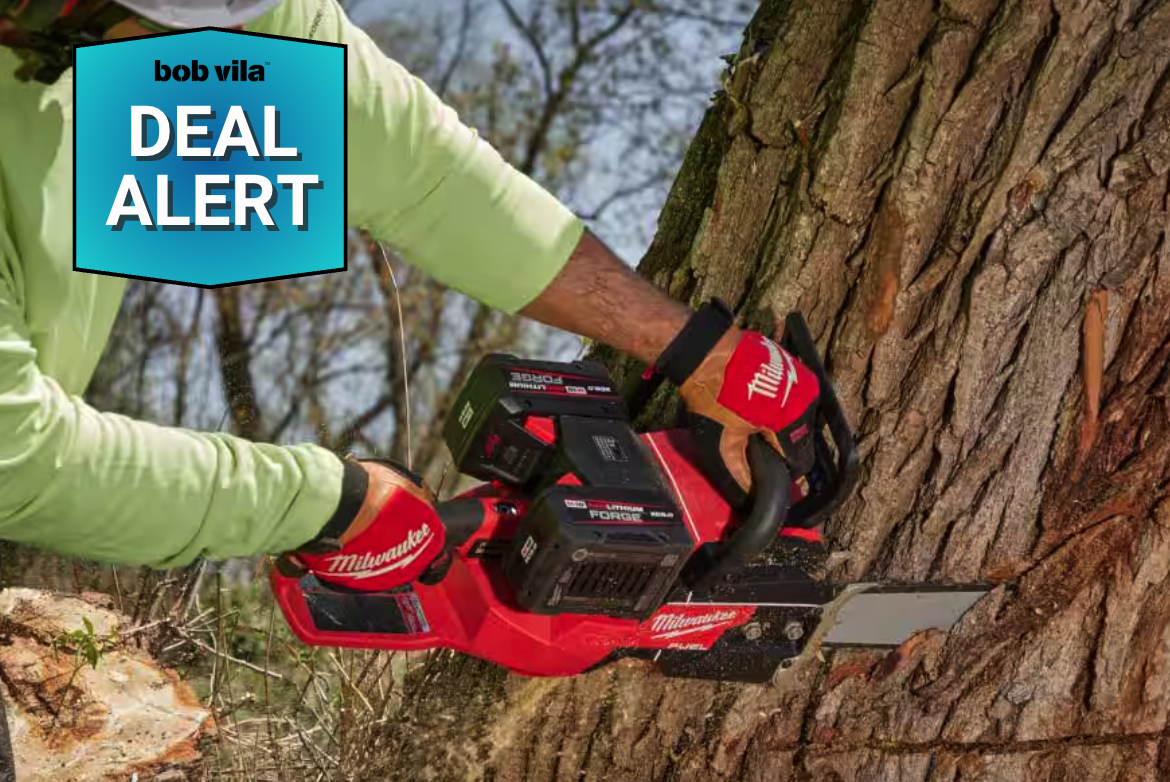
Editor’s note: Deals on power tools can change faster than a freshly sharpened chain through soft pine. Always confirm the final price, model number, battery bundle, return policy, and local availability at checkout before buying.
If your yard has been quietly collecting fallen limbs, half-pruned branches, or that one suspicious log you keep promising to “deal with this weekend,” this may be the nudge you needed. Home Depot has been featuring aggressive promotional pricing on Milwaukee chainsaws, including popular M18 FUEL models built for pruning, storm cleanup, firewood cutting, and heavier-duty outdoor work. In plain English: red tools, sharp chains, fewer excuses.
The headline sounds dramatic“clearing out” always doesbut the real story is more useful than hype. Some Milwaukee chainsaws are currently showing meaningful markdowns, while others are part of seasonal promos, bundle offers, or “buy more, save more” events. That means smart shoppers should look beyond the sticker price and ask a better question: Which Milwaukee chainsaw deal actually fits the work I need to do?
This guide breaks down the most important Milwaukee chainsaw options at Home Depot, why battery-powered chainsaws have become serious tools, what to check before buying, and how to avoid common mistakes. We will also cover safety, batteries, bar length, value, and real-world usage experiences so you can shop like a pro instead of panic-clicking like someone racing a squirrel for the last acorn.
Why Milwaukee Chainsaw Deals at Home Depot Are Getting Attention
Milwaukee’s M18 platform has a major advantage: many homeowners, contractors, landscapers, and serious DIYers already own M18 batteries. If you already have compatible batteries and chargers in your garage, buying a Milwaukee chainsaw can be less painful than starting a new battery ecosystem from scratch. That is one reason Milwaukee outdoor power equipment has become so popular among people who want gas-like performance without gas-engine drama.
Battery chainsaws also make sense for seasonal yard work. They start with a trigger instead of a pull cord. They do not require mixing fuel. They do not leave you smelling like a small-engine repair shop. And for many homeowners, they provide more than enough cutting power for storm limbs, pruning, trail cleanup, and weekend firewood projects.
Home Depot’s current Milwaukee chainsaw selection includes compact pruning saws, 16-inch general-purpose saws, top-handle models, and larger dual-battery saws. Some listings show discounts compared with previous prices, while other models are simply positioned as seasonal deals. Either way, Milwaukee chainsaws are worth watching closely when Home Depot runs outdoor power equipment promotions.
Current Milwaukee Chainsaw Deals Worth Checking
One of the standout Home Depot offers is the Milwaukee M18 FUEL 16-inch chainsaw kit with a 12.0Ah battery and rapid charger. Recent listing details showed it at $399, reduced from $499. That matters because this kit includes the battery and charger, which are often the expensive part of cordless tool ownership. If you do not already own a large M18 battery, a complete kit can be the smarter buy.
The Milwaukee M18 FUEL 8-inch HATCHET pruning saw has also been listed with a strong markdown in certain configurations. One current Home Depot listing showed an 8-inch HATCHET pruning saw package with two 8-inch saw chains at $219, reduced from $299. For branch trimming and tight-space cutting, that compact format is more convenient than wrestling a full-size chainsaw through a shrub like you are auditioning for a backyard action movie.
For heavier work, Home Depot also lists the Milwaukee M18 FUEL 20-inch dual-battery chainsaw kit. This model is not an impulse buy; it is a serious cordless saw aimed at demanding users. It uses two M18 batteries and is designed for large cutting jobs where balance, torque, and runtime matter. If your weekend plans include bucking larger logs or replacing a gas saw, this is the Milwaukee model that deserves a closer look.
Milwaukee M18 FUEL 16-Inch Chainsaw: The Best All-Around Pick
For most homeowners and many pros, the Milwaukee M18 FUEL 16-inch chainsaw hits the sweet spot. A 16-inch bar is long enough for storm cleanup, medium logs, thick branches, and general property maintenance, but it is not so large that casual users feel like they accidentally bought logging equipment.
Milwaukee designed this saw to deliver power comparable to a small gas chainsaw. The tool uses a POWERSTATE brushless motor, REDLINK PLUS electronics, and the M18 battery system. The 16-inch model includes an Oregon bar and chain, automatic oiler, variable-speed trigger, onboard scrench storage, and compatibility with M18 batteries.
The real value is the kit configuration. A chainsaw without a battery may look cheaper, but once you add a high-output battery and charger, the math can change quickly. If you already own multiple M18 high-output batteries, the tool-only version may make sense. If not, the kit is usually the better long-term purchase.
Who should buy the 16-inch Milwaukee chainsaw?
Choose the 16-inch M18 FUEL chainsaw if you want one saw for general yard cleanup, medium firewood cutting, storm-damaged limbs, and occasional heavier work. It is the “one good saw” option for homeowners who want more capability than a tiny pruning saw but do not need a massive 20-inch dual-battery machine.
Milwaukee M18 FUEL HATCHET 8-Inch Pruning Saw: Small but Seriously Useful
The Milwaukee M18 FUEL HATCHET 8-inch pruning saw is built for control, access, and quick cutting in tight spaces. It is not meant to replace a full-size chainsaw. Instead, it shines when you need to trim branches, clean up small fallen limbs, shape overgrown shrubs, or cut material where a longer bar would feel clumsy.
Milwaukee says the 8-inch HATCHET is designed for professional arborists, landscape maintenance workers, utility users, and anyone who needs compact cutting power. It weighs less than many full-size saws and has features such as an automatic oiler, easy-access chain tensioner, metal bucking spikes, variable-speed trigger, and a scabbard.
For homeowners, the appeal is simple: the HATCHET feels approachable. A full chainsaw can be intimidating for someone who only needs to remove a few branches after a storm. The HATCHET is easier to maneuver and store, yet still powerful enough to handle real hardwood cuts within its intended capacity.
Who should buy the 8-inch HATCHET?
Buy the HATCHET if your work is mostly pruning, trimming, branch cleanup, and light cutting. It is ideal for people who already own M18 batteries and want a compact tool that gets used often instead of a big chainsaw that lives on a shelf until a tree falls over dramatically.
Milwaukee M18 FUEL 20-Inch Dual-Battery Chainsaw: For Bigger Jobs
The Milwaukee M18 FUEL 20-inch dual-battery chainsaw is the heavy hitter. It is built for demanding cuts and uses two M18 batteries to generate serious power. Milwaukee lists peak output at 5.8 horsepower and 9.5Nm of torque, with the saw optimized for two M18 REDLITHIUM FORGE XC8.0 batteries.
This model is for users who need more than occasional branch cleanup. A 20-inch bar gives you the reach for larger logs, bigger storm debris, and more serious property work. It also comes with the tradeoff you would expect: more weight, more cost, and a stronger need for proper technique.
If you are replacing a gas chainsaw for frequent cutting, this model becomes interesting. If you are trimming ornamental branches twice a year, it is probably overkill. Buying too much chainsaw is like buying a dump truck to pick up one bag of mulch: impressive, but not exactly efficient.
How to Choose the Right Milwaukee Chainsaw at Home Depot
Choose by bar length
Bar length determines what kind of work a chainsaw handles comfortably. An 8-inch pruning saw is best for branches and smaller material. A 16-inch chainsaw is the all-around choice for most homeowners. A 20-inch chainsaw is better for larger logs, heavier storm cleanup, and professional-style cutting.
Choose by battery situation
If you already own M18 batteries, especially high-output packs, a tool-only deal might be attractive. If you are new to Milwaukee, look hard at kits that include a battery and charger. Chainsaws draw more power than drills or impact drivers, so small batteries may limit performance and runtime.
Choose by job frequency
If you cut once or twice a year, prioritize convenience, storage, and value. If you cut every month, runtime, balance, replacement chains, oil capacity, and durability become more important. The more often you use the saw, the more sense it makes to invest in a stronger model and extra batteries.
Battery Chainsaws vs. Gas Chainsaws: Why the Gap Has Shrunk
Battery-powered chainsaws used to have a reputation problem. Older models often felt underpowered, slow, and better suited for nibbling twigs than cutting real hardwood. That is no longer the case. Premium cordless chainsaws now deliver impressive torque, quick trigger response, and strong cutting performance.
The biggest advantage is convenience. With a Milwaukee battery chainsaw, you install the battery, check the chain oil, release the brake, and start cutting. There is no choke, no pull cord, no carburetor mood swing, and no half-empty gas can from last summer glaring at you from the corner of the garage.
Battery saws are also quieter than gas saws, though they are not silent. You still need hearing protection, eye protection, gloves, boots, and chainsaw chaps. The chain does not care whether the motor is electric or gas. Sharp is sharp.
Important Safety and Recall Note Before You Buy
Before buying or using any chainsaw, safety should come first. Chainsaws can cause serious injuries, and even experienced users need to respect kickback, chain speed, fatigue, and poor footing. Always use proper personal protective equipment, keep both hands on the saw when required, avoid cutting overhead, and engage the chain brake when carrying the saw or pausing between cuts.
There is also a specific Milwaukee recall that shoppers should know about. The U.S. Consumer Product Safety Commission announced a recall involving certain Milwaukee M18 FUEL 12-inch and 14-inch Top Handle Chainsaws because the chain brake may not activate properly. The affected recall is tied to specific top-handle models and serial-number details, not every Milwaukee chainsaw.
If you are buying a top-handle Milwaukee chainsaw, especially older stock or a used unit, verify the exact model and serial number before using it. A good deal is not a good deal if the saw belongs in a repair program.
What to Check Before Clicking “Add to Cart”
First, confirm whether the chainsaw is tool-only or a kit. Tool-only listings are cheaper because they do not include a battery or charger. That is perfect for existing Milwaukee users but frustrating for first-time buyers who open the box and realize the saw is basically a very sharp paperweight until they buy a battery.
Second, check the battery size. Chainsaws perform best with larger high-output batteries. A compact battery may technically fit but may not deliver the runtime or power you expect. For larger saws, the right batteries are not optional; they are part of the tool’s performance.
Third, look at replacement chains and bar oil. Most cordless chainsaws still require bar and chain oil. Many new users forget this and then wonder why the chain looks unhappy after a few cuts. Buy oil, inspect chain tension often, and keep a spare chain handy if you plan to do serious cleanup.
Fourth, compare store pickup and shipping. Home Depot pricing and availability can vary by location. A deal that appears online may not be stocked at your closest store, and some promotions may expire quickly. If the price is genuinely good and the model fits your needs, waiting too long can mean watching the deal vanish like a 10mm socket.
Are Home Depot Milwaukee Chainsaw Deals Actually Worth It?
Yes, but only if you buy the right saw for the right reason. The 8-inch HATCHET is a great value when discounted for pruning and small cleanup. The 16-inch M18 FUEL chainsaw kit is arguably the best all-around deal when it includes a large battery and charger. The 20-inch dual-battery model is expensive but compelling for serious users who want cordless power in a larger format.
The mistake is buying based only on discount percentage. A huge markdown on the wrong tool is still the wrong tool. If you need a compact pruning saw, the 20-inch model is too much. If you need to buck large logs regularly, the tiny HATCHET will leave you under-equipped. Value is not just price; it is fit.
Real-World Experiences: What It Feels Like to Use a Milwaukee Chainsaw
The first thing most people notice when switching from gas to a Milwaukee battery chainsaw is how quickly the work starts. There is no ritual. No priming bulb. No “maybe it starts on the fourth pull if the moon is kind.” You press the trigger, and the chain is ready. For homeowners who only use a chainsaw occasionally, that alone can make the tool feel worth it.
During typical yard cleanup, the 16-inch M18 FUEL chainsaw feels like the practical hero. Imagine a windy night drops three medium limbs across your driveway. With a gas saw, you might spend ten minutes finding fuel, checking the engine, and hoping it starts. With the Milwaukee, you grab a charged battery, check oil, inspect chain tension, and get to work. The saw cuts cleanly through branches that would make a recip saw feel underdressed.
The 8-inch HATCHET creates a different experience. It feels less like “chainsaw day” and more like grabbing a regular yard tool. That matters because tools you are comfortable using get used more often. For trimming fruit trees, cleaning up fence-line branches, or cutting limbs into trash-can-friendly pieces, the HATCHET is easy to control. It also reduces the temptation to use an oversized saw for small work, which is often where awkward cuts happen.
Battery management becomes part of the routine. A big Milwaukee battery can handle plenty of cutting, but chainsaws are power-hungry. If you are clearing a whole fallen tree, one battery may not be enough. The smart move is to keep a second battery charging while you work. That way, your break schedule is controlled by your energy level, not by a blinking battery indicator.
Another practical lesson is that chain maintenance still matters. Some new battery-tool users assume cordless means maintenance-free. Not quite. You still need bar oil. You still need proper chain tension. You still need to sharpen or replace the chain. A dull chain turns even a powerful saw into a noisy butter knife. When the chain is sharp, the saw pulls itself into the cut. When it is dull, you start pushing, the motor works harder, the battery drains faster, and everyone has a worse afternoon.
Noise is better but not gone. A Milwaukee battery chainsaw is less obnoxious than a gas saw, which your neighbors may appreciate, especially if your yard project starts before coffee has fully entered the community bloodstream. But hearing protection is still smart. The chain, wood, and motor create enough sound that safety gear remains part of the job.
The final experience is storage. Battery chainsaws are easier to live with. No fuel smell. No stale gas. No carburetor issues after sitting for months. Store the saw clean, remove the battery, keep the chain covered, and check for oil leakage. If you are used to gas equipment, this feels wonderfully boringand boring is underrated when it comes to tools that can remove branches and confidence at the same time.
Final Buying Advice
If Home Depot is showing a strong discount on the Milwaukee chainsaw you already had your eye on, it is worth acting quickly. The best Milwaukee deals usually combine a useful saw, a serious battery, a charger, and a price that beats buying everything separately. For most shoppers, the 16-inch M18 FUEL chainsaw kit is the safest all-around choice. For pruning-heavy work, the 8-inch HATCHET is the more convenient option. For demanding jobs, the 20-inch dual-battery saw brings the muscle.
Just remember: buy for your actual workload, not your fantasy lumberjack identity. Check the model, battery, charger, warranty, return policy, and safety notices. Then grab the deal while it is still there. Your yard will look better, your future self will thank you, and that fallen limb by the fence can finally stop being part of the landscape design.













