
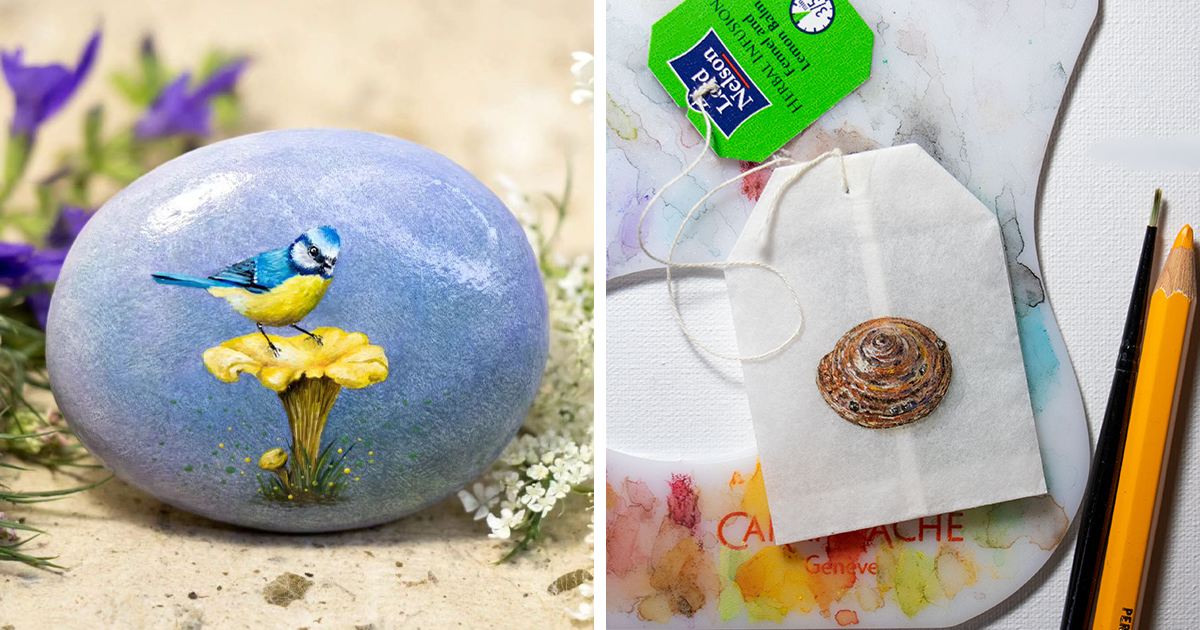
There is something wonderfully ridiculous about painting an entire world on a surface smaller than a cookie. A mountain range may fit on a two-inch panel. A sunset can live inside a bottle cap. A tiny cat can have more attitude than a full-sized oil portrait in a museum hallway. That is the magic of miniature paintings: they ask the viewer to slow down, lean in, and pay attention to details that might be missed in a larger work.
Miniature art has a long and fascinating history, from illuminated manuscripts and Persian album paintings to delicate portrait miniatures once carried close to the heart. Today, the form feels surprisingly modern. In a world of fast scrolling, miniature paintings do the opposite. They whisper, “Come closer.” They reward patience. They turn smallness into drama.
In this collection, I am sharing 20 of my newest miniature paintings, each built around a tiny scene, a mood, or a visual joke that made me smile while working under a magnifier. Some are landscapes. Some are cozy interiors. A few are so small that one sneeze could have changed the composition forever. Thankfully, the sneeze stayed away.
Why Miniature Paintings Feel So Special
Miniature paintings are not simply “small paintings.” They are small-scale artworks designed with precision, restraint, and close viewing in mind. The best miniature painting uses scale as part of the storytelling. A tiny window can feel lonely. A tiny moon can feel enormous. A tiny cup of coffee can carry the emotional weight of an entire Monday morning.
Historically, miniature artworks were often personal objects. Portrait miniatures could be worn, carried, hidden, or treasured as keepsakes. Illuminated manuscript paintings transformed pages into visual worlds. Indo-Persian and Mughal miniature traditions used exquisite detail, refined linework, and jewel-like color to tell stories with remarkable sophistication. While my new pieces are contemporary and playful, they owe a quiet thank-you to that long tradition of careful looking.
For me, miniature painting is part art, part meditation, and part hand-eye coordination contest. The process is slow, but never boring. A single brushstroke can become a fence post, a tree branch, a roofline, or an unfortunate blob that must immediately become a cloud. That is the contract: the painting gets to be tiny, but the consequences are huge.
The Tools Behind These Tiny Worlds
My newest miniature paintings were created using a mix of fine-detail brushes, acrylic and gouache paints, smooth miniature panels, heavyweight paper, and occasionally recycled materials like small tins or wooden scraps. I use a limited palette for many pieces because too many colors can quickly overwhelm a small surface. On a miniature scale, a dot of red can behave like a marching band.
The most important tool is not the smallest brush, although that certainly helps. The real secret is planning. Before I paint, I usually sketch a thumbnail composition and decide where the eye should land first. In larger paintings, viewers have room to wander. In miniature art, every millimeter matters. A misplaced highlight can steal attention. A heavy shadow can swallow the scene whole.
I also work in thin layers. Miniature painting rewards patience because thick paint can erase detail quickly. Fine lines, transparent glazes, dry brushing, and tiny accents help build depth without turning the piece into a colorful pancake.
Here Are 20 Of My Newest Miniature Paintings
1. “Blue Door After Rain”
This miniature painting captures a weathered blue door with a puddle reflecting the soft glow of evening. I wanted the piece to feel like a quiet street after a summer storm. The hardest part was painting the reflection without making the puddle look like spilled soup. Success, I hope, has been achieved.
2. “Tiny Cabin, Big Moon”
A small wooden cabin sits beneath an oversized moon, surrounded by dark pine trees. The contrast between the little house and the huge sky gives the painting a dreamy, storybook mood. It is the kind of place where someone is probably making tea and refusing to answer emails.
3. “Morning Bakery Window”
This piece shows a bakery window filled with miniature loaves, pastries, and one suspiciously perfect croissant. Warm yellow light spills onto the sidewalk. I used tiny dots of paint to suggest crumbs, because no respectable bakery scene should be crumb-free.
4. “The Red Umbrella”
A single red umbrella moves through a gray city street. The whole painting is built around contrast: muted buildings, soft rain, and one bold color note. It is simple, but it has emotional punch. Sometimes one bright shape is enough to tell the story.
5. “Cat On The Windowsill”
This miniature features a cat watching the world from a window full of houseplants. The cat is only a few brushstrokes wide, yet somehow still looks judgmental. That is not my fault. That is simply cat science.
6. “Pocket-Sized Desert”
In this warm-toned landscape, tiny cactus silhouettes stand against a peach and lavender sunset. I focused on the glow of the horizon and the clean shapes of the desert plants. The painting is small, but it carries a wide-open feeling.
7. “Kitchen At 7:03 A.M.”
This cozy interior shows a small kitchen table, a chair, a mug, and morning light coming through a curtain. I love painting domestic spaces because they feel personal even when no people appear in them. A coffee mug can be a portrait if you stare at it long enough.
8. “Lighthouse In A Bottle Cap”
This was one of the most playful pieces in the series. I painted a tiny lighthouse scene inside a bottle cap, using the circular shape as part of the composition. The curved edge frames the sea like a little porthole.
9. “The Bookshop Corner”
A miniature bookshop is almost dangerously charming. This painting includes stacked books, a reading lamp, and a small chair that looks ready for someone who says, “I’m just browsing,” then disappears for two hours.
10. “Snow On The Green Roof”
This winter scene features a tiny cottage with a green roof under soft falling snow. I kept the palette cool and quiet, then added warm light in the windows. That little glow is the emotional center of the painting.
11. “Three Boats At Low Tide”
This coastal miniature shows three small boats resting on wet sand. The challenge was creating believable reflections with very little space. I used thin horizontal strokes to suggest water and shine without overworking the scene.
12. “The Orange Tree Courtyard”
Inspired by Mediterranean courtyards, this painting includes white walls, patterned tiles, and a small orange tree. The fruit was painted with tiny dots of bright orange. Each dot had to land exactly right, which made the process feel like a very calm circus act.
13. “Night Train Window”
This piece looks outward from a train window at passing lights in the dark. It is more abstract than some of the others, using blurred strokes and reflections to suggest motion. Miniature paintings do not always need perfect detail; sometimes atmosphere does the heavy lifting.
14. “Garden Chair In Spring”
A green chair sits among tiny flowers and tall grass. I wanted this painting to feel like the first warm day after a long winter. The flowers are only small touches of color, but together they create a lively garden texture.
15. “Cloud Study No. 4”
This tiny sky painting is all about softness. I used gentle layering to build cloud edges and pale blue depth. Painting clouds in miniature is surprisingly forgiving because a mistake can often become another cloud. Clouds are generous like that.
16. “The Yellow Raincoat”
A small figure in a yellow raincoat walks along a dark path. The surrounding trees are deep green and blue, making the coat glow. This piece is about contrast, movement, and the feeling of going somewhere even when the weather has other plans.
17. “Mini Museum Wall”
This is a painting of tiny paintings hanging on a tiny gallery wall. Yes, it is miniature art about miniature art. No, I will not apologize. The piece has a playful, self-referential quality and was one of the most fun to create.
18. “Tea Cup Landscape”
This painting places a mountain scene inside the rim of a teacup. I like combining ordinary objects with imagined worlds, and this one feels like a daydream during breakfast. The steam becomes mist, and the cup becomes a valley.
19. “Lanterns Over The Alley”
Warm lanterns hang across a narrow alley, lighting brick walls and a small doorway. The painting relies on tiny points of light to create depth. On a miniature scale, glowing lights are especially satisfying because they make the whole piece feel alive.
20. “Window Seat With Rain”
The final painting in this group shows a cushioned window seat, a book, and rain streaking down the glass. It is a tiny tribute to quiet afternoons, unfinished chapters, and the noble art of doing absolutely nothing for a while.
What These New Miniature Paintings Have In Common
Although these 20 paintings vary in subject, they share a few common themes: intimacy, atmosphere, and the charm of everyday details. I am drawn to scenes that feel familiar but slightly enchanted. A window, a chair, a street corner, a teacup, or a rainy alley can become a whole universe when painted small.
Miniature painting also teaches economy. There is no room for unnecessary noise. Every shape must earn its place. A tiny painting cannot rely on size to impress the viewer; it must use composition, color, and mood with care. That is why miniature art often feels so personal. It pulls the viewer into a private conversation.
How I Approach Color In Miniature Art
Color behaves differently in miniature painting. A bold color that looks balanced on a large canvas can become overwhelming on a small surface. For this reason, I often start with muted base tones and add brighter accents at the end. A red umbrella, a yellow raincoat, or a warm window light can guide the viewer’s eye without shouting.
I also pay close attention to temperature. Cool backgrounds can make warm details glow. Warm shadows can keep a cozy scene from looking flat. In a tiny painting, color contrast is one of the fastest ways to create depth.
Why Viewers Love Tiny Paintings
Miniature paintings invite curiosity. People naturally lean closer to see how the details were made. That physical act of looking closely creates a different connection between the viewer and the artwork. Instead of being overwhelmed by scale, the viewer becomes a participant. The painting says, “Come here, I have a secret.”
Small art is also easy to collect, display, and gift. A miniature painting can sit on a shelf, tuck into a small frame, hang in a gallery wall arrangement, or become part of a personal collection without demanding an entire room. It brings fine art into daily life in a friendly, approachable way.
My Experience Creating These Miniature Paintings
Creating this newest set of miniature paintings reminded me that small work requires a surprisingly large amount of patience. When I first began painting miniatures, I assumed the reduced size would make everything faster. That was adorable. Completely wrong, but adorable. In reality, a tiny painting can take as much focus as a larger piece because there is very little room for correction. A single line can change the expression of a cat, the angle of a roof, or the mood of an entire street.
One of the biggest lessons I have learned is to respect the sketching stage. When the final piece is only a few inches wide, composition must be clear before the first layer of paint goes down. I often block the scene into simple shapes first: sky, ground, building, window, figure, tree. If the painting does not work as a basic arrangement, no amount of tiny detail will save it later. Detail is wonderful, but structure is the skeleton holding the whole little world upright.
Lighting has become another obsession. In miniature painting, light gives the viewer a reason to care. A glowing bakery window, a moon over a cabin, or a lamp beside a reading chair creates an emotional anchor. I have learned to ask myself, “Where is the warmth?” Even a cold winter scene needs some kind of visual heartbeat, whether that is a candle, a window, or the pale reflection of snow.
The physical process can be funny, too. I have held my breath while painting a line thinner than a thread. I have searched for a dropped miniature panel on the floor like it was a lost diamond. I have cleaned a brush tip so carefully you would think I was preparing it for surgery. There is a strange comedy in making tiny art because the stakes feel dramatic even when the object is small enough to hide under a sticky note.
At the same time, miniature painting has made me more observant in everyday life. I notice the glow of signs reflected in puddles, the shape of shadows on a windowsill, the exact color of a late afternoon wall, and the way plants crowd around a kitchen window. These details may seem ordinary, but they become valuable material for small paintings. Miniature art trains the eye to find stories in corners.
My favorite part is watching people discover the details. Someone may first see a simple tiny cabin, then notice the smoke from the chimney, the moonlight on the roof, or the little path leading into the trees. That second moment of discovery is the real reward. It proves that a painting does not need to be large to create wonder. It only needs to invite attention.
Making these 20 new miniature paintings has also pushed me to balance precision with play. If I become too careful, the work can feel stiff. If I become too loose, the scene loses clarity. The sweet spot is somewhere in between: controlled enough to hold detail, relaxed enough to feel alive. That is where miniature painting becomes joyful.
Final Thoughts
Miniature paintings prove that scale is not the same thing as impact. A tiny artwork can hold atmosphere, humor, memory, and emotion. It can capture a rainy window, a glowing lantern, a lonely boat, or a cat with the confidence of a museum director. These 20 newest pieces are small in size, but each one carries its own little world.
For artists, miniature painting is a beautiful discipline because it sharpens observation and rewards careful choices. For collectors and viewers, it offers a quiet kind of delight. You do not simply look at miniature art from across the room. You step closer. You slow down. You discover. And in a loud, oversized world, that small invitation feels surprisingly powerful.













