
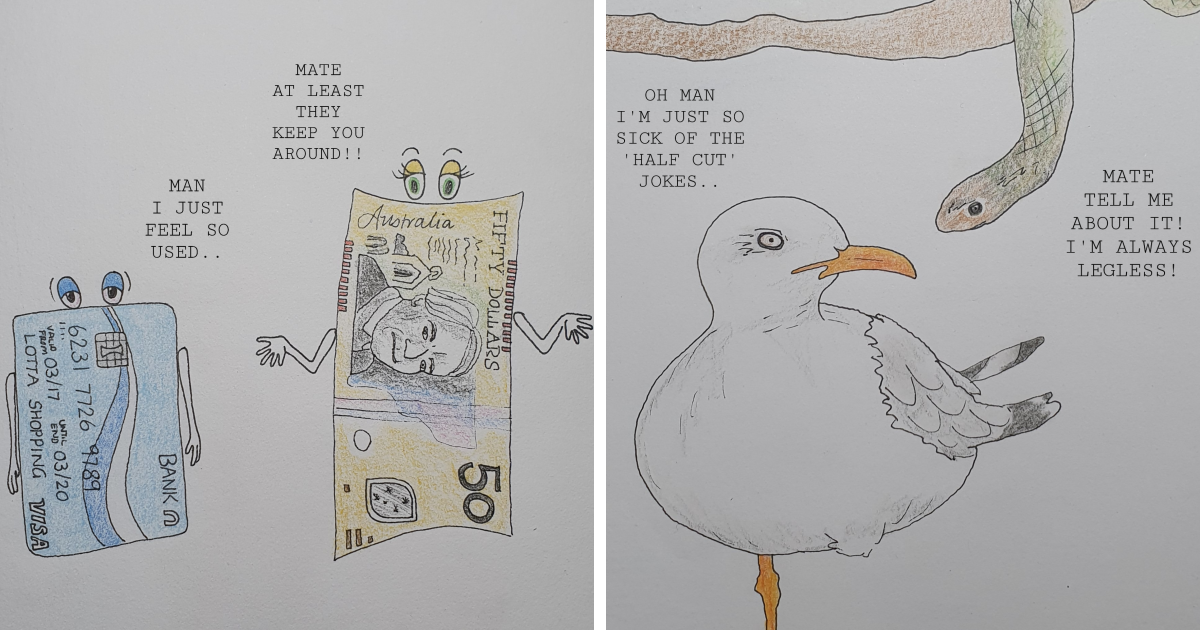
I create silly drawings because the world already has enough serious rectangles, official-looking emails, and chairs designed by people who apparently dislike knees. A silly drawing is a tiny rebellion. It is a banana wearing sunglasses, a cat running a law firm, a dinosaur apologizing for stepping on your Wi-Fi router, or a coffee mug with the emotional range of a Shakespearean actor. It does not ask for permission. It simply appears on the page and says, “Congratulations, your brain is allowed to play today.”
At first glance, silly drawings may look like casual doodles, quick sketches, or funny little cartoons made during a phone call. But behind the wobbly lines and exaggerated faces is a surprisingly useful creative practice. Drawing playful images can sharpen observation, encourage storytelling, reduce creative pressure, and help ideas escape the locked basement of overthinking. The best part? You do not have to be “good at art.” In fact, being too polished can sometimes scare the silliness away.
This article explores why silly drawings matter, how they connect to creativity and doodling, what makes them so charming, and how anyone can start making them without buying a professional art kit or dramatically whispering, “I must find my muse,” beside a rainy window.
What Are Silly Drawings?
Silly drawings are playful, humorous, low-pressure illustrations made to entertain, express an idea, or simply enjoy the act of drawing. They may be doodles, cartoons, comics, visual jokes, character sketches, or absurd little scenes. A silly drawing does not need perfect anatomy, perfect shading, or a perfect explanation. It only needs a spark.
A doodle is often described as a picture or pattern made while thinking about something else or when bored. That definition fits many silly drawings, but silly art can also be intentional. You might sit down with the goal of drawing a grumpy potato, a superhero snail, or a haunted toaster. The drawing may begin as nonsense, but it often becomes a small story. Why is the toaster haunted? Who wronged the potato? Why is the snail wearing a cape, and does it fly slowly?
Why I Create Silly Drawings
I create silly drawings because they make creativity feel less like a performance and more like a playground. Many people avoid drawing because they think art must be impressive. They imagine realistic portraits, museum lighting, and someone in a black turtleneck murmuring, “The composition is brave.” Silly drawings gently kick that pressure under the couch.
When I draw something ridiculous, I am not trying to prove that I can render the human hand, nature’s most complicated bundle of sausages. I am trying to capture a funny idea quickly and honestly. That shift changes everything. The goal becomes expression, not perfection. The drawing succeeds when it communicates a feeling, a joke, or a small burst of personality.
A Silly Drawing Can Start With One Question
Many of my favorite ideas begin with a simple “what if.” What if a pencil had stage fright? What if clouds gossiped? What if a slice of pizza joined a gym but only worked out its crust? These questions are tiny creative engines. They transform ordinary objects into characters and turn blank paper into a comedy club with no cover charge.
The Creative Benefits of Drawing and Doodling
Drawing and doodling can support focus, memory, and idea generation when used thoughtfully. Research discussed by Harvard Health notes that doodling may help attention during dull tasks, and one well-known study found that people who doodled while listening to a boring message recalled more information afterward. The lesson is not that every meeting should become an art festival, although that would improve several meetings immediately. The lesson is that simple visual activity can keep the mind engaged.
Drawing can also help memory because it combines several mental actions at once: visual thinking, physical movement, interpretation, and imagination. When you draw an idea, even badly, you give your brain more hooks to grab later. A silly drawing of a milk carton holding a tiny umbrella may be ridiculous, but if it helps you remember to buy milk, that little dairy goblin has done its job.
Silly Drawings Reduce the Fear of Being Wrong
One of the biggest enemies of creativity is the fear of making something bad. Silly drawings solve this problem by proudly being a little bad on purpose. The lines can wobble. The eyes can be uneven. The dog can look like a confused loaf of bread. In silly art, imperfection is not a flaw; it is often the punchline.
This matters because creativity grows through experimentation. If every drawing has to be impressive, you will naturally make fewer drawings. But if a drawing can be quick, funny, and weird, you give yourself permission to create more often. Quantity leads to discovery. The tenth silly frog might be okay. The fiftieth silly frog might become a character with a tax problem and a fan base.
How Silly Drawings Support Emotional Expression
Art-making is often connected with emotional expression and well-being. Clinical art therapy is a professional mental health practice led by credentialed therapists, and it is different from casual drawing at home. Still, everyday creative activities can help people express feelings, relax, and process thoughts in a nonverbal way.
Silly drawings are especially useful because humor gives emotions a softer landing. Instead of writing, “I am overwhelmed,” you might draw a tiny office worker buried under a mountain of sticky notes while a pigeon acts as the manager. The picture is funny, but it also tells the truth. Sometimes a joke can say what a serious sentence cannot.
Humor Makes Big Feelings Easier to Hold
A silly drawing can turn frustration into a cartoon monster, anxiety into a nervous jellybean, or boredom into a chair staring into the void. Once the feeling becomes a character, it becomes easier to examine. You can laugh at it, name it, exaggerate it, and maybe even understand it. That is one reason playful creativity can feel surprisingly freeing.
Simple Ideas for Silly Drawings
If you want to create silly drawings, start small. Do not begin with “a highly detailed fantasy kingdom with 700 emotionally complex dragons.” Begin with a spoon wearing shoes. Begin with a bird trying to use a smartphone. Begin with a cactus giving free hugs and immediately regretting its business model.
Try These Silly Drawing Prompts
- A nervous sandwich before a job interview
- A moon complaining about night shifts
- A fish who just discovered umbrellas
- A turtle running late but staying optimistic
- A pencil drawing a portrait of itself
- A vampire who is afraid of ketchup
- A houseplant with celebrity energy
These prompts work because they combine familiar objects with unexpected behavior. That contrast creates humor. The more ordinary the object, the funnier it becomes when it develops a dramatic personality. A royal lion is expected. A royal paperclip is art.
How to Develop Your Own Silly Drawing Style
A personal drawing style does not arrive in a golden envelope. It develops through repetition, curiosity, and many awkward sketches that look like they were assembled during an earthquake. To find your style, pay attention to what you naturally enjoy drawing. Maybe you love big eyes, tiny legs, expressive eyebrows, or speech bubbles with dry humor. Follow those clues.
Your silly drawing style may be clean and minimal, messy and energetic, cute and rounded, or sharp and sarcastic. None of these choices is wrong. The strongest style is the one that feels repeatable and fun enough to keep you coming back.
Use Exaggeration
Exaggeration is the secret sauce of silly drawings. Make the eyebrows enormous. Give the banana a heroic chin. Draw the tiny dog with the confidence of a CEO. Exaggeration tells the viewer where the joke lives.
Add Captions and Dialogue
Words can make a simple sketch funnier. A drawing of a tired potato becomes better when it says, “I have given enough.” A nervous cloud becomes memorable when it whispers, “Do I look like rain?” Captions help turn a drawing into a miniature comic.
Repeat Characters
If you draw a silly character you like, draw it again in different situations. Put the same grumpy frog at breakfast, in traffic, at the dentist, and on a first date. Repetition builds personality. Before long, the frog is no longer just a frog. It is a brand ambassador for emotional inconvenience.
Why Silly Drawings Work Online
Silly drawings are highly shareable because they are quick to understand and easy to emotionally connect with. Online audiences often scroll fast, so a simple funny image can catch attention faster than a long explanation. A small cartoon about procrastination, awkward social moments, pet behavior, or daily stress can feel instantly relatable.
This is why doodle art, comics, memes, and illustrated jokes perform well across blogs, social media, newsletters, and educational content. A silly drawing can make a serious idea more approachable. It can also give a personal brand a recognizable voice. People may forget a paragraph, but they remember the drawing of a raccoon holding a planner and shouting, “I am organized now!” while standing in a trash can.
Tools You Need to Start
You do not need expensive supplies to create silly drawings. A pen and paper are enough. A notebook, sticky note, napkin, or the back of an old receipt can become a tiny stage. Digital tools are useful too, especially if you want to post your work online, but they are optional.
Start with what feels comfortable. If you like paper, use paper. If you like tablets, use a drawing app. If you like markers, use markers. The tool matters less than the habit. A fancy pen will not create ideas for you, although it may make you feel like a wizard with office supplies.
Common Mistakes Beginners Make
The first mistake is waiting to feel talented. Talent is not the entrance ticket. Practice is. The second mistake is trying to make every silly drawing hilarious. Some drawings will only be mildly amusing. Some will be confused. Some will look like a refrigerator had a dream. That is normal.
The third mistake is overworking the sketch. Silly drawings often lose charm when polished too aggressively. Leave some wobble. Let the line breathe. Let the character look a little unprepared for existence. That awkwardness can be the most lovable part.
How to Turn Silly Drawings Into a Creative Habit
A creative habit works best when it is small enough to repeat. Try drawing one silly thing a day for five minutes. Give yourself a theme: silly animals, emotional vegetables, dramatic office supplies, confused monsters, or household objects with opinions. Keep the rules simple.
You can also use a three-step formula: choose an object, give it a feeling, and add a problem. For example: toaster plus jealousy plus a popularity contest. Now you have a drawing. Or cactus plus optimism plus a hugging booth. Now you have a tragedy with spikes.
Examples of Silly Drawing Concepts
Imagine a tiny wizard who can only cast spells that slightly inconvenience people: turning socks damp, making spoons too loud, or causing elevator music to follow someone for six minutes. Imagine a duck who starts a motivational podcast but only says, “Quack, but with confidence.” Imagine a slice of bread that wants to become toast but is afraid of commitment.
These examples show how silly drawings often work through contradiction. A small thing acts important. A serious thing becomes absurd. A familiar object behaves like a person. The humor comes from surprise, but the charm comes from recognition. We laugh because the bread’s commitment issues are somehow, terribly, us.
The Personal Joy of Making Silly Art
The best thing about silly drawings is that they bring back a childlike sense of permission. Children draw without asking whether the market is ready for a purple giraffe driving a submarine. They simply draw it because the idea is there. Adults often need to relearn that freedom.
Creating silly drawings reminds me that imagination is not only useful when it produces something profitable, polished, or professional. Sometimes imagination is useful because it makes an ordinary afternoon feel lighter. Sometimes a tiny cartoon is enough to reset the mood of a whole day.
Extra Experience: What I Have Learned From Creating Silly Drawings
Over time, creating silly drawings has taught me that funny ideas usually arrive when I stop trying to force them. If I sit down and command myself, “Be brilliant immediately,” my brain reacts like a cat being asked to file taxes. It leaves. But if I begin with a simple line, a random shape, or a dumb little face, something opens up. The drawing becomes a conversation instead of a test.
One of my favorite experiences is starting with a mistake. A circle becomes too lopsided, so I turn it into a worried moon. A leg looks too short, so the character becomes a proud little creature who insists it was designed that way. A coffee cup looks angry, so suddenly it has a backstory: it has been reheated three times and wants respect. Silly drawings reward adaptation. They teach you to say, “That went wrongexcellent, let’s use it.”
I have also learned that the funniest drawings are often specific. “A tired animal” is fine. “A raccoon wearing reading glasses and judging your grocery choices” is better. Specific details give the viewer something to hold onto. They make the drawing feel like a tiny scene from a larger universe. Who is this raccoon? Why is it at the supermarket? Why does it care so deeply about off-brand cereal? The unanswered questions become part of the fun.
Another experience that changed how I draw is sharing imperfect work. At first, I wanted to hide the messy sketches and only show the clean ones. But the messy ones often made people laugh more. They felt alive. A polished drawing can be impressive, but a quick silly sketch can feel like a joke told by a friend. That relaxed quality is powerful. It invites people in instead of asking them to admire from a distance.
Silly drawings have also helped me notice the world more closely. A leaning street sign, a grumpy-looking backpack, a banana with a suspicious bruise, or a chair that seems emotionally unavailable can all become inspiration. The habit trains your eye to find personality in ordinary things. Once you start seeing faces in objects and stories in small moments, daily life becomes much more entertaining. The grocery store becomes a character workshop. The kitchen becomes a sitcom. The laundry pile becomes a mountain range with unresolved leadership issues.
Most importantly, creating silly drawings has taught me that creativity does not have to be dramatic to be meaningful. It can be small, quick, and funny. It can happen in the margin of a notebook or during a break between tasks. It can be shared with thousands of people or kept privately as a tiny joke between you and the page. Either way, it counts. Every silly drawing is proof that your imagination is still stretching, still playing, and still willing to put a hat on a potato just to see what happens.
Conclusion
I create silly drawings because they make art feel human, approachable, and wonderfully ridiculous. They help reduce pressure, encourage creative thinking, and turn ordinary objects into characters with suspiciously strong opinions. Whether you are doodling during a boring moment, sketching a funny idea for social media, or building a personal cartoon style, silly drawings offer a joyful way to practice creativity without waiting for perfection.
The blank page does not need a masterpiece every time. Sometimes it just needs a confused frog, a dramatic toaster, or a potato wearing a crown. Start there. Keep drawing. Let the silliness do its tiny, magical work.














