
Note: This publish-ready article is written in standard American English, based on real public information about the artist, wax pastels, surreal portraiture, pareidolia, mixed-media art, and contemporary visual storytelling. Source links and citation tags are intentionally omitted for clean web publishing.
Some artists paint portraits that look like people you might meet at a coffee shop. Others paint faces that look like the coffee shop met a dream, swallowed a circus, and woke up wearing a tiny dog as a hat. That second category is where this wonderfully strange wax pastel series lives.
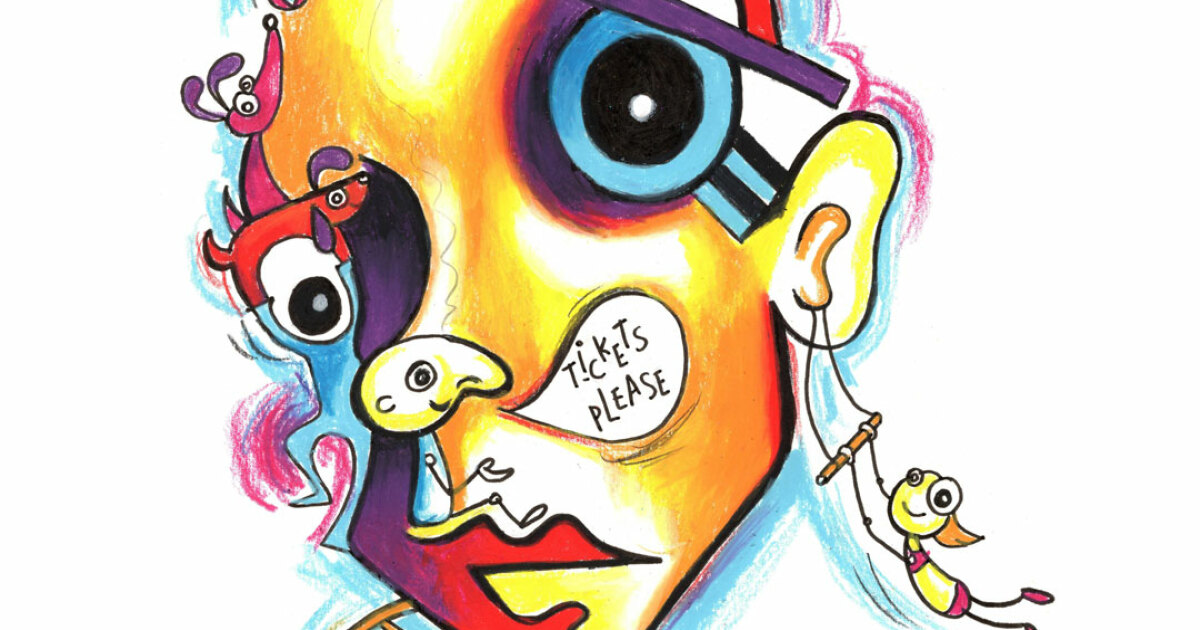
“I Paint Faces Made Up Of Weird Creatures By Using Wax Pastels (9 Pics)” is a playful, surreal, and oddly relatable look at faces that are not just faces. They are little ecosystems. They are characters built from animals, expressions, accidental shapes, visual jokes, and the kind of imagination that clearly refuses to sit politely in a chair.
The series, created by UK-based artist Tara Roskell, combines semi-abstract portrait painting with whimsical creatures and facial features. The result is art that feels both spontaneous and carefully observed. One moment, you are looking at an eye. The next, you notice a cat, a dog, a strange nose, a circus of thought, or a face hiding inside another face. It is the artistic version of saying, “Wait, was that there the whole time?”
And honestly, that is half the fun.
Why Weird Creature Faces Are So Hard to Stop Looking At
Human beings are face-detecting machines. We see faces in electrical outlets, tree bark, toast, cloud shapes, bathroom tiles, and the front of cars that look either deeply offended or suspiciously cheerful. This tendency is known as pareidolia, a psychological phenomenon where the brain finds recognizable patternsespecially facesin random or vague visual information.
Roskell’s artwork leans directly into that instinct. Instead of fighting the brain’s habit of seeing faces everywhere, she invites it to throw a party. Her portraits do not ask viewers to identify a single person. They ask viewers to explore. A curve becomes a cheek. A blob becomes a creature. A bright patch of color becomes a thought. Suddenly, a face is no longer a fixed identity; it becomes a busy little neighborhood.
This is one reason the series feels accessible even when it is abstract. You do not need a degree in art history to enjoy it. You only need eyes, curiosity, and maybe a willingness to admit that, yes, the face with the creature on its head is somehow having a better hair day than most of us.
The Charm of Wax Pastels: Messy, Bold, and Full of Personality
Wax pastels are a perfect match for this kind of expressive portrait art. Unlike digital tools, which can be polished until every edge behaves itself, wax pastels keep a little rebellion in the hand. They are creamy, colorful, tactile, and slightly unpredictable. They can create strong lines, soft blends, scratchy textures, and chunky areas of pigment that feel alive on the surface.
That physical quality matters. When you look at a wax pastel face, you can sense the movement behind it: the pressure of the hand, the drag of pigment, the layered colors, the quick decisions, the happy accidents. The medium carries the energy of the process. It does not whisper, “I was carefully approved by committee.” It says, “I was made with a hand, a brain, and possibly a snack break.”
Wax pastels also work beautifully for surreal abstract faces because they allow the artist to move between drawing and painting. A line can become a shape. A smudge can become a shadow. A saturated block of color can become a creature’s body or a strange facial plane. The medium supports both control and chaos, which is exactly what these portraits need.
Meet the World of Semi-Abstract Faces
Semi-abstract portraiture sits in a delicious middle zone. It is not fully realistic, but it is not completely nonrepresentational either. You can still recognize eyes, noses, mouths, heads, or expressions, but they have been rearranged, exaggerated, simplified, or merged with unexpected forms.
In this series, the face is more of a stage than a strict anatomical map. A dog may appear on the head. A cat-like creature may slide into the composition. Eyes may become symbolic windows. A nose may feel like its own main character. The portrait becomes less about capturing someone’s exact appearance and more about revealing an inner mood, joke, fear, memory, or tiny imaginary roommate.
This approach connects with a long tradition of surrealism and imaginative portraiture. Surrealist artists often used dream logic, unexpected combinations, and strange symbols to make ordinary things feel mysterious. Roskell’s work brings that spirit into a bright, contemporary, approachable format. The faces are strange, yes, but they are not cold or distant. They are weird in a friendly way, like an eccentric neighbor who waters plants at midnight and gives excellent book recommendations.
The 9 Pics: Tiny Stories Hidden in Strange Faces
The original collection features nine images, each with its own playful title and personality. The names alone suggest the humor and visual curiosity behind the project: “Excuse Me There’s A Dog On My Head,” “Eyes Are The Windows,” “Meowsers,” “Is That A New Hair Do?,” “My Brain Is A Circus,” “I See Faces Everywhere,” “Petrol Head,” “The Nose Knows,” and “Slurpy Slurpy Milkshake.”
These titles do important work. They do not over-explain the art, but they nudge viewers toward the fun. They give each portrait a wink. Instead of presenting the pieces like serious museum objects guarded by a person in uncomfortable shoes, the titles make the images feel conversational. They say, “Come closer. Something silly and slightly strange is happening here.”
“Excuse Me There’s A Dog On My Head”
This title immediately sets the tone. It transforms the portrait into a visual joke, but not a disposable one. The dog-on-head idea turns the face into a stage for personality, surprise, and absurdity. It also captures the emotional truth of having a mind full of distractions. Sometimes your thoughts are elegant. Sometimes there is simply a dog on your head. Life is complicated.
“Eyes Are The Windows”
Eyes have always carried symbolic weight in portraiture. They suggest identity, awareness, emotion, and connection. In a surreal wax pastel portrait, however, eyes can become more than realistic features. They can act as portals, frames, or separate characters inside the face. This piece likely plays with that familiar phrase“eyes are the windows to the soul”while giving it a more peculiar, creature-filled twist.
“My Brain Is A Circus”
Few titles are more relatable. A busy mind can feel exactly like a circus: colorful, loud, crowded, and possibly run by monkeys with clipboards. In visual terms, this idea works beautifully with wax pastels because the medium can capture movement, noise, and layered energy. A face becomes not just a face but a map of mental activity.
Why the Series Feels Funny Without Becoming Shallow
Humor in art can be tricky. Too little, and the work becomes stiff. Too much, and it risks feeling like a one-note gag. Roskell’s strange creature faces sit comfortably between those extremes. They are funny, but they also reward slower looking.
The humor comes from surprise: a creature appears where a normal feature should be, a facial expression turns into a visual pun, or a title makes the viewer reinterpret the image. But underneath the fun is a serious artistic instinct. These works explore how identity can be fragmented, layered, and assembled from unexpected parts.
That is why the portraits stick in the mind. They are not only “weird for weird’s sake.” They tap into something familiar: the feeling that each person contains many little selves. A serious self, a silly self, a tired self, a dramatic self, a snack-seeking goblin self. In Roskell’s work, those inner characters finally get visible bodies.
From Digital Design to Hands-On Creative Freedom
One of the most interesting parts of Roskell’s creative background is her shift from graphic design into more hands-on artmaking. After many years of working digitally, she rediscovered drawing and painting through creative challenges and collaboration with another artist. That transition matters because it explains some of the freshness in the work.
Graphic design often requires solving problems for clients, brands, layouts, messages, and deadlines. Fine art, especially experimental mixed-media art, opens a different door. It allows for play without needing every mark to justify itself in a meeting. Wax pastels, in particular, encourage directness. There is no loading bar, no keyboard shortcut, no “export as final_final_REALfinal_v3.” There is just color meeting surface.
This return to physical materials can be liberating. It reconnects the artist with touch, risk, and imperfection. In the strange creature faces, you can feel that joy of making. The works do not look overplanned. They look discovered.
How Wax Pastels Shape the Mood of the Artwork
Color is one of the main reasons these portraits feel so alive. Wax pastels can create rich, saturated tones that sit strongly on the page. They are excellent for bold contrasts, expressive marks, and layered textures. In surreal portrait art, those qualities help create a sense of energy and movement.
The faces in this kind of work do not need natural skin tones. A cheek can be orange, blue, pink, green, or whatever color best expresses the emotion of the piece. This freedom moves the portrait away from realism and toward feeling. The colors are not merely decorative; they become part of the character.
Texture also plays a key role. Smooth blending can suggest softness or dreaminess, while rougher marks can add tension, humor, or visual noise. Scratched lines, heavy strokes, and uneven edges all contribute to the sense that the faces are forming in real time. They feel alive because they are not too tidy.
Why Creatures Make Portraits More Human
It may sound backward, but adding weird creatures to faces can make them feel more human. Traditional portraits often focus on external likeness: the shape of the nose, the angle of the jaw, the light in the eyes. Creature-based portraits can focus on internal likeness: the oddness, humor, anxiety, energy, and imagination inside a person.
A tiny animal shape may represent instinct. A strange monster may represent a worry. A playful creature may represent a thought that refuses to behave. When these elements become part of the face, the portrait turns into a psychological landscape. It shows not just what someone looks like, but what it feels like to be a person with a head full of weather.
This is why the series can feel light and meaningful at the same time. The creatures are fun, but they also suggest that identity is assembled from many influences: memory, mood, imagination, humor, stress, and the occasional mental raccoon knocking over the trash cans.
What Artists Can Learn From This Series
For artists, the biggest lesson is simple: follow the weird idea. Not every creative concept needs to be polished into seriousness. Sometimes the strongest work comes from giving a silly thought enough room to grow teeth, ears, whiskers, or a suspiciously expressive nose.
This series also shows the value of constraints. Limiting the subject to faces and the medium to wax pastels creates a recognizable framework. Within that framework, the artist can experiment endlessly. The viewer knows they are looking at portraits, but each portrait bends the rules differently.
Another useful lesson is that titles matter. A clever title can open a doorway into the artwork. It can make abstract or surreal imagery feel more inviting. It can add humor without explaining too much. For artists sharing work online, this is especially important. A strong title can turn a casual scroll into a pause, a smile, and maybe even a click.
How to Approach Your Own Weird Wax Pastel Faces
If this series makes you want to grab wax pastels and draw a face with a creature hiding inside it, congratulations: your imagination has been properly activated. The good news is that this kind of project is approachable for beginners and satisfying for experienced artists.
Start With a Loose Face Shape
Do not begin with perfection. Draw a loose oval, rectangle, blob, or lopsided head shape. A strange foundation often leads to a more interesting result. If the face looks slightly confused from the beginning, you are probably on the right path.
Add Features, Then Interrupt Them
Place the eyes, nose, and mouth, but allow creatures or abstract shapes to interrupt the structure. Maybe one eyebrow becomes a bird. Maybe the nose becomes a mountain. Maybe the hair becomes a group of tiny cats holding a meeting. Do not overthink it. The best surreal details often arrive before logic has time to complain.
Layer Color Boldly
Wax pastels reward confident color. Try layering warm and cool tones, blending edges with your fingers or a cloth, and adding sharp accents on top. Use color to create mood rather than realism. A green forehead or purple chin is perfectly legal in the republic of imagination.
Let Accidents Join the Cast
A smudge might become a shadow. A broken line might become a tail. A strange color patch might become a creature’s body. Instead of correcting every accident, ask what it wants to become. Sometimes the mistake is the most talented member of the team.
Why This Art Works So Well Online
Visual art competes for attention in a fast-moving online world. People scroll quickly, often giving an image less than a second to make its case. These wax pastel creature faces work well because they are instantly unusual. The bright colors, strange forms, and humorous titles create immediate curiosity.
But the work also has a second layer, which is important. After the initial “What am I looking at?” moment, viewers can keep searching the image. They can find hidden shapes, read expressions, and interpret the creatures in their own way. That makes the art shareable without being shallow.
In online art culture, personality is powerful. People connect not only with technical skill but also with a recognizable creative voice. Roskell’s voice is playful, expressive, and unmistakably curious. Her faces feel like they come from a world where imagination is allowed to leave muddy footprints on the carpet.
The Bigger Appeal of Strange Portrait Art
Strange portrait art has a lasting appeal because faces are familiar, but distorted faces are surprising. We know what a face should do. We know where the eyes usually go. When an artist bends those expectations, our attention wakes up.
This is why surreal portraits, abstract faces, and creature-based characters continue to attract viewers. They create a bridge between recognition and mystery. We understand enough to enter the image, but not enough to finish it immediately. That unfinished feeling keeps us engaged.
In Roskell’s wax pastel faces, the weird creatures are not decorations pasted onto portraits. They are part of the emotional architecture. They turn each face into a small story. And like the best small stories, they leave room for the viewer to bring something personal to the interpretation.
Final Thoughts: A Face Is Never Just a Face
“I Paint Faces Made Up Of Weird Creatures By Using Wax Pastels (9 Pics)” is more than a quirky art series with funny titles. It is a celebration of visual imagination, material play, and the strange little patterns our brains love to find. It reminds us that faces can be landscapes, jokes, puzzles, and emotional maps all at once.
The use of wax pastels gives the work its bold, tactile personality. The surreal creature elements add humor and mystery. The semi-abstract style keeps the portraits open-ended and alive. Together, they create artwork that feels joyful without being empty, strange without being alienating, and funny without losing artistic depth.
Most of all, the series encourages viewers to look twice. And in a world full of images designed to be consumed instantly, that is no small achievement. These faces do not simply stare back. They wiggle, whisper, bark, meow, and possibly ask whether anyone has seen their milkshake.
Extra Experience: What It Feels Like to Create Weird Creature Faces With Wax Pastels
Creating faces made up of weird creatures with wax pastels is a little like inviting your imagination to dinner and discovering it brought twelve unexpected guests. You may begin with a simple plan: draw a face, add expressive eyes, maybe use a few bold colors. Then the wax pastel touches the paper, and suddenly the cheek wants to become a fish, the hairline wants to become a dog, and the nose has decided it deserves its own biography.
That is the magic of the process. Wax pastels are direct and physical. They do not allow you to stay too precious for too long. The marks arrive quickly, and because the pigment is thick and bold, every decision has presence. Even a small line can change the mood of the whole face. A dark stroke under an eye may make the character look tired, mysterious, or like it just remembered an embarrassing thing from seventh grade. A bright orange shape near the forehead might become a bird, a flame, or a thought escaping before it has permission.
One of the most enjoyable parts of this kind of work is searching for creatures inside accidental marks. After laying down color, you can turn the paper around and look again. A smudge may suggest a snout. A rough patch may look like fur. A curved line may become a tail. The process becomes a conversation rather than a command. Instead of forcing the picture to obey an original sketch, you respond to what appears.
This can be surprisingly freeing, especially for artists who worry about making “correct” drawings. In creature-based abstract portraiture, correctness is not the boss. Expression is. A face does not have to be symmetrical. The colors do not have to match reality. The creatures do not need to belong to any known species. In fact, it is often better if they do not. The more specific and strange they become, the more personality the artwork gains.
Wax pastels also create a satisfying push and pull between control and mess. You can press hard for rich color, use lighter pressure for sketchy texture, blend areas with a finger or cloth, scratch into layers for details, or add fine liner marks over the top for sharper definition. Each technique brings a different voice. Heavy blending can make a face feel dreamy. Rough scribbles can make it feel nervous or energetic. Scratched lines can reveal hidden movement, like the artwork has a secret skeleton of color underneath.
There is also a personal side to making these faces. Many artists discover that the creatures they invent reflect moods they did not consciously plan. A tiny anxious animal may appear near the mouth. A loud, cheerful shape may sit on the head. A strange eye-creature may suggest curiosity, suspicion, or insomnia with excellent posture. The finished artwork can feel like a diary entry written in monsters.
For anyone trying this style, the best advice is to stay playful. Give yourself permission to make odd choices. Use colors that clash. Let the face become crowded. Name the piece something funny. Titles can help unlock the personality of the work after it is finished. A portrait that seems confusing at first may suddenly make sense when called “My Brain Forgot Its Password” or “There Is a Frog in My Confidence.”
The most rewarding moment comes when the face begins to look back at younot as a realistic person, but as a character with its own strange logic. That is when the artwork stops being just a drawing and starts feeling like a tiny world. And if that world includes a cat, a circus, a suspicious nose, and a dog balanced on someone’s head, all the better. Imagination deserves comfortable shoes and absolutely no leash.













