
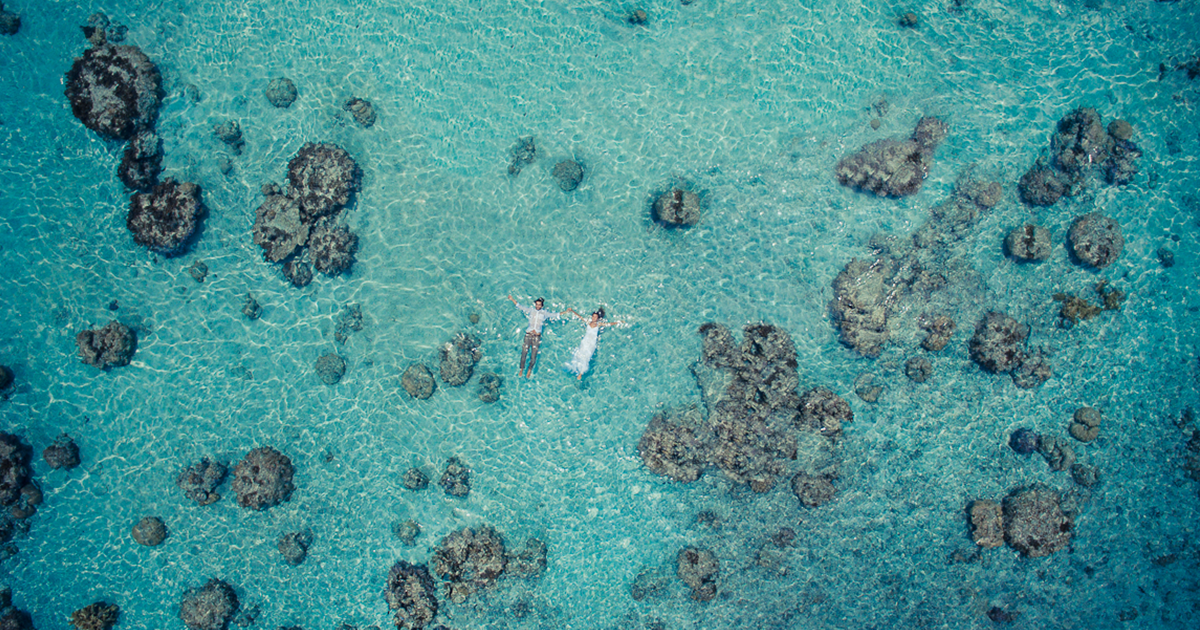
There is a moment at almost every wedding when the day suddenly becomes bigger than the couple, bigger than the aisle, bigger than the table settings everyone spent six months arguing about. From the ground, a wedding is intimate: hands, tears, nervous smiles, champagne bubbles, a flower girl walking with the confidence of a tiny CEO. From above, a wedding becomes a story written across a landscape.
That is why I started shooting weddings from above using drones. Not because I wanted to replace traditional wedding photography, and definitely not because I wanted to become the loudest flying guest at the party. I started because aerial wedding photography can reveal what ground cameras simply cannot: the curve of a vineyard ceremony, the geometry of a garden aisle, the ocean glittering behind a first kiss, or guests forming a heart around the newlyweds while pretending they totally understood the instructions the first time.
Drone wedding photography is not just “send the drone up and hope for magic.” It is part photography, part aviation, part choreography, part weather negotiation, and part emotional intelligence. You need to know when to fly, when to land, when to stay quiet, and when the wind is looking at your drone like it owes money. A beautiful aerial wedding shot begins long before takeoff.
Why Drone Wedding Photography Feels So Cinematic
Traditional wedding photography captures emotion up close. Drone photography captures context. A drone can show how the couple fits into the world around them: a chapel tucked into rolling hills, a beach ceremony glowing at sunset, a rustic barn surrounded by fields, or a rooftop reception with the city acting like unpaid set design.
The best drone wedding photos are not gimmicks. They are establishing shots with heart. In film language, they tell the viewer where the story is happening and why the setting matters. A couple standing in a canyon looks romantic from the ground; from above, they look like the only two people on Earth. A reception tent looks elegant from eye level; from the sky, it becomes a glowing island of laughter in the dark.
The Drone Does Not Replace the Photographer
One of the biggest misunderstandings about wedding drones is that they should dominate the gallery. They should not. Most wedding images should still come from human-level storytelling: the bride laughing with her mother, the groom trying not to cry and failing with dignity, the dance floor entering its “uncle has discovered disco” phase.
A drone adds variety. It gives the final gallery a sense of place and scale. Think of it as seasoning, not the whole meal. Too little, and nobody notices. Too much, and suddenly the wedding album feels like a real estate listing with vows.
Planning the Flight Before the Wedding Day
Every successful wedding drone shoot starts with planning. Before I even pack batteries, I check the venue, surrounding airspace, weather, flight restrictions, obstacles, and the wedding timeline. A drone pilot who says, “I will figure it out when I get there,” is not being adventurous. They are volunteering to become a cautionary tale.
In the United States, commercial drone work is generally handled under FAA Part 107 rules. That means a paid wedding drone operator should be properly certified, understand airspace restrictions, and follow operational rules for safe flight. If controlled airspace is involved, the pilot may need authorization, often through LAANC. Remote ID compliance, drone registration, and visual line-of-sight requirements also matter. These details may sound less romantic than rose petals, but they are what keep the day safe, legal, and drama-free.
Questions I Ask Before I Fly
Before a wedding, I want answers to very specific questions. Does the venue allow drones? Are there airports, heliports, stadiums, national parks, military areas, or temporary flight restrictions nearby? Are there power lines, trees, fountains, glass walls, birds, or dramatic chandeliers waiting to become enemies? Where can I take off and land without turning cocktail hour into a safety briefing?
I also ask the couple what kind of aerial images they actually want. Some couples dream of a grand landscape shot. Others want a full wedding-party formation from above. Some want the drone for video only, especially for sweeping venue reveals. The clearer the expectations, the smoother the flight.
Best Wedding Moments to Capture From Above
The best drone moments are usually planned around transitions, open spaces, and natural movement. Drones are not ideal during quiet, emotional vows because even modern drones make noise. Nobody wants the soundtrack to their lifelong promises to be “zzzzzzzz with propellers.”
Venue Establishing Shots
My first priority is usually the venue. I like to capture the location before guests fully arrive, when the chairs are perfect, the flowers are fresh, and nobody has abandoned a half-empty iced coffee behind the altar. A slow aerial reveal of the property gives the wedding gallery a cinematic opening scene.
The Ceremony Layout
If the ceremony is outdoors and the rules allow safe operation, overhead images can be beautiful. Rows of chairs, floral arches, pathways, and natural surroundings create patterns that ground-level cameras cannot capture. The key is timing. I prefer to shoot before the ceremony begins or from a respectful distance during non-disruptive moments.
Couple Portraits With Landscape
This is where drones shine. A couple standing on a cliff, walking through a field, crossing a bridge, or holding hands on a beach can look extraordinary from above. The pose does not need to be complicated. In fact, simple works best. Stand close, hold hands, walk slowly, look at each other, and let the landscape do the heavy lifting.
Group Photos and Creative Formations
Drone group photos can be fun when they are organized well. Guests can form a heart, initials, a circle, or a celebratory shape around the couple. The secret is having a planner, coordinator, or loud-but-kind relative help guide people. Without direction, a heart formation can quickly become a potato with commitment issues.
Golden Hour and Reception Atmosphere
Golden hour is the drone photographer’s favorite lighting assistant. The sun is low, shadows are soft, and everything looks expensive, even if the budget was held together with spreadsheets and courage. Aerial footage of guests mingling, the reception tent glowing, or the couple walking through warm light can add emotional polish to a wedding film.
Safety Comes Before the Shot
A great wedding drone photographer knows that the best shot is never worth risking people, property, or the couple’s peace of mind. Weddings are crowded, emotional, and unpredictable. Guests wander. Kids run. Dogs make executive decisions. Wind changes. A safe drone pilot is always thinking three steps ahead.
I never treat a drone like a toy at a wedding. I choose a secure launch zone, keep the aircraft within visual line of sight, monitor battery life carefully, avoid flying directly over crowds unless the operation and aircraft meet applicable requirements, and land early if conditions change. I also carry backup gear, extra propellers, charged batteries, landing pads, memory cards, and enough calmness to survive a flower-crown emergency.
Insurance and Professional Responsibility
Couples should ask whether their drone operator has appropriate liability coverage. Many venues may request proof of insurance before allowing drone operations. That is not being difficult; it is being sensible. A wedding has too many moving parts for guesswork. The photographer, videographer, planner, venue manager, and drone pilot all need to understand the plan.
Weather: The Uninvited Wedding Guest
Weather is the one vendor nobody can fire. Drone wedding photography depends heavily on safe conditions. Rain can damage equipment and ruin image quality. Strong wind can make flight unstable. Heavy clouds can flatten light. Low visibility can make safe operation impossible.
This is why I never guarantee drone images in all conditions. I promise preparation, judgment, and effort. If the weather cooperates, fantastic. If not, I would rather disappoint a shot list than endanger a wedding day. That may not sound glamorous, but professionalism often looks like saying, “Not safe,” and putting the drone back in the case.
How Drone Photography Changes the Wedding Story
When done well, aerial wedding photography gives couples something emotional and unexpected. It helps them see the scale of what they built: the venue they chose, the guests who gathered, the landscape that surrounded them, and the movement of the day from ceremony to celebration.
For destination weddings, drones can be especially powerful. A beach wedding in California, a mountain ceremony in Colorado, a lakeside celebration in Michigan, or a vineyard wedding in Oregon all have scenery that deserves to breathe. The drone lets the environment become a character in the story.
But even smaller weddings can benefit. A backyard ceremony can look intimate and charming from above. A farm wedding can reveal beautiful lines of fences and fields. A city rooftop can show the couple framed by architecture and skyline. The point is not luxury. The point is perspective.
What Couples Should Know Before Booking a Wedding Drone
If you are considering drone wedding photography, start by asking your photographer or videographer whether drone coverage is included or offered as an add-on. Some studios have licensed drone pilots on their team. Others partner with specialists. Either option can work, as long as the person flying is qualified, insured, and experienced with weddings.
Ask to see real wedding drone samples, not just landscape clips. Weddings require timing, discretion, and people skills. A pilot who can film mountains beautifully may still struggle with a tight wedding timeline, nervous couples, venue restrictions, or Aunt Linda asking if the drone can “take one quick picture of her good side.”
Budget Expectations
Drone wedding photography is often priced as an add-on or included in premium photography and videography packages. Costs vary based on location, coverage time, deliverables, editing, travel, and the pilot’s experience. For some couples, drone coverage may be a few hundred dollars extra; for more complete photo and video packages, it can cost more. The important thing is to understand what is included: still images, video clips, edited highlight footage, raw footage, travel fees, permits, and backup plans.
My Experience Shooting Weddings From Above
The first time I flew a drone at a wedding, I learned that the sky is honest. From the ground, I could hide a crooked chair row with a tight lens. From above, the drone exposed everything. The aisle was not centered. The floral arch was slightly angled. One guest had parked a bright red cooler near the ceremony site like it was part of the design concept. The drone sees all. It is basically a flying truth serum with a camera.
Since then, I have learned to arrive early and walk the property before launching. I look for clean lines, safe flight paths, interesting textures, and places where the couple can stand without feeling like they are posing for a satellite. The best aerial portraits usually feel simple: two people in the center of a big beautiful scene. I avoid over-directing because tiny human figures from above do not need Broadway choreography. A slow walk, a kiss, a spin, or a quiet embrace is enough.
I have also learned that communication saves the day. I coordinate with the planner so I am not flying during vows, speeches, prayers, or emotional moments that deserve silence. I talk with the photographer so we do not fight for the same five minutes of golden hour. I check with the venue manager so my landing zone does not become the catering team’s shortcut. A drone may fly solo, but wedding drone work is a team sport.
One of my favorite experiences was a countryside wedding where the couple wanted a photo of all their guests forming a giant heart around them. It sounded easy. It was not. From the ground, everyone insisted the shape looked perfect. From above, it looked like a beanbag chair. We laughed, adjusted, waved people left and right, and finally got the shot. The couple loved it not only because it looked beautiful, but because the process became a memory. Everyone was laughing, pointing, and participating. That is the kind of image that carries more than pixels.
Another memorable shoot happened at a coastal venue with dramatic cliffs and an ocean breeze that clearly had personal ambitions. The light was perfect, but the wind was flirting with my safety limits. I waited. The couple waited. The planner looked at the timeline like it had betrayed her. Then, for about six calm minutes, the wind dropped. I launched, captured a wide shot of the couple standing near the cliff edge from a safe distance, recorded a slow pullback revealing the coastline, and landed before the wind returned. Six minutes gave us one of the strongest shots of the day. Drone photography rewards patience more than ego.
I have made mistakes too. Early on, I tried to capture too many aerial clips because everything looked exciting from above. Later, in editing, I realized the wedding film did not need twelve versions of the same venue reveal. It needed three powerful aerial moments placed at the right emotional beats. Now I shoot with more intention. I ask: Does this shot help tell the story? Does it reveal something meaningful? Would the couple care about this image in twenty years? If the answer is no, I save the battery.
The most important lesson is that drones should serve the wedding, not steal attention from it. Guests should remember the couple, not the aircraft. The drone should feel like a quiet storyteller, not a mechanical mosquito with creative confidence. When the flight is planned well, the couple gets images that feel grand, personal, and impossible to capture any other way.
Conclusion
Shooting weddings from above using drones has taught me that perspective changes everything. Aerial wedding photography can transform a beautiful day into a cinematic memory, showing not only faces and flowers but also place, scale, movement, and atmosphere. It works best when handled by a certified, insured, safety-minded professional who understands both aviation rules and wedding emotions.
The magic of drone wedding photography is not simply altitude. It is timing, restraint, planning, and respect. The best aerial images do not shout, “Look, a drone!” They whisper, “Look how beautiful this day really was.” From sweeping venue shots to intimate portraits surrounded by landscape, drones can give couples a view of their wedding they never saw while living it. And that, in the end, is the whole point of photography: to return us to moments we could only partly understand while they were happening.














