
Note: This article is formatted for a gallery-style web post. Pair each numbered section with its matching image before publishing.
Hollywood has never been shy about selling a fantasy. Give it soft lighting, a dramatic eyebrow, and a cigarette holder longer than a tax audit, and suddenly a person becomes a legend. That is exactly why this little AI experiment felt so irresistible. I wanted to see what would happen if I took some of the most iconic movie stars ever to light up the screen and asked artificial intelligence to imagine them later in life, far beyond the point where history stopped the reel.
The result was equal parts fascinating, funny, elegant, and just a little spooky. Some portraits felt uncannily believable. Others looked like the AI had been fed a diet of old studio headshots, luxury moisturizer ads, and pure chaos. Still, the project says something bigger about why classic movie stars continue to hold such power. We do not just remember them as actors. We remember them as symbols. Grace. Glamour. Swagger. Mystery. A cheekbone so sharp it could open a can.
That lasting magic is not an accident. Hollywood’s golden-age image machine was built on still photography as much as film, and famous portrait photographers helped define what stardom looked like for generations. Institutions devoted to film history still preserve and celebrate those faces because they remain central to American screen culture. Meanwhile, today’s entertainment industry is already using AI and digital de-aging tools in major productions, which makes the question even more interesting: when we ask AI to imagine old Hollywood in the future, are we creating art, nostalgia, or a very glamorous identity crisis?
Why This AI Experiment Feels So Addictive
There is a reason people cannot stop clicking celebrity transformation posts. They combine two internet superpowers: nostalgia and curiosity. We already know the original face. The fun is in seeing how technology interprets time. With classic Hollywood legends, the effect is even stronger because many of them remain frozen in public memory at a very specific age. James Dean is permanently rebellious. Audrey Hepburn is permanently luminous. Marilyn Monroe is permanently mid-sparkle. AI disrupts that freeze-frame and asks a weirdly emotional question: what if the story had kept going?
That emotional pull sits right beside a technical one. AI image tools are very good at pattern recognition. Feed them enough well-known visual cues, and they can create surprisingly coherent aging concepts. But they are still guessing. These are not documentaries. They are visual interpretations built from style, facial structure, cultural memory, and a machine’s best effort to fake wisdom lines. In other words, AI is not reporting the future. It is improvising it in excellent lighting.
That matters because Hollywood is already living through serious debates about digital likeness, AI replicas, and consent. De-aging effects have appeared in major films, and unions have pushed for stronger protections around how performers’ faces and voices can be recreated or altered. So while a fan-made gallery of classic stars may feel playful, the broader topic is not trivial. It sits right at the crossroads of film history, visual technology, and human identity.
What AI Gets Right About Hollywood Legends
The strongest results in this kind of project usually come from stars with instantly recognizable features. Audrey Hepburn’s wide eyes and fine bone structure remain readable even when aged. Humphrey Bogart’s weathered cool naturally translates into a sharper, older version of the same presence. Sophia Loren, Gregory Peck, Elizabeth Taylor, and Sidney Poitier all have the kind of facial architecture that gives AI a sturdy runway. When the source icon is visually distinct, the future version often feels more emotionally convincing.
AI also tends to do well with the visual language of old Hollywood. That sounds odd, but it makes sense. Glamour photography from the studio era was highly stylized: deliberate posture, controlled shadows, polished skin, and expression designed to project persona. Since AI thrives on recognizable patterns, it can mimic that glossy visual vocabulary with startling ease. The machine might not understand charisma, but it definitely understands cheekbone propaganda.
What AI Gets Wrong, and Why That Matters
Here is where the tuxedo starts to wrinkle. AI often over-polishes aging. Instead of making a star look older, wiser, and more lived-in, it sometimes produces a suspiciously expensive version of old age, as if every legend had unlimited access to world-class skincare, angelic lighting, and a contract clause banning neck wrinkles. Real aging has character. AI aging often has branding.
It can also flatten individuality. Some outputs drift toward a generic “elderly celebrity” look, where the person starts to resemble everybody and nobody at once. The danger is not just aesthetic. It reminds us that AI can replicate surface cues without truly understanding the lived experience behind a face. It can imitate a legend’s appearance, but not the years, losses, reinventions, scandals, triumphs, and oddball habits that made the legend matter in the first place.
The 20 Hollywood Legends, Reimagined in the Future
1. Audrey Hepburn
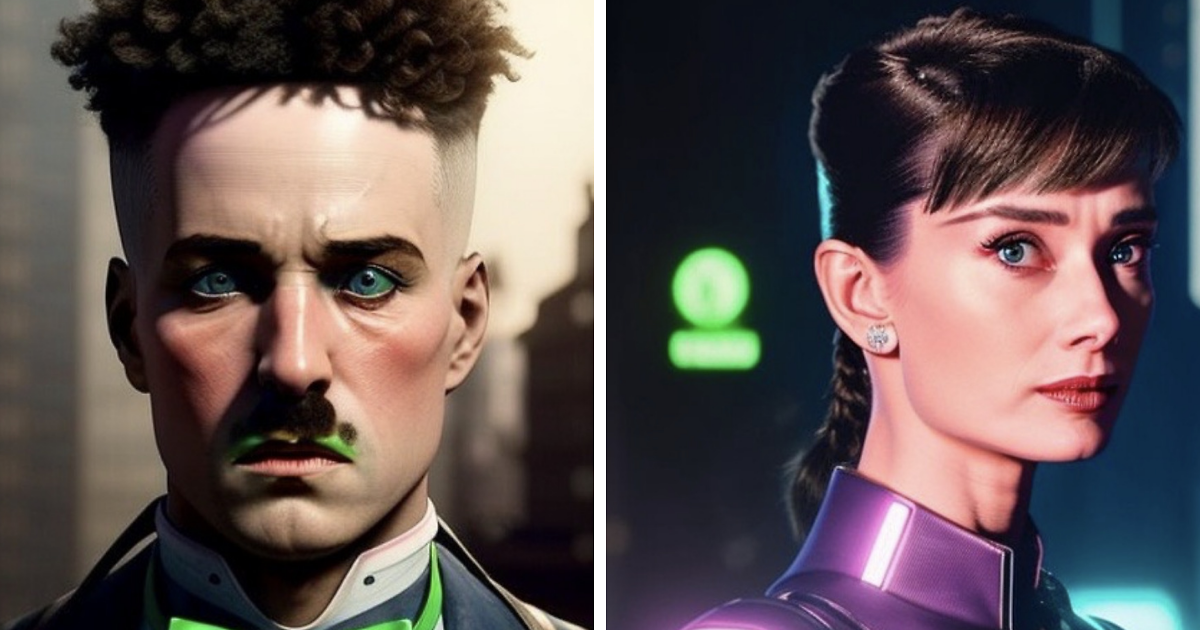
AI imagined Audrey Hepburn as the queen of graceful aging: silver pixie cut, elegant posture, and eyes that still looked like they knew exactly where the best pastries in Paris were hidden. The portrait kept her signature delicacy but added warmth, making her seem less untouchable and more like the world’s chicest grandmother.
2. Marilyn Monroe
Marilyn’s future version was fascinating because the softness stayed. AI preserved the luminous smile and rounded features, then added a mature calm that made her look less like a bombshell and more like a woman who had finally escaped every bad studio note ever written. Glamour remained, but the result felt quieter and more human.
3. James Dean
This one hit hard. The AI kept the restless eyes and rebellious tilt of the mouth, but aged him into a rugged older man who looked like he still drove too fast in theory, if not according to his insurance premiums. Of all the results, James Dean may be the most emotional because history never gave us the real version.
4. Humphrey Bogart
Bogart barely needed help becoming an older icon. AI simply leaned into the trench-coat soul of his face. More lines, deeper gaze, sharper jaw, same “I’ve seen things, kid” energy. If anyone was built to look iconic at eighty, it was Bogart.
5. Ingrid Bergman
The future Ingrid Bergman came out luminous rather than flashy. AI emphasized dignity over drama, and the portrait looked like the kind of face that could still deliver devastating emotional truth with one raised eyebrow and a five-second pause.
6. Elizabeth Taylor
Elizabeth Taylor’s imagined older portrait was all about the eyes. The AI clearly understood that those famous violet-toned eyes were the main event. It wrapped them in mature glamour, a bit of regal softness, and enough old-school star power to make the entire image feel like it demanded its own entrance music.
7. Cary Grant
AI turned Cary Grant into the patron saint of aging well. He looked distinguished, amused, expensive, and mildly judgmental in the most attractive possible way. It was the visual equivalent of a perfectly tailored suit saying, “No, that color tie was a mistake.”
8. Paul Newman
Paul Newman already aged beautifully in real life, so the AI had a head start. The imagined future version doubled down on the blue-eyed magnetism and added lived-in texture that made him look like he had been quietly winning every room for decades without ever raising his voice.
9. Grace Kelly
Grace Kelly’s portrait looked serene, polished, and almost impossibly composed. AI interpreted her future face as aristocratic elegance with softened lines, the kind of aging that whispers rather than announces itself. It was glamorous in the way a handwritten note on expensive stationery is glamorous.
10. Marlon Brando
Marlon Brando’s AI future was less pretty and more powerful. The face became heavier, more sculptural, more weathered. The result suggested a man who had nothing left to prove and would definitely not repeat himself just because you missed the first line.
11. Rita Hayworth
Rita Hayworth’s transformation kept the high-voltage glamour but matured it into something richer. The red-carpet sparkle became old-Hollywood confidence, and the face carried the kind of dramatic elegance that made it feel built for velvet curtains and dangerous close-ups.
12. Sidney Poitier
Sidney Poitier’s future portrait was one of the most convincing. AI preserved the intelligence and steadiness that always made him so compelling on screen. The older version felt calm, deeply assured, and almost statesmanlike, which frankly suited him perfectly.
13. Judy Garland
With Judy Garland, AI softened the sadness people often project onto her image and gave her something more restorative. The result looked resilient, warm, and beautifully seasoned by life. It felt less like tragedy and more like survival.
14. Gregory Peck
Gregory Peck turned into the sort of older gentleman who looks like he still knows the correct thing to say in a crisis. The AI portrait emphasized structure, restraint, and gravitas. Very handsome. Very composed. Very likely to make everyone else sit up straighter.
15. Lauren Bacall
Lauren Bacall’s imagined future face kept the unmistakable gaze and transformed it into pure seasoned authority. She looked like she could still steal the scene, your drink, and the better line in under thirty seconds. AI did not invent that energy. It just gave it a few more decades.
16. Clark Gable
Clark Gable’s future version looked like old-fashioned movie-star charisma had been marinated in time and polished with sarcasm. The mustache, naturally, remained essential. Some icons evolve. Some icons merely upgrade.
17. Bette Davis
Bette Davis was always all about the eyes, and AI wisely did not mess with the formula. The future portrait looked fierce, alert, and gloriously uninterested in anybody’s approval. Aging, in this case, became an accessory.
18. Gene Kelly
Gene Kelly’s imagined older face had warmth and movement even in stillness. AI made him look like the kind of person who might no longer leap across lampposts but could absolutely still out-charm an entire room before dessert arrived.
19. Sophia Loren
Sophia Loren’s future image was predictably spectacular. AI leaned into her bone structure, confidence, and rich screen presence, turning her into a portrait of commanding late-life glamour. Not delicate. Not timid. Positively imperial.
20. Ava Gardner
Ava Gardner’s imagined future face came out smoky, elegant, and a touch dangerous. The AI seemed to understand that conventional prettiness was never the whole story with her. The best version of Ava in the future still looked like a little trouble in fabulous form.
What This Says About Hollywood, Memory, and Machine-Made Nostalgia
This experiment works because movie stardom is built on memory. Even decades later, the public still carries mental snapshots of these actors: the stare, the laugh, the silhouette, the angle of a chin in black-and-white. AI does not create that memory from scratch. It borrows it, remixes it, and hands it back wearing a fresh suit.
That is why the project feels both delightful and slightly eerie. It offers a second act history never recorded. At the same time, it reminds us how much of celebrity image is constructed. Classic Hollywood carefully shaped star personas through studio photography, publicity, makeup, lighting, costume, and mythmaking. AI simply joins the long line of image-making tools, except this one moves faster and asks fewer philosophical questions before generating a face.
Still, there is an important line between affectionate reimagining and careless exploitation. Imagining classic stars in respectful editorial or artistic ways is one thing. Using AI likenesses without consent in deceptive, manipulative, or exploitative contexts is another thing entirely. That distinction is becoming central to entertainment, law, and audience trust. The technology is powerful. So is the responsibility that comes with it.
My Experience Using AI To Imagine Hollywood Legends in the Future
What surprised me most was not the technology itself. It was my own reaction to it. I went into the experiment expecting a novelty, something halfway between a design exercise and an internet rabbit hole. I assumed I would laugh at a few weird hands, reject some suspicious eyebrows, and move on with my day. Instead, I found myself staring at certain portraits much longer than expected, especially the ones involving stars whose public image has been frozen for generations.
James Dean was the clearest example. When AI aged him, the image felt less like a gimmick and more like an alternate timeline. It was not perfect, and it was certainly not real, but it made me notice how powerful unresolved cultural memory can be. With some stars, we are not only attached to who they were. We are attached to the fact that they never got older in public. AI pokes at that emotional glass case and asks us to imagine what we were never given.
I also noticed how much prompt wording changed the results. When I leaned into glamorous language, the outputs became polished to the point of absurdity. Everyone looked like they owned either a villa, a private driver, or both. When I asked for realism, the faces became more textured and believable, but sometimes lost the spark that made the person recognizable as a star. The sweet spot was somewhere in between: respectful aging, visible character, and just enough cinematic flair to keep the portrait from looking like a random person waiting for a dental appointment.
Another strange part of the process was realizing how strongly old Hollywood photography still shapes modern visual taste. Even when using a contemporary AI tool, the best images often resembled classic studio portraiture. Soft shadow. Strong eyes. Clean composition. Controlled posture. It reminded me that the glamour grammar of the 1930s and 1940s never fully left us. It just got new software and a bigger GPU bill.
There was humor in the process, too, because AI occasionally overcommitted. Some faces became too smooth. Some silver hair looked shampoo-commercial perfect. A few portraits gave off the unmistakable vibe of “retired movie star who now sells luxury candles and somehow makes it look profound.” But even the misses were revealing. They showed where AI defaults to stereotype instead of personality, and where human judgment is still necessary to shape the final image into something meaningful.
By the end, I stopped thinking of the gallery as a prediction machine. It felt more like a conversation between eras. The stars brought the history. The AI brought the speculation. I brought the curiosity and probably too much time fussing over whether Gregory Peck should look more statesmanlike or more grandfatherly. The experiment left me with a bigger appreciation for both classic cinema and the limits of machine-made beauty.
Most of all, it reminded me that what makes a Hollywood legend endure is not perfect skin, flawless symmetry, or even iconic styling. It is presence. That elusive thing that survives black-and-white film stock, bad remasters, decades of cultural change, and now even the strange mirror of AI. The machine can guess at the wrinkles. It can suggest the silver hair. But the real magic is still the human imprint those stars left behind. And that, thankfully, remains impossible to fake completely.
Final Take
Using AI to imagine Hollywood legends in the future is fun because it lets nostalgia play dress-up with technology. But it is also revealing. It shows how powerfully classic stars still live in the culture, how much of stardom is image construction, and how quickly modern tools blur the line between tribute and replication. The best results are not the most flawless ones. They are the ones that preserve personality.
So yes, this was a “20 pics” experiment. It was also a reminder that the faces of old Hollywood were never just faces. They were myths, brands, performances, and mirrors for the fantasies of their era. AI can extend the visual fantasy, but it cannot replace the original electricity. It can imagine the future version of a legend. It cannot manufacture the legend itself.










