
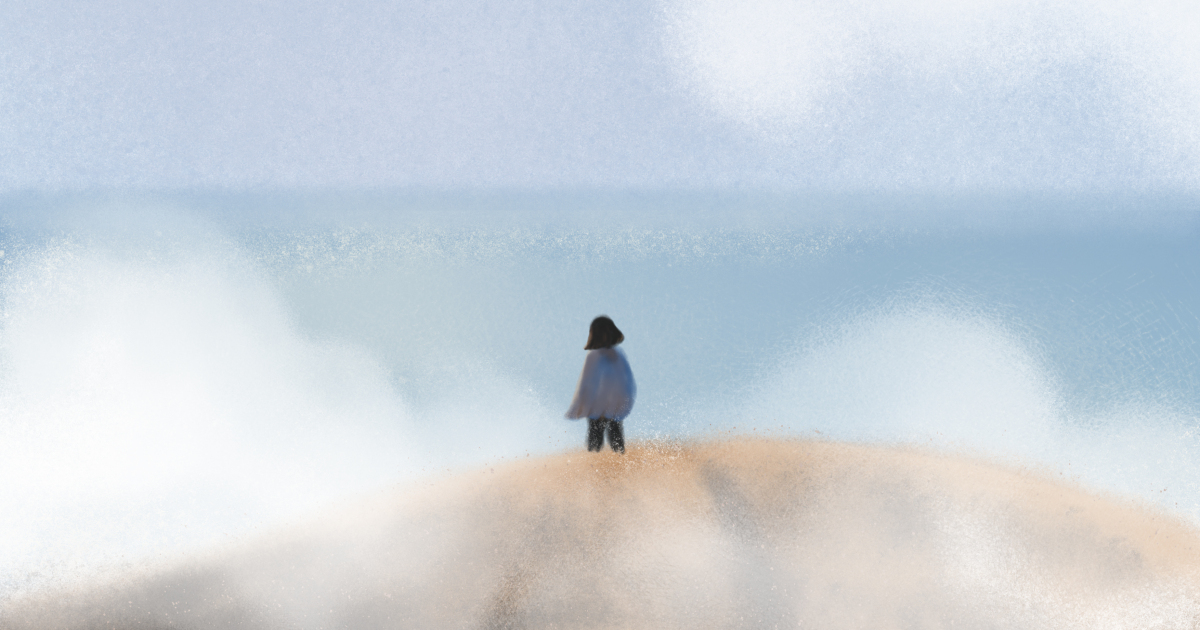
Solitude is a strange roommate. It never remembers to make coffee, it sits in the good chair, and somehow it still teaches you things you did not know you needed to learn. When I began visualizing solitude through drawings, I did not set out to make dramatic, rain-on-the-window, movie-trailer art. I simply wanted to understand why quiet rooms, empty sidewalks, half-open doors, and one lonely chair could feel louder than a marching band with emotional issues.
Drawing solitude is not the same as drawing sadness. That distinction matters. Solitude can be peaceful, creative, awkward, restorative, funny, or even suspiciously cozy. Loneliness, on the other hand, can feel like being locked outside a party where everyone seems to know the password except you. In art, the most powerful images often live somewhere between those two states. A figure alone in a diner. A window glowing at night. A person sitting beside a plant that is clearly judging them. These visual moments ask: Are we looking at isolation, reflection, independence, or a quiet conversation with the self?
This article explores how drawings can visualize solitude using line, space, shadow, composition, symbolism, and personal observation. It is written for artists, art lovers, students, bloggers, and anyone who has ever stared at a blank page and thought, “Well, this paper understands me.”
What Does It Mean to Visualize Solitude?
To visualize solitude means turning an inner state into a visible scene. You cannot draw “solitude” the way you draw an apple, unless the apple is sitting alone on a kitchen counter having a very reflective afternoon. Instead, you draw the conditions that make solitude felt: distance, silence, emptiness, repetition, contrast, and the relationship between a subject and its surroundings.
In visual art, solitude often appears through ordinary things. A single cup on a table. A bed with one pillow. A figure facing away. A long hallway. A park bench at dusk. The subject may be small, while the space around it feels large. That imbalance creates emotional pressure. The viewer senses that the drawing is not only showing a person or object, but also showing the invisible air around them.
Solitude vs. Loneliness in Drawing
Solitude and loneliness are related, but they are not twins. Solitude can be chosen. Loneliness usually feels imposed. A drawing of someone reading alone under a lamp may suggest comfort, privacy, and focus. A drawing of someone surrounded by empty chairs may suggest disconnection. The difference comes from visual cues: posture, light, scale, facial expression, and context.
For example, a character curled up beside a window with soft shading and balanced composition may feel calm. The same character placed in a huge, dark room with sharp angles and no visible exit may feel abandoned. The subject has not changed much, but the visual language has changed everything. Art is sneaky like that.
Why Solitude Works So Well as a Drawing Theme
Solitude is one of the most flexible themes in drawing because it can be expressed with very little. A single line can become a horizon. A blank area can become silence. A small figure can become an emotional anchor. Unlike crowded scenes, which rely on action and interaction, solitude relies on atmosphere. It asks the viewer to slow down and notice what is missing.
Many memorable artworks use emptiness as an active ingredient. Empty space is not wasted space. It is the quiet part of the music. In drawings about solitude, blank paper can represent distance, stillness, memory, or the unsaid. When used thoughtfully, negative space gives the subject room to breatheand occasionally room to overthink, as all respectable solitary subjects do.
The Power of Negative Space
Negative space is the area around and between subjects. In solitude drawings, it becomes emotionally important. Imagine a tiny figure sitting on the left side of a large sheet of paper, with nothing but white space stretching to the right. That emptiness can feel like silence, possibility, or separation. It can also make the viewer wonder what the character is waiting for.
Negative space is especially useful because it lets the viewer participate. Instead of explaining every detail, the artist leaves room for interpretation. The viewer fills the silence with personal memory. One person may see peace. Another may see absence. A third may see a dramatic album cover and wonder when the acoustic guitar comes in.
Drawing Techniques That Make Solitude Visible
Visualizing solitude is not only about what you draw. It is also about how you draw it. Line quality, shading, composition, scale, and texture all influence emotional tone. A shaky line can suggest vulnerability. A clean, controlled line can suggest restraint. Heavy shadows can create tension. Soft gradients can create calm. The page becomes a stage, and every mark has a tiny acting role.
1. Use Scale to Show Emotional Distance
Scale is one of the easiest ways to communicate solitude. Draw a small figure in a large environment: a person under a wide sky, a chair in a giant room, a single window on a tall building. The contrast between subject and space makes solitude visible without needing a speech bubble that says, “I am having feelings.”
When the subject is small, the world feels big. That can make the drawing poetic, peaceful, or overwhelming depending on the surrounding elements. A small figure on a beach might suggest freedom. A small figure in a crowded cityscape might suggest invisibility. Scale allows the same emotion to wear different outfits.
2. Let Light Become a Character
Light can turn an ordinary drawing into an emotional scene. A lamp shining on one corner of a room can create intimacy. A streetlight falling across an empty sidewalk can create mystery. A narrow strip of light under a door can suggest separation, privacy, or hope.
Solitude often lives in contrast: lit areas against dark areas, open space against enclosed space, visible forms against hidden corners. By controlling light and shadow, an artist can guide the viewer’s emotional response. Soft light whispers. Hard light interrogates. Backlighting says, “I have a secret, and possibly a very dramatic playlist.”
3. Draw the Back of the Figure
A face gives information quickly. The back of a figure withholds it. That is why drawings of people facing away can feel so powerful. The viewer cannot read the expression, so they read the posture, setting, and mood instead. A person looking out a window becomes a question rather than an answer.
This technique is useful when visualizing solitude because it protects the subject’s interior life. The drawing does not force an emotion. It invites the viewer to wonder. Is the person thinking, waiting, resting, grieving, planning, daydreaming, or simply avoiding a group chat? The ambiguity makes the image feel more human.
4. Use Repetition to Create Quiet Tension
Repeated shapes can make solitude feel more intense. Rows of windows, empty seats, fence posts, floor tiles, books, or telephone poles can create rhythm. When one figure appears within that repetition, the contrast becomes meaningful. The world looks organized, but the person feels separate from it.
Repetition can also create a meditative effect. A drawing filled with repeated lines, hatching, or patterns can feel like breathing. The viewer senses time passing slowly. In this way, solitude becomes not a dramatic event, but a state of attention.
Symbols That Communicate Solitude
Symbols help translate abstract emotion into concrete imagery. The trick is to avoid clichés unless you can make them feel fresh. A single candle, an empty chair, a window, a bird, a boat, or a long road can all suggest solitude. But the emotional effect depends on how they are drawn.
Windows
Windows are classic solitude symbols because they divide inside from outside. A person near a window may seem protected, trapped, curious, or disconnected. A lit window seen from the street can suggest the hidden life of someone we will never meet. Windows are basically emotional rectangles, and artists have known this for a long time.
Chairs
An empty chair can be surprisingly expressive. It may suggest waiting, absence, rest, or memory. A chair placed in the middle of a room feels different from a chair tucked beside a desk. A chair facing a wall feels different from one facing a window. Small changes in placement can shift the entire mood.
Roads and Paths
A road stretching into the distance can represent transition, independence, uncertainty, or longing. If the road is empty, the viewer may feel quiet possibility. If a figure stands at the beginning of it, the drawing becomes a story about choice. Roads are useful because they imply movement even when nothing is moving.
Plants
Plants can soften solitude. A single houseplant beside a person may suggest care, routine, and companionship. A dead plant may suggest neglect or emotional exhaustion. A thriving plant in an empty room may suggest resilience. Also, plants are excellent drawing subjects because they never complain about being sketched from the wrong angle.
Composition Ideas for Solitude Drawings
Composition is how elements are arranged on the page. In solitude-themed drawing, composition shapes the viewer’s emotional experience. You can use centered composition to create stillness, off-center composition to create tension, and cropped composition to create mystery.
Centered Composition: Calm and Ritual
A centered subject often feels stable. A person sitting in the middle of a quiet room may suggest ritual, acceptance, or contemplation. This approach works well for drawings about peaceful solitude, meditation, reading, journaling, or creative focus.
Off-Center Composition: Distance and Unease
Placing the subject near the edge of the page creates imbalance. The empty area becomes emotionally active. This approach works well when the solitude feels uncertain, unresolved, or fragile. The subject seems surrounded by more space than they can occupy.
Cropped Composition: Intimacy and Mystery
Cropping can make a drawing feel cinematic. Show only part of a figure, a hand on a windowsill, a shoulder near a doorframe, or a cup beside a sketchbook. The missing information creates intrigue. The viewer senses a larger story outside the frame.
How Famous Art Helps Us Understand Solitude
Many well-known artists have explored solitude through quiet rooms, isolated figures, landscapes, and urban scenes. Edward Hopper is often associated with loneliness and solitude in modern American life. His interiors, windows, diners, and streets show people close to one another yet emotionally separate. That kind of visual tension is useful for anyone drawing solitude today.
Landscape artists have also used solitude in powerful ways. A lone figure facing a vast natural scene can suggest awe, spiritual reflection, or the smallness of human life. Interior scenes can do the opposite: instead of showing a person against a huge world, they show a person enclosed within private space. Both approaches can work beautifully in drawing.
Drawings themselves are especially suited to solitude because they often feel immediate and intimate. A sketch can reveal thought in motion. Lines show hesitation, confidence, revision, and discovery. Unlike polished images, drawings can preserve the feeling of searching. They show the artist thinking on paper, which makes them perfect for a theme as inward as solitude.
A Step-by-Step Process for Visualizing Solitude Through Drawings
If you want to create your own series of solitude drawings, begin with observation instead of pressure. You do not need a grand concept. Start with a place where quiet naturally gathers: a bedroom at night, a kitchen before breakfast, a bus stop, a hallway, a library corner, a balcony, or a laundromat where socks go to develop independent lives.
Step 1: Choose the Emotional Temperature
Ask yourself what kind of solitude you want to show. Is it peaceful, heavy, strange, cozy, comic, mysterious, or reflective? The emotional temperature will guide your choices. Peaceful solitude may use soft lines and balanced space. Uneasy solitude may use sharp angles, strong shadows, and off-center placement.
Step 2: Pick One Main Subject
Solitude drawings often work best with one clear focal point. Choose a person, chair, window, lamp, object, or landscape feature. Keep the subject simple enough that the surrounding space can speak. If everything in the drawing is shouting for attention, solitude has to leave the room and file a noise complaint.
Step 3: Build the Space Around the Subject
Decide how much empty space you want. A wide margin can create quiet. A cramped room can create emotional pressure. A long hallway can create distance. Think of the setting as a mood machine. Every wall, shadow, object, and blank area should help the viewer feel the kind of solitude you want to communicate.
Step 4: Add Details Carefully
Details should support the story. A book left open, a cup cooling on a table, shoes by the door, or a jacket on a chair can suggest life without showing action. These small clues make solitude feel specific rather than generic. The goal is not to decorate the drawing; it is to leave emotional breadcrumbs.
Step 5: Stop Before You Explain Too Much
One of the hardest parts of drawing solitude is knowing when to stop. Overworking the image can remove its quietness. Leave some ambiguity. Let the viewer wonder. A drawing does not need to answer every question. Sometimes the most powerful part is the question it refuses to answer.
Why Solitude Drawings Connect With Viewers
Solitude is universal because everyone experiences it differently. Some people seek it as a refuge. Some fear it. Some discover creativity inside it. Some only meet it accidentally when their phone battery dies at 2 percent and the charger is in another room, a modern tragedy of almost mythological scale.
When people look at drawings of solitude, they often bring their own memories to the image. An empty room may remind one viewer of independence and another of homesickness. A lone figure on a bench may feel peaceful to one person and sad to another. This openness gives solitude-themed art emotional depth.
Art also gives solitude a shape. That matters because feelings can become less overwhelming when they are transformed into images. Drawing does not magically solve every difficult emotion, but it can create distance, language, and reflection. It turns a vague inner weather system into something visible. Once visible, it can be studied, softened, changed, or simply acknowledged.
Common Mistakes When Drawing Solitude
Making Everything Too Obvious
A drawing does not need a giant caption that says, “This person is alone.” Trust visual storytelling. Use space, posture, lighting, and objects. Subtlety makes the image stronger.
Confusing Empty With Boring
Empty space still needs design. A blank area should feel intentional, not forgotten. Consider shape, balance, and direction. Empty space should guide the eye, not make the viewer wonder whether the artist got tired and went to make toast.
Overloading the Scene With Symbols
One empty chair can be powerful. An empty chair, broken clock, dead flower, cracked mirror, storm cloud, abandoned teddy bear, and dramatic crow may be a little much unless you are designing the poster for Melancholy: The Musical. Choose symbols with restraint.
Personal Experience: What I Learned While Drawing Solitude
When I first tried to visualize solitude through drawings, I expected the process to be calm and elegant. In my imagination, I would sit at a desk with perfect lighting, sip tea like a thoughtful poet, and produce delicate sketches full of emotional intelligence. In reality, I erased the same chair seventeen times, spilled coffee near the paper, and discovered that drawing a window at the wrong angle can make an entire room look seasick.
My first drawing was simple: a small figure sitting at a kitchen table late at night. There was a cup, a square of light from the refrigerator, and a dark window behind the figure. At first, I wanted to add more details: cabinets, dishes, curtains, a clock, maybe a cat for emotional support and mild judgment. But the more I added, the less lonely the scene felt. The drawing became busy. It started to look like a real estate listing with unresolved feelings.
So I removed things. I simplified the table. I made the window larger. I erased the background until the figure seemed surrounded by quiet. That was the first lesson: solitude often appears when unnecessary noise disappears. The blank paper was not empty; it was doing emotional work. It was the silence around the figure.
Another drawing showed a person standing at a bus stop under a streetlight. I placed the figure too close to the center at first, and the image felt calm, almost balanced. But I wanted a sharper feeling, something closer to waiting without knowing whether anyone was coming. I moved the figure toward the edge of the page and left a wide empty road stretching across the rest of the composition. Suddenly, the drawing changed. The person looked smaller. The night felt bigger. The bus stop became a tiny island.
I also learned that posture can say more than facial expression. In one sketch, I drew a person facing away from the viewer, shoulders slightly rounded, hands in pockets. There was no face, but the pose carried the mood. It felt private. Viewers could imagine their own story. Some saw sadness. Some saw peace. One person said the figure looked like they were deciding whether to go home or buy fries. Honestly, that interpretation had emotional accuracy.
The funniest surprise was that solitude did not always look dark. Some of my favorite drawings used morning light, plants, soft bedding, and quiet corners. A person reading alone in a chair did not feel abandoned; they felt restored. A single cup beside a notebook felt less like loneliness and more like permission. These drawings reminded me that solitude can be generous. It can give us back our attention.
Over time, drawing solitude became less about making sad images and more about noticing subtle emotional spaces. The pause before a message is answered. The quiet after guests leave. The strange calm of walking alone while the world keeps moving. The dignity of doing something by yourself without needing it to be witnessed. Those moments are small, but drawing makes them visible.
The biggest lesson was this: solitude is not one mood. It is a whole weather system. It can be foggy, golden, heavy, clean, awkward, peaceful, or electric. Through drawing, I learned to stop treating solitude as an empty room and start seeing it as a room full of invisible detail. Sometimes the best drawing is not the one with the most objects, but the one with the most listening.
Conclusion
Visualizing solitude through drawings is an invitation to slow down and notice what quiet looks like. It is not only about lonely people or empty rooms. It is about the relationship between a subject and space, between light and shadow, between what is shown and what is withheld. With thoughtful use of negative space, scale, posture, symbols, and composition, a simple drawing can express reflection, independence, longing, comfort, or mystery.
Solitude is powerful because it leaves room for interpretation. A single chair can become memory. A window can become distance. A small figure can become a universe of thought. Whether you are sketching in a notebook, building a portfolio, or creating visual content for a blog, solitude offers a rich and deeply human theme. And the best part? It does not require expensive materials, dramatic scenery, or a studio with exposed brick. Sometimes all you need is paper, a pencil, and enough quiet to hear what the empty space is trying to say.














