
Editor’s note: This is an original, research-grounded photo-essay draft. Replace the image placeholders, captions, and any personal details with the author’s genuine photographs and on-site observations before publication.
There are travel experiences that make you say, “Wow.” Then there are travel experiences that make you stand in the middle of a mountain forest, forget how language works, and accidentally whisper “wow” about 47 times in a row.
That was the Monarch Butterfly Biosphere Reserve in central Mexico for me. I had seen monarch butterflies before, usually fluttering around gardens with the confidence of tiny orange celebrities. But seeing one monarch is not the same as standing beneath trees covered in thousands upon thousands of them. At the reserve, the forest does not merely contain butterflies. For part of the winter, it becomes butterflies.
The Monarch Butterfly Biosphere Reserve stretches across highland areas of Michoacán and the State of Mexico, where the eastern population of North American monarchs spends the winter in mountain forests. These butterflies arrive after one of the most remarkable migrations on Earth, traveling from the United States and Canada to forests filled with oyamel fir trees. The journey can span thousands of miles, which is especially impressive when you remember that monarchs do not have luggage, GPS, or tiny airport lounge access.
Visiting this place felt less like entering a tourist attraction and more like stepping into a living nature documentary. The air was cool, the paths climbed through the forest, and every branch seemed to hold a secret. At first, I thought the dark clusters hanging from the trees were leaves. Then the sunlight warmed the forest, the “leaves” began to move, and suddenly the sky had wings.
The Monarch Butterfly Biosphere Reserve Is Not Your Average Nature Walk
The reserve protects a specialized mountain ecosystem that monarch butterflies depend on during winter. The oyamel fir forests create a delicate microclimate: cool enough for monarchs to conserve energy, but sheltered enough to reduce exposure to freezing temperatures, harsh rain, wind, and sudden storms.
That balance is incredibly important. Monarch butterflies do not simply pick any random tree and decide to have a winter reunion. Their survival depends on very specific forest conditions, including elevation, humidity, shade, shelter, and access to moisture. In other words, these butterflies have stronger vacation requirements than most people planning a beach weekend.
The best-known sanctuaries in the region include El Rosario and Sierra Chincua in Michoacán, along with other protected areas in the State of Mexico. Visitors usually arrive during the winter months, when the monarch colonies are present in the mountain forests. Conditions change from day to day, and the butterflies are generally more active when the sun breaks through and temperatures rise.
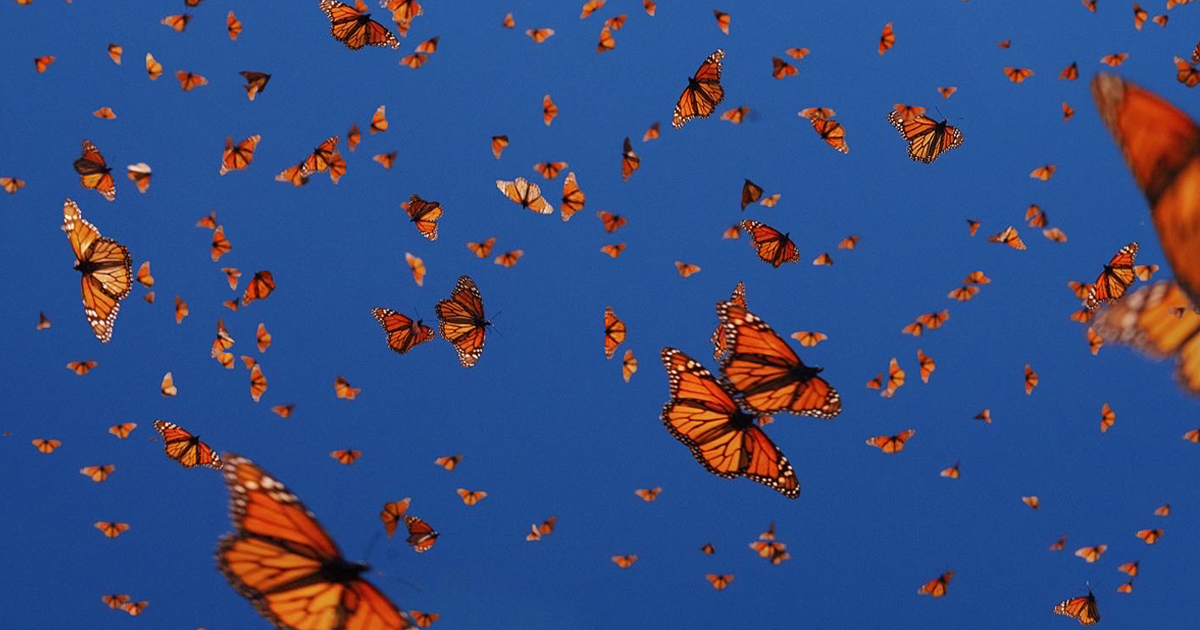
On colder mornings, the clusters can look almost still. The butterflies cling tightly to branches and trunks, conserving energy. But when sunlight reaches the forest, the reserve changes character. Wings begin opening. A few monarchs lift off. Then dozens do. Then hundreds. Before long, orange-and-black butterflies float through the trees like someone shook a snow globe filled with autumn leaves.
23 Pictures From a Forest That Looked Like It Was Breathing
These are the photo moments that best captured the feeling of being surrounded by monarch butterflies in Mexico. Each image slot can be paired with an original photograph from the trip.


Why the Monarch Butterfly Migration Matters So Much
The monarch butterfly migration is not only beautiful; it is one of North America’s most extraordinary ecological stories. The eastern monarch population travels south each fall from breeding grounds across the United States and southern Canada. Many of the butterflies arriving in Mexico are part of a special late-summer generation that can live for months, far longer than typical summer monarchs.
In spring, monarchs leave Mexico and begin moving north. They reproduce along the way, laying eggs on milkweed plants. Their offspring continue the migration over several generations, eventually reaching parts of the United States and Canada. Later in the year, a new generation begins the long return trip to Mexico.
That means the butterflies in the reserve are connected to gardens, prairies, roadsides, farms, schoolyards, and parks across a huge portion of North America. A monarch that visits a flowerbed in Illinois, Texas, Ontario, or Minnesota may eventually become part of the same migration story that ends in these Mexican mountain forests.
The reserve also highlights how fragile that story can be. Monarchs face challenges throughout their range, including habitat loss, declining milkweed availability, pesticide exposure, climate change, drought, severe weather, and damage to overwintering forest habitat. The number of butterflies can change dramatically from year to year, which is why conservation groups measure the amount of forest occupied by monarch colonies each winter.
Recent surveys have offered encouraging signs, including an increase in the area occupied by monarch colonies during the 2025–2026 overwintering season. Still, a better year does not mean the work is finished. Monarch conservation requires long-term protection of forests in Mexico and healthy breeding habitat across the United States and Canada.
How to Visit the Monarch Butterfly Biosphere Reserve Respectfully
Follow the guides and stay on established paths
The reserve is a protected habitat, not a place to wander freely through butterfly clusters. Local guides and sanctuary staff help visitors observe the monarchs while reducing disturbance to the colonies. Stay on designated trails, respect restricted areas, and keep your distance from the butterflies.
Skip the urge to touch a butterfly
Monarchs are beautiful, but they are not props. Touching butterflies can damage their delicate wings or stress them unnecessarily. The best photo is not the closest photo; it is the photo that lets the animal continue doing what it came there to do.
Dress for mountain weather
The reserve is located at high elevation, and mornings can be chilly. Comfortable walking shoes, layered clothing, water, sunscreen, and a little patience are useful. Think “forest hike,” not “casual stroll to a café.” Your legs may eventually send you a strongly worded complaint.
Ask before using flash, drones, or special equipment
Rules can vary by sanctuary, season, and conservation conditions. Follow local guidance about photography, drones, flash, tripods, and access areas. Wildlife photography should never come at the expense of wildlife.
What I Will Remember Most About the Monarch Butterfly Reserve
I expected to see a lot of butterflies. I did not expect to feel emotional about a tree.
But that is what happened. There was something almost overwhelming about seeing monarchs clustered on oyamel fir branches, knowing that each one had traveled through weather, wind, cities, highways, fields, and forests to reach this mountain refuge. The reserve did not feel like a destination built for people. It felt like a place people are lucky to witness.
The monarch butterfly migration is often described as a miracle of nature, and that phrase can sound a little dramatic until you see it in person. Then it starts to feel understated. A tiny butterfly crosses international borders without a passport, follows environmental signals we are still working to understand, and finds its way to a small group of mountain forests year after year.
Standing beneath those trees, I kept thinking about how easy it is to admire wildlife from a distance without realizing how many conditions must line up for it to exist at all. The monarchs need forests in Mexico. They need nectar along migration routes. They need milkweed for their caterpillars. They need people across three countries to make decisions that leave room for nature.
And for one morning in the mountains of Mexico, they needed nothing from me except a little space, a little respect, and the willingness to look up.
More Reflections From the Trip: 500 Extra Words From a Day Among Monarchs
The part I did not expect was the sound.
When people talk about monarch butterflies, they usually talk about color. Orange wings. Black veins. White spots. A forest painted in warm autumn tones. All of that is true, but the sound stayed with me just as much. It was not loud in the way a flock of birds can be loud. Instead, it was a soft, layered flutter that rose and faded with the wind. Sometimes it felt like the forest was whispering. Other times it sounded like someone gently turning the pages of a very large book.
I remember stopping on the trail because I thought I had heard rain. The sky was clear, and no one else looked concerned. Then I realized the sound was coming from the wings above me. The butterflies had begun moving through the canopy as the sun warmed the trees. It was one of those moments that would sound exaggerated if I tried to describe it at dinner later, so naturally I took too many photos and hoped the camera could somehow prove that I was not making it up.
The hike itself was part of the experience. The higher we climbed, the more the forest seemed to close around us. The air smelled like damp earth, wood, and pine needles. Every now and then, sunlight slipped through the branches and hit a cluster of monarchs at exactly the right angle. The butterflies would brighten all at once, as if someone had switched on a hidden string of orange lights.
I also noticed how quickly the reserve changed depending on temperature. In the cooler sections of the forest, many monarchs stayed packed together in still clusters. They were so quiet that I could understand why people sometimes mistake them for dry leaves from a distance. But when the day warmed up, the reserve came alive. A few butterflies would lift off, then another group, then another. Soon the air had motion in every direction.
There was a strange feeling of being surrounded by something huge and delicate at the same time. A single monarch looks fragile enough to disappear in one gust of wind. But thousands together create a scene that feels powerful. The forest seemed filled with orange energy, drifting in slow circles through the trees.
One of my favorite moments happened when I put the camera down. I had been trying to photograph a butterfly in flight, which is roughly as easy as photographing a flying piece of confetti that has strong opinions about focus. After several blurry attempts, I gave up and simply watched. A monarch floated past at eye level, then another, then five more. For a few minutes, I forgot about exposure settings, framing, and whether my phone battery was behaving.
That is what I would tell anyone planning a visit to the Monarch Butterfly Biosphere Reserve: bring your camera, absolutely. Take the photos. Capture the colors, the trees, the trails, and the impossible-looking clusters. But also take a few moments to stop trying to document everything.
Look up. Listen. Let the butterflies move through the forest without turning every second into content.
Because the best part of the experience was not any single picture. It was the feeling of standing in a mountain forest while millions of tiny wings reminded me that nature still knows how to make a grand entrance.













