
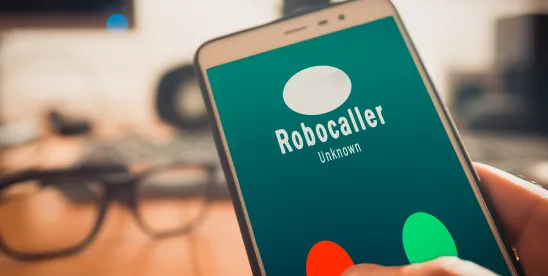
The phone rings. You glance down, see an official-sounding number, and think, “This might be important.” Five seconds later, a robotic voice is warning you about Medicare, your Social Security number, your auto warranty, or some mystery problem that apparently can only be solved by staying on the line and panicking efficiently.
That annoying little theater of fraud is no longer being treated as a minor nuisance. It has become the center of a major multistate legal fight. What began as waves of illegal robocalls, spoofed caller IDs, and questionable “consent” practices has grown into a nationwide lawsuit with serious implications for telecom providers, lead generators, marketers, regulators, and everyday consumers who are very tired of being interrupted during dinner.
This case matters because it reflects a bigger shift in how the United States is fighting robocall abuse. Regulators are no longer focused only on the person pressing “send.” They are also looking at the companies that route the calls, sell the leads, disguise the caller ID, and keep the whole noisy machine humming. In other words, the legal spotlight has moved from the actor on stage to the entire backstage crew.
How a robocall mess turned into a nationwide lawsuit
The lawsuit at the center of this story was brought by a bipartisan coalition of 49 attorneys general against Avid Telecom, a Voice over Internet Protocol, or VoIP, service provider. The allegations were not small, technical, or easy to shrug off. State officials said the company helped initiate or route billions of illegal robocalls across the country over a period of years.
That scale is what turned an everyday consumer irritation into a national legal event. Robocalls are often treated like background noise in modern American life, somewhere between spam email and stepping on a Lego. But in the government’s telling, this was not just an issue of annoyance. It was a system that allegedly enabled scams, impersonation, and deceptive telemarketing on a breathtaking scale.
The multistate complaint accused the company and its executives of violating the Telephone Consumer Protection Act, the Telemarketing Sales Rule, and state consumer protection laws. Those are not decorative laws pulled out of a regulatory attic once every decade. They are core tools used to police abusive calling practices, deceptive sales behavior, and caller ID spoofing.
What the company was accused of doing
Billions of calls is not a typo
According to public statements from multiple state attorneys general, Avid Telecom allegedly sent or attempted to transmit more than 24.5 billion calls between December 2018 and January 2023. More than 7.5 billion of those calls allegedly went to numbers listed on the National Do Not Call Registry. That detail matters because the registry exists for one simple reason: consumers should not have to fight telemarketing like it is a part-time job.
Officials also said that more than 90 percent of the calls lasted fewer than 15 seconds, which regulators argued strongly suggests robocall activity rather than meaningful human conversation. If your average call ends faster than a person can say, “Hello, who is this?”, the odds are not exactly pointing toward a warm community outreach effort.
Spoofing made the calls look legitimate
The allegations went further. State enforcers said hundreds of millions of calls used spoofed or invalid caller ID information, including more than 8.4 million calls that appeared to come from government agencies, law enforcement entities, or private companies. That is a major reason robocalls can be so dangerous. The scam is not just in the message. It is in the disguise.
Caller ID spoofing turns suspicion into false trust. A call that seems to come from Washington, a local police department, or a well-known brand can push people to answer when they would normally ignore the call. Once that trust is borrowed, the scam has a head start.
The alleged warnings did not stop the traffic
One of the most striking details in the public allegations is that the USTelecom-led Industry Traceback Group reportedly sent at least 329 notifications that the company was transmitting suspected illegal robocalls. Regulators say those warnings should have triggered serious action. Instead, they claim the robocall traffic kept moving.
That point is important because it transforms the story from “bad calls slipped through” into “warning signs were allegedly visible for a long time.” In legal terms, that can matter a lot. In plain English, it is the difference between accidentally leaving a window open and repeatedly ignoring the alarm going off.
The scam themes were painfully familiar
The alleged robocall campaigns included Social Security scams, Medicare scams, auto warranty pitches, Amazon impostor calls, DirecTV-related scams, credit card interest rate reduction offers, and employment scams. If that list sounds familiar, that is because it is basically the greatest-hits album of scam calling in America.
These scripts work because they borrow urgency from real life. Health coverage is important. Jobs matter. Government benefits matter. Money matters. Scammers do not invent random worries; they weaponize the ones people already have.
Why this lawsuit matters beyond one company
The enforcement strategy is getting wider
For years, robocall enforcement often looked like a game of digital whack-a-mole. Shut down one operation, and three more seemed to appear wearing fake caller IDs and a suspicious sense of confidence. What makes this lawsuit more significant is that it reflects a broader strategy: go after the entire robocall ecosystem.
That means not just telemarketers, but also intermediaries, VoIP providers, lead sellers, consent farms, and anyone else accused of helping illegal telemarketing travel farther, cheaper, and faster. The legal message is clear: being one step removed from the prerecorded voice may not keep a company out of the case caption.
Lead generation has become a major target
Federal regulators have also been cracking down on companies that gather consumer information and funnel it into aggressive calling campaigns. In a separate case, the FTC announced a settlement with lead generator Response Tree, alleging that it used deceptive websites and dark patterns to collect personal information and then sold that information to telemarketers who made millions of illegal calls. That matters because many robocalls begin long before the phone actually rings. They start with a website form, a comparison page, or a checkbox that looks harmless until your phone becomes a full-time side character in a scam documentary.
In other words, the lawsuit against a telecom provider and the cases against lead generators are part of the same story. Regulators increasingly view robocalls as a chain. If one link profits from deception, the entire chain deserves scrutiny.
The crackdown is still active
This is not ancient history gathering dust in a legal filing cabinet. Federal and state agencies have continued to press the issue. The FTC’s 2023 “Operation Stop Scam Calls” involved more than 180 enforcement actions aimed at illegal telemarketing operations and related facilitators. The FCC has also kept tightening its posture, including actions against providers that fail to comply with robocall mitigation rules. In 2026, the agency blocked a voice provider from connecting with U.S. networks for robocall-rule violations, showing that regulators are willing to move from warnings to real operational consequences.
That ongoing enforcement matters for businesses because the regulatory mood is not softening. And it matters for consumers because the system is, slowly but undeniably, becoming less forgiving toward the companies that help scam traffic move.
How illegal robocalls hurt real people
It is easy to laugh at some robocall scripts because they are so absurd. Apparently, half the country’s auto warranties have expired every Tuesday since 2017. But the impact is not funny.
Illegal robocalls waste time, chip away at trust, and train people to fear their own phones. They especially hurt older adults, people with health concerns, job seekers, and anyone already stressed about bills or benefits. A scam call does not have to successfully steal money to cause damage. It can create confusion, embarrassment, anxiety, and decision fatigue.
There is also a broader social cost. When scam calls flood the network, legitimate calls become easier to ignore. A doctor’s office, school, delivery company, government agency, or family member may get screened out because the line between real and fake has become too blurry. That is what makes robocall abuse a trust problem, not just a telecom problem.
What the lawsuit says about modern consumer protection
This case signals that regulators increasingly understand how illegal robocalls actually work in 2026. The old model of enforcement focused heavily on the visible caller. The newer model asks harder questions. Who provided the software? Who sold the numbers? Who routed the traffic? Who ignored red flags? Who made money while pretending not to notice what was happening?
That shift is important because fraudulent calling campaigns often depend on layers of distance and plausible deniability. One company collects the lead. Another buys it. Another places the call. Another transmits the traffic. Another passes the data. Everybody makes a little money, and everybody hopes responsibility belongs to someone else. Nationwide lawsuits disrupt that strategy by bundling the problem into a single narrative: if you knowingly help the machine run, do not be shocked when your name ends up in the complaint.
What businesses should learn before their compliance team starts stress-baking
For legitimate businesses, this story contains a blunt lesson: compliance is no longer just about your own call center script. It is about vendor oversight, consent quality, lead sourcing, caller ID accuracy, traceback response, and internal controls. A company cannot casually buy leads from murky sources, outsource calling to aggressive third parties, and act surprised when regulators start asking uncomfortable questions with numbered paragraphs.
Businesses should be reviewing how consent is obtained, what disclosures consumers actually see, how quickly revocation requests are honored, whether any prerecorded or autodialed communications are appropriately authorized, and whether telecom partners are responding promptly to suspected illegal traffic notices. “We thought the vendor had it handled” is not the kind of sentence that inspires regulatory sympathy.
The strongest compliance programs treat robocall risk as a board-level reputational issue, not a narrow technical issue for one department. Because once a company becomes associated with scam traffic, the damage spreads fast. Consumers stop trusting the calls, regulators start asking harder questions, and headlines begin writing themselves.
What consumers can do when the phone starts acting haunted
Consumers cannot single-handedly fix the robocall economy, but they can make themselves harder to exploit. Registering numbers on the National Do Not Call Registry still matters. Using carrier blocking tools and phone settings helps. Avoiding calls from unknown numbers is often wise, even if it feels mildly antisocial. Most importantly, never trust the caller ID alone.
If a caller claims to represent Social Security, Medicare, a bank, Amazon, a utility, or law enforcement, hang up and contact the organization using a number from its official website or your account statement. Do not use the number the caller gives you. That is like letting the fox hand you directions to the henhouse.
Consumers should also report suspicious calls to the FTC, FCC, state attorney general offices, and telecom providers when possible. One complaint may feel small, but complaint data helps regulators spot patterns, trace traffic, and build cases that turn everyday irritation into enforceable action.
Experiences from the robocall front lines
To understand why the illegal robocalls lawsuit matters, it helps to look beyond statutes and enforcement headlines and focus on what these calls feel like in ordinary life. Imagine a retiree sitting down to breakfast when the phone rings with a caller ID that appears to belong to a federal office. The voice on the line is urgent, polished, and slightly mechanical. It says there is a problem with the recipient’s benefits and action is needed immediately. The call may last less than a minute, but the stress can linger all day. Even if the target hangs up, the emotional effect is real. People begin second-guessing legitimate notices, worrying about identity theft, and wondering whether ignoring the next call could create a bigger problem.
Now picture a working parent whose cell phone lights up three times during the commute, twice during lunch, and again right as dinner hits the table. One call promises lower credit card rates. Another claims a package cannot be delivered. Another offers a job opportunity that sounds suspiciously generous and weirdly urgent. None of these calls steals money right away, yet each one steals attention. It breaks concentration, interrupts routines, and creates a constant low-grade sense that your phone is less a communication tool and more a tiny chaos dispenser.
Job seekers are another common target. An employment-related robocall can sound especially convincing because it taps into hope as much as fear. Someone actively looking for work may answer because the possibility feels worth it. The caller promises a fast interview, remote opportunity, or immediate hiring process. Then comes the request for personal information, payment for training materials, or some other nonsense wearing a necktie. The emotional damage here is deeper than inconvenience. It exploits vulnerability and wastes time that could have gone into real opportunities.
Older adults often face a different kind of pressure. Scam calls involving Medicare or Social Security are designed to sound authoritative and time-sensitive. They may arrive repeatedly, sometimes using slightly different caller IDs to look local or official. Family members eventually notice that a parent or grandparent has become nervous around every unknown number. That anxiety changes behavior. Some people stop answering completely. Others answer everything, afraid of missing something important. Neither response is healthy, and both are a direct result of an ecosystem flooded with deceptive traffic.
Even people who think they are too savvy to be fooled can get worn down. That is one of the least discussed effects of robocall abuse. It is not always about one successful scam; it is about cumulative exhaustion. After enough fake alerts, fake banks, fake employers, fake retailers, and fake agencies, people become easier to manipulate because they are frustrated, distracted, or simply tired. The robocall system counts on that fatigue. That is exactly why nationwide enforcement matters. It is not just about punishing bad actors after the fact. It is about making daily life a little less noisy, a little less deceptive, and a lot less ridiculous.
Conclusion
The nationwide lawsuit over illegal robocalls is bigger than one company and bigger than one batch of scam calls. It marks a turning point in how regulators describe the problem and whom they are willing to blame. The focus is no longer limited to the voice reading the script. It now includes the companies accused of powering, routing, monetizing, and protecting the system behind it.
That matters for consumers because it increases the odds of meaningful disruption. It matters for businesses because “we are only the platform” is starting to look less like a defense and more like a red flag. And it matters for the future of telemarketing law because the age of casual indifference to robocall infrastructure appears to be ending.
For anyone who has ever stared at an incoming call from a suspiciously official-looking number and thought, “Absolutely not,” this lawsuit is a reminder that the frustration is not imaginary. It is documented, investigated, and finally being litigated on a national scale.













