
The phrase “Ilse Crawford bench” sounds wonderfully simple, like you are searching for one perfect object that will quietly solve your hallway, dining room, mudroom, and existential design crisis in one graceful swoop. In reality, it opens the door to a wider design universe: Studioilse’s warm, human-centered benches for De La Espada, the tactile cork language of the IKEA SINNERLIG collection, the flexible Betwixt seating family for Herman Miller, and later home collections that show Crawford’s enduring love of useful, sensory, people-friendly furniture.
Ilse Crawford is not the kind of designer who makes furniture just to look elegant in a photo shoot while everyone is afraid to sit on it. Her work is built around the body, habits, hospitality, atmosphere, and the small daily rituals that make a space feel alive. A bench, in her world, is not merely “long chair, no arms, good luck.” It is an invitation: scoot over, sit closer, share a meal, pull off your boots, pause in the hallway, or create a corner that feels more like a welcome than a waiting area.
This article explores what makes an Ilse Crawford bench special, how the best-known Studioilse bench designs differ, where they fit in a home, and why Crawford’s approach still feels fresh in an era when interiors are expected to work harder than ever.
Who Is Ilse Crawford, and Why Does Her Bench Design Matter?
Ilse Crawford is a British designer, creative director, and founder of Studioilse, the London-based design studio known for interiors, furniture, objects, and brand experiences that prioritize human well-being. Before founding Studioilse in 2001, Crawford was also the founding editor of ELLE Decoration UK, which helps explain her rare ability to think like both a storyteller and a maker. She understands not only how objects are produced, but how they feel inside a room and inside a life.
Her design philosophy is often described as human-centered, but that phrase can sound a little corporate, as if a committee in nice sneakers invented it during a branding workshop. Crawford’s version is warmer and more practical. It asks: How does a space make people behave? Does it encourage conversation? Does it calm the nervous system? Is the material pleasant to touch? Can the object age with dignity instead of looking embarrassed after two years?
That is why the Ilse Crawford bench matters. A bench is one of the oldest forms of seating, but in Crawford’s hands it becomes modern without becoming cold. It is simple, social, and flexible. It can belong to a dining table, an entryway, a bedroom, a hospitality space, or a work lounge. It can hold one person with a book or three people negotiating who gets the last roast potato. Either way, it behaves beautifully.
The Studioilse “Seating for Eating” Bench by De La Espada
The most direct answer to “Ilse Crawford Bench” is often the Studioilse Bench for De La Espada, part of the Seating for Eating family. This collection includes settles, benches, and stools designed around the idea of gathering. It draws inspiration from traditional English vernacular furniture: stools, pews, settles, and benches that were once practical, communal, and refreshingly free of design diva behavior.
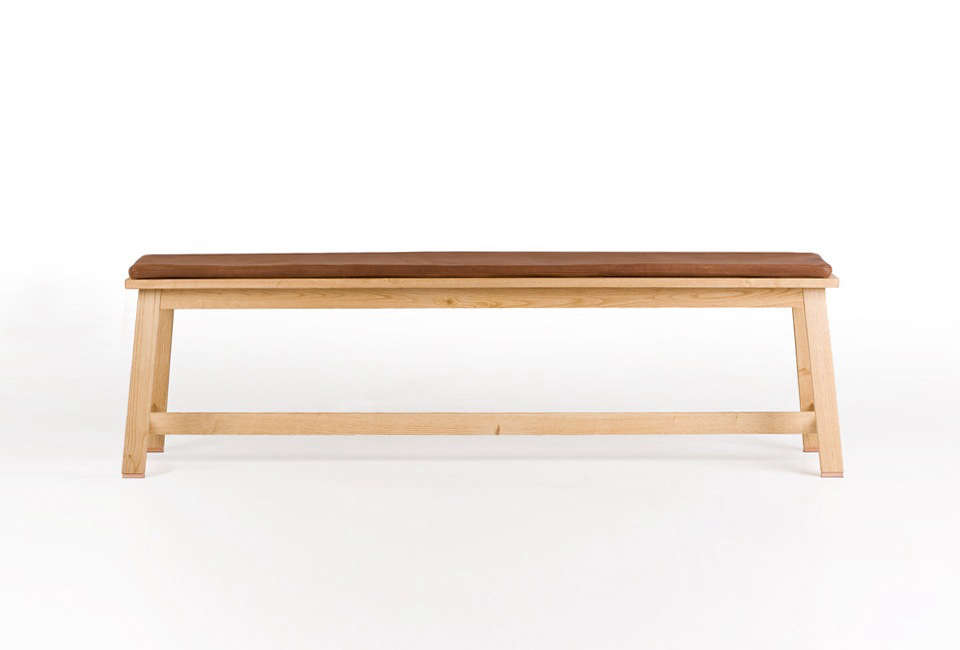
The De La Espada bench is beautifully restrained. It is available in solid wood options such as black walnut, white oak, or ash, with refined detailing that gives it quiet presence. Copper feet add a subtle material note without turning the bench into a jewelry counter. Optional seat pads, often in leather or fabric depending on configuration and retailer, soften the experience while preserving the lean, architectural silhouette.
Key Features of the De La Espada Studioilse Bench
The bench is available in two-seat and three-seat versions, making it suitable for compact dining corners as well as longer tables. Its proportions are narrow and efficient, which is part of its charm. Unlike bulky upholstered benches that devour floor space like a sofa in disguise, the Studioilse bench slips into rooms with discipline. It gives you seating without visually clogging the room.
The design is also refreshingly honest. There is no decorative noise. The construction, material, and proportion do the work. The result is a designer wooden bench that feels familiar but elevated, like something remembered from an old farmhouse, refined through contemporary craft, and politely asked not to squeak.
Why the Seating for Eating Idea Still Feels So Relevant
Modern homes are expected to multitask. The dining table is also a laptop zone, homework headquarters, birthday cake staging area, puzzle battlefield, and occasionally the place where mail goes to “rest” for three weeks. Crawford’s Seating for Eating concept anticipated this beautifully. These pieces are not just dining furniture; they are social tools.
A bench changes the psychology of a table. Chairs mark individual territory. A bench suggests shared space. It lets people move closer, make room, or slide along as the conversation shifts. This is why the Studioilse bench works so well with the Studioilse Together Table, another De La Espada design created for eating, drinking, working, and playing. Rounded table ends and communal bench seating create a setting that feels informal, generous, and ready for real life.
In a restaurant, the same logic helps strangers feel more comfortable. In a home, it makes everyday meals feel less stiff. If a chair says, “This is my seat,” a bench says, “There is room.” That tiny social difference is exactly the kind of design intelligence Crawford is known for.
The IKEA SINNERLIG Influence: Cork, Touch, and Everyday Use
No discussion of an Ilse Crawford bench is complete without mentioning the IKEA SINNERLIG collection. Designed by Studioilse for IKEA and launched in 2015, SINNERLIG explored natural materials such as cork, ceramic, glass, seagrass, and bamboo. The collection included more than 30 items for the home, with a strong emphasis on tactility, simple forms, and affordability.
While collectors often search for the Ilse Crawford IKEA bench or the SINNERLIG cork bench, the broader importance of the collection lies in its democratic design spirit. Crawford’s studio worked within IKEA’s industrial system to create pieces that felt warm, useful, and sensory rather than slick and anonymous. Cork was especially important because it is soft to the touch, acoustically gentle, naturally textured, and visually warm.
The SINNERLIG pieces proved that affordable furniture did not have to feel disposable. They brought Studioilse’s values to a much wider audience: honest materials, flexible use, and a sensory connection to the home. In other words, not every bench needs to be a luxury heirloom. Sometimes the best bench is the one that quietly improves daily life and survives keys, tote bags, coffee cups, and one suspiciously muddy dog.
The Herman Miller Betwixt Bench: Studioilse in a Contract-Friendly Form
Another important design connected to Ilse Crawford and Studioilse is the Betwixt Bench for Herman Miller. Designed by Studioilse, the Betwixt family includes chairs, stools, and benches intended to move between residential, hospitality, and contract spaces. The bench has a steel frame and can be specified with wood or upholstered elements, depending on the desired look and performance.
Where the De La Espada bench feels rooted in communal dining and traditional seating archetypes, the Betwixt Bench feels more like an “everywhere” piece. It is suitable for offices, lounges, waiting areas, cafés, and homes that need a slim two-person seat with character. It has more visible structure than the De La Espada bench, with a distinctive frame that balances strength and lightness.
This is a different expression of the same Studioilse thinking. The bench must support behavior. It must be durable, adaptable, and emotionally approachable. Nobody wants contract furniture that looks like it was designed by a spreadsheet with posture issues. Betwixt adds warmth and identity while remaining practical for high-use environments.
The Anthropologie Studioilse Woven Bench and the Multiuse Home
In 2023, Studioilse also collaborated with Anthropologie on a home collection that included seating, tables, textiles, lighting, ottomans, and a woven bench. The collection reflected post-pandemic living, where homes had become offices, studios, restaurants, classrooms, and emotional support habitats all at once.
The Studioilse Woven Bench for Anthropologie leaned into tactile materials and a softer domestic mood. It was part of a larger conversation about furniture that can move through different roles: seating at the foot of a bed, a perch in an entry, extra living room seating, or a beautiful landing zone for the objects that mysteriously follow us around the house.
This matters because it shows how Crawford’s bench language adapts across price points, brands, and lifestyles. Whether the material is solid timber, cork, steel, upholstery, or woven texture, the intention remains consistent: create objects that support real human rhythms.
How to Style an Ilse Crawford Bench at Home
The beauty of an Ilse Crawford bench is that it does not demand a museum-like setting. In fact, it often looks best when life is happening around it. A wooden Studioilse bench can sit beside a solid dining table, paired with chairs on the opposite side for a relaxed but refined mix. The key is to keep the surrounding materials honest: wood, stone, linen, wool, ceramic, leather, and hand-finished metal all speak the same language.
In the Dining Room
Use a bench on one side of the table to create flexibility. It is especially useful for families, casual entertaining, or narrow dining rooms where pulling out chairs on both sides feels like a small architectural tragedy. Add a leather or upholstered pad if the bench will be used for long meals. Your guests may admire pure wooden minimalism, but after two hours of pasta and conversation, they will also admire cushioning.
In the Entryway
An entry bench gives people a place to remove shoes, set down bags, or pause before entering the home. A Crawford-inspired bench works well here because it brings warmth without clutter. Add wall hooks, a woven basket, and soft lighting to create a welcoming landing zone.
At the Foot of the Bed
A slim bench at the foot of a bed is both beautiful and useful. It can hold a throw, provide a place to sit, or prevent decorative pillows from forming a dramatic mountain on the floor every night. Choose a softer woven or upholstered version if the bedroom already has many hard surfaces.
In a Hallway or Gallery-Like Space
Because Studioilse benches are often visually light, they work well in transitional spaces. A hallway bench can turn a pass-through area into a moment. Add a small artwork, a warm wall color, or a textured rug, and suddenly the corridor stops feeling like a route to the laundry and starts acting like part of the home.
Materials: Why Crawford’s Benches Feel Different
Material is central to Ilse Crawford’s work. She often favors natural, tactile, and emotionally resonant surfaces. Wood is not just a construction material; it brings grain, warmth, scent, and age. Cork is not just sustainable and practical; it is soft, quiet, and unexpected. Woven fibers are not just decorative; they soften acoustics and invite touch.
This is one reason the Ilse Crawford designer bench category feels different from many contemporary benches. Some modern benches are visually impressive but emotionally chilly, like they might judge your socks. Crawford’s pieces usually avoid that problem. They are refined, but they still understand breakfast crumbs, winter coats, tired legs, and the fact that people rarely sit as neatly as catalog photography suggests.
Buying Considerations: What to Know Before Choosing One
Before buying an Ilse Crawford bench or a Studioilse-inspired piece, consider scale first. Measure the table, hallway, or bedroom wall where it will sit. A bench should feel generous enough to use but not so large that it dominates the room. For dining, make sure the bench height works with the table height and that there is enough room to slide in and out comfortably.
Next, think about material and maintenance. Solid wood develops character over time, but it needs reasonable care. Cork is tactile and warm, but vintage SINNERLIG pieces may show wear depending on use. Upholstered or woven benches add comfort and texture, but they may require more attention in homes with pets, children, or adults who treat coffee like a performance sport.
Finally, consider whether you want the bench to disappear quietly into the room or become a focal point. A black painted ash bench, a walnut bench with copper detailing, or a woven bench can each change the mood dramatically. The best choice is not the most expensive one; it is the one that supports the way you actually live.
Why the Ilse Crawford Bench Has Lasting Appeal
The lasting appeal of the Ilse Crawford bench comes from its refusal to chase trends. These designs are not trying to be loud, futuristic, or aggressively “iconic.” They are trying to be useful, beautiful, and emotionally intelligent. That may sound modest, but it is surprisingly rare.
In a world of furniture that often seems designed for online scrolling first and human use second, Crawford’s benches remind us that good design begins with the body. Can you sit comfortably? Can you gather? Can you touch the material and feel something real? Can the object grow older without losing its dignity?
The answer, in the best Studioilse benches, is yes. They are not just places to sit. They are small pieces of social architecture.
Personal Experience and Practical Reflections on Living with an Ilse Crawford Bench
Spending time with an Ilse Crawford-style bench changes how you think about seating. At first, the appeal may seem visual: the clean line, the honest wood, the quiet profile, the way it looks pulled up to a table or tucked under a window. But after a while, the real value becomes behavioral. A bench gently changes what people do.
In a dining area, a bench makes meals feel less formal. People do not approach it with the same stiff choreography as individual chairs. They slide in, make space, shift closer, lean back, lean forward, and treat the table like a shared landscape. This is especially useful when hosting friends. Someone always arrives late, someone brings an extra guest, and someone’s child decides that sitting normally is a personal betrayal. A bench absorbs these little disruptions with grace.
In an entryway, the experience is different but just as valuable. A well-placed bench becomes part of the routine. You sit down to tie shoes, drop a bag, sort the mail, or take a breath before leaving. It turns the transition between outside and inside into something calmer. That might sound poetic for a piece of furniture, but anyone who has tried to put on boots while hopping on one foot beside a pile of umbrellas knows that furniture can absolutely affect your dignity.
What makes Crawford’s approach especially satisfying is the balance between beauty and restraint. The bench does not scream for attention. It does not need an elaborate styling moment with twelve books, a sculptural vase, and a blanket folded by a professional rectangle specialist. It works with ordinary life. A coat can land on it. A child can sit on it. A guest can admire it. The bench survives all three scenarios.
The material experience is also important. A solid wood bench feels grounding. Cork feels warmer and more casual. Woven textures soften a room immediately. These materials invite touch, which is a subtle but powerful part of feeling at home. Smooth plastic or overly polished metal can look sleek, but they rarely create the same emotional response. Crawford’s benches and bench-adjacent designs understand that the hand matters as much as the eye.
Another practical lesson is that benches are underrated space-savers. In smaller homes, a bench can often do the work of several chairs while taking up less visual room. It can tuck under a table, sit along a wall, or move from dining area to living room when extra seating is needed. This flexibility is one reason Studioilse’s work feels so contemporary. Today’s homes are rarely single-purpose. The same corner may host breakfast, emails, craft projects, and a slightly chaotic video call before noon.
Living with a bench also teaches you not to over-furnish. A strong, simple bench can create a complete moment with very little else. Add warm lighting, a natural rug, and one useful basket, and the space feels considered. This is where Crawford’s design philosophy becomes practical advice: start with human behavior, then add only what supports it.
The Ilse Crawford bench is not about perfection. It is about atmosphere, use, and connection. It gives people a place to gather without fuss. It makes a room feel warmer without shouting. And perhaps most importantly, it proves that a humble bench can carry a surprising amount of emotional intelligence. Not bad for a long piece of furniture that technically does not even have a back.
Conclusion: The Quiet Power of the Ilse Crawford Bench
The Ilse Crawford bench is best understood not as one isolated object, but as a design idea expressed through several thoughtful collections. From the Studioilse Seating for Eating bench by De La Espada to the tactile spirit of IKEA SINNERLIG, the contract-friendly Betwixt Bench for Herman Miller, and the softer woven designs created for contemporary homes, Crawford’s bench designs share a common purpose: to support human life with warmth, flexibility, and care.
They are useful without being boring, refined without being precious, and social without being pushy. In a dining room, hallway, bedroom, office, or hospitality space, an Ilse Crawford bench brings people closer to the thing design should always serve: the experience of being human.
Editorial note: Product specifications, pricing, finishes, and lead times may change by retailer and production period. Always verify current details with the official manufacturer or authorized dealer before purchasing.













