
Glitter may be part of the uniform, but curiosity is the real superpower.
Som pattern and will never apologize for believing that a jacket can benefit from tiny planets.
But “Galaxy Girl” is bigger than an aesthetic. It is not just a Pinterest board, a Halloween costume, or a personality assigned by a sparkly sticker on a water bottle. It is a way of moving through the world with curiosity, imagination, courage, and the stubborn belief that there is always more to learn.
I am drawn to galaxies because they remind me that nothing interesting is flat. A galaxy is not merely a pretty swirl in a textbook. It is motion, gravity, dust, heat, darkness, light, mystery, and a few billion things refusing to sit still. That feels familiar. People are like that, too. We are not one label, one outfit, one talent, one awkward middle-school photo, or one thing someone decided about us five minutes after meeting us.
So yes, I may be a Galaxy Girl. But I am also a reader, a builder, a daydreamer, a question-asker, a friend, a work in progress, and occasionally a person who burns toast while contemplating the universe. Multitasking has limits.
A Label Should Be a Telescope, Not a Cage
Labels can be useful. They help us find people who understand us. They can give shape to interests that felt lonely before we found the right words for them. “Artist.” “Gamer.” “Science nerd.” “Bookworm.” “Athlete.” “Galaxy Girl.” Each label can be a tiny signal flare that says, Hello, someone else might get this.
The trouble begins when a label becomes a cage. The moment someone says, “You are a Galaxy Girl, so you must always look like this,” or “You like astronomy, so you cannot also care about fashion,” the whole thing gets smaller. That is not identity. That is a cardboard cutout with good lighting.
A real identity has room to evolve. It can hold contradictions without falling apart. You can love science fiction and still cry during a baking show. You can wear moon earrings and spend Saturday morning fixing a bicycle chain. You can know the names of constellations and still get lost in a parking garage. The universe itself is not tidy, so why should we demand that people be?
Being more than one thing does not make you confusing. It makes you human. It means you are allowed to have layers, side quests, plot twists, and interests that do not fit neatly inside one social-media caption.
The Science Behind the Sparkle
There is something powerful about combining wonder with knowledge. Space has always inspired art, stories, music, fashion, and imagination. At the same time, it asks difficult questions. How do stars form? What happens near a black hole? How can we study a planet we may never visit? Why do some objects shine while others remain invisible?
Those questions matter because curiosity changes how we see ourselves. When we learn even a little astronomy, the night sky stops being a dark ceiling with decorative dots. It becomes a living map filled with history, physics, distance, and possibility. Suddenly, a star is not just “pretty.” It is evidence. A planet is not just “far away.” It is a world with its own weather, chemistry, and story.
That is why a Galaxy Girl identity should never be reduced to glitter alone. The glitter is fun. The curiosity is the engine.
Women have been part of astronomy, mathematics, engineering, and space exploration for generations, even when their names did not always make it into the loudest headlines. Women who once worked as human “computers” analyzed astronomical observations by hand. Mathematicians helped make early spaceflight possible. Astronomers challenged assumptions about the universe while also pushing against assumptions about who belonged in science.
That history matters because it proves that wonder and intelligence have never been opposites. A person can love beauty and equations. A person can collect star stickers and solve hard problems. A person can be fascinated by distant galaxies while working to make life on Earth kinder, smarter, and more interesting.
The Costume Is Not the Credential
Let us address the sparkly elephant in the room: appearance. People are quick to decide that anyone who enjoys style must not be serious. It is a strange assumption, especially considering that people have worn uniforms, robes, suits, helmets, lab coats, and dramatic capes for centuries. Humans have always used clothing to express identity. We simply get suspicious when the expression includes rhinestones.
Being interested in fashion does not erase intelligence. Wearing pink does not cancel out a love of physics. Caring about makeup does not mean you cannot care about coding, climate science, art history, robotics, writing, or business. The idea that someone must look plain to be taken seriously is not professionalism. It is boredom wearing a name tag.
A Galaxy Girl can dress like a nebula, a minimalist, a skater, a librarian, a mechanic, or someone who grabbed the nearest clean hoodie before class. None of those choices determines how curious, capable, creative, or ambitious she is.
Style can be play. It can be armor. It can be a celebration. It can also be absolutely nothing deeper than “this shirt has Saturn on it, and Saturn is objectively cool.” Every reason is valid.
Curiosity Is the Real Uniform
What makes someone cosmic is not the number of galaxy-print items in her closet. It is the habit of asking better questions.
Curiosity sounds simple, but it is not passive. It asks you to stay open when the answer is inconvenient. It asks you to admit when you do not know something. It asks you to look beyond the first explanation, the loudest opinion, or the easiest stereotype. Curiosity is the opposite of pretending that the world is already solved.
A Galaxy Girl notices things. She looks up. She reads the label. She asks why a science experiment failed instead of throwing it away immediately. She wonders how a camera captures a distant planet, how a song makes people emotional, why cities are designed the way they are, and whether there is a better way to solve a problem.
That mindset does not belong only in classrooms. It belongs in friendships, creative projects, careers, and ordinary life. Curiosity can make you a better listener because you stop assuming you already understand people. It can make you more resilient because mistakes become information instead of proof that you should quit. It can make you more confident because you learn that not knowing something is the beginning of learning, not the end of intelligence.
In other words, curiosity is not a cute accessory. It is a survival skill with excellent branding.
Building a Galaxy Girl Life
A big identity does not need a dramatic origin story. You do not need to discover a comet before breakfast or build a rocket in your garage by lunch. A Galaxy Girl life can begin with small habits that make room for wonder.
1. Collect Questions, Not Just Answers
Keep a list of things that make you curious. Why do some clouds look pink at sunset? How does a telescope work? What makes a story unforgettable? Why does one person see a problem as impossible while another sees it as a design challenge?
You do not have to answer every question immediately. The point is to practice noticing. Curiosity grows when it is fed, and it gets surprisingly hungry.
2. Make Things That Do Not Need Permission
Create a collage. Write a short story about a city on Mars. Build a tiny model solar system. Take photographs of the moon for a month. Learn a few constellations. Design a playlist that sounds like leaving Earth. Make something messy, strange, funny, beautiful, or gloriously unnecessary.
Creative work teaches an important lesson: you are allowed to begin before you are an expert. The first version may be awkward. Great. Awkward is often just beginner energy wearing socks with sandals.
3. Find People Who Expand Your Universe
Supportive communities matter. A mentor, teacher, friend, club, online learning group, library program, science museum, art class, or team can introduce you to possibilities you had not considered. The right people do not shrink your interests into a joke. They ask about your ideas and hand you tools, books, encouragement, or at least a snack while you figure things out.
Look for people who make you feel more capable, not more performative. You should not have to audition for the right to be interested in something.
4. Protect Your Wonder From Comparison
Comparison is a thief with excellent Wi-Fi. It can turn a simple interest into a competition before you have even had time to enjoy it. Someone else may know more about astronomy, have a better camera, wear cooler clothes, draw more realistically, or have a much more organized desk. Congratulations to them. Their success does not reduce your sky.
Your curiosity does not need to be the loudest or most polished to be real. You are allowed to learn in public, learn slowly, change your mind, and be new at things.
Make Room for Every Version of Yourself
One of the most freeing things a person can learn is that identity is not a final exam. You do not have to choose one permanent version of yourself at fourteen, eighteen, twenty-five, or eighty. You can grow out of interests, return to old ones, discover new talents, and change directions without betraying who you used to be.
Maybe the Galaxy Girl version of you starts with space photos and turns into environmental science. Maybe it becomes graphic design, aerospace engineering, filmmaking, teaching, coding, music, writing, architecture, or a career that does not exist yet because someone has not invented the right name for it.
The important part is not staying perfectly consistent. The important part is staying connected to the things that make you feel awake.
There is a lot of pressure to become easy to understand. People like categories because categories make life feel organized. But the most memorable people are rarely the easiest to summarize. They contain hobbies, contradictions, private ambitions, strange jokes, and whole internal solar systems that cannot fit inside one label.
That is not a flaw. That is the point.
Experiences From a Galaxy Girl Life: More Than Stardust
The first time I stayed outside long enough to really look at the sky, I expected something dramatic. I expected a meteor shower, a mysterious signal, or at least a bird to fly past in a shape resembling a spaceship. Instead, I got a quiet yard, a slightly uncomfortable lawn chair, and a sky that took its time.
At first, I could only see a few stars. Then my eyes adjusted. More lights appeared, then more, until the darkness looked less empty and more like a crowded room where everyone was whispering. I remember realizing that the sky did not need to perform for me. I needed to pay attention to it.
That experience changed how I think about confidence. I used to believe confidence meant arriving somewhere already brilliant, polished, and ready for applause. Now I think confidence can be quieter. Sometimes it is just staying outside long enough for your eyes to adjust.
I have had plenty of moments when being a “Galaxy Girl” felt like a joke other people were waiting to make. Someone would see the planet earrings, the glitter notebook, or the space-themed desktop background and assume they knew the whole story. They would think I was all daydream and no discipline, all decoration and no depth.
For a while, I tried to correct that by becoming less visible. I toned things down. I worried about seeming too enthusiastic. I thought that if I looked more serious, people would automatically assume I was serious. That did not work. It mostly made me feel like I had packed away useful parts of myself to make strangers comfortable.
Eventually, I learned that I did not need to choose between joy and credibility. I could wear a star-print shirt while preparing for a difficult presentation. I could be excited about astronomy while struggling through a hard math concept. I could make art inspired by planets and still take my goals seriously. The two sides did not compete. They supported each other.
One of my favorite memories is working on a small creative project with friends: a handmade “intergalactic magazine” full of fake alien advice columns, moon photographs, short poems, and absurd advertisements for products like anti-gravity socks. Was it scientifically important? Not exactly. Was it one of the most educational things I have done? Absolutely.
We had to research, write, edit, plan, draw, disagree politely, solve layout problems, and laugh when the stapler betrayed us. It taught me that curiosity becomes stronger when it is shared. Ideas get better when they collide with other ideas. Also, never trust a stapler during a creative deadline.
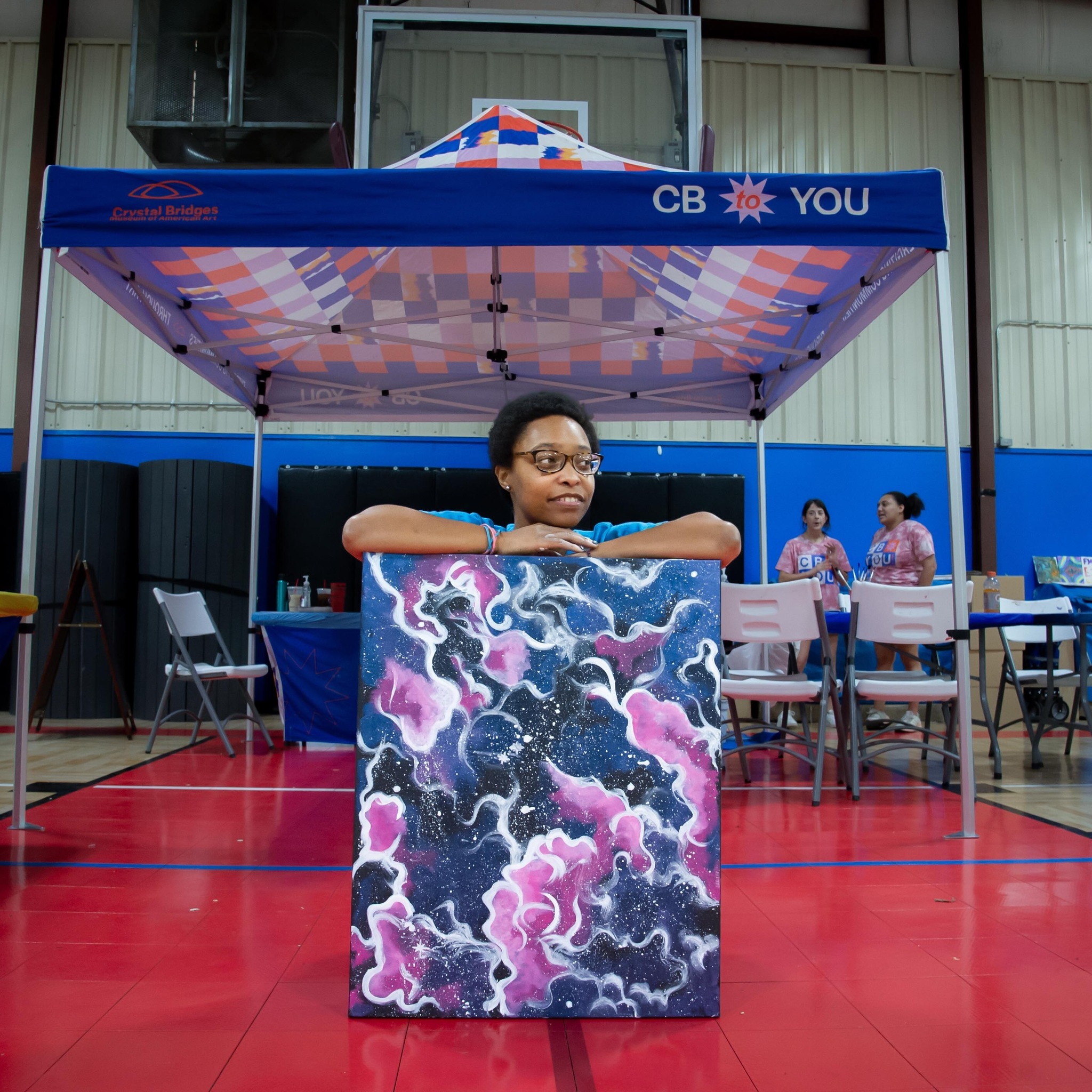
Another important experience came from failing at something I cared about. I once spent days trying to make a detailed galaxy painting. In my imagination, it looked like something hanging in a museum gift shop. In reality, it looked like a blueberry had exploded during a thunderstorm.
I wanted to throw it away. Instead, I kept going. I added layers, covered mistakes, experimented with different textures, and learned that the dark parts were necessary for the bright colors to show up. The final painting was not perfect, but it was mine. That lesson stayed with me: progress often looks unimpressive in the middle.
Being more than a Galaxy Girl means carrying that lesson everywhere. I can be imaginative and practical. I can be soft and determined. I can care about beauty and still ask hard questions. I can admire the stars without waiting for them to tell me who I am.
The universe is enormous, strange, unfinished, and full of things we have not named yet. That is not intimidating to me anymore. It is an invitation.
Conclusion: The Universe Is Not Your Limit
“Galaxy Girl” can be a joyful beginning, but it should never be the whole story. It can represent a love of space, style, science, creativity, or wonder. It can be a reminder to look up, keep learning, and refuse the tiny boxes people try to hand you.
But you are more than your aesthetic. More than your favorite subject. More than the assumptions people make when they see you from across a room. You are allowed to be ambitious, playful, serious, curious, uncertain, brilliant, ordinary, evolving, and impossible to summarize in one sentence.
Wear the stars. Study the stars. Paint the stars. Question the stars. Then build a life that is bigger than anyone’s first impression of you.













