
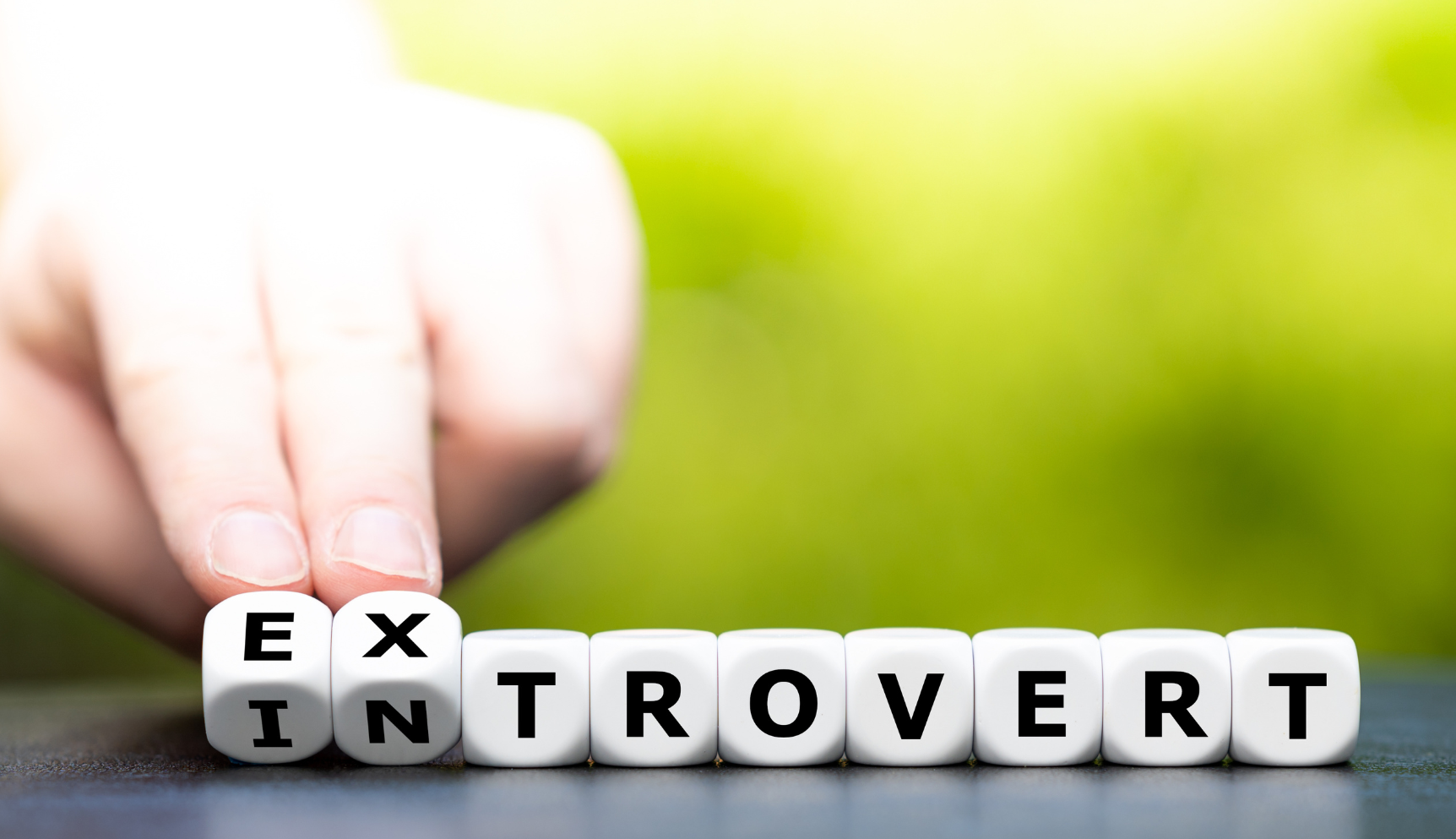
Some people walk into a party and instantly gain three new best friends, two future business partners,
and a free slice of pizza. Others walk in, locate the nearest wall, and start a meaningful relationship
with the houseplant. If you’ve ever wondered where you land on the introvert–extrovert spectrum,
you’re in the right place.
This isn’t a “label you forever” kind of thing. Modern psychology treats introversion and extraversion
as a continuummeaning most of us are a mix, often called an ambivert. Your score can also shift
depending on your season of life, stress level, health, job demands, and how many back-to-back group chats
you’ve survived this week.
What Introversion and Extraversion Really Mean (No Stereotypes Allowed)
Let’s clean up a common mess: introversion is not the same as shyness, and extraversion is not
the same as being “the loud one.” In personality research, extraversion generally reflects how energized you feel
by social stimulation, novelty, and outward engagement. Introversion reflects a stronger pull toward inward focus,
quieter environments, and recovering energy through solitude or low-stimulation settings.
Also: social anxiety is a different topic. You can be an outgoing extrovert and still feel anxious
about judgment. You can be a calm introvert who loves peoplejust in smaller doses. Think “energy management,” not
“social skills.”
Quick myth-busting (because the internet loves drama)
- Myth: Introverts hate people. Reality: Many introverts love peopledeeply. They just need recovery time.
- Myth: Extroverts never need alone time. Reality: Everyone needs quiet sometimes; extroverts just tend to refill faster in social settings.
- Myth: You’re either one or the other. Reality: Most people are somewhere in the middle (hello, ambiverts).
How This Introvert or Extrovert Quiz Works
You’ll answer 24 statements using a 1–5 scale. Go with your usual pattern, not your “when I’ve had three coffees”
pattern. Be honestthis quiz does not report to your group chat.
Answer scale
- 1 = Strongly disagree
- 2 = Disagree
- 3 = Neutral / depends
- 4 = Agree
- 5 = Strongly agree
The Quiz: Introvert or Extrovert?
Part A: Social Energy
- I feel more energized after spending time with a group of people.
- After a busy social day, I crave quiet time alone to feel like myself again.
- Meeting new people feels exciting rather than draining.
- I prefer one-on-one conversations over group discussions.
- I often start conversations, even with people I don’t know well.
- I’m happiest when I have plenty of time to myself each week.
Part B: Stimulation & Environment
- I like busy places (events, cafés, crowds) because they feel alive.
- Too much noise or activity can make me feel overstimulated.
- I seek out new experiences just for the fun of it.
- I prefer calm settings where I can focus without interruptions.
- I enjoy being “in the mix” when something is happening.
- I do my best thinking when I’m alone or in a quiet space.
Part C: Communication Style
- I tend to think out loud and figure things out as I talk.
- I usually think carefully before I speak.
- I’m comfortable being the center of attention.
- I’d rather observe first than jump into a conversation.
- I’m quick to share stories, opinions, or jokes in a group.
- I’m selective about what I share and with whom.
Part D: Preferences in Work & Leadership
- I enjoy collaborative projects and frequent team interaction.
- I prefer independent work with fewer check-ins.
- I feel confident speaking up in meetings or group settings.
- I contribute best when I’ve had time to prepare my thoughts.
- I’m motivated by networking, meeting people, and building connections.
- I’m motivated by depth: mastering skills, thoughtful work, and meaningful relationships.
Scoring Instructions
Some items point toward extraversion and some toward introversion. To score accurately:
Step 1: Reverse-score these items
Reverse-score: 2, 4, 6, 8, 10, 12, 14, 16, 18, 20, 22, 24
Reverse-scoring means:
1 ↔ 5, 2 ↔ 4, and 3 stays 3.
Step 2: Add up all 24 answers
Your total score range is 24 to 120.
Step 3: Read your result
- 24–59: More Introverted (you recharge inwardly and prefer lower stimulation)
- 60–84: Ambivert / Balanced (you flex depending on context and energy)
- 85–120: More Extroverted (you recharge outwardly and enjoy higher stimulation)
Optional: Mini-profile (because you’re curious and I respect that)
Add up your points by section (A, B, C, D) to see where you lean most strongly. Many people score “ambivert overall”
but show a clear pattern, like “quiet communicator” or “social but easily overstimulated.”
What Your Result Means (And What It Doesn’t)
If you scored more Introverted
You likely restore your energy through solitude, calm environments, and deeper, more focused interaction. You may prefer
meaningful conversations over rapid-fire small talk. That doesn’t mean you can’t be socialit means your “social battery”
has a different charging cable.
- Strengths you can lean on: depth, reflection, listening, preparation, focus
- Watch-outs: over-scheduling, too much stimulation, not building recovery time into plans
- Real-life example: You can enjoy a wedding… but you also want a 48-hour “do not perceive me” weekend afterward.
If you scored Ambivert / Balanced
You’re adaptable. Sometimes you want the group hang; sometimes you want to quietly exist near a window like a thoughtful cat.
Ambiverts often do well in roles that require both listening and speakingbecause you can shift gears.
- Strengths you can lean on: flexibility, social range, balanced communication
- Watch-outs: confusing other people (“I swear I like you; I just also like silence.”)
- Real-life example: You’re amazing at parties for two hours… then you become a pumpkin with boundaries.
If you scored more Extroverted
You likely feel energized by interaction, novelty, and outward engagement. Brainstorming with others may fuel you. You might
process thoughts by talking and feel “more like yourself” when you’re connected to people and activity.
- Strengths you can lean on: networking, momentum, initiating, enthusiasm, collaboration
- Watch-outs: not noticing burnout until it’s loud, filling every gap with activity, talking past your own needs
- Real-life example: You leave a great conversation feeling refreshedlike you just plugged into a human phone charger.
Introvert vs. Social Anxiety (A Quick Reality Check)
If you avoid social situations because you’re afraid of embarrassment, judgment, or rejectionand it’s disrupting your lifethat
may be closer to social anxiety than introversion. Introversion is a personality trait. Social anxiety is an anxiety condition.
They can overlap, but they are not the same thing.
If anxiety is making school, work, friendships, or daily tasks feel hard, it’s worth talking to a trusted adult, counselor, or a licensed
mental health professional. You deserve support that actually helps.
How to Use Your Quiz Result (Without Turning It Into a Personality Prison)
1) Design your week around your energy, not your guilt
Introverts often benefit from spacing social events and adding recovery time. Extroverts often benefit from planning connection and not isolating
when stressed. Ambiverts benefit from checking which way their battery is leaning this week.
2) Communicate your “recharge rules”
You don’t have to explain your nervous system with a PowerPoint, but you can say:
“I’d love to gojust not two nights in a row,” or “I’m quiet because I’m thinking, not because I’m mad.”
3) Build a balanced social diet
Think of social time like food: the goal isn’t “more” or “less,” it’s the right mix. Some people thrive on a buffet;
others prefer a calm, intentional meal. Either way, you still deserve dessert.
4) Use the result to choose strategies, not identities
The healthiest takeaway is: “Here’s what energizes me; here’s what drains me; here’s how I can plan accordingly.”
Not: “I can never do presentations because I’m an introvert,” or “I must be the life of every party because I’m an extrovert.”
Common Questions About Introvert and Extrovert Quizzes
Is this quiz scientific?
This quiz is educational and inspired by well-known personality research (including how extraversion is treated as a spectrum in major trait models).
It’s not a clinical diagnosis tool. If you want a validated assessment, look for instruments used in research or administered by professionals.
Can I be an “extroverted introvert”?
Many people relate to that phrase. Usually it means: you enjoy people, but you recharge aloneor you’re socially skilled but get overstimulated.
That’s a very common ambivert pattern.
Do introverts make good leaders?
Yes. Leadership isn’t one personality typeit’s skills, context, and how you use your strengths. Research and workplace writing often note that
introverted leaders can excel, especially in environments that reward listening, thoughtful decisions, and empowering proactive teammates.
Why do I get different results at different times?
Because you’re a human, not a downloadable personality file. Stress, sleep, health, workload, and life changes can shift how social stimulation feels.
Your baseline may be stable, but your week-to-week capacity is allowed to change.
Real Experiences That Make This Quiz Feel Personal (Extra )
Here’s the funny part about an introvert or extrovert quiz: you can understand the theory in five minutes, but real life is where
it becomes painfully obvioususually at the worst possible moment, like when someone says, “Quick icebreaker! Share a fun fact!”
The Party Entrance Test
You walk into a crowded room. The extrovert experience can feel like: “Amazingpeople! Sound! Motion! A snack table! I’m alive!”
The introvert experience can feel like: “Okay. Okay. I can do this. Just find one friendly face… or a quiet corner… or a portal to another dimension.”
Ambiverts often start strong, do great for a while, and then suddenly realize they’ve been smiling for two hours straight and their cheeks are filing a complaint.
The Group Project Paradox
In school or at work, the extrovert may love tossing ideas around out loud, building momentum as the group reacts. An introvert may prefer to think first,
then bring a sharper idea to the table after a little quiet time. Cue the classic misunderstanding: the talker thinks the quiet person has no ideas, while
the quiet person is mentally writing a full strategy documentplus a backup planplus a list of “things we should not do because chaos.”
The “Let’s Hop on a Quick Call” Moment
Extroverts may hear “quick call” and think, “Perfect. Communication! Connection! Let’s go.” Introverts may hear “quick call” and think,
“Quick… for who?” If you’ve ever wished meetings came with a “preview trailer,” you might be someone who performs best with preparation. That’s not a flaw.
That’s a settings menu.
The Social Battery Surprise
The most relatable experience might be the social battery curve. You’re having fungenuinely. Then, without warning, it happens:
your brain sends a low-battery notification like a phone at 3%. You’re still smiling, still polite, but internally you’re already picturing quiet:
a comfy chair, a calm playlist, and a dramatic whisper of “silence” like you’re in a movie trailer.
The Best-Kind-of-You Strategy
The real win isn’t proving you’re an introvert or extrovert. The win is noticing what helps you show up as the best version of yourself.
If you’re introverted, maybe you plan one social thing and one recovery thinglike a hangout followed by a walk or a cozy night in.
If you’re extroverted, maybe you schedule connection on purpose, especially when life gets stressful, because isolation can quietly drain you.
If you’re an ambivert, you might build a flexible plan: people time when you want it, solitude when you need it, and permission to change your mind
without writing a formal apology letter to the universe.
So take your result, laugh at how accurate it feels, and use it like a practical tool: to plan your week, protect your energy, and stop trying to
live like someone else’s nervous system. Yours already came with a user manual. This quiz just helps you find the table of contents.













