
Choosing a kitchen sink should be easy. It is a basin with a drain, not a life partner, right? Then you start shopping and discover single-bowl sinks, double-bowl sinks, 50/50 splits, 60/40 configurations, low dividers, deep basins, workstation ledges, and enough stainless steel to make your kitchen look ready for a minor space launch.
So, is a single sink better than a double sink? For many modern kitchens, a large single-bowl sink is the better choice because it gives you uninterrupted room for stockpots, baking sheets, skillets, and oversized dishes. However, a double sink can be far more efficient for people who hand-wash dishes, separate food prep from cleanup, or routinely perform several sink tasks at once.
The honest answer is that the best kitchen sink configuration depends less on trends and more on your daily habits. Let’s compare the two without pretending anyone has ever lovingly scrubbed a roasting pan while whispering, “I’m so glad I chose a 50/50 basin.”
Single Sink vs. Double Sink: What Is the Actual Difference?
A single-bowl kitchen sink has one uninterrupted basin. Depending on the model, it may be compact enough for a small apartment or large and deep enough to swallow a sheet pan, Dutch oven, and yesterday’s coffee mug collection at the same time.
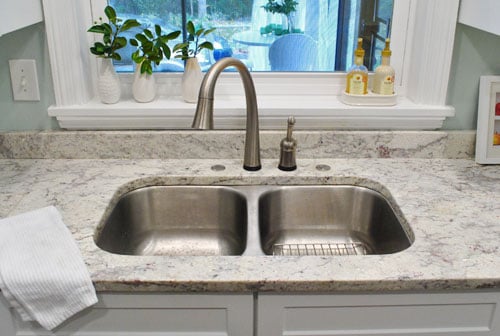
A double-bowl kitchen sink divides the sink into two basins. Traditional versions often use a 50/50 split, but 60/40 and 70/30 configurations are also common. Some newer double sinks have a low center divider, creating separate work zones while still making it easier to maneuver long cookware.
The difference sounds minor on paper. In daily kitchen life, however, that center divider can be either an organizational superhero or a stainless-steel speed bump.
Why a Single Sink May Be Better
1. You Get More Uninterrupted Washing Space
The biggest advantage of a single sink is simple: there is no divider in the way.
Large skillets can lie flatter. Cookie sheets are easier to rinse. Stockpots can sit entirely inside the basin instead of balancing at an angle with one handle pointing toward the toaster like an accusing finger.
This matters if you cook frequently. A sink may look enormous in a showroom, but divide a 33-inch sink into two bowls and each individual workspace becomes considerably smaller. The overall sink is still large; your usable space for one oversized object is not.
A deep single-bowl sink is especially useful for families who regularly wash roasting pans, slow-cooker inserts, cutting boards, grill accessories, or oversized serving platters.
2. Single-Bowl Sinks Work Well With Dishwashers
If your dishwasher handles most plates, glasses, forks, and everyday cookware, you may not need two dedicated hand-washing zones.
Instead, the sink becomes a place to rinse food, fill pots, soak stubborn cookware, and deal with items that cannot conveniently go into the dishwasher. For these jobs, one large basin often makes more sense than two smaller compartments.
Think about your actual routine. If your “washing side” and “rinsing side” currently function as “dirty spoon side” and “slightly larger dirty spoon side,” a double basin may not be earning its counter space.
3. A Single Sink Is Usually Easier to Clean
One bowl means fewer interior edges and no center divider to wipe around. That simpler shape can make routine cleaning faster.
Food particles, mineral residue, and soap film have fewer corners in which to organize a tiny convention. With a smooth single basin, you can rinse debris toward the drain and wipe the interior in one continuous motion.
The exact maintenance demands still depend heavily on sink material. Stainless steel, fireclay, enameled cast iron, and composite sinks all behave differently. However, when comparing two sinks made from the same material, the less complicated single-bowl shape is generally more straightforward to clean.
4. It Can Be a Smart Choice for a Small Kitchen
A single sink does not automatically mean a giant farmhouse basin. Compact single-bowl models can provide generous usable bowl space while preserving more countertop area than a wide double-bowl configuration.
This is particularly important in apartments, condos, galley kitchens, and older homes where every inch of counter has a job. In a compact kitchen, sacrificing valuable prep space just to own a second basin you rarely use may be a poor trade.
Before buying, measure the sink base cabinet, countertop opening, and available front-to-back space. The glamorous sink in your inspiration photo will be significantly less glamorous if the cabinet doors cannot close afterward.
5. The Look Is Simple and Contemporary
Large single-bowl sinks pair naturally with undermount installations, apron-front designs, and modern workstation sinks. Their uninterrupted shape can create a cleaner visual appearance.
An undermount single sink also allows crumbs and small food scraps to be wiped directly from the countertop into the basin without navigating a raised sink rim. That is a small convenience, but kitchens are built on small conveniences. So are happy relationships and correctly labeled leftovers.
Why a Double Sink May Be Better
1. Double Basins Make Multitasking Easier
The strongest argument for a double sink is task separation.
You can soak a saucepan on one side while rinsing vegetables on the other. You can wash dishes in one basin and rinse them in the second. One side can remain available for draining liquids while the other contains dirty cookware.
In a busy kitchen, these separate zones can prevent one task from taking the entire sink hostage.
This is especially useful when two people cook together. Without separate zones, one person washing a cutting board can block the person who needs water for pasta. Suddenly a quiet Tuesday dinner has the logistical atmosphere of an airport runway.
2. Double Sinks Are Excellent for Hand-Washing Dishes
If you do not own a dishwasher or simply prefer washing dishes by hand, a double-bowl kitchen sink can offer a classic wash-and-rinse setup.
Fill one basin with wash water and use the other for rinsing or temporary drying. This arrangement keeps the process organized and reduces the need to clear the entire sink between stages.
A smaller basin may also require less water to fill than a very large single bowl. That can be useful when you regularly wash small batches of dishes by hand. Of course, the actual water used depends on your habits; leaving the faucet running enthusiastically for twenty minutes will defeat nearly any clever basin configuration.
3. One Bowl Can Become a Dedicated Drying Zone
One common complaint about a single sink is the lack of a built-in place for wet cookware after washing.
With a double sink, you can use one side for cleaning and the other for a dish rack or freshly washed pans. This keeps more water inside the sink and may reduce countertop clutter.
Single-sink owners can solve this problem with a roll-up drying rack, absorbent drying mat, removable dish rack, or workstation accessory. Still, those solutions require another item to buy, clean, and store.
For people who deeply dislike seeing a drying rack on the counter, the second bowl can be surprisingly valuable.
4. Double Sinks Can Separate Food Prep From Dirty Dishes
Imagine preparing dinner while a casserole dish is soaking. With a single sink, the soaking dish occupies part of your only basin. You either move it, work around it, or stare at it until it apologizes.
A double sink allows one bowl to remain clear for rinsing produce, draining pasta, or filling a measuring cup.
Good food-safety habits still matter. Wash and sanitize food-contact surfaces appropriately, and avoid allowing raw meat juices to contaminate produce or clean dishes. Two basins do not magically create a laboratory-grade kitchen, but separate work areas can make an organized workflow easier to maintain.
The Biggest Problem With a Double Sink: Basin Size
For many homeowners, the debate is not really about single sinks versus double sinks. It is about large usable space versus an annoying center divider.
A traditional 50/50 double sink creates two similarly sized basins. This arrangement is wonderfully symmetrical. Unfortunately, your 14-inch skillet does not care about symmetry.
Large cookware may rest diagonally, and long pan handles may extend onto the countertop. Washing baking sheets can require rotating, tilting, and spraying them from multiple angles. By the end, the baking sheet is clean, the backsplash is clean, your shirt is wet, and the floor has accidentally joined the rinse cycle.
If you cook with large equipment, test basin dimensions carefully. Do not judge a sink solely by its overall width. Look at the actual interior dimensions of each bowl.
Is a 60/40 or 70/30 Double Sink the Best Compromise?
For indecisive sink shoppers, an offset double bowl may be the diplomatic solution.
A 60/40 kitchen sink provides one relatively large basin and one smaller secondary basin. A 70/30 configuration pushes the idea even further.
The large side can handle pots and pans, while the small side serves as a prep area, disposal bowl, rinsing station, or place for utensils. You preserve much of the multitasking advantage of a double sink without dividing the available space equally.
The catch? The large basin still has a divider on one side. Very wide sheet pans and long-handled cookware may remain easier to manage in a true single bowl.
Consider a Low-Divide Double Sink
A low-divider sink is another excellent compromise. Instead of extending to the full height of the sink, the center wall stops several inches below the rim.
You still get two work zones for everyday tasks. However, large pan handles and baking sheets can extend across the divider more easily. When water rises above the divider, the two bowls effectively begin behaving more like one larger basin.
For homeowners who cannot choose between Team Single and Team Double, a low divide deserves serious consideration.
Which Sink Is Better for a Garbage Disposal?
Both single- and double-bowl sinks can work with a compatible garbage disposal, provided the sink, drain opening, plumbing, cabinet, and disposal installation are suitable.
In a double sink, many homeowners place the disposal on one side and keep the second bowl available for washing or rinsing. This creates a defined cleanup zone.
A single-bowl sink offers a simpler workspace around one drain, but the disposal occupies the only basin’s drain area. Whether this matters depends on how often you use the disposal and how you organize dishes.
Do not select a sink configuration based on disposal assumptions alone. Check the manufacturer’s requirements and confirm that the under-sink area has enough room for the disposal, drain piping, water filtration equipment, pullout storage, or anything else competing for cabinet real estate.
Which Sink Is Better for a Small Kitchen?
In many small kitchens, a single-bowl sink wins because it can maximize usable basin space within a relatively compact footprint.
For example, one moderate-size single basin may fit large cookware more comfortably than two tiny bowls occupying a similar overall sink width. This allows you to preserve counter space without making hand-washing a cookware-based puzzle game.
However, a small double sink may still be useful if you have no dishwasher and wash nearly everything by hand. In that situation, dedicated washing and rinsing zones can be more important than fitting a giant stockpot flat inside the sink.
The best decision is based on workflow, not square footage alone.
Which Sink Is Better for a Large Family?
A large family can make a strong argument for either option.
A spacious single sink can contain an impressive volume of dirty dishes, preventing them from spreading across the counter. It also accommodates large cookware used for family meals.
On the other hand, a double sink allows the household to keep one basin usable while dishes occupy the other. That is useful when the sink seems to refill with cereal bowls six minutes after someone empties the dishwasher.
Families that rely heavily on a dishwasher may prefer a large single bowl. Families that hand-wash throughout the day may appreciate a double bowl. Pay attention to who actually cleans the kitchen, too. The person using the sink most often deserves more voting power than the person who says, “They both look nice,” and disappears during cleanup.
Single Sink vs. Double Sink: Quick Comparison
| Feature | Single-Bowl Sink | Double-Bowl Sink |
|---|---|---|
| Large pots and pans | Excellent | Depends on bowl size |
| Multitasking | Limited without accessories | Excellent |
| Hand-washing dishes | Good | Excellent |
| Easy cleaning | Usually easier | More edges and divider area |
| Small kitchen flexibility | Often excellent | Depends on sink width |
| Dedicated drying zone | Requires a rack or mat | One bowl can be used for drying |
| Oversized cookware | Excellent | Can be awkward |
| Separate prep and cleanup zones | Limited | Excellent |
How to Choose the Right Kitchen Sink Configuration
Look at Your Largest Cookware
Measure your biggest skillet, roasting pan, baking sheet, and stockpot. Include handles. Then compare those measurements with the interior bowl dimensions of any sink you are considering.
This simple step is more useful than staring lovingly at staged kitchen photographs.
Think About Your Dishwasher Habits
Do most dirty dishes go directly into the dishwasher? A single basin may provide all the flexibility you need.
Do you hand-wash several times a day? The divided workflow of a double sink could save effort.
Count How Many Tasks Happen at the Sink
Some households primarily use the sink for rinsing and filling pots. Others wash dishes, clean vegetables, thaw items, soak cookware, prepare flowers, fill pet bowls, and perform mysterious craft projects involving glue.
The more simultaneous tasks your sink handles, the more useful a second basin becomes.
Consider Sink Depth
Bowl count is only one part of sink comfort. A deep sink can hide dirty dishes and accommodate larger items, but an excessively deep basin may require more bending. Sink installation style, countertop height, and the user’s height all influence comfort.
Also consider faucet height and spout reach. A large sink paired with a poorly positioned faucet can create awkward dead zones or excessive splashing.
Do Not Forget Accessories
Modern workstation sinks have changed the single-versus-double debate. Some single-bowl models use built-in ledges that support cutting boards, colanders, drying racks, and other accessories.
A roll-up rack can create a temporary drying zone. A fitted basin can provide a smaller washing area. A colander can separate produce from dirty cookware.
In other words, a single sink no longer has to perform as one giant empty tub. Accessories can turn it into a flexible workstation when needed and restore the full basin when large cookware arrives.
So, Is a Single Sink Better Than a Double Sink?
Yes, a single sink is often better if you regularly wash large pots, baking sheets, and oversized cookware, especially when a dishwasher handles most everyday dishes. The uninterrupted bowl is versatile, relatively easy to clean, and well suited to modern kitchen workflows.
But a double sink is better for serious multitaskers and households that hand-wash frequently. Separate washing, rinsing, prep, and drying zones can make kitchen cleanup significantly more organized.
My practical recommendation is simple: choose a large single bowl if cookware space is your biggest frustration. Choose a double bowl if losing your second work zone would drive you crazy. If you want both benefits, investigate 60/40 sinks and low-divider models.
There is no universal winner. The best sink is the one that removes friction from the tasks you perform every day. Kitchen design is glamorous in magazines, but real satisfaction sometimes comes from being able to lay a frying pan flat without spraying yourself in the stomach.
Real-World Experience: What Living With Single and Double Sinks Teaches You
Specifications are helpful, but sinks reveal their personalities after dinner. That is when the roasting pan appears, three glasses are abandoned beside the faucet, someone drops a fork into soapy water, and the kitchen enters its natural post-meal state of mild chaos.
The First Surprise With a Large Single Sink
After using traditional divided sinks for years, a large single basin can feel almost comically spacious. The first time a long skillet fits completely inside, including the handle, you may wonder why nobody sent you a congratulatory card.
The biggest improvement is not that the sink holds more dishes. In fact, allowing more dirty dishes to accumulate is not necessarily a lifestyle achievement. The real benefit is freedom of movement.
You can rotate a pot while scrubbing it. A large cutting board can rest flat. A sheet pan can be sprayed without repeatedly flipping it from one tiny basin to another. When soaking a large casserole dish, the water actually reaches the entire bottom instead of covering approximately 63 percent of it and leaving one stubborn corner to develop its own ecosystem.
For regular cooks, these small improvements add up quickly.
Then You Notice the Missing Second Bowl
The honeymoon phase with a single sink usually ends the first time a large pot is soaking and you need to drain pasta.
Suddenly, the glorious open basin is occupied. You move the pot to the counter, drain the pasta, wipe the water ring beneath the pot, return it to the sink, and briefly remember the double sink you once complained about.
Drying can also become an issue. With a double sink, clean cookware can sit in the second basin. With a single sink, wet pans often migrate to the countertop unless you immediately towel-dry them.
A removable drying mat solves much of the problem. So does a roll-up rack that spans part of the sink. The important lesson is that a single-bowl kitchen works best when you plan a temporary drying strategy rather than assuming clean pans will politely evaporate.
Daily Life With a Double Sink Feels More Organized
A double sink creates boundaries, and boundaries are surprisingly comforting in a kitchen.
Dirty dishes can stay on one side. The second basin remains available for washing hands, rinsing an apple, or filling the coffee maker. When several people are moving through the kitchen, that available basin prevents one pile of dishes from shutting down the entire water department.
Hand-washing also feels naturally organized. Wash on one side, rinse on the other, and transfer dishes to a drying rack. There is less rearranging during the process.
The frustration appears when large cookware enters the story. A deep 50/50 sink may look generous until a roasting pan arrives. Then every movement becomes a geometry lesson.
You angle the pan. The handle hits the divider. You rotate it. The edge touches the faucet. You spray one half, turn it around, and spray the other. By the time the pan is clean, you have developed opinions about basin architecture that would concern your younger self.
The Best Choice Becomes Obvious When You Watch Your Own Habits
One of the most useful experiences is simply observing the kitchen for a week before replacing the sink.
Notice where dirty dishes collect. Count how often you use both sides of a double basin at the same time. Pay attention to the cookware that does not fit. Look at whether clean pans usually dry in the sink, on the counter, or immediately in a cabinet.
In one household, the second basin may be essential because dishes are hand-washed after every meal. In another, that same basin may spend years holding one sponge, a vegetable peeler, and a mug nobody admits belongs to them.
Likewise, a large single sink can be fantastic for an enthusiastic home cook but unnecessarily huge for someone who mainly reheats takeout and considers assembling a sandwich “meal prep.”
The experience teaches a useful design rule: do not renovate for an imaginary version of yourself. Choose a sink for the kitchen habits you actually have.
My Practical Verdict After Comparing Both Styles
If the kitchen has a dishwasher and large cookware is washed by hand, I would lean toward a deep single-bowl sink. The freedom to wash baking sheets, skillets, and stockpots without fighting a divider is difficult to give up once you experience it.
I would pair it with a pull-down faucet and a removable drying solution. A workstation ledge or roll-up rack would make the setup even more flexible.
For a home without a dishwasher, or a household that regularly has several people cooking and cleaning, I would lean toward a double bowl. A 60/40 configuration or low divider would be my preference over a traditional small 50/50 split because the larger side remains more useful for cookware.
Ultimately, living with both designs makes one thing clear: a single sink is not automatically better than a double sink, but it is often better for people whose biggest complaint is lack of usable bowl space. A double sink wins when simultaneous tasks and dedicated zones matter more.
That may not be the dramatic sink showdown the internet deserves, but it is the practical answer. Measure your pans, study your cleanup routine, and be honest about your habits. Your future self, standing in front of a dirty roasting pan at 9:47 p.m., will appreciate the effort.
Conclusion
The single sink vs. double sink decision comes down to kitchen workflow. A large single-bowl sink offers maximum uninterrupted space, easier handling of oversized cookware, and a streamlined design. A double-bowl sink offers task separation, efficient hand-washing, and a convenient second zone for rinsing or drying.
For many dishwasher-equipped modern kitchens, a spacious single sink is the more flexible option. For frequent hand-washing and multitasking, a double sink remains extremely practical. And for homeowners trapped in the middle of this thrilling domestic crisis, a 60/40 or low-divider sink may offer the best of both worlds.
Note: Always verify the sink’s exact bowl dimensions, minimum cabinet requirements, mounting compatibility, and plumbing specifications before purchasing or modifying a countertop.














