
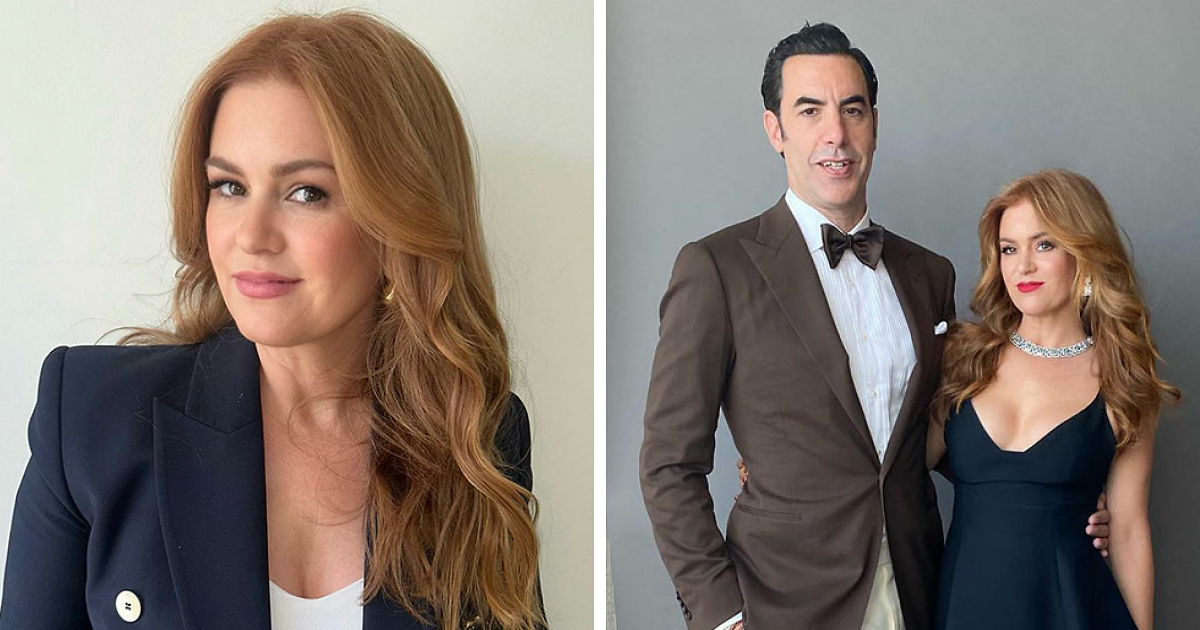
Isla Fisher has spent most of her career making audiences laugh, whether she was stealing scenes in Wedding Crashers, charming viewers in Confessions of a Shopaholic, or popping up with that unmistakable comic timing that says, “Yes, I know this situation is ridiculous, and yes, I am going to make it worse in the funniest possible way.” But in the wake of her split from Sacha Baron Cohen, one social media post pushed the conversation in a more emotional direction.
The actress shared a striking image on Instagram Stories showing a man embracing a crying woman, paired with a caption about being able to “rent” someone to cry with you and wipe away your tears. Some fans read the post as lighthearted, others saw it as sad, and celebrity-watchers immediately connected it to her highly publicized divorce from Baron Cohen. The internet, naturally, did what the internet does best: it put on a detective hat, grabbed a magnifying glass, and sprinted directly into speculation.
The headline-grabbing number attached to the split has varied across reports, with some outlets framing the divorce around a massive fortune and others avoiding a fixed settlement figure altogether. What is confirmed is that Fisher and Baron Cohen were together for more than two decades, married in 2010, share three children, announced in April 2024 that they had filed to end their marriage in 2023, and later confirmed that the divorce had been finalized in June 2025.
Why Isla Fisher’s Instagram Story Sparked Concern
Celebrity Instagram Stories are tricky little creatures. They disappear quickly, rarely come with a full press statement, and are often interpreted as emotional Morse code by fans. Fisher’s post was not a formal announcement about her mental health, nor did it directly mention Sacha Baron Cohen. Still, the image of a crying woman being comforted struck a nerve because of the timing.
By the time the post circulated, Fisher had already described the end of her marriage as one of the hardest experiences of her life. That kind of comment changes how audiences read everything that follows. A playful meme no longer looks like just a playful meme. A sad-looking image no longer stays in the “random internet oddities” folder. Suddenly, it becomes a clue, a symbol, and possibly a headline before anyone has finished their morning coffee.
There is also something very modern about the reaction. In another era, fans might have waited for a magazine interview. Today, a single Story can become a public mood ring. Fisher’s post may have been a joke about loneliness, paid emotional labor, or the absurd services that go viral online. But amid divorce headlines, it became part of a larger narrative about heartbreak, independence, and rebuilding a family after separation.
The Sacha Baron Cohen Divorce Timeline
Fisher and Baron Cohen were one of Hollywood’s more private long-term couples. They met in Sydney in 2001, became engaged in 2004, and married in 2010. While both were recognizable stars, they generally kept their family life away from the spotlight. That made their April 2024 announcement feel even more surprising.
Their joint statement used a tennis metaphor, saying that after a long match lasting more than 20 years, they were putting their racquets down. It was a surprisingly graceful line for a difficult life event, and perhaps the most British-Australian way possible to say, “This is serious, but please let us keep our dignity.”
The statement also emphasized that they had always prioritized privacy and were quietly working through the change. Most importantly, they made clear that their children remained the central priority. This is one reason the public conversation around the divorce has often felt conflicted: tabloids love tension, but the couple’s official language repeatedly focused on respect, privacy, and co-parenting.
Was There Really “Growing Tension”?
The phrase “growing tension” has followed coverage of Fisher and Baron Cohen’s divorce, but it should be handled carefully. Publicly, both stars have presented a united message about remaining friends and committed co-parents. That does not mean the divorce was easy. It simply means the most responsible way to discuss it is to separate confirmed facts from interpretation.
Reports have pointed to emotional strain, Fisher’s comments about the difficulty of the split, and the broader media attention surrounding Baron Cohen during the same period. But there has been no need to turn every Instagram Story into a courtroom exhibit. Divorce after more than 20 years together is almost always emotionally complex, even when both people behave maturely. Add fame, money, children, and a global audience, and the pressure rises faster than a Hollywood awards-show dress budget.
Fisher has been open enough to acknowledge pain, but not so open that she has invited the world into every private detail. That distinction matters. A celebrity can share that a chapter was painful without giving strangers permission to write the entire chapter for them.
The $119 Million Question
The divorce has been discussed alongside large financial estimates, including figures around $119 million in some headlines. However, public reporting has not consistently confirmed one exact settlement amount. Some outlets have used different valuations, while others have focused on the fact of the divorce rather than the math.
That makes the “$119 million divorce” phrase useful as a search term, but risky as a hard factual claim. A better reading is this: Fisher and Baron Cohen were a wealthy entertainment couple with long careers, property interests, and substantial professional earnings. The financial side of their divorce was likely significant, but the exact division has not been fully laid out for the public.
And honestly, that is probably for the best. Divorce settlements are not fantasy football stats. When children and private family arrangements are involved, the public does not need every decimal point. The important part is that the former couple said they remained respectful and committed to co-parenting after finalizing the divorce.
Isla Fisher’s Public Reinvention After Divorce
One of the most interesting parts of Fisher’s post-divorce story is not the sadness; it is the reinvention. She has spoken about rediscovering herself outside the marriage and leaning on female friendships. That theme resonates because it is not just a celebrity storyline. It is a very human one.
After a long relationship ends, identity can feel like a house after all the furniture has been moved out. You recognize the rooms, but the echo is different. Fisher’s comments suggest that she has been working through that empty-space feeling by focusing on motherhood, work, friendships, and personal growth.
Her professional life has also remained active. Fisher has continued appearing in film and entertainment projects, and her public appearances show someone moving forward rather than disappearing. That does not erase the difficulty of divorce. It simply shows that grief and momentum can exist at the same time. Sometimes the same person who is healing is also booking roles, doing interviews, getting dressed for a red carpet, and remembering where she put her lip gloss.
Why Fans Read So Much Into Celebrity Posts
Part of the fascination with Fisher’s “concerning” photo comes from the emotional contract fans feel they have with celebrities. Viewers watch actors for years, see them fall in love, see them raise families from a distance, and begin to feel invested. When a marriage ends, fans do not experience the divorce personally, but they may feel a strange secondhand sadness.
This is especially true for couples who seemed stable. Fisher and Baron Cohen were not known for constantly broadcasting their relationship. Their privacy made them feel grounded, almost old-school. So when the split became public, it disrupted a quiet assumption many fans had made: that this was one Hollywood marriage that might simply keep going.
That is why a single image can feel loaded. Fans are not just reacting to the post. They are reacting to the end of an idea. The image of comfort, tears, and emotional support became a symbol of what many imagine divorce feels like behind closed doors.
Co-Parenting Remains the Central Message
For all the noise surrounding the split, Fisher and Baron Cohen have repeatedly centered their children. That is not a minor detail; it is the main one. Their public statements have asked for privacy and emphasized their shared devotion as parents.
In celebrity coverage, children are often mentioned as background information, but in real life they are the whole story. A divorce can change the structure of a family without ending the family itself. Fisher has spoken about building a new, healthy version of family life, which is a more meaningful takeaway than any rumored dollar figure.
That idea also softens the more sensational parts of the headline. Yes, there was a concerning-looking photo. Yes, there were reports of tension. Yes, the divorce involved two famous people and potentially major assets. But the lasting story appears to be about transition: two parents trying to move from marriage into a different kind of partnership for the sake of their children.
How the Media Should Cover Celebrity Divorce
Celebrity divorce coverage walks a fine line between public interest and emotional trespassing. Fisher and Baron Cohen are public figures, and their careers make them newsworthy. But not every private feeling becomes public property simply because one person has a movie poster at the mall.
A responsible article should acknowledge what is known: the relationship timeline, the public statements, Fisher’s own comments, and the Instagram post that drew attention. It should also acknowledge what is not known: the full emotional reality of the divorce, the private reasons behind the split, and the precise financial terms unless officially confirmed.
That approach may be less dramatic than shouting “secret feud” into the digital void, but it is more useful. Readers can still understand the story without being fed speculation disguised as fact. And frankly, the real story is compelling enough without extra seasoning.
Experience and Reflection: What This Story Says About Divorce, Healing, and Starting Over
Divorce stories involving celebrities often look glamorous from a distance because the people involved have red carpets, stylists, and bank accounts with more commas than most grocery receipts. But emotional upheaval does not check someone’s net worth before entering the room. Whether a person is a movie star or a regular parent trying to survive a Tuesday, the end of a long relationship can feel disorienting.
One relatable lesson from Fisher’s public journey is that healing rarely arrives as one clean, cinematic moment. It is not always a triumphant walk down a sunlit street while inspirational music plays. Sometimes it is a strange meme posted at midnight. Sometimes it is thanking friends for texting. Sometimes it is admitting that the life you imagined did not unfold the way you expected. Sometimes it is laughing at something absurd because crying has already had its turn.
For anyone who has experienced a major breakup or divorce, Fisher’s situation may feel familiar in one specific way: the need to rebuild identity. Long relationships create shared habits, shared jokes, shared calendars, shared parenting rhythms, and shared dreams. When the relationship ends, the practical tasks are obviouslawyers, homes, schedules, paperworkbut the emotional tasks are quieter. Who am I now? What do I enjoy? What kind of future feels possible? How do I make peace with a story that did not end the way I planned?
Fisher’s emphasis on friendship is especially important. Many people underestimate the role friends play after divorce. Friends are the ones who bring normal life back into the room. They send messages, invite you out, listen without turning everything into a lecture, and occasionally remind you to eat something that is not toast over the sink. Support does not have to be dramatic to be powerful. Often, it is the steady presence of people who keep showing up.
Another experience connected to this topic is the challenge of being interpreted while healing. Most people going through divorce only have to deal with family, friends, and perhaps one overly curious neighbor named Linda. Celebrities have strangers analyzing their captions, outfits, facial expressions, and emoji choices. That level of attention can make recovery harder because every small expression becomes public material. Fisher’s Instagram Story may have been a joke, a sad reflection, or both. The public does not truly know. That uncertainty is exactly why empathy matters.
The story also shows how humor can coexist with pain. Fisher is a comic actress, and Baron Cohen built much of his career on satire. Their divorce announcement itself used a tennis metaphor, suggesting a desire to soften a painful message with wit. Humor does not mean someone is not hurting. It can be a bridge over the roughest parts. Sometimes the joke is not there to dismiss the pain; it is there to make the pain survivable.
For readers navigating their own life transitions, the most useful takeaway is not to compare circumstances but to recognize patterns. A long chapter can close. A family can change shape. Grief can sit beside gratitude. A person can be heartbroken and still capable of growth. A social media post can look concerning and still be part of a wider process of expression, not a complete diagnosis of someone’s life.
In the end, Fisher’s post became news because it touched a universal nerve. Everyone understands the desire to be comforted when life gets heavy. Everyone understands the awkward comedy of wanting someone to wipe away tears, even if the idea comes packaged as a bizarre viral service. Beneath the celebrity headline is a simple human image: someone hurting, someone being held, and the hope that eventually the tears become less frequent. That is why the story resonated far beyond the usual celebrity gossip cycle.
Conclusion
Isla Fisher’s concerning Instagram photo became a flashpoint because it arrived during a deeply scrutinized chapter in her life. Her divorce from Sacha Baron Cohen involved a long relationship, three children, major public interest, and plenty of speculation about money and tension. Yet the confirmed story is more nuanced than the loudest headlines suggest.
Fisher has acknowledged the pain of separation while also showing signs of renewal, humor, and independence. Baron Cohen and Fisher have publicly emphasized respect and co-parenting. The post that worried fans may have reflected sadness, wit, or simply a passing internet moment. What it definitely revealed is how closely audiences watch celebrities when private lives become public narratives.
The most balanced way to understand the story is this: a famous actress shared an emotional-looking post during a difficult transition, and fans responded with concern because the broader context was already heavy. But beyond the speculation, the more meaningful theme is resilience. Divorce can end a marriage, but it does not have to erase dignity, humor, parenthood, or the possibility of a strong next chapter.













