
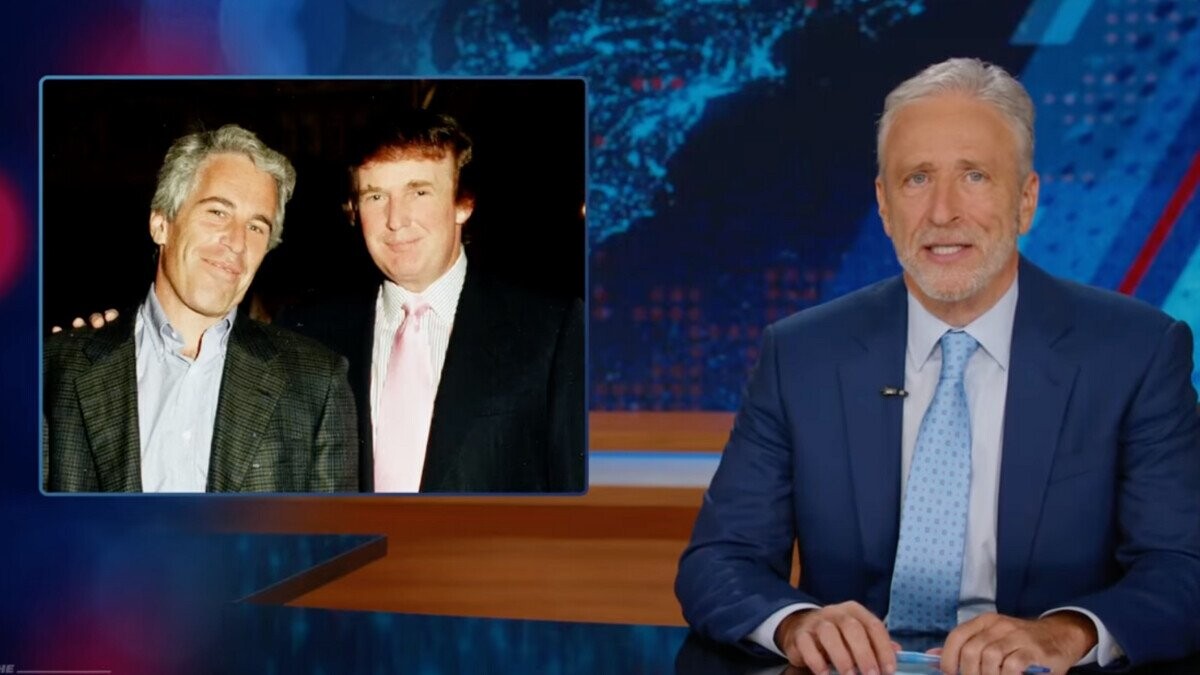
Sometimes a political insult lands with the delicacy of a piano falling out of a third-story window. Jon Stewart’s line about Donald Trump suffering from a case of “chronic penis insufficiency” was exactly that kind of moment: crude, theatrical, impossible to ignore, and very much designed to do more than shock. It was not a medical observation. It was not even really about anatomy. It was a satirical summary of Stewart’s larger point about insecurity, grievance, and the endless need to perform power in public.
That is why the joke traveled so far, so fast. It arrived during one of those unusually combustible weeks in media and politics when late-night comedy, corporate fear, presidential lawsuits, and culture-war theater all collided in one big, messy American content smoothie. Stewart was defending Stephen Colbert after CBS announced that The Late Show with Stephen Colbert would end in 2026, even as Paramount was under scrutiny for settling Donald Trump’s lawsuit over a 60 Minutes interview and while its Skydance merger still needed government approval. In that environment, Stewart’s line did not feel like a random cheap shot. It felt like a satirical pressure valve finally blowing.
And because this is Jon Stewart, the joke came wrapped in something sharper than simple mockery. Beneath the profanity and punchline was a serious argument: when institutions become afraid of political retaliation, they begin to pre-comply. They soften. They duck. They start serving flavorless, beige television oatmeal and hope the loudest guy in the room will leave them alone. Stewart’s monologue argued that this strategy does not work. In his telling, Trump’s political style feeds on submission. Give an inch, and the whole newsroom ends up in witness protection.
What Stewart Actually Meant
To read Stewart’s insult literally is to miss the joke by a mile and a half. The phrase was satirical shorthand for what he sees as Trump’s public obsession with domination, humiliation, and proving his own strength. The target was not biology. The target was performance. Stewart was effectively saying that Trump’s politics often look like overcompensation with a red tie and a legal team.
That interpretation makes sense when you look at the rest of the monologue. Stewart framed Colbert’s cancellation as part of a larger climate of fear inside American institutions. He mocked the idea that networks and corporations could become so bland, so obedient, and so aggressively harmless that Trump would stop paying attention to them. In Stewart’s telling, the joke about “insufficiency” was just one brutal way of naming a familiar dynamic: the more a leader needs constant validation of his strength, the more fragile that strength appears.
That is also why the line felt like old-school Stewart. He has always been at his best when he turns absurdity into diagnosis. He hears a corporate explanation, watches the timing, watches the body language of public life, and then translates the whole thing into a sentence nobody can forget. Elegant? Not exactly. Effective? Absolutely.
Why This Quote Exploded Beyond Late Night
Plenty of comedians insult Donald Trump. That part is not exactly breaking news. What made this moment different was the context. Stewart was not riffing in a vacuum. He was reacting to a very specific chain of events that made the joke feel like commentary on power, media independence, and corporate self-preservation all at once.
First, Paramount settled Trump’s lawsuit over the editing of a 60 Minutes interview for $16 million, with the money designated for Trump’s future presidential library. Then came scrutiny over the timing, because Paramount was seeking approval for its merger with Skydance. Then CBS said The Late Show with Stephen Colbert, the top-rated broadcast late-night show, would end in May 2026 and described the decision as purely financial. Colbert had recently blasted Paramount’s settlement as a “big fat bribe.” Stewart, in turn, used his Daily Show monologue to argue that fear and pre-compliance were gripping American institutions.
That sequence gave Stewart’s insult unusual force. The line was vulgar, yes, but it was attached to a broader narrative people already understood: powerful companies often insist a decision is just business, while everyone watching at home quietly raises one eyebrow so high it practically leaves the building.
In other words, the joke spread because it worked on two levels. On the surface, it was a savage laugh line. Underneath, it captured a public mood: exhaustion with institutions that say they are acting independently while appearing to bend toward political pressure. When comedy identifies an emotion people were already feeling but had not yet phrased that clearly, the internet usually takes over from there.
Trump, Masculinity, and the Politics of Performance
Another reason the Stewart line hit so hard is that Trump’s political image has long been wrapped in spectacle, aggression, and masculine branding. That branding did not appear by accident. During the 2024 campaign cycle, coverage from major U.S. outlets noted that Trump and his allies explicitly courted male voters through a rhetoric of toughness, swagger, and hypermasculinity. This was not subtle. It was one of the selling points.
So when Stewart used a body-based insult, he was jabbing directly at the image Trump has helped construct around himself. Again, the point was not anatomy. The point was symbolic emasculation in the oldest tradition of political mockery: take a leader who markets strength and imply that the whole display is compensatory theater.
That kind of satire is rough, but it is not random. It attacks the brand at the exact place the brand wants to look invulnerable. Trump’s political persona depends heavily on projecting that he is the dominant figure in every room, the one who humiliates rather than gets humiliated, the one who sues rather than explains, posts rather than reflects, and attacks before anyone can question him. Stewart’s line turned that pose upside down in one move. He basically said: this swagger is not evidence of strength; it is evidence of need.
That helps explain why the quote felt so culturally sticky. America understands these signals instantly. A politician performs toughness. A comedian reframes it as insecurity. Audiences laugh because the reversal feels emotionally true, even when it is delivered with all the subtlety of a flamethrower in a library.
The Colbert Factor: Why Stewart Was So Fired Up
There was also something personal in the monologue. Stewart was not defending an abstract principle alone. He was defending Stephen Colbert, a longtime friend, former colleague, and one of the most recognizable heirs to the modern late-night satire tradition Stewart helped shape. That gave the segment extra voltage.
Colbert’s cancellation was already politically charged. CBS said the move was financial and unrelated to performance or content. But the timing invited suspicion because Colbert had just gone after Paramount over the Trump settlement. Even people willing to believe the economics of late night are shaky could see why the optics looked terrible. It was one of those moments when a company’s official explanation may be plausible on paper but still feels narratively cursed in real time.
Stewart leaned into that tension. He argued that shows like Colbert’s help create the very value big media companies later rush to protect. Bold programming builds cultural relevance. Opinionated voices create loyalty. Taking risks brings attention, audience, and identity. Then, when the politics get hot, executives suddenly act like the risky shows are embarrassing relatives who have started talking too loudly at brunch.
That critique resonated because it extended beyond Colbert. Stewart was really talking about what happens when entertainment companies try to keep the benefits of edgy commentary but retreat the second that commentary becomes inconvenient. He was arguing that courage cannot be a limited-time offer.
Why the Joke Was Crude on Purpose
Let’s be honest: Stewart could have made the same argument with a cleaner phrase. He did not want to. The crudeness was part of the delivery system. When a comedian decides that polite language will not match the scale of the hypocrisy he sees, the joke gets dirtier because the target, in his view, has earned it.
Political comedy has always used ridicule to puncture pomp. Sometimes that means irony. Sometimes it means understatement. And sometimes it means looking at the emperor, noticing he has assembled an army of lawyers, lobbyists, publicists, and loyalists to insist he is the manliest man who ever manned, and replying with the rhetorical equivalent of, “Sure, buddy.”
The Stewart line belonged to that tradition. It was ugly language deployed in the service of mockery, not seduction. It was designed to make Trump smaller, not sexier; ridiculous, not dangerous; needy, not commanding. That is an old trick in political humor, and a potent one. Satire often strips away grandeur by making the mighty look petty.
The Bigger Story: Late-Night TV in an Era of Fear and Shrinking Margins
Stewart’s joke also landed during a real crisis for late-night television. The format is not what it was in the Carson or Leno years, or even what it was in the early Colbert era. Audiences now consume clips on YouTube, TikTok, podcasts, and social feeds. Advertising revenue has fallen. Ratings are softer. Networks no longer treat late night as the untouchable cultural throne room it once was.
That matters because the economic weakness of late night creates a perfect environment for political suspicion. If a show is already financially vulnerable, a network can make a decision for business reasons and still trigger public skepticism if the timing overlaps with a major political controversy. That is exactly what happened here. The economics gave CBS a defensible explanation. The optics gave everyone else a reason to doubt it.
Stewart understood this tension and used it to his advantage. His monologue was not a spreadsheet rebuttal. It was a cultural one. He basically argued that even if business realities are real, institutions still reveal themselves in the moments when money and principle collide. If a company settles, softens, and cancels under the shadow of political pressure, people are going to connect the dots whether executives like it or not.
And in fairness, the dots were not exactly hiding behind a curtain wearing fake mustaches.
What This Moment Says About Political Satire Now
The most interesting thing about Stewart’s line may be that it reminded people what political satire can still do. In a media environment flooded with hot takes, clips, reaction posts, and algorithmically optimized outrage pellets, it is hard to create a moment that cuts through. Stewart did because he fused comedy with a moral accusation. He was not just joking about Trump. He was accusing institutions of acting scared around him.
That combination matters. Satire survives when it does more than snark. It has to identify a contradiction, crystallize a feeling, and say the quiet part loud enough that people recognize themselves in the reaction. Stewart’s joke succeeded because viewers were not merely laughing at a rude phrase. They were responding to the larger claim beneath it: that public life is filling up with people who would rather appease power than confront it.
Whether one agrees with Stewart or not, the monologue showed why he remains so effective when he is locked in. He does not just insult. He arranges the insult so it functions like a thesis statement.
Experiences Related to This Topic: What It Feels Like to Watch a Moment Like This Unfold
One reason this episode resonated so strongly is that it matched the experience many politically engaged viewers have had over the last decade: a strange mix of disbelief, dark laughter, fatigue, and recognition. You watch the news all week, hear executives explain that everything is normal, hear politicians insist the chaos is strength, and then a comedian comes on television and says the thing nobody in a suit wants to say out loud. Suddenly the room makes sense again, even if only for ten minutes.
For longtime Stewart viewers, the segment likely felt familiar in the best possible way. It had the old rhythm: gather the absurd facts, stack them next to each other, look at the camera like civilization just texted “u up?”, and then drop a line so blunt it becomes the unofficial caption for the entire week. That experience is not just about laughter. It is about relief. Someone has finally acknowledged how weird the public script has become.
For Colbert fans, the moment probably carried something else too: protectiveness. When a host becomes part of a viewer’s weekly routine, the cancellation of that show does not feel like a random programming adjustment. It feels personal, even if it is not. That is especially true when the host’s political voice is a reason people tuned in to begin with. Stewart’s fury gave that audience a form of representation. He sounded like the angry friend in the group chat who is articulating what everyone else is typing in all caps.
For critics of Trump, the experience was probably cathartic. Stewart was not trying to meet the moment with calm, bipartisan decorum and a tasteful shrug. He met it with ridicule. For audiences who see Trump’s public persona as one long pageant of grievance and dominance, that kind of ridicule can feel clarifying. It cuts the performance down to size.
For Trump supporters, of course, the experience was likely the opposite. The joke would register as elitist late-night contempt, proof that media entertainers still think insult is argument. That divide is part of why the clip traveled so widely. The same line that sounded like truth-telling to one audience sounded like smugness to another. In the digital era, that tension does not suppress a media moment. It multiplies it.
And for everyone else, somewhere in the exhausted middle, the experience may have been simpler: the sense that late-night comedy is still one of the few places where public absurdity gets translated into human language. Not always fair language. Not always elegant language. Definitely not church language. But human language all the same.
That may be the most lasting takeaway from Stewart’s crude, unforgettable phrase. It was less about the insult itself than about the emotional function it served. In a political culture crowded with euphemism, corporate smoothing, strategic ambiguity, and endless reputation management, a comedian delivered an intentionally ugly sentence that felt truer than the polished statements surrounding it. That is why people shared it. That is why people argued over it. And that is why, love it or hate it, the moment mattered.
Conclusion
Jon Stewart’s “chronic penis insufficiency” crack was not subtle, diplomatic, or fit for embroidery on a throw pillow. But it was effective because it condensed an entire media-political drama into one savage satirical phrase. The joke worked not because it was vulgar, but because it named something deeper: the insecurity at the center of Trump’s performance politics and the fear shaping the institutions around him.
In that sense, the line was classic Stewart. He took a complicated story involving mergers, lawsuits, late-night economics, media independence, presidential grievance, and masculine image-making, then ran it through a comedy blender set to “absolutely feral.” Out came a quote people could not stop repeating.
And maybe that is the strangest compliment political satire can earn in 2025 and 2026: not that it was polite, but that it made the chaos legible.













