
Note: Body-only HTML for web publishing; source links intentionally omitted.
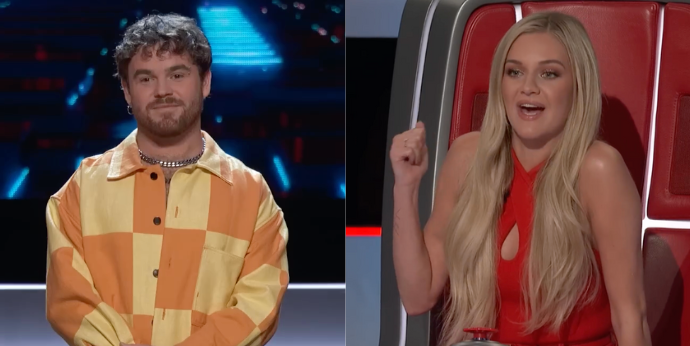
Every season of The Voice delivers at least one audition that makes the coaches look like they forgot television cameras exist. You know the type: a singer walks out, says a quick hello, and then casually detonates the room with one song. That was exactly the energy around Conor James, the Massachusetts-born artist whose Blind Audition had the entire panel leaning in and Kelsea Ballerini practically admitting, with charming honesty, that she got so caught up in the performance she nearly forgot to do the actual job of coaching.
Conor James did not stroll onto the stage and play it safe. He took on “I Say a Little Prayer,” a song forever linked to soul royalty, and delivered it with polish, personality, and enough control to make four coaches hit their buttons. Kelsea’s reaction quickly became one of the most talked-about parts of the moment. Her response was excited, slightly flustered, and refreshingly human. Instead of pretending she had everything perfectly measured out like a poker-faced talent scout, she reacted the way a real music fan reacts when an artist catches them off guard: she lit up.
That is a big reason this audition stuck with viewers. It was not just about a strong vocal. It was about the chemistry between performer and coach, the thrill of a four-chair turn, and the sense that everyone in the room knew they had just witnessed one of those early-season moments that can shape the whole competition. If a Blind Audition is supposed to introduce an artist in one dramatic swing, Conor James absolutely understood the assignment.
Why Kelsea Ballerini’s reaction mattered so much
Kelsea Ballerini’s reaction worked because it sounded real, not rehearsed. She did not go with bland industry compliments or generic “great tone, great range” talk. Instead, she basically said what many viewers were already thinking: she was into the performance immediately. Her now-famous response that she was “obsessed” with Conor James felt spontaneous, and her follow-up explanation made the moment even better. She joked that she was still learning the ropes as a first-time full-season coach and “forgot” she had a job to do because she was just listening and vibing.
That kind of honesty is catnip for reality TV fans. It also revealed something important about Kelsea as a coach. She is not trying to be the most intimidating person in the red chair. She is leaning into instinct, emotion, and artist connection. With Conor, she seemed moved by the fact that he was fully inside the song. She recognized not just a technically capable singer, but a performer who appeared deeply present in his own artistry.
In other words, Kelsea was not selling herself as the coach with the flashiest résumé in that moment. She was selling herself as the coach who truly felt what Conor was doing. That is a smart pitch on The Voice, because artists often respond to the coach who makes them feel seen rather than simply recruited.
Conor James picked a song that could have gone very wrong and made it look easy
Let’s be honest: choosing “I Say a Little Prayer” for a televised singing competition is either brave or mildly unhinged. There is not a lot of room to hide in a song with that much history. If you oversing it, people notice. If you copy the classic too closely, people notice. If you flatten the arrangement, the whole thing loses its sparkle. Conor James somehow avoided all three traps.
What made the audition stand out was the journey inside the performance. The song began with enough restraint to pull the coaches in, then built into something fuller and more dynamic. That arc matters on The Voice. A Blind Audition has to work like a mini movie. You need an opening, a reveal, a payoff, and ideally at least one moment that makes a coach smack the button like they are swatting a mosquito with feelings.
Conor also benefited from having a voice that felt both polished and personal. There was soul in it, but also theater-trained control. That combination can be potent on competition shows. Too much technical precision can feel cold. Too much raw emotion without control can feel messy. Conor’s performance landed in the sweet spot between the two, which helps explain why John Legend, Michael Bublé, Adam Levine, and Kelsea all wanted him.
The four-chair turn turned the audition into a real event
A good audition gets applause. A great audition gets a chair turn. A truly memorable audition gets all four coaches trying to out-charm each other in under two minutes. That is what happened here. Conor James earned the coveted four-chair turn, which immediately elevated his performance from “nice TV moment” to “main-character energy.”
John Legend saw elegance
John Legend responded to the musicality of the performance. He praised the way Conor took the song on a journey and highlighted how soulful and tasteful the interpretation felt. That made sense. John often gravitates toward artists who can blend technique, phrasing, and emotional intelligence. Conor’s background in musical theater, songwriting, and playing keys only made that connection stronger.
Michael Bublé saw charm
Michael Bublé’s pitch leaned into personality. He found Conor instantly likable and made the case that coaching him would simply be fun. That may sound light, but it is actually meaningful. Bublé often responds to performers who bring not just skill, but glow. Conor had that. He looked comfortable, warm, and engaged, which is harder than it sounds when you are singing for millions of people under giant lights while four celebrities swivel around behind you.
Kelsea saw artistic instinct
Kelsea’s pitch was the most emotionally revealing. She emphasized that before she even turned around, she could hear that Conor was fully in the music. Once she saw him perform, that impression only deepened. She framed him as the kind of artist who reminds other artists why they fell in love with music in the first place. That is a high compliment, and not one coaches toss around just because the cameras are rolling.
Adam Levine saw winning potential
Adam Levine came in with veteran-coach confidence. He talked about originality and the kind of intangible spark he has recognized in memorable contestants from past seasons. Adam’s pitch was not subtle. He made it clear that he believed Conor had the kind of limitless upside that could carry a contestant deep into the competition. That directness mattered, because Conor ultimately chose Team Adam.
Why Conor James choosing Adam Levine made sense
Kelsea may have had one of the most heartfelt reactions, but Adam delivered the classic The Voice closer: the seasoned coach pitch that says, “I know what this show takes, and I know what to do with someone like you.” For a contestant standing in the middle of a four-chair turn, that kind of certainty can be incredibly persuasive.
Conor James choosing Team Adam was not necessarily a rejection of Kelsea’s enthusiasm. It was more like a strategic call. Adam pitched him as an artist with major ceiling, not just immediate appeal. He compared the vibe to contestants who had gone the distance before, and that probably landed. When you are a singer trying to turn one audition into a national breakthrough, being told you could actually win the whole thing is not exactly background noise.
And, to be fair, the decision looked pretty reasonable as the season unfolded. Conor kept advancing, which suggested Adam was not simply tossing out coach-speak. He clearly saw something durable there.
The audition also revealed who Conor James is as an artist
One of the reasons the moment resonated is that Conor James did not come across as a blank-slate contestant who appeared out of nowhere with one good song. He seemed like a fully formed artist. He talked about his background in musical theater, his songwriting and production work, and his ability to play keys. That matters because viewers are increasingly drawn to contestants who feel like real-world musicians, not just competition-show hopefuls.
His journey before The Voice added to that impression. After growing up in Bridgewater, Massachusetts, he pursued training at the American Musical and Dramatic Academy in New York before later living and performing in Los Angeles. That kind of path tends to build stage presence the hard way: through classes, side gigs, open mics, private events, and the glamorous profession known as “please clap, I hauled my keyboard here myself.”
What audiences saw in the Blind Audition was the result of that accumulation. The performance felt practiced but not stiff. Confident but not smug. Stylish without becoming self-conscious. In a competition full of singers who can hit notes, that balance is what separates an artist people remember from one they forget by the next commercial break.
Kelsea’s reaction helped define her first season as a coach
Season 27 was Kelsea Ballerini’s first season as a full coach on The Voice, so every major interaction carried extra meaning. Fans were paying attention not just to the contestants, but to how she would handle the role. Her response to Conor James became a kind of early-season character note. It showed that she was intuitive, enthusiastic, and willing to speak from the gut.
That matters because new coaches often face a weird balancing act. They have to prove they belong while also avoiding the trap of sounding like they are auditioning for the audience. Kelsea did not seem to overcalculate the moment. She just reacted. Ironically, that made her look even more comfortable in the chair.
Her style also gave the panel a different flavor. Next to the polished wit of Bublé, the smooth precision of Legend, and the battle-tested confidence of Levine, Kelsea brought fresh emotional immediacy. Conor James’ audition showcased that difference beautifully. She was not trying to out-Adam Adam. She was being Kelsea, and viewers responded to it.
Conor James’ later run proved the audition was not a fluke
Another reason this audition remains interesting is that it was not a one-night wonder. Conor James kept popping up as the season moved forward, which made the original Kelsea reaction feel even more justified. He advanced through the Battle Round with “How Deep Is Your Love,” moved on from the Knockouts with a performance of “Forever Young,” later tackled “Pink Pony Club” in the Playoffs, and returned via Adam Levine’s Super Save before singing “Chasing Pavements” in the Live Semi-Finals.
That progression tells you something important. Coaches and fans did not just get dazzled by one nicely packaged Blind Audition. They kept responding to him. Adam Levine later talked about Conor’s soulful quality and broad potential, which echoed the promise he saw at the very beginning. Kelsea’s instinct that there was something special there did not age badly. Quite the opposite.
Even though Conor did not ultimately win the season, his arc reinforced the original takeaway: this was an artist with range, identity, and serious staying power. In talent-show terms, that is the difference between “great TV” and “real prospect.”
Why fans connected with the moment so quickly
Audiences tend to love auditions like this because they offer three pleasures at once. First, there is the thrill of discovery. Second, there is the coach drama. Third, there is the fantasy that maybe you are watching the start of something bigger than the show itself.
Conor James’ audition checked all three boxes. Viewers got the excitement of seeing a performer arrive fully prepared, the fun of watching four coaches compete for him, and the sense that he was not done surprising people. Kelsea’s reaction amplified all of that because it validated the audience’s own excitement. When a coach says the thing fans are already shouting at the screen, the moment becomes sticky. It spreads. People replay it. Articles get written. Group chats get noisy. Somebody’s aunt suddenly becomes a talent scout from the recliner.
That is what happened here. The audition had momentum because it felt like the beginning of a story, not just a viral clip.
Extra perspective: the experience behind a moment like this
Part of what makes a Blind Audition like Conor James’ so compelling is that it compresses years of effort into just a few minutes of television. Viewers see the polished result, but the experience behind it is usually much longer and much messier. For artists with backgrounds like Conor’s, the road often includes voice lessons, tiny gigs, awkward auditions, travel, financial stress, and a thousand small moments where they have to decide whether they still believe in themselves. When someone steps onto The Voice stage looking calm and sounding ready, that confidence is rarely accidental. It is usually built from repetition, disappointment, and persistence.
That is why Kelsea Ballerini’s reaction resonated beyond simple fandom. She was responding to more than a clean vocal run or a smart arrangement. She seemed to recognize the feeling of an artist who had put real life into the performance. Many musicians talk about the difference between singing a song and inhabiting one. Conor looked like he was inhabiting it. He was not delivering a school-project version of soul. He was interpreting it through his own instincts, his own training, and his own taste.
There is also a specific emotional experience to watching a coach be won over in real time. Fans love that moment because it mirrors what happens in everyday listening. You hear a voice on the radio, in a club, online, or at a local open mic, and there is a split second where your attention sharpens. You stop scrolling. You stop talking. You lean in. Kelsea’s “I’m obsessed with you” reaction translated that exact sensation into TV language. It was dramatic, yes, but it was also recognizable.
For aspiring singers, auditions like this can feel strangely personal. They are a reminder that taste still matters, individuality still matters, and technical skill alone is not always the whole story. The reason coaches turned was not just because Conor could sing. Plenty of people can sing. They turned because he sounded like someone. He had style. He had command. He had enough point of view to make a classic song feel current without stripping away its soul.
For viewers, the experience is slightly different but just as real. A great audition offers emotional permission to be excited again. It cuts through cynicism. Even people who think they have seen every reality-show trick in the book can still be surprised by a performance that feels alive. That is the secret fuel behind these moments. They make the audience believe, for a few minutes, that discovery is still possible.
And for coaches like Kelsea Ballerini, experiences like this can shape their identity on the show. One strong reaction can tell viewers a lot about how a coach listens, what moves them, and what kind of artists they are drawn to. Her response to Conor James suggested that she values emotional commitment just as much as vocal ability. That is a meaningful coaching philosophy, and it is one fans can track over a season.
So yes, the audition was entertaining. But it also captured something bigger: the shared experience of recognizing an artist in the exact moment they stop being just another contestant and start becoming someone people want to follow.
Conclusion
Kelsea Ballerini reacts to Voice artist Conor James’ audition the way a lot of viewers wish coaches would react more often: with genuine excitement, a little vulnerability, and zero robotic polish. Her response helped turn an already strong Blind Audition into one of those standout reality-TV moments people keep talking about long after the episode ends.
As for Conor James, he gave the kind of performance that earns every bit of the hype. The song choice was bold, the delivery was smart, and the presence was impossible to ignore. Even though he chose Team Adam Levine, Kelsea’s reaction remains one of the most memorable parts of the audition because it captured the exact thing that made him special. She did not just hear a contestant. She heard an artist.













