
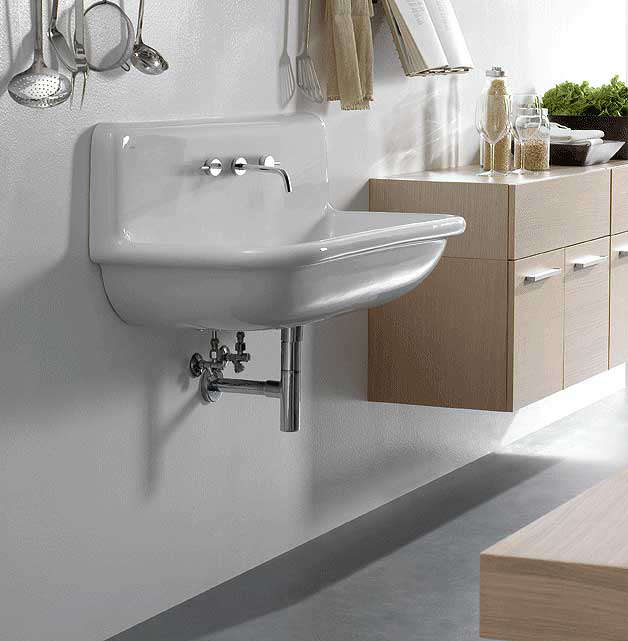
A kitchen utility sink is the hardworking cleanup station that handles the jobs your elegant main sink would rather pretend do not exist. Oversized roasting pans, muddy vegetables, flowerpots, paintbrushes, pet bowls, greasy grill grates, and suspiciously sticky craft projects can all be directed toward this durable secondary basin. When planned correctly, a utility sink expands a kitchen’s capabilities, protects decorative finishes, and keeps messy work away from food preparation areas.
What Is a Kitchen Utility Sink?
A kitchen utility sink is a large, deep basin designed for demanding washing, soaking, rinsing, and cleanup tasks. It may be installed directly in a kitchen, butler’s pantry, scullery, mudroom, enclosed porch, or nearby laundry area. Unlike a standard kitchen sink, which is usually selected with dishwashing and meal preparation in mind, a utility sink prioritizes capacity, durability, splash control, and easy maintenance.
You may also see it described as a utility tub, service sink, laundry sink, wash sink, mud sink, or multipurpose sink. These terms overlap, although individual products can differ in construction and intended use. A lightweight plastic laundry tub, for example, may be excellent for soaking towels but less suitable as a polished secondary kitchen fixture. A stainless steel utility sink with a commercial-style faucet can perform similar chores while blending more naturally into a modern kitchen.
The goal is not to replace the main kitchen sink. The goal is to give messy work its own address.
Why Add a Utility Sink to the Kitchen?
It separates dirty work from food preparation
A dedicated utility basin can keep soil, grease, pet residue, household cleaners, and craft materials away from the sink used to rinse produce or wash cookware. This separation is especially valuable in homes where the kitchen doubles as a gardening station, pet-care area, workshop, flower-arranging corner, or command center for children armed with glue and glitter.
Task separation does not eliminate the need for cleaning and sanitation. It simply makes good hygiene easier to manage. After washing muddy boots or pet equipment, the basin should be thoroughly cleaned before it is used for any food-related task.
It handles large and awkward items
Deep single-bowl utility sinks provide room for stockpots, oven racks, beverage dispensers, recycling bins, mop buckets, and sheet pans that refuse to cooperate with a divided kitchen sink. A generous basin also makes soaking less precarious. Instead of balancing a roasting pan at an angle and hoping gravity has taken the afternoon off, you can lower the entire item into the water.
It protects the main sink
Decorative fireclay, polished composite, copper, and enameled sinks can be durable, but owners may understandably hesitate before dropping a greasy grill grate into them. A rugged secondary basin absorbs the rougher assignments, reducing scratches, impact damage, discoloration, and general wear on the kitchen’s showpiece sink.
It improves household workflow
In a busy kitchen, one person can rinse vegetables or wash dishes while another cleans gardening tools, fills a bucket, or soaks stained linens. That second water station may seem like a luxury until Thanksgiving, canning season, or the day a dog discovers a mud puddle with the enthusiasm of a treasure hunter.
Where Should a Kitchen Utility Sink Go?
The best location depends on what the sink will do most often. Placement should support the household’s natural workflow rather than forcing users to carry dripping objects through finished rooms.
Scullery or butler’s pantry
A scullery is an ideal location for a cabinet-integrated utility sink. It keeps heavy cleanup close to the kitchen while hiding soaking cookware, recycling chores, flower preparation, and entertaining debris from the main room. This arrangement works particularly well in open-concept homes where the main kitchen is always on display.
Mudroom connected to the kitchen
A mudroom sink can serve as a transition point between outdoors and the food-preparation zone. It is useful for rinsing garden produce, cleaning shoes, filling pet bowls, washing hands after yardwork, and dealing with sports equipment before dirt travels farther into the house.
Kitchen perimeter or secondary wall
In a large kitchen, a utility sink can occupy a secondary run of cabinetry. Keep it out of the primary cooking triangle so someone filling a bucket does not block the refrigerator, range, or main sink. A location near an exterior door is helpful when the sink frequently supports grilling or gardening.
Island or freestanding worktable
An island installation can work when the basin is primarily used for produce washing, baking equipment, or entertaining. However, plumbing an island can be more complicated, and an exposed utility sink may dominate the design. For genuinely dirty work, a perimeter or back-kitchen location usually contains splashes and clutter more effectively.
Choosing the Right Utility Sink Material
Stainless steel
Stainless steel is one of the most practical choices for a kitchen utility sink. It tolerates heat, resists many stains, cleans easily, and coordinates with common kitchen appliances. It is also relatively light compared with cast iron or fireclay.
Gauge numbers can be confusing because a lower gauge generally indicates thicker steel. Thicker stainless steel may feel more substantial and can be less prone to flexing, although construction quality, sound-deadening pads, sink shape, and mounting method also affect performance. Stainless steel can scratch, but on a work sink those marks often become part of a uniform working patina rather than a household emergency.
Polypropylene or thermoplastic
Heavy-duty plastic utility tubs are affordable, lightweight, and resistant to many ordinary household stains. They are common in laundry rooms, garages, and mudrooms. Plastic is a smart option when function and budget matter more than a built-in appearance.
The trade-off is visual refinement. Some models can discolor, flex, or develop scratches over time, particularly when exposed to abrasive tools or harsh chemicals. Check the manufacturer’s instructions before placing hot cookware or strong solvents in any plastic basin.
Enameled cast iron
Enameled cast iron offers a substantial feel, excellent heat resistance, and a classic appearance. Its weight helps create a solid, quiet sink, but it also demands strong support. If the enamel is damaged by a severe impact, the exposed area may require repair to prevent corrosion.
Fireclay and vitreous china
These materials provide a smooth, attractive surface that suits traditional kitchens, farmhouse interiors, and carefully designed mudrooms. They are easy to wipe down but can be vulnerable to chipping when struck by heavy metal objects. They make beautiful utility sinks when the expected work is moderately demanding rather than industrial.
Composite materials
Quartz and other engineered composites can offer a matte finish, color variety, heat resistance, and good scratch performance. They are useful when the sink must look integrated with a designer kitchen. Because formulas differ, review the manufacturer’s care requirements, chemical restrictions, and temperature limits before buying.
Selecting the Best Size and Basin Depth
A utility sink should be large enough for its intended jobs without consuming an unreasonable amount of workspace. Begin by listing the three largest items you expect to wash. Measure those objects rather than trusting descriptions such as “large” or “extra deep,” which are enthusiastic marketing phrases, not standardized units of measurement.
For most utility applications, a deep single bowl is more useful than two smaller compartments. One open basin accommodates long handles, oven racks, buckets, and bulky cookware. A shallower model may be more comfortable for frequent handwashing or food preparation, while a deeper tub offers better splash control and soaking capacity.
Remember that a deep sink reduces the usable space beneath it. The bowl, drain, trap, supply valves, faucet hose, filtration equipment, and optional pump all compete for cabinet room. Before ordering, create a simple dimensional drawing that includes the cabinet interior and plumbingnot just the countertop opening.
Ergonomics also matter. An extremely deep bowl installed in a standard-height counter may require shorter users to bend and reach uncomfortably. Raising the sink deck slightly or choosing a moderate depth can make repetitive work easier on the back and shoulders.
Utility Sink Installation Styles
Freestanding utility tub
A freestanding model is usually the most economical and straightforward option. It may stand on legs or come with a compact cabinet. This style is practical for a mudroom, pantry, garage-adjacent kitchen, or unfinished utility space. The open base makes plumbing accessible, although it offers little concealment.
Drop-in sink
A drop-in or top-mount sink rests on the countertop with a visible rim. It is compatible with many countertop materials and is often easier to install than an undermount basin. The rim supports the sink and hides the cut edge, but crumbs and residue can collect around it if it is not wiped regularly.
Undermount sink
An undermount utility sink creates a streamlined surface and allows debris to be swept directly from the countertop into the basin. It typically works best with stone, quartz, solid-surface, or other water-resistant countertop materials. Secure mounting and proper sealing are essential, especially with large sinks that become extremely heavy when filled with water.
Wall-mounted sink
A wall-mounted utility sink leaves the floor open and can be installed at a customized working height. It requires secure attachment to structural framing, masonry, or approved blocking. Decorative wall finishes alone cannot support a basin full of water, no matter how confident the drywall anchors appear.
Apron-front or farmhouse utility sink
An apron-front model adds character and offers comfortable access because the user stands closer to the basin. Installation may require a specially sized cabinet, front-panel modifications, and substantial support framing. Coordinate the sink, cabinet, faucet, and countertop before construction begins rather than introducing them to one another on installation day.
Faucet Features That Make a Real Difference
A deep basin paired with a tiny fixed faucet is a missed opportunity. The faucet should reach the working area comfortably and provide enough clearance for buckets and tall cookware.
- Pull-down or pull-out spray head: Helps rinse corners, large objects, and the sink walls.
- High-arc spout: Provides vertical clearance for stockpots, watering cans, and buckets.
- Multiple spray patterns: A focused stream fills containers efficiently, while a wider spray loosens debris.
- Long lever handle: Can be operated with a wrist or forearm when hands are dirty.
- Wall-mounted faucet: Frees the sink deck and may simplify cleaning, but requires careful rough-in planning.
- Side spray or pre-rinse design: Adds reach for oversized basins and heavy cleanup.
- Hose connection: Useful for filling floor-level buckets, provided the fitting and backflow protection comply with local requirements.
If water from the sink may be used for drinking or food preparation, select a faucet specifically intended and certified for potable-water applications. Do not assume every laundry or service-sink faucet meets the same material requirements as a kitchen faucet.
Plumbing and Structural Requirements
A utility sink needs properly sized water supplies, accessible shutoff valves, a drain, a trap, and approved venting. Exact pipe sizes and venting arrangements depend on the product, local code, and existing plumbing layout. Because requirements differ among jurisdictions, the installation should follow the manufacturer’s instructions and the plumbing rules adopted in your area.
Locating the sink near existing supply and drain lines usually reduces project complexity. Moving it across the room may require opening walls or floors, rerouting pipes, drilling framing, and adding vent connections. In below-grade locations where gravity drainage is unavailable, an approved sink pump may be necessary.
Structural support is equally important. A large basin filled with water can place significant weight on a countertop, wall, cabinet, and mounting hardware. Heavy cast iron, fireclay, composite, and undermount sinks may need reinforced framing. The support should carry the basin itself rather than relying on caulk to perform an exciting side career as structural lumber.
Plan for water protection around the sink. Use moisture-resistant finishes, seal countertop cutouts, caulk appropriate joints, and protect adjacent cabinetry from repeated splashing. A raised backsplash or short side splash is especially useful when the faucet produces a strong spray.
Accessories Worth Considering
The right accessories can turn a basic utility basin into a flexible workstation:
- A removable sink rack protects the bottom from heavy cookware and improves drainage.
- A fitted wash bin allows small items to soak without filling the entire basin.
- A rolling rack creates a temporary drying or rinsing surface.
- A removable cutting board adds workspace when the sink is clean and designated for food use.
- A deep strainer basket catches leaves, soil, labels, and other drain-clogging debris.
- A wall-mounted drying rail keeps wet brushes, gloves, and cleaning cloths above the basin.
- A waterproof pull-out bin organizes scrubbers and supplies without turning the cabinet into a damp archaeological site.
Choose accessories sized for the specific sink. A generic rack that shifts, tips, or blocks the drain tends to become an expensive object stored vertically in a closet.
How to Maintain a Kitchen Utility Sink
Clean according to the material
Use a soft cloth or nonabrasive sponge for routine cleaning. Stainless steel generally responds well to mild soap and water, followed by rinsing and drying. Wiping in the direction of the visible grain can help preserve an even appearance. Avoid leaving metal cans, wet steel tools, or cast iron cookware sitting in the basin, because transferred rust can create stains.
Enameled, fireclay, composite, and plastic sinks should be cleaned with products approved by the manufacturer. Abrasive powders, concentrated bleach, drain chemicals, and solvents may dull, discolor, or weaken certain surfaces.
Control mineral deposits
Drying the faucet and sink rim after use helps prevent water spots. On compatible faucet finishes, a diluted vinegar solution may loosen mineral buildup, but it should not be left on the surface longer than recommended. Always rinse thoroughly and verify care instructions first.
Protect the drain
Use a strainer when washing soil-covered produce, paint tools, pet items, or workshop equipment. Grease, hardened plaster, grout, soil, coffee grounds, and fibrous debris should not be sent down the drain. Collect them for appropriate disposal instead.
Inspect hidden areas
Periodically check supply connections, shutoff valves, the trap, faucet hoses, caulk joints, and the cabinet floor. A slow leak can remain invisible until the cabinet begins smelling like a forest floor. A washable leak tray or water sensor beneath the sink provides inexpensive protection.
Common Utility Sink Planning Mistakes
- Buying before measuring: The sink fits the countertop but collides with the cabinet, drain, faucet, or window trim.
- Choosing depth without considering comfort: A cavernous bowl sounds useful until every task requires bending at the waist.
- Using an undersized faucet: The basin is enormous, but the water lands in one tiny spot near the back wall.
- Ignoring splash zones: Unprotected drywall and wood cabinetry absorb the consequences.
- Forgetting structural support: Heavy sinks and full basins require more than sealant and optimism.
- Assuming all faucets provide potable water: Product certification and intended use should be verified.
- Mixing clean and dirty tasks carelessly: Pet washing, chemical cleanup, and food preparation require deliberate sanitation practices.
- Storing moisture-sensitive supplies below: Paper goods, electrical devices, and valuable tools do not belong where leaks are most likely to occur.
What Does a Kitchen Utility Sink Cost?
The total budget depends on the sink material, cabinet, faucet, countertop, plumbing access, structural work, permits, and finish repairs. A basic freestanding plastic tub installed beside existing plumbing can be relatively affordable. A custom undermount composite or apron-front sink in a finished scullery may require cabinetry, stone fabrication, reinforcement, premium fixtures, and professional plumbing.
When comparing estimates, confirm what is included. Sink removal, disposal, new shutoff valves, drain modifications, countertop cutting, backsplash repair, cabinet reinforcement, faucet installation, permits, and cleanup may be listed separately. The lowest fixture price does not always produce the lowest completed-project price.
Spend first on reliable plumbing, adequate support, a useful faucet, and a durable basin. Decorative handles can be upgraded later. Water damage has a regrettable habit of ignoring the design budget.
Real-World Experiences: What Homeowners Learn After Living With a Utility Sink
The practical value of a utility sink often becomes clear through small daily experiences rather than dramatic renovation photographs. Consider a household that adds a deep stainless steel basin to a pantry just off the kitchen. During the first week, the sink may be used mainly for washing an oversized stockpot. Within a month, it has become the place for filling the mop bucket, rinsing refrigerator shelves, soaking barbecue tools, arranging flowers, and cleaning the removable parts of a countertop appliance.
The first lesson is usually that faucet reach matters as much as basin size. A large sink with a short spout leaves the outer corners difficult to rinse. Homeowners often discover that a pull-down head transforms cleanup because water can be directed behind a bucket, beneath a rack, and along the sink walls. A magnetic or secure spray-head dock also becomes important after repeated use; nobody enjoys wrestling a dangling faucet head while holding a greasy roasting pan.
The second lesson involves depth. A deep basin contains splashes when muddy vegetables or tall containers are being rinsed. However, depth can become uncomfortable during detailed handwashing. A removable rack or wash bin helps raise smaller items to a more convenient level. This simple accessory can prevent the user from leaning into the sink like an archaeologist examining an unusually damp fossil.
Storage habits change as well. At first, the cabinet beneath the sink may be filled with paper towels, cardboard boxes, spare shopping bags, and cleaning products. After the first loose connection or wet spray hose, most homeowners reconsider. A better arrangement uses a waterproof tray for a small number of daily supplies, while bulk products and moisture-sensitive items are stored elsewhere. Adding a battery-powered leak sensor provides peace of mind, particularly when the utility sink is located in a pantry surrounded by cabinetry.
A family that gardens commonly learns to keep a sturdy strainer in the drain. Fresh carrots and potatoes may arrive carrying enough soil to establish a small independent nation. Brushing off loose dirt outdoors before rinsing protects the plumbing, while the strainer catches remaining roots and leaves. The basin is then washed and disinfected before any food-preparation equipment is placed inside it.
Pet owners discover another useful pattern: designate accessories for specific tasks. A washable mat can protect the basin when pet bowls, leashes, or muddy toys are cleaned. Separate brushes and cloths prevent those tools from wandering back toward cookware. Clear labeling may seem overly organized until someone uses the dog-bowl scrubber on a favorite Dutch oven.
People who entertain frequently appreciate the sink for staging. Empty bottles can be rinsed away from the main cooking zone, drink dispensers can be filled without blocking meal preparation, and used serving pieces can wait out of sight in a scullery. This keeps the primary kitchen functional and prevents dirty dishes from forming a decorative mountain beside the range.
Another common realization is that good lighting matters. Utility sinks are often placed in secondary rooms where one ceiling fixture attempts to illuminate every corner and succeeds mainly in creating shadows. An under-cabinet task light above the basin makes stains, residue, and sharp tools easier to see. A nearby hanging rail or drying rack also prevents wet brushes and cloths from colonizing the countertop.
Over time, minor scratches and water spots become less concerning. A true utility sink earns evidence of work. Routine drying, gentle cleaning, and prompt attention to leaks preserve its function without requiring showroom perfection. The best experience comes from choosing a sink that matches real household behavior rather than an imaginary lifestyle. A beautiful basin is pleasant; a beautiful basin that comfortably holds the largest roasting pan is better.
Is a Kitchen Utility Sink Worth It?
A kitchen utility sink is worth considering when the household regularly tackles large cookware, gardening, pet care, home canning, entertaining, messy hobbies, or outdoor cooking. It is especially valuable in a scullery, pantry, mudroom, or secondary kitchen where dirty work can be separated from everyday food preparation.
The best model is not necessarily the biggest or most expensive. It is the sink that fits the available space, supports the intended tasks, works with the plumbing, and remains comfortable to use. Choose a durable material, pair it with a properly proportioned faucet, reinforce the installation, protect nearby surfaces, and give drainage as much attention as appearance.
Done well, a utility sink becomes one of those household features that quietly solves problems every day. It may never receive the admiration given to a marble island or professional range, but when a giant stockpot, muddy harvest, or paint-covered school project arrives, the utility sink gets the heroic entrance music.










