
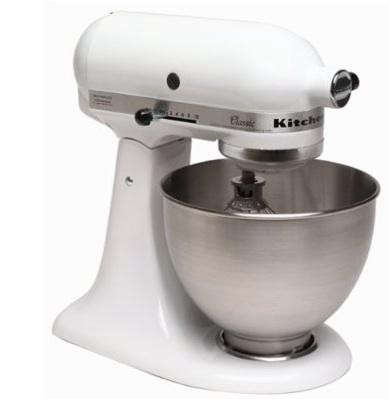
The KitchenAid 4-1/2-Quart Stand Mixer is one of those kitchen appliances that looks calm on the counter but secretly wants to take over your baking life. It is not the largest stand mixer KitchenAid makes, nor the flashiest, nor the one that arrives in seventeen shades of “artisan sunset over a Tuscan bakery.” But for many home bakers, that is exactly the point. This classic 4.5-quart tilt-head mixer is practical, sturdy, familiar, and ready to handle everyday recipes without making your countertop look like a commercial bakery moved in overnight.
For cookies, cakes, frosting, mashed potatoes, whipped cream, pizza dough, quick breads, and weekend experiments that may or may not end with flour on the dog, this mixer has earned its place as a dependable kitchen workhorse. It offers the iconic KitchenAid stand mixer design, a 4.5-quart stainless steel bowl, 10 speeds, durable metal construction, and compatibility with many KitchenAid hub attachments. In plain English: it mixes, beats, whips, kneads light doughs, and can become more useful over time if you add accessories.
This guide breaks down what the KitchenAid 4-1/2-Quart Stand Mixer does well, where it has limits, who should buy it, and how it performs in real kitchens where recipes are sometimes measured carefully and sometimes guided by vibes.
What Is the KitchenAid 4-1/2-Quart Stand Mixer?
The KitchenAid 4-1/2-Quart Stand Mixer is commonly associated with the KitchenAid Classic Series, a tilt-head stand mixer designed for home bakers who want reliable performance without jumping into the larger professional bowl-lift models. Its 4.5-quart stainless steel bowl is large enough for family baking, holiday cookies, cake batter, buttercream, and small-to-medium batches of dough.
The tilt-head design means the motor head lifts back, giving you room to attach the flat beater, wire whip, or dough hook and to remove the bowl. This is one reason the Classic Series remains popular with home users: it feels simple. There is no wrestling match with a bowl-lift lever, no dramatic machinery moment, and no need to read a manual with the emotional intensity of assembling furniture at midnight.
It typically includes three core accessories: a flat beater for mixing batters and cookie dough, a dough hook for kneading yeast doughs, and a wire whip for aerating cream, eggs, and frostings. The stainless steel bowl is dishwasher safe, which is excellent news for anyone who believes baking should end with dessert, not a sink full of regret.
Key Features That Make It Popular
4.5-Quart Stainless Steel Bowl
The 4.5-quart bowl hits a sweet spot for everyday baking. It is roomy enough for a standard batch of chocolate chip cookies, cake batter, muffins, whipped cream, mashed potatoes, and frostings. It is not oversized, which matters if you usually bake for a household rather than a cafeteria.
For smaller kitchens, this bowl size also helps the mixer feel more manageable. Bigger mixers can be wonderful, but they can also be countertop real estate hogs. The KitchenAid 4-1/2-Quart Stand Mixer offers a more compact footprint while still providing enough capacity for most common recipes.
10 Speeds for Different Tasks
The mixer’s 10-speed control gives you flexibility. Lower speeds are useful for stirring dry ingredients, combining butter and sugar, or starting a recipe without launching powdered sugar into the atmosphere. Medium speeds handle creaming, mixing, and beating. Higher speeds are useful for whipping cream, egg whites, and lighter frostings.
The golden rule is simple: start slow. Every experienced baker has learned this eventually, usually after creating what can only be described as a flour weather event. The KitchenAid mixer gives you enough speed range to move gradually from gentle stirring to serious whipping.
Tilt-Head Access
The tilt-head design is one of the most user-friendly features. You unlock the head, tilt it back, add or remove the attachment, place the bowl in position, and lock the head back down. It is straightforward and familiar, especially for beginners.
This design also makes it easier to scrape the bowl, add ingredients, or check texture during mixing. If you bake often, these small conveniences add up. A stand mixer should make cooking easier, not feel like you are operating a tiny cement mixer with culinary ambitions.
Durable Metal Construction
One major reason people choose KitchenAid is the brand’s reputation for sturdy construction. The 4.5-quart Classic model has a durable metal body that feels substantial on the counter. It is not feather-light, but that weight helps with stability when the mixer is working through thicker batters.
That said, weight is part of the deal. If you plan to store it in a lower cabinet and lift it out every time you bake, your arms may develop a personal relationship with it. Most owners prefer to keep it on the counter if space allows.
What Can You Make With a KitchenAid 4-1/2-Quart Stand Mixer?
The short answer: a lot. The slightly longer answer: a lot, as long as you understand its strengths.
This mixer shines with cakes, cupcakes, brownies, muffins, pancake batter, whipped cream, meringue, buttercream, mashed potatoes, meatloaf mixtures, shredded cooked chicken, and standard cookie dough. It is also useful for kneading smaller batches of bread dough or pizza dough, though serious bread bakers who make heavy dough several times a week may prefer a more powerful bowl-lift model.
For casual home baking, the 4.5-quart KitchenAid stand mixer offers more than enough versatility. It turns repetitive mixing into a hands-free process, letting you prepare pans, measure ingredients, or simply stare proudly at the mixer like you are hosting your own cooking show.
Performance: Where It Excels
Cakes and Cupcakes
Cake batter is where this mixer feels very comfortable. The flat beater creams butter and sugar efficiently, blends eggs into the mixture, and incorporates flour without overworking the batter if you use the correct speed. For birthday cakes, loaf cakes, sheet cakes, and cupcakes, the KitchenAid 4-1/2-Quart Stand Mixer is more than capable.
Cookies
For classic cookie doughs, it performs well. Chocolate chip, oatmeal, sugar cookies, peanut butter cookies, and snickerdoodles are all within its comfort zone. Very stiff doughs packed with nuts, chocolate chunks, dried fruit, and ambition may require slower mixing and occasional scraping.
The key is not to overload the bowl. Just because a mixer can handle a batch does not mean it wants to be treated like a dough bulldozer. Give it reasonable quantities, and it will reward you with consistent results.
Whipped Cream and Frosting
The wire whip is excellent for whipped cream, egg whites, and fluffy frostings. Homemade whipped cream goes from “liquid dairy” to “dessert cloud” quickly, so keep an eye on it. Buttercream also benefits from stand mixing because it needs time and air to become smooth and spreadable.
Mashed Potatoes and Savory Recipes
A stand mixer is not only for dessert. The flat beater can mash potatoes, mix meatballs, combine dips, shred cooked chicken, and bring together savory fillings. It is a quiet hero during holidays, especially when mashed potatoes must appear on the table while six relatives ask when dinner will be ready.
Where It Has Limits
The KitchenAid 4-1/2-Quart Stand Mixer is strong for everyday use, but it is not the best choice for every single kitchen task. Heavy bread dough, dense bagel dough, very large cookie batches, or frequent high-volume baking may push it beyond its ideal comfort zone.
If you bake multiple loaves of bread every week, sell cookies from home, or routinely double and triple recipes, a larger KitchenAid bowl-lift mixer may be a better fit. Those models generally offer larger bowls and are designed with heavier workloads in mind.
But for the average home baker, the Classic 4.5-quart model is often enough. It is better to buy the mixer that matches your real life, not the imaginary version of yourself who bakes twelve sourdough boules before breakfast.
KitchenAid Attachments: A Mixer That Can Grow With You
One of the biggest advantages of a KitchenAid stand mixer is the front attachment hub. With compatible attachments, the mixer can do more than mix. Depending on the accessory, it can help roll pasta, grind food, slice vegetables, shred ingredients, spiralize produce, make ice cream, or mill grain.
This is where the KitchenAid 4-1/2-Quart Stand Mixer becomes more than a baking appliance. It becomes a small kitchen platform. You may buy it for cookies and later discover it can help with homemade pasta night, fresh burger patties, or vegetable prep.
Attachments are sold separately, and prices vary, so it is smart to buy only what you will actually use. A pasta roller is magical if you make pasta. It is less magical if it spends five years in a cabinet next to a waffle maker you bought during a very optimistic brunch phase.
KitchenAid 4.5-Quart vs. 5-Quart Artisan: Which Is Better?
The 4.5-quart Classic and 5-quart Artisan are often compared because both are tilt-head mixers. The Artisan usually offers a slightly larger bowl, more color choices, and often a more powerful motor depending on the model. It may also include extras such as a pouring shield on some versions.
The KitchenAid 4-1/2-Quart Stand Mixer, however, often wins on value. It gives you the core KitchenAid experience at a more accessible price. If you mainly bake standard recipes and do not care about having a rainbow of color options, the Classic model can be the smarter purchase.
Choose the Artisan if you bake more frequently, want slightly more capacity, prefer more colors, or like the added polish of a higher-tier model. Choose the 4.5-quart Classic if you want durability, simplicity, and dependable everyday performance without paying for features you may not need.
Who Should Buy the KitchenAid 4-1/2-Quart Stand Mixer?
This mixer is ideal for beginner bakers, occasional bakers, small households, apartment kitchens, and anyone who wants a reliable stand mixer without moving into professional equipment. It is also a strong choice for gift-giving because it is practical, recognizable, and likely to be used for years.
It is especially good for people who bake cookies at the holidays, make birthday cakes, prepare frosting, enjoy weekend baking projects, or want to reduce the effort of hand mixing. It is also helpful for cooks who make mashed potatoes, dips, shredded chicken, or homemade meatballs.
It may not be ideal for someone who regularly makes large batches, heavy bread doughs, or commercial-level quantities. In those cases, a larger bowl-lift model would be worth considering.
Cleaning and Maintenance Tips
Cleaning the KitchenAid 4-1/2-Quart Stand Mixer is fairly simple. The stainless steel bowl can usually go in the dishwasher, while many attachments should be washed according to their material and care instructions. The mixer body should be wiped with a damp cloth after use, especially around the speed lever and attachment area where flour likes to hide like it has a lease agreement.
To keep the mixer performing well, avoid overloading it, use the right attachment for the job, and do not run it at high speed with heavy dough. Lock the head before mixing, scrape the bowl when needed, and start at a low speed before increasing power.
Another useful habit is checking the beater-to-bowl clearance. If ingredients are consistently left unmixed at the bottom, the attachment may need a small adjustment. KitchenAid mixers are designed with this in mind, and a tiny adjustment can improve mixing results.
Real Kitchen Experience With the KitchenAid 4-1/2-Quart Stand Mixer
Using the KitchenAid 4-1/2-Quart Stand Mixer feels like upgrading from “I am making cookies” to “I have a baking department.” The biggest difference is not that it performs impossible magic. It is that it removes the annoying parts of mixing: the tired wrist, the uneven batter, the bowl sliding around the counter, and the moment when butter refuses to blend because apparently it has chosen independence.
For everyday baking, the experience is smooth and satisfying. When making chocolate chip cookies, the flat beater creams butter and sugar evenly, then brings in eggs and vanilla without drama. Once flour is added, the low speeds help prevent a powder explosion. The final dough is consistent, and mix-ins distribute well as long as you do not overload the bowl. A rubber spatula is still useful for scraping the sides, because even a good mixer appreciates teamwork.
With cake batter, the mixer is especially pleasant. You can let it cream butter and sugar while you prepare pans or measure dry ingredients. The batter becomes lighter and more uniform than most hand-mixed versions. This matters because good mixing affects texture. A properly creamed cake has a better crumb, a softer bite, and fewer surprise pockets of flour lurking like tiny baking ghosts.
For whipped cream, the wire whip is fast and effective. It is also a reminder not to walk away for too long. One minute you have soft peaks; the next minute you are entering butter territory. The mixer does not judge you, but your dessert might. Frostings also come together beautifully, especially American buttercream and cream cheese frosting. The stand mixer adds air and smoothness in a way that is hard to match by hand.
Bread dough is where expectations matter. The dough hook can handle small batches of soft yeast dough, dinner rolls, pizza dough, and basic sandwich bread. However, dense doughs should be mixed carefully and in reasonable amounts. This is not the machine to abuse with giant batches of bagel dough while shouting, “You can do it!” like a sports coach. It probably can do some of it, but that does not mean it should.
The mixer’s size is another practical advantage. It is substantial enough to feel stable but not so massive that it dominates the kitchen. In an apartment or smaller home, the 4.5-quart bowl feels sensible. It can live on the counter without making the room look like a bakery supply showroom. If stored in a cabinet, the weight is noticeable, but manageable for many users.
Over time, the best part of owning this mixer is how often it encourages you to cook from scratch. Pancake batter on a Saturday morning feels easier. Holiday cookies feel less chaotic. Mashed potatoes become smoother. Homemade frosting becomes normal instead of “something people do on television.” The mixer lowers the effort barrier, which means you are more likely to actually make the recipes you bookmark.
There is also a small emotional bonus. A KitchenAid mixer has a certain countertop confidence. It looks like it belongs there. It says, “Yes, serious baking happens in this kitchen,” even if dinner is occasionally cereal. The 4.5-quart Classic model may not have every premium feature, but it delivers the essential experience: dependable mixing, timeless design, and enough versatility to become one of the most-used appliances in the kitchen.
Final Verdict: Is the KitchenAid 4-1/2-Quart Stand Mixer Worth It?
The KitchenAid 4-1/2-Quart Stand Mixer is worth considering if you want a durable, easy-to-use, everyday stand mixer for baking and cooking. It offers the iconic KitchenAid design, practical capacity, 10 speeds, useful attachments, and room to expand with optional hub accessories.
It is not the best choice for every heavy-duty baker, but it is an excellent choice for many households. If your kitchen life includes cookies, cakes, frosting, whipped cream, mashed potatoes, pizza dough, and occasional bread, this mixer can make the work easier and the results more consistent.
In short, the KitchenAid 4-1/2-Quart Stand Mixer is the reliable friend who shows up on time, does the hard mixing, and does not complain when you decide at 9 p.m. that tomorrow absolutely requires cupcakes. That alone earns it a permanent spot on many countertops.














