
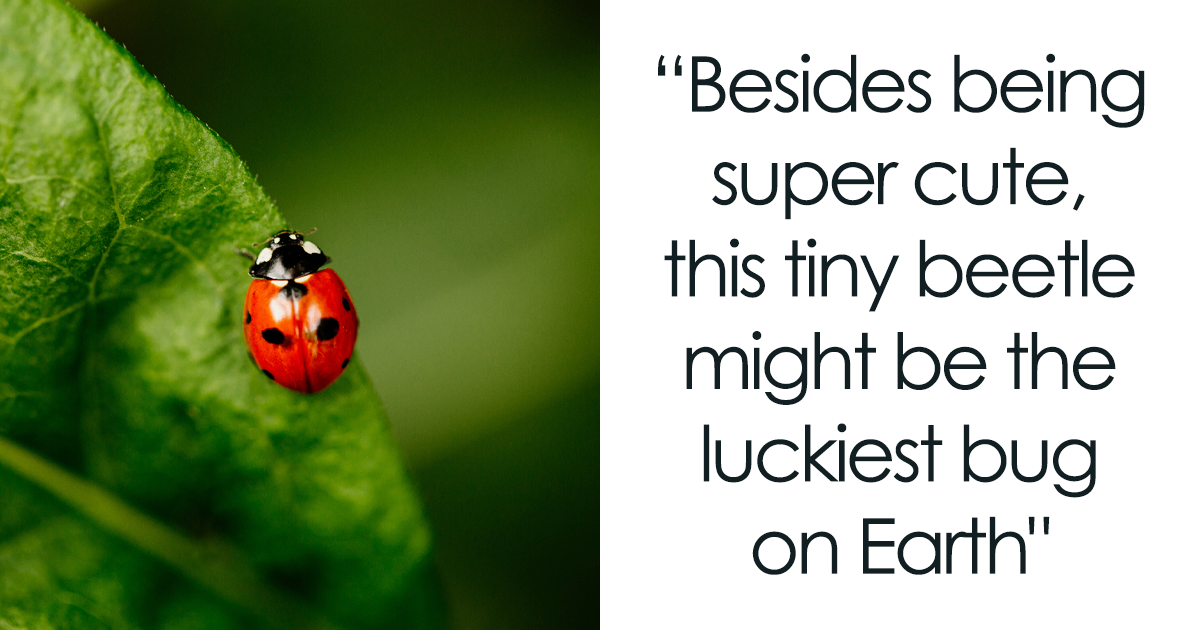
Some animals work hard to build a reputation. Lions need dramatic manes. Eagles require mountain scenery and orchestral music. The ladybug simply arrives in a polished red coat, parks on your sleeve, and convinces you that your day is about to improve.
Across generations and cultures, this tiny beetle has represented good fortune, protection, love, favorable weather, and healthy harvests. The reputation did not appear from nowhere. Long before ladybugs decorated jewelry and children’s backpacks, farmers noticed that these cheerful insects were ruthless enemies of aphids and other crop pests. The ladybug became lucky because it often brought a practical kind of luck: fewer pests and healthier plants.
Its story blends biology, agriculture, religion, nursery rhymes, color symbolism, and humanity’s habit of turning useful creatures into legends.
First, a Ladybug Is Not Actually a Bug
Ladybugs belong to the beetle family Coccinellidae. Entomologists often call them lady beetles because “bug” has a narrower scientific meaning: true bugs belong to Hemiptera, while ladybugs belong to Coleoptera. This distinction matters greatly to insect experts and almost nobody trying to remove one from a lampshade.
Thousands of lady beetle species occur worldwide. They may be red, orange, yellow, brown, pinkish, or black, with spots, stripes, or almost no markings. Adults have familiar dome-shaped bodies, but their larvae resemble tiny black-and-orange alligators.
Lady beetles pass through egg, larva, pupa, and adult stages. Females often lay eggs near prey, giving hatchlings immediate access to aphids, scales, mites, whiteflies, mealybugs, and other soft-bodied insects. Both larvae and adults of many species are valuable predators.
How Agricultural Help Turned Into “Good Luck”
Imagine farming before pesticides, extension offices, weather apps, and online forums where twelve strangers diagnose your tomato as simultaneously overwatered, underwatered, and emotionally neglected. Aphids could weaken crops and threaten food or income. Then small beetles arrived and began devouring the pests.
To a farmer, that was not a cute nature moment. It was rescue. Lady beetles naturally suppress pests in farms, orchards, gardens, and landscapes. People saw the connection: destructive insects appeared, ladybugs followed, and plant damage sometimes eased. The predator became associated with protection, prosperity, and divine favor.
This is the strongest explanation for the ladybug’s lucky status. The beetle needed no marketing department. Aphids handled that.
Why Is It Called a “Lady” Bug?
The traditional European explanation connects the name with the Virgin Mary, commonly called “Our Lady.” Folklore tells of farmers praying for help when insects threatened their crops. Lady beetles appeared, consumed the pests, and became known by names meaning “Our Lady’s beetle” or “Mary’s beetle.”
Related names survive across European languages. German Marienkäfer means “Mary beetle,” while Spanish names such as mariquita echo María. Scandinavian traditions have linked the insect with Mary, heaven, or heavenly keys.
The seven-spotted species gained extra symbolism. Its red wing covers were compared with Mary’s cloak, and the spots with Christian sets of seven. These are folkloric interpretations, not laboratory findings. The famous prayer-and-rescue account should therefore be treated as a traditional origin story rather than a precisely documented event. Still, it neatly joins faith, harvest protection, and a genuinely useful insect.
From Helpful Beetle to Traveling Fortune Teller
Once an animal becomes lucky, humans quickly assign it extra responsibilities. Ladybugs have been asked to predict romance, weather, wishes, money, harvests, and the direction from which good news will arrive. This is a heavy workload for an insect mostly trying to find lunch.
When a Ladybug Lands on You
The best-known belief says that a landing brings good fortune. In many versions, the beetle should leave on its own; killing it is especially unlucky. People may count its spots, make a wish, or watch the direction in which it flies. The moment feels meaningful because it is gentle, unusual, and personal. A horsefly lands on you and creates a legal dispute. A ladybug receives a spiritual promotion.
Spots, Love, and Weather
Folklore has treated spots as lucky months, years until marriage, future children, or wishesbut spots do not reveal age. The beetle does not gain one per birthday like a flying calendar. In matchmaking traditions, the direction of its flight supposedly showed where love would come from. Ladybugs also became seasonal weather and harvest signs, perhaps because insect activity genuinely changes with temperature, food, and rainfall.
Why the Ladybug Looks Lucky
The ladybug’s appearance does much of the symbolic work. Its rounded shape feels friendly. Its small size makes it approachable. Its bright red or orange coloring attracts attention without the visual menace of a wasp’s narrow waist or a spider’s surplus of legs. Black spots create a simple pattern that children can draw, designers can reproduce, and jewelers can shrink onto charms.
Red has long carried strong meanings in many societies, including life, love, energy, celebration, protection, and prosperity. Black dots give the insect a balanced, memorable design. The combination resembles a naturally produced emblempart polka dot, part warning sign, part luxury compact car.
Biologically, those colors are not intended to make humans feel optimistic. Bright coloration can warn predators that the beetle tastes unpleasant or contains defensive chemicals. When threatened, many lady beetles can release yellowish hemolymph from their leg joints, a behavior called reflex bleeding. The fluid may smell bad and contain bitter or toxic compounds that discourage attackers. The ladybug’s cheerful outfit is therefore closer to a hazardous-materials label than a party dress.
Nursery Rhymes Carried the Symbol Across Generations
Folklore survives because it is repeated, and few repetition machines are more effective than children. The English-language rhyme usually beginning “Ladybird, ladybird, fly away home” helped make the beetle familiar even to children who had never watched one eat an aphid.
Different versions mention a burning house, endangered children, fields, or flight homeward. Scholars and folklorists have proposed several interpretations, including connections to seasonal field burning, warnings to useful insects, religious conflict, and older oral traditions. No single explanation has settled every version.
What matters culturally is that the rhyme invites a direct encounter. A child lets the beetle walk across a hand, speaks to it as though it understands household emergencies, and waits for it to fly. That tiny ritual turns observation into memory. The insect becomes not merely an animal but a characterhelpful, vulnerable, magical, and worth protecting.
How the Ladybug Became a Modern Good-Luck Charm
Ladybug symbolism now appears on jewelry, keychains, baby clothes, garden decorations, tattoos, wedding favors, logos, and toys. It is common in gifts expressing encouragement, new beginnings, protection, or affection. A tiny charm says “good luck” without forcing anyone to carry a horseshoe.
The image travels well because it is simple and positive: a small creature associated with gardens, spring, and beneficial change. It also suits modern environmental values, including biodiversity, natural pest control, and reduced pesticide use. The ladybug is both an old folk charm and a current ecological mascot.
Not Every Lady Beetle Is an Easy Houseguest
The lucky reputation needs a practical footnote. The multicolored Asian lady beetle, an introduced species widespread in North America, often gathers on sunny buildings and moves indoors for winter. Large numbers may produce odor, stain surfaces with defensive fluid, and occasionally nip exposed skin.
These beetles still eat aphids, but homeowners facing hundreds at a window may feel fortune has become overly enthusiastic. Seal cracks and repair screens before fall migration; remove indoor beetles gently rather than crushing them.
Buying containers of ladybugs also does not guarantee pest control. Released beetles may quickly disperse, and transported insects can carry parasites or disrupt local populations. A better strategy is to attract resident beneficial insects with diverse flowers, limited pesticide use, shelter, and enough prey to keep them nearby. Learn to recognize larvae before mistaking them for tiny dragons with criminal intent.
What the Ladybug’s Luck Really Means
Superstitions often begin where observation meets uncertainty. People see a pattern without a formal explanation, then preserve the lesson through story. In the ladybug’s case, the lesson is sound: protect the small predator, and the garden may benefit.
The “luck” was ecological assistance interpreted through the language of farmers, families, and children. Food attracted ladybugs to pest colonies; feeding reduced some pests; healthier plants could follow. Communities wrapped that useful relationship in religion, rhyme, and ritual.
The charm still has value without supernatural proof. It encourages patience, gentleness, attention to nature, and hope that effective help can arrive in a very small form.
A 500-Word Garden Experience: Following the “Lucky” Beetle
One of the best ways to understand the ladybug’s reputation is to spend time in a garden where aphids are active. The following is a representative field experience based on common garden observations rather than a claim of one miraculous beetle solving an entire infestation before lunch.
Start with a plant showing curled new growthperhaps a rose, milkweed, bean, or young fruit tree. Turn over a tender leaf and look closely. Aphids may be clustered along the veins or stems like tiny pear-shaped commuters waiting for a train. Some are green, some dark, and some pale enough to blend into the plant. Nearby ants may patrol the colony because they feed on the aphids’ sugary honeydew and sometimes defend the aphids from predators.
At first, no ladybug may be visible. This is the moment when an impatient gardener reaches for a spray bottle and accidentally turns a complex food web into a chemical crime scene. Waiting and observing can reveal more.
A bright adult lady beetle may eventually walk onto the stem, but the more interesting visitor is often its larva. It looks nothing like the round red adult. The larva is elongated, dark, spiny, and marked with orange. Many beginners assume it is a pest and consider removing it. That mistake is the garden equivalent of firing the security team because its uniforms look intimidating.
Watch the larva approach an aphid. The encounter is not graceful. It is efficient. The predator grabs the aphid with its jaws and feeds, then continues hunting. It may examine several leaves, moving through the colony with the focused energy of someone who has discovered free appetizers. An adult ladybug can be equally businesslike, lowering its head and chewing while its polished wing covers make it look far more innocent than the scene deserves.
Return to the plant over several days. You may notice fewer aphids, shed skins, new lady beetle larvae, or small clusters of yellowish eggs. You might also see lacewing larvae, hoverfly larvae, or swollen “mummified” aphids that indicate parasitoid wasps are present. The ladybug is not working alone; it is part of a natural-enemy community.
This experience explains why historical farmers could interpret ladybugs as a blessing. They did not need to know the word Coccinellidae or understand complete metamorphosis. They could see that plants under attack attracted small beetles and that the beetles ate the attackers. When your harvest depends on the health of those plants, the arrival of a predator feels like good fortune in motion.
The observation also changes how you respond to garden problems. Instead of demanding instant perfection, you begin looking for balance. A few aphids become food that keeps beneficial predators nearby. Flowers become nectar sources. Leaf litter and sheltered spaces become habitat. The goal shifts from eliminating every insect to supporting an ecosystem that performs much of its own pest control.
Finally, place your hand near an adult ladybug and let it climb aboard without squeezing or trapping it. It may pause, open its hardened wing covers, unfold the delicate flight wings beneath them, and lift away. You can make a wish if tradition appeals to you. The scientifically accurate explanation is that the beetle is leaving. The emotionally accurate explanation may be that, for a few seconds, a tiny living symbol made you stop, look closely, and expect something good.
Conclusion: Small Beetle, Enormous Reputation
The ladybug became a universal good-luck charm through an unusually successful partnership between nature and human imagination. Its appetite for crop pests made it valuable. Its bright colors made it memorable. Religious traditions gave it a sacred identity. Nursery rhymes introduced it to children. Folk beliefs turned its landing, spots, and flight into signs of love, weather, wishes, and prosperity.
Behind the charm is a real predator with a complete life cycle, chemical defenses, and an important role in many gardens and farms. That combinationcute appearance, practical benefit, and centuries of storytellinghelps explain why the ladybug remains one of the few insects people are delighted to find on their clothing.
So when a ladybug lands nearby, there is no scientific guarantee that money, romance, or perfect weather will follow. Still, allowing it to continue its journey is a sensible choice. It may not deliver supernatural luck, but it could be on its way to eat the aphids ruining someone’s roses. Sometimes good fortune is simply a useful beetle showing up at the right time.













