
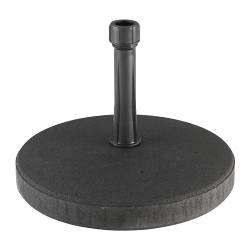
A good patio umbrella can turn a harsh, sun-baked patio into the best seat in the house. A bad base, on the other hand, can turn that same umbrella into a wind-powered menace with the manners of a shopping cart on a slope. The LÖKÖ umbrella base belongs to the first category: a simple, sturdy, no-drama solution from IKEA’s older outdoor lineup, built to keep a parasol where it belongsupright, useful, and not flying into the neighbor’s basil garden. The original LÖKÖ design was a concrete parasol base by designer Nicolas Cortolezzis, with a 18 1/8-inch diameter, a 13 3/4-inch height, and compatibility for poles roughly 1 to 1 1/2 inches wide.
What made it appealing was not flash. It was practicality. Concrete has always been a favorite material for umbrella bases because it brings real mass without requiring complicated parts, pumps, or weather tricks. IKEA’s own outdoor guidance has long treated umbrella bases as a stability-first product: keep the umbrella anchored, lower it in strong wind, and choose the base with enough weight for the size of the canopy. That advice still holds whether the base is concrete, sand-filled, or a modern hybrid design.
Why an umbrella base matters more than people think
Many shoppers focus on the canopy color, the tilt mechanism, or whether the umbrella looks good next to the grill. That is fair, but the base is the quiet hero of the setup. A patio umbrella only feels relaxing when it stays put. Home-improvement guidance from Lowe’s and Bob Vila consistently points to the same truth: larger umbrellas need significantly heavier bases, and cantilever models need even more support than simple market umbrellas. Lowe’s suggests about 20 to 30 pounds for smaller 6- to 7-foot umbrellas, 40 to 50 pounds for mid-sized canopies, and 75 to 100 pounds or more for larger models. Bob Vila’s recent guidance goes even higher for bigger umbrellas, with examples reaching 100 pounds for 11- to 13-foot umbrellas and 120 to 150 pounds in windier, more exposed spaces.
That is the basic reason a concrete base like LÖKÖ earned trust. It solved the most important problem first. Not style. Not branding. Stability.
What the LÖKÖ design gets right
The LÖKÖ umbrella base is a reminder that good outdoor products do not need a complicated personality. The shape is straightforward, the footprint is manageable, and the material does the heavy lifting. Remodelista’s product listing described the base as concrete with a polyethylene tube, and IKEA’s assembly guidance from the era added a practical caution that concrete can react with some wood decking, causing discoloration on certain surfaces. The manual also advised rinsing the base before first use to remove concrete dust. That is exactly the sort of small-but-useful detail that separates a clever patio item from a maintenance headache.
In other words, LÖKÖ was built for people who wanted shade without drama. Put it in place, slide the pole in, tighten it, and get on with lunch, reading, or pretending you are about to make lemonade but actually just want to sit still for twenty minutes.
How it compares with modern umbrella bases
Today’s market offers a lot more variety than the old concrete-only approach. IKEA’s current U.S. lineup leans toward the IGGÖN system, which uses recycled textile sandbags and easy-move handles. The brand highlights that newer approach as a way to make large umbrellas easier to bring home, install, and move. Current IKEA product pages also mention that sandbags are softer underfoot than stone or concrete and that the recycled polyester construction resists mold and dirt. That is a very different philosophy from LÖKÖ, but both designs solve the same problem: hold the umbrella down, keep the patio usable, and avoid the kind of public embarrassment that happens when a base tips over during a breezy afternoon.
Retailers like Target and Wayfair show how broad the category has become. Target sells bases in metal, resin, fiberglass, and fillable formats, often with water or sand for extra weight. Wayfair’s selection includes free-standing models that can adjust to roughly 125 pounds, along with base weights for cantilever umbrellas that can be filled with sand or water. That range matters because a patio umbrella base is not one-size-fits-all; it is a matching problem between umbrella size, pole diameter, weather exposure, and how often you move the setup.
Choosing the right base weight for real-world use
If the umbrella is going to stay in one place all season, heavier is usually better. If it must move often, weight still matters, but handles and a manageable shape suddenly become important too. The Spruce, Better Homes & Gardens, Real Simple, and Bob Vila all emphasize the same shopping logic: match the base to the umbrella type, then think about where the umbrella will live on an ordinary day. Market umbrellas used through a table can get by with less base weight than a freestanding cantilever umbrella, because the table helps stabilize the pole. Cantilever umbrellas, on the other hand, act like levers and need more ballast to stay calm in the wind.
A useful rule of thumb from the sources is simple: size and exposure dictate weight. Smaller umbrellas can work with lighter bases; bigger umbrellas or breezy locations need serious mass. That is why a classic concrete stand like LÖKÖ still makes sense in discussions about umbrella safety. It represents the idea that the base should be honest about the job it has to do. No shortcuts. No wishful thinking. Just ballast.
Style matters, but not at the expense of stability
Outdoor furniture is part engineering and part mood board. A base that keeps the umbrella upright but looks clunky can drag down a beautiful patio. A pretty base that cannot handle wind is even worse. The best modern patio setups tend to do both jobs well. Architectural Digest’s umbrella coverage treats umbrellas as both functional shade and decor, while Better Homes & Gardens and Real Simple repeatedly remind readers to think about frame quality, fabric durability, and overall resistance to weather. That mindset applies to the base too. The base may not be the star, but it is part of the visual language of the space.
LÖKÖ’s appeal was that it stayed visually quiet. Concrete, cylindrical, practical. It let the umbrella do the decorating while it did the invisible work in the background.
Setup and care tips that actually matter
The best way to keep any umbrella base useful is to respect the weather. IKEA advises folding umbrellas when they are not in use, especially on windy days, and that advice is not optional if you want your patio setup to last. For concrete-based products like LÖKÖ, rinsing before first use helps remove dust. For wood decks, the old IKEA manual warns that some woods may discolor when in contact with concrete, so the base should be placed with care. If your deck is sensitive, using a protective layer or choosing a different material may be the smarter move.
A few practical habits go a long way:
- Match the pole diameter before buying, rather than trying to force a fit later.
- Keep the umbrella lowered or closed when the wind picks up.
- Check the tightener periodically so the pole does not slowly wiggle loose.
- Move the base only with proper lifting technique; concrete does not negotiate.
- Clean the surface occasionally so dirt and water marks do not become permanent souvenirs.
Where LÖKÖ fits in a patio design
The easiest way to think about LÖKÖ is as the dependable middle of a shade setup. It is not the umbrella itself, and it is not the table. It is the piece that lets the rest of the arrangement do its job. In a small balcony, that may mean a modest table umbrella and a couple of chairs. On a larger patio, it may mean a simple shaded corner for brunch, laptops, iced coffee, and the kind of long conversation that begins with “We should probably go inside soon” and ends two hours later. As patio sets evolve, the base remains the anchor point that makes the entire scene feel finished.
LÖKÖ also appeals to a certain kind of shopper: the one who values function over trend-chasing, and who understands that outdoor gear should earn its keep. In that sense, it is almost anti-fashion. It does not ask for attention. It asks for competence. That is a pretty good bargain.
What the current umbrella market teaches us about LÖKÖ
Looking across the current U.S. market, you can see the evolution clearly. Retailers now sell fillable bases, wheeled bases, resin shells, fiberglass designs, and heavier cantilever platforms. Yet the core lesson has not changed. A base must be heavy enough, durable enough, and matched well enough to the umbrella above it. That is exactly why an older concrete design like LÖKÖ still feels relevant. Its logic is timeless. The materials may have changed across the category, but the physics has not. Gravity remains undefeated. Wind is still rude. And a stable base is still the difference between comfortable shade and an umbrella that behaves like it has somewhere better to be.
Experience notes: what living with an umbrella base really feels like
The first thing people notice after bringing home a solid umbrella base is how quickly it changes the rhythm of a patio. Before the base arrives, every umbrella decision feels theoretical. You think about size, color, and placement, but you are never fully committed because the setup is not yet trustworthy. Once the base is in place, the whole space relaxes. Chairs stop being moved around as if they are on a rescue mission. The table feels ready. The shade feels intentional. Even a plain afternoon suddenly looks more like a plan.
A concrete base like LÖKÖ teaches one of the most underrated lessons in outdoor living: stability is a luxury. It is easy to admire a beautiful canopy on a sunny day when the breeze is mild and everyone is still. It is much harder to appreciate the base until the weather turns or the umbrella needs to stay open through lunch, a long read, or a few unpredictable gusts. That is where the value shows up. A heavy base removes a little background anxiety. You stop checking the pole every five minutes. You stop wondering whether a passing breeze will turn your umbrella into an awkward, slow-motion stunt.
There is also a practical side to the experience that people often overlook. Moving a base reminds you that weight is real. Carrying a concrete stand across a patio is a tiny strength-training session, whether you planned it or not. That is one reason some newer shoppers prefer sandbag systems like IKEA’s current IGGÖN approach. Handles make a difference, and a base that is easier to move can be a smarter choice in a space that gets rearranged often. But for a fixed setup, especially one that stays near a dining table or a grill, the old-school weight of a concrete base can feel reassuring. You set it down once, then let it do the job.
In daily use, the best umbrella bases become invisible in the best possible way. They do their work without asking for applause. They let you eat lunch without squinting. They let you read outside without chasing the chair into a new patch of shade every fifteen minutes. They keep the canopy where the canopy belongs. With a base like LÖKÖ, the experience is less about owning a product and more about owning calm. That is the real upgrade. Not the object itself, but the absence of small frustrations that pile up when an outdoor setup is slightly wrong.
Over time, a good base also shapes how people use the patio. A stable umbrella encourages longer meals, more open windows to the day, and more time outside without feeling rushed by heat. It can make a tiny balcony feel like a usable room and a large deck feel like a complete outdoor living space. That is probably the strongest case for LÖKÖ and products like it: they support the kind of ordinary, repeatable comfort that makes a home feel better every single week, not just on the day of installation.
Conclusion
The LÖKÖ umbrella base is not trying to be clever. It is trying to be dependable, and that is exactly why it still deserves attention. Built as a concrete parasol base with straightforward dimensions and practical compatibility, it reflects the old-school principle that a good umbrella setup begins at ground level. Modern alternatives may be lighter, wheeled, fillable, or easier to move, but the basic logic remains the same: choose enough weight, match the pole correctly, and respect the weather. A patio umbrella only feels effortless when the base is doing its job, and LÖKÖ was designed for that quiet, essential task.
Note: HTML body only, ready for publishing.














