
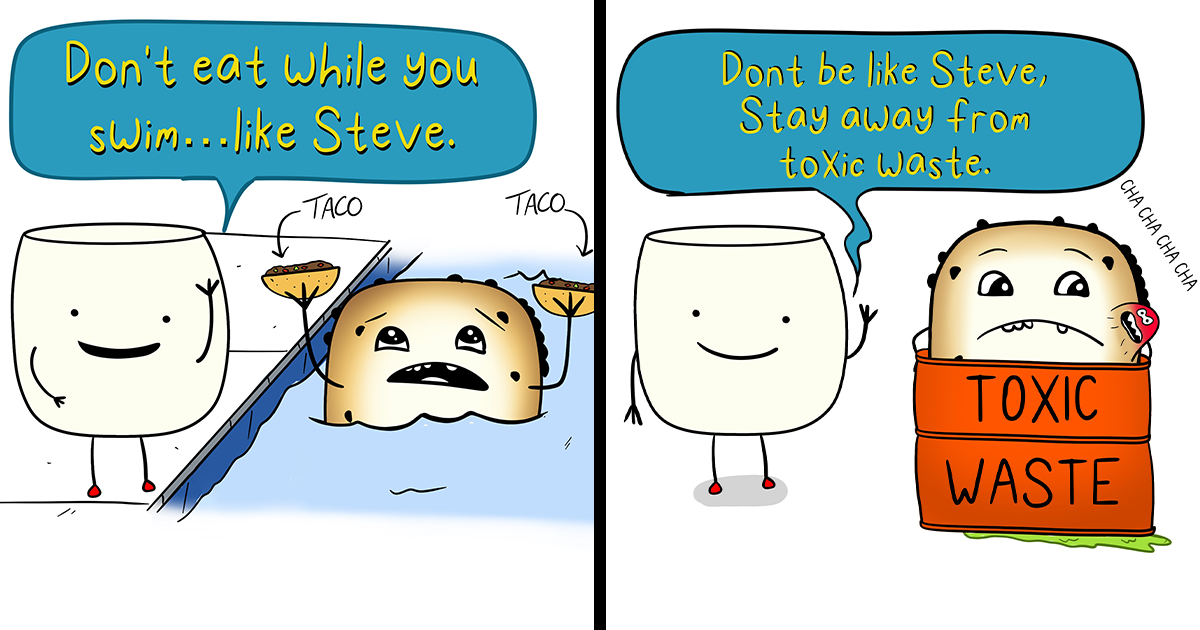
Some comic characters arrive wearing capes, carrying swords, or brooding dramatically under storm clouds. Mine arrived soft, round, slightly toasted in spirit, and emotionally unprepared for the modern world. Meet Marsh and Steve: two marshmallows with tiny bodies, big feelings, and the strange ability to turn everyday nonsense into one-panel comedy.
“My 10 One-Panel Comics Featuring Two Marshmallows” is built on a simple idea: what if the world’s smallest public service announcements came from the least qualified snack foods imaginable? The result is a playful collection of single-panel comics where two marshmallows observe life, misunderstand basic reality, and somehow still manage to deliver tiny truths with a sugar-dusted punchline.
One-panel comics are deceptively difficult. There is no long setup, no dramatic second act, and no room to slowly escort readers toward the joke while offering them snacks. Everything has to happen at once: the visual setup, the character dynamic, the surprise, and the emotional payoff. That is why two marshmallows work so well. They are simple enough to read instantly, but flexible enough to become anxious philosophers, motivational speakers, bad planners, dramatic roommates, or tiny edible life coaches.
Why Two Marshmallows Make a Surprisingly Good Comedy Duo
The best comic duos usually rely on contrast. One character is practical; the other is chaos in shoes. One is optimistic; the other has seen the comment section. With Marsh and Steve, the humor comes from their soft appearance clashing with the sharpness of their observations. A marshmallow looks harmless, but give it a speech bubble and suddenly it has opinions about burnout, self-improvement, friendship, fear, and why being roasted is not the same thing as personal growth.
That contrast is the heart of the series. The characters are cute, but the jokes can be dry. The drawings are simple, but the ideas often tap into recognizable human habits: overthinking, procrastinating, comparing ourselves to others, giving advice we absolutely do not follow, and acting brave right up until life turns up the heat.
The Charm of One-Panel Comics
A one-panel comic is comedy under pressure. It has to do in one image what a sitcom might do in twenty-two minutes. The scene must be clear at a glance, the characters must be readable, and the caption or dialogue has to land before the reader scrolls away to look at a cat wearing sunglasses.
That is why simplicity matters. A one-panel joke does not need five paragraphs of backstory explaining that Steve has complicated feelings about campfires because of something that happened during a family picnic in 2017. The reader only needs the essential ingredients: two marshmallows, a situation, a twist, and a line that makes the scene snap into place.
Comic #1: The Campfire Motivational Speech
In one comic idea, Marsh stands near a campfire and tells Steve, “Growth begins outside your comfort zone.” Steve looks at the flames and replies, “That sounds suspiciously like being toasted.” The joke works because it turns a familiar motivational phrase into a literal marshmallow emergency. What humans call self-improvement, marshmallows might call a workplace hazard.
This type of joke is strong because the visual and verbal punchline support each other. The reader sees the campfire before the line lands, so the humor feels immediate. It is not just a joke about growth; it is a joke about how inspirational advice can sound terrifying when applied too literally.
Comic #2: The Self-Care Blanket
Another panel could show Steve wrapped in a tiny blanket while Marsh says, “You can’t solve every problem by hiding.” Steve answers, “I’m not hiding. I’m becoming a limited-edition cocoa topping.” The comedy comes from turning avoidance into branding. Anyone who has ever postponed a task by calling it “rest” may feel personally attacked, but gently, like being criticized by a pillow.
Comic #3: The Tiny Public Service Announcement
Because the marshmallows are framed as delivering humorous PSAs, one panel might show them holding a sign that says, “Reminder: Not every thought deserves a meeting.” Marsh points at Steve, who is standing beside a whiteboard filled with the words “What If?” repeated twenty-seven times. This kind of gag uses exaggeration to turn anxiety into something visible and silly.
The best PSAs in humor comics do not lecture. They wink. They make readers laugh first, then realize they have just received useful advice from two squishy cylinders with faces.
Comic #4: The Productivity Trap
In another one-panel comic, Marsh proudly announces, “I made a to-do list.” Steve asks, “Great. What’s on it?” Marsh answers, “Make a better to-do list.” This joke works because it captures the strange loop of productivity culture. Planning can feel like progress, even when the actual task is still sitting there, quietly aging like an unpaid parking ticket.
The marshmallow format makes the observation lighter. A human character might seem judgmental. A marshmallow admitting defeat feels adorable, relatable, and just a little sticky.
Comic #5: The Toasted Confidence Lesson
One panel might show Steve with one side lightly browned. Marsh says, “You look different.” Steve replies, “I’m calling it character development.” That is the whole joke: a physical change becomes emotional growth. It is simple, but it taps into a bigger idea. We often turn awkward experiences into wisdom because that feels better than saying, “Well, that was weird.”
This is where food-based characters shine. Their bodies can become metaphors without needing heavy explanation. Toasting, melting, sticking, puffing up, getting squished, and floating in hot cocoa all become visual shortcuts for human experiences.
Comic #6: The Friendship Contract
Imagine Marsh holding a tiny document titled “Friendship Agreement.” Steve reads it and says, “Clause four says I must validate your dramatic sighs.” Marsh replies, “That is the foundation of trust.” The humor comes from formalizing a very familiar friendship ritual. Good friends listen to complaints, notice mood shifts, and occasionally pretend that a sigh contains enough information to begin a full investigation.
Two marshmallows make this scene more playful because their friendship feels both tiny and strangely serious. They are not just snacks. They are roommates in the emotional economy of the internet.
Comic #7: The Fear of Being Basic
One comic could show Steve staring at a mug of hot chocolate and saying, “What if I’m predictable?” Marsh replies, “Steve, you are a marshmallow. Mystery was never the main selling point.” This is a classic identity joke. Steve wants depth and uniqueness, while Marsh delivers the blunt truth with the warmth of a friend who has absolutely had enough.
The panel gently pokes fun at the pressure to be constantly original. Sometimes being “basic” simply means being comforting, familiar, and excellent with cocoa.
Comic #8: The Existential Snack Crisis
For a slightly more philosophical one-panel comic, Marsh might ask, “Are we the main characters or the dessert?” Steve replies, “Depends who’s holding the skewer.” It is a tiny existential crisis with a campfire punchline. The joke is funny because it gives marshmallows a human-level awareness of purpose, danger, and narrative control.
This style of humor works especially well online because readers enjoy cute characters saying surprisingly heavy things. The contrast creates emotional whiplash, but the safe, soft design keeps it from feeling too bleak.
Comic #9: The Social Media PSA
One modern panel could show Marsh checking a phone and saying, “Someone online disagrees with me.” Steve, wearing a tiny emergency helmet, says, “Do we evacuate or become experts?” The joke captures how quickly online conversations turn ordinary people into overnight specialists in topics they learned about seven minutes ago.
Comics like this are shareable because they describe a common digital habit without naming a specific platform or trend. The joke remains evergreen. As long as people argue online, two marshmallows can stand nearby and offer soft commentary.
Comic #10: The Softness Manifesto
The final comic in the collection could show Marsh and Steve standing proudly beneath a banner that reads, “Stay Soft.” Steve asks, “Is that wisdom or a storage instruction?” Marsh answers, “Both.” This is the emotional center of the series. The marshmallows are funny because they are vulnerable by design. They dent easily. They melt under pressure. They absorb whatever they are placed into. Somehow, that makes them perfect mascots for resilience.
“Stay soft” does not mean being weak. In the world of these comics, it means staying open, kind, and humorous even when life behaves like a poorly supervised campfire.
How the Humor Works Behind the Scenes
The comedy in two marshmallow comics depends on quick recognition. Readers instantly understand what marshmallows are: sweet, soft, simple, and often doomed near fire. That shared knowledge allows each joke to skip the boring explanation and jump straight into the twist.
Many of the jokes use a technique common in single-panel cartoons: taking an ordinary phrase and making it literal. “Feeling burned out” becomes a marshmallow problem. “Soft skills” becomes a physical trait. “Melting under pressure” becomes both an emotional state and a recipe note. These double meanings are valuable because they create two levels of humor at once: the human meaning and the marshmallow meaning.
The visual design also matters. Two simple characters allow facial expressions, posture, and spacing to carry the joke. If Steve stands slightly farther away from the campfire, the reader understands fear. If Marsh holds a clipboard, the scene suddenly becomes official. If both marshmallows stare silently at a mug of cocoa, the awkwardness writes half the punchline.
Why These Comics Feel Relatable
Relatability is not about making characters realistic. Nobody is reading a marshmallow comic because they demand accurate snack psychology. Relatability comes from emotional truth. Marsh and Steve worry about change, friendship, confidence, productivity, identity, and the strange pressure to have life figured out before breakfast.
Their world is small, but the feelings are familiar. That is the secret sauce. Or perhaps the secret syrup. Either way, it is probably sticky.
SEO and Web Publishing Value of Marshmallow Comics
From a web publishing perspective, a collection like “My 10 One-Panel Comics Featuring Two Marshmallows” has strong appeal because it combines visual humor, character branding, and snackable content. Readers can enjoy each comic quickly, but the characters are memorable enough to encourage repeat visits.
For search visibility, the article naturally supports keywords such as one-panel comics, funny marshmallow comics, single-panel cartoons, cute comic characters, and humor comics. The topic is specific, which helps it stand out, but broad enough to attract readers interested in webcomics, cartoon humor, wholesome jokes, and illustrated storytelling.
Accessibility is also important. Each comic should include clear alt text that explains the key visual joke without overloading the reader. A good description might identify the characters, the situation, and the punchline context in one or two sentences. This helps screen reader users enjoy the comic and gives search engines better information about the image.
What Creators Can Learn From Marsh and Steve
The biggest lesson is that strong comic characters do not need complicated designs. They need a clear personality dynamic. Marsh and Steve work because they are easy to recognize, easy to place in different scenarios, and funny when their physical nature collides with human problems.
Creators can also learn the value of constraints. Limiting a comic to one panel and two marshmallow characters may sound restrictive, but restrictions often make ideas sharper. When there are fewer moving parts, every expression, prop, and word has to earn its place.
That is why a tiny comic about two marshmallows can feel more memorable than a crowded scene full of unnecessary details. The reader knows where to look, understands the setup, and reaches the joke quickly. In internet terms, that is gold dust. In marshmallow terms, powdered sugar.
My Experience Creating Comics About Two Marshmallows
Creating a series like this begins with accepting one strange truth: the simpler the characters look, the harder their personalities have to work. Marsh and Steve are basically soft white shapes, which means they cannot rely on elaborate costumes, dramatic hairstyles, or action-hero cheekbones. Their humor has to come from attitude, timing, and the tiny emotional gap between what they say and what the reader sees.
When I started imagining these comics, I found that the best ideas came from everyday frustrations. A messy to-do list. A motivational quote that sounds suspiciously threatening. A friend who says “I’m fine” while clearly being one inconvenience away from becoming soup. These small moments are perfect for one-panel comics because they do not require a complicated story. They only need a situation that readers already understand.
The marshmallows also helped me keep the tone light. Some jokes touch on anxiety, pressure, self-doubt, or burnout, but the characters soften the subject. A human character saying “I am melting under pressure” might feel serious. A marshmallow saying it while standing near cocoa feels funny, visual, and oddly comforting. That balance is important. Humor can acknowledge stress without turning the whole page into a group therapy session with snacks.
Another useful lesson was learning to cut words. In a one-panel comic, every extra word is a tiny speed bump. If the reader has to read a paragraph before reaching the punchline, the joke starts sweating. I learned to write the first draft, then remove anything that explained too much. The drawing should carry part of the setup. The dialogue should deliver the twist. The reader should feel smart for connecting the two.
For example, a weaker version of a joke might explain that Steve is afraid of being toasted because marshmallows are commonly roasted over fires. That is unnecessary. Readers already know. All the panel needs is Steve, a campfire, and a line that reframes danger as “personal development.” Trusting the reader makes the joke faster and cleaner.
I also discovered that recurring characters build affection. After a few panels, Marsh and Steve stop being random marshmallows and become a tiny comedy team. Readers begin to understand that Marsh might be the more confident one, while Steve may be more nervous, literal, or dramatically suspicious. Once that pattern exists, the comics can play with expectations. Sometimes Steve can deliver the sharpest line. Sometimes Marsh can be the one falling apart. That variety keeps the series fresh.
From a creative standpoint, the best part of making marshmallow comics is that almost everything becomes a possible joke. A cup of cocoa becomes a spa, a crisis, or a retirement plan. A campfire becomes ambition, danger, or public speaking. A graham cracker becomes real estate. Chocolate becomes either a friend, a rival, or an unreasonably attractive neighbor. The world is small, but the comic possibilities are huge.
Most importantly, these comics reminded me that cute humor does not have to be empty. A simple character can carry a smart joke. A tiny panel can say something real. And two marshmallows, despite having no bones, no credentials, and no visible survival strategy, can still offer surprisingly good advice: stay soft, keep laughing, and never trust a motivational speaker standing too close to a campfire.
Conclusion
“My 10 One-Panel Comics Featuring Two Marshmallows” proves that comedy does not need a massive cast or complicated world-building to connect with readers. Sometimes all it takes is two soft characters, a sharp observation, and one perfectly timed punchline. Marsh and Steve turn ordinary worries into bite-sized jokes, making the series funny, relatable, and easy to enjoy in a single scroll.
Whether they are discussing self-care, productivity, friendship, online arguments, or the emotional risks of hot chocolate, these marshmallows show why one-panel comics remain powerful. They are fast, visual, memorable, and built for readers who want humor with a little heart. In a noisy digital world, that kind of sweet simplicity can stand out beautifully.
Note: This article is written as original, web-ready content based on real principles of single-panel cartooning, webcomic publishing, visual humor, accessibility, and audience-friendly SEO. It does not reproduce copyrighted comic captions or source code references.














