
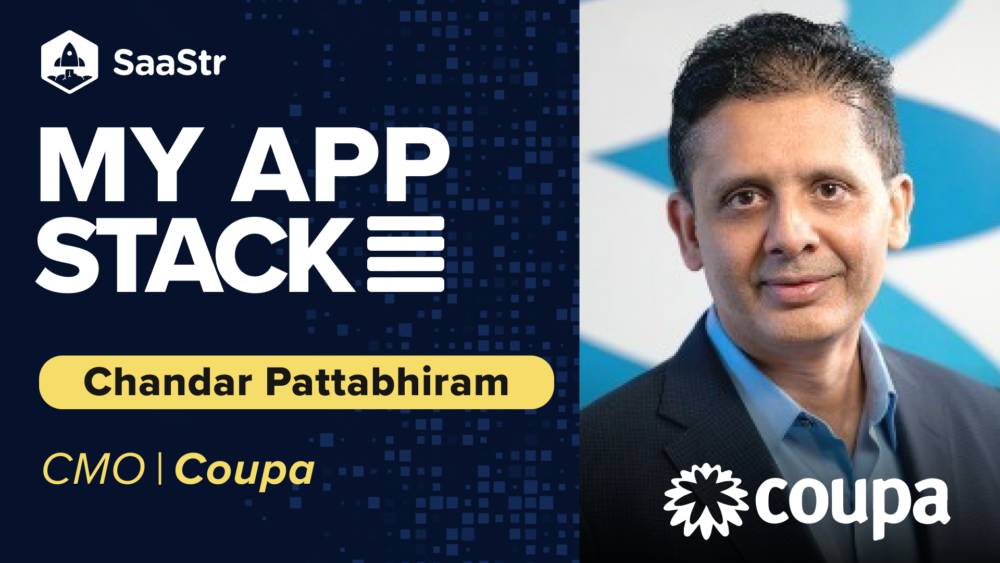
Every great marketing leader has a secret weapon. Sometimes it is a memorable brand message. Sometimes it is a sharp go-to-market playbook. And sometimes, let’s be honest, it is a carefully assembled app stack held together with automation, dashboards, coffee, and the quiet hope that sales actually checks the alerts.
In the case of Chandar Pattabhiram, the former CMO of Coupa and one of the more recognizable names in enterprise SaaS marketing, the app stack tells a bigger story than “which software does a CMO use?” It reveals how modern B2B marketing actually works when the audience is complex, the buying committee is large, the product category is strategic, and the revenue team needs more than colorful campaign slides to win.
The title “My App Stack: Chandar Pattabhiram, CMO at Coupa” is not just about tools. It is about how a senior marketing executive designs a system for awareness, intent, conversion, orchestration, sales alignment, and measurement. In other words, it is about making marketing behave less like a bag of disconnected tactics and more like a revenue engine with a steering wheel, headlights, and maybe a decent suspension system.
Who Is Chandar Pattabhiram?
Chandar Pattabhiram is a seasoned B2B technology executive known for leadership roles at companies including Coupa, Marketo, IBM Cast Iron Systems, Badgeville, and Workato. At Coupa, he helped lead marketing for a company operating in the business spend management category, a space that touches procurement, finance, supply chain, payments, and supplier relationships. That is not exactly “buy one hoodie, get one free” marketing. It is enterprise marketing with long sales cycles, multiple stakeholders, and plenty of CFO-level scrutiny.
Before Coupa, Pattabhiram served as CMO at Marketo, where he helped position the company around digital marketing and engagement marketing. That background matters because his Coupa stack shows a very Marketo-fluent mindset: capture signals, score engagement, nurture buyers, align with sales, and measure everything. His later move into a Chief Go-to-Market Officer role at Workato also reinforces a broader trend: the modern marketing leader is increasingly responsible not just for brand, but for the entire revenue motion.
The Core Idea Behind Chandar Pattabhiram’s App Stack
The app stack Pattabhiram shared while he was CMO at Coupa included tools across marketing automation, account-based marketing, personalization, retargeting, lead conversion, routing, gifting, SEO, paid media, and analytics. That combination is important. It shows that mature B2B marketing is not built around one magic platform. It is built around a sequence of jobs that must work together.
Think of it like a professional kitchen. Marketo may be the stove. Demandbase may be the prep station where account intelligence gets organized. Intellimize may be the chef adjusting the seasoning for each visitor. LeanData may be the expeditor yelling, “This lead goes to the right rep, now!” Tableau and Looker are the managers checking whether the restaurant is actually making money. And yes, Sendoso is the person who sends a thoughtful gift so the prospect remembers you are not just another automated email in a blazer.
What Apps Were in the Stack?
The core stack included Marketo for nurturing and scoring, Demandbase for intent, targeting, connected TV, orchestration, and sales insights, Intellimize for dynamic personalization and multivariate testing, RollWorks for retargeting, Hushly for website exit conversion, LeanData for lead-to-contact management, Sendoso for ABM gifting, Conductor and SEMrush for organic search and competitive research, LinkedIn for paid social, Google Ads for paid search, video, and Gmail ads, Looker for organic and ad analytics, and Tableau for funnel analytics.
That list is not random. It maps almost perfectly to the lifecycle of a sophisticated B2B buyer journey: attract the right audience, identify account-level intent, personalize the website, retarget visitors, convert anonymous or hesitant traffic, route qualified leads correctly, support sales outreach, build organic visibility, activate paid channels, and report performance across the funnel.
Marketo: The System of Engagement
Marketo sits at the center of the stack because marketing automation remains one of the most important foundations for B2B growth. Pattabhiram specifically highlighted Marketo for nurturing and scoring, and he described it as essential for helping sales and account development representatives win when buyers show enough engagement to suggest they may be ready to buy.
This is classic enterprise marketing logic. Not every website visitor is ready for a demo. Not every white paper download deserves a phone call. And not every curious executive wants an SDR showing up like a golden retriever with a calendar link. Lead scoring and nurturing help separate casual interest from meaningful buying behavior.
In practical terms, Marketo helps a team build campaigns that respond to behavior: page visits, email engagement, form submissions, webinar attendance, content downloads, and account activity. A good scoring model does not replace human judgment, but it gives sales teams a much better starting point. Instead of guessing who is warm, the revenue team can prioritize people and accounts showing real signals.
Demandbase: Account Intelligence and ABM Control
Demandbase plays a major role in the stack because Coupa’s market is deeply account-based. Business spend management is usually not purchased by one person browsing late at night with a credit card. It involves finance leaders, procurement teams, IT, operations, legal, and sometimes regional decision-makers. Account-based marketing exists because the buyer is not just a lead; the buyer is a group.
Pattabhiram’s use of Demandbase covered intent, targeting, connected TV, orchestration, and sales insights. That range shows how ABM has evolved. It is no longer just “run ads to a target account list.” Modern ABM helps teams identify which accounts are showing interest, what topics they care about, which channels can reach them, and how sales should respond.
The inclusion of connected TV is especially interesting. B2B marketers used to treat TV as something for sneaker brands, pickup trucks, and snack foods with suspiciously happy families. But connected TV gives B2B teams a way to reach specific audiences with more precision than traditional broadcast media. For a company trying to build category awareness, that can be powerful.
CTV Retargeting: The Newer Addition That Paid Off
When asked about the top new app or capability added in the past year, Pattabhiram pointed to CTV capability and said it had delivered strong returns in retargeting website traffic. This is a useful clue about how Coupa thought about brand and demand together.
Website retargeting is familiar. A visitor checks out your pricing page or reads a product article, then later sees display ads across the web. Connected TV adds a different layer. Instead of only showing banner ads, a brand can reach warm audiences in a high-attention environment. For B2B companies, that can help move from “I think I saw that company once” to “I keep seeing this brand in serious contexts; maybe they are a leader.”
Of course, CTV is not a magic button. A weak message on a fancy screen is still a weak message. But when paired with account intelligence, retargeting, and analytics, CTV can become part of a broader surround-sound strategy. It helps the brand show up where buyers spend time, not only where marketers traditionally bought media.
Intellimize: Personalization Without Guesswork
Intellimize appeared in the stack for dynamic personalization and multivariate testing. That matters because the website is often the most important sales rep that never sleeps. It handles first impressions, educates buyers, routes visitors to content, and quietly loses conversions when the message is too generic.
Dynamic personalization helps adapt the website experience based on visitor attributes, behavior, account fit, or campaign source. Multivariate testing helps teams compare combinations of headlines, calls to action, layouts, proof points, and offers. Instead of arguing in a conference room about whether “See Demo” or “Get Started” feels more inspiring, teams can test and learn.
For an enterprise brand like Coupa, personalization is especially useful because different audiences care about different outcomes. A CFO may care about margin, control, forecasting, and resilience. A procurement leader may care about supplier management and compliance. A supply chain executive may care about risk and visibility. A one-size-fits-all homepage is convenient for the marketing team, but not always ideal for the buyer.
RollWorks: Keeping the Conversation Alive
RollWorks was listed for retargeting. In a B2B journey, retargeting is less about chasing people around the internet and more about staying relevant while buying committees slowly assemble their internal consensus. Enterprise buyers do not usually convert after one visit. They compare, discuss, wait, revisit, ask for budget, get distracted, and then reappear months later with a spreadsheet full of questions.
Retargeting keeps useful messages in front of the right people. The key word is useful. Bad retargeting says, “You looked at our website once, so now we live in your browser.” Good retargeting says, “Here is the next logical proof point, case study, guide, or event based on what you seemed interested in.” The difference is the difference between helpful and haunted.
Hushly: The Undiscovered Gem for Website Conversion
Pattabhiram named Hushly as an “undiscovered gem” and credited it with helping website conversions. That is worth paying attention to because conversion is where many B2B teams leak value. They invest heavily in search, paid media, events, ABM, and content, then lose visitors because the form is too long, the offer is not compelling, or the experience does not match the buyer’s stage.
Website conversion tools help capture more value from existing traffic. That may include exit-intent experiences, content recommendations, self-nurturing flows, or smarter forms. The lesson is simple: before spending more money to drive traffic, improve what happens to the traffic you already have.
LeanData: Routing as a Revenue Function
LeanData was included for lead-to-contact management. That may sound operational, but in enterprise B2B marketing, routing is revenue-critical. If a high-intent executive from a target account fills out a form and the lead lands in the wrong queue, waits too long, or gets assigned to the wrong owner, the company may lose momentum.
Lead-to-account matching and routing help connect people to the right account, territory, owner, and follow-up path. This is especially important when multiple people from the same company are engaging with marketing. One person downloading a guide may be mildly interesting. Five people from the same account researching procurement transformation, pricing, and implementation? That is not a coincidence. That is a buying committee waving politely from the funnel.
Sendoso: ABM Gifting With a Human Touch
Sendoso appeared in the stack for ABM gift sending. In a world where inboxes are packed and buyers can smell generic outreach from three browser tabs away, thoughtful gifting can create a more human moment. The point is not to bribe a prospect with swag. The point is to create relevance, appreciation, and a memorable touchpoint in a strategic account journey.
Used well, gifting supports sales conversations, event follow-up, customer appreciation, and executive engagement. Used poorly, it becomes expensive clutter. The strongest ABM gifting programs are tied to clear account strategy: why this account, why this person, why this message, and why now?
Conductor, SEMrush, LinkedIn, and Google Ads: Demand Creation Meets Demand Capture
The stack also included Conductor and SEMrush for organic search keyword research and competitive research. That reflects the long-term importance of search visibility in B2B. Buyers research problems before they research vendors. They search for frameworks, comparisons, category terms, ROI questions, implementation concerns, and best practices. A company that owns those educational moments earns trust before the sales conversation begins.
LinkedIn and Google Ads filled the paid media side. LinkedIn is especially useful in B2B because targeting can align with job titles, industries, company sizes, and professional interests. Google Ads captures active demand when buyers search for specific solutions, competitors, or problem terms. Together, organic search and paid media allow a team to create demand, capture demand, and learn which messages are resonating.
Looker and Tableau: The Stack Needs a Scoreboard
Looker and Tableau were used for organic, ad, and funnel analytics. This is where the stack becomes accountable. Without analytics, marketing becomes a theater production: lots of lights, big emotions, unclear ticket sales. With analytics, teams can see which campaigns generate traffic, which traffic converts, which accounts progress, which channels influence pipeline, and where the funnel slows down.
Tableau’s role in funnel analytics is especially important because B2B marketing performance cannot be judged only by clicks or form fills. Mature teams need visibility from first touch to opportunity creation, pipeline velocity, deal progression, and revenue impact. Looker and Tableau help translate activity into business insight.
What This Stack Says About Modern B2B Marketing
Pattabhiram’s app stack shows three big principles. First, B2B marketing is now deeply connected to sales execution. Tools like Marketo, Demandbase, LeanData, and Tableau are not just marketing toys. They help sales teams prioritize, personalize, and act faster.
Second, brand and demand are no longer separate planets. Connected TV, paid social, search, retargeting, and website personalization work together. A buyer may first notice the brand through a broad awareness campaign, return through search, engage with a personalized page, receive nurture content, and finally speak with sales after enough signals accumulate.
Third, conversion quality matters as much as traffic volume. Hushly, Intellimize, LeanData, and analytics tools all point to the same truth: more visitors are not automatically better. Better journeys are better. Better timing is better. Better routing is better. Better insight is better. More bad traffic is just a bigger mess with a higher invoice.
The Coupa Context: Why the Stack Had to Be Sophisticated
Coupa operates in business spend management, a category that helps organizations gain visibility and control over spending across procurement, finance, suppliers, payments, supply chain, and related workflows. That category requires a strong educational motion because many buyers are not simply shopping for a tool; they are rethinking how their company manages spend.
During Pattabhiram’s time as CMO, Coupa also pushed toward broader category awareness. The brand was not only trying to explain software features. It was trying to elevate the conversation around the strategic value of spend. That explains why the stack included both precision tools and brand-building channels. Enterprise category creation requires both a microscope and a megaphone.
Lessons Marketers Can Learn From Chandar Pattabhiram’s App Stack
1. Build Around the Buyer Journey, Not Vendor Categories
A common mistake is buying tools because they are popular. Pattabhiram’s stack appears designed around jobs to be done: nurture, score, target, personalize, retarget, convert, route, gift, rank, advertise, and analyze. That is the correct order. Start with the revenue motion, then choose the tools.
2. Treat Sales Alignment as a Product Requirement
The best campaign in the world can fail if sales does not receive the right context. Tools that provide engagement signals, account insights, lead routing, and funnel reporting make marketing more useful to the field. Sales alignment is not a meeting. It is a system.
3. Do Not Ignore Website Conversion
Hushly and Intellimize show that Coupa’s team cared about what happened after people landed on the site. That is a practical lesson for every B2B marketer. Your website is not a brochure. It is a conversion environment, a segmentation engine, a proof library, and a first impression machine.
4. Use Analytics to Improve, Not Just Report
Looker and Tableau are not there simply to decorate quarterly business reviews. Analytics should help teams make better decisions: where to spend, which accounts to prioritize, which messages to scale, and where the funnel is stuck.
Added Experience: What It Feels Like to Run a Stack Like This
From a practical marketing operations perspective, a stack like Chandar Pattabhiram’s looks elegant on paper and wonderfully chaotic in real life. The dream is a smooth revenue machine where intent data flows into campaigns, campaigns produce engagement, engagement triggers scoring, scoring alerts sales, sales follows up beautifully, and dashboards glow with pipeline. The reality is that someone still has to check field mappings, fix broken UTMs, reconcile campaign names, and explain why “Q3_ABM_Final_Final_v7” is not a sustainable naming convention.
The experience of managing a B2B app stack starts with integration discipline. Every platform has its own language. Marketo thinks in programs, lists, smart campaigns, scores, and nurture streams. Demandbase thinks in accounts, intent, segments, and orchestration. LeanData cares about matching and routing logic. Salesforce or the CRM cares about objects, ownership, stages, and activity. Analytics tools care about clean data models. If those systems do not agree, the team ends up debating numbers instead of improving performance.
A strong team usually creates a shared operating model. That includes clear lifecycle stages, definitions for MQLs and account-qualified activity, rules for routing, service-level agreements for follow-up, naming conventions, attribution logic, and reporting standards. It sounds boring until the first executive asks, “How much pipeline did this campaign create?” At that moment, boring becomes beautiful.
Another real-world lesson is that personalization requires restraint. With tools like Intellimize, Demandbase, and website conversion platforms, it is tempting to personalize everything for everyone. But too much personalization can become difficult to manage and even confusing for the buyer. The best approach is to personalize where the difference matters: industry proof points, account segments, buying stage, use cases, and calls to action. Personalization should make the experience clearer, not turn the website into a slot machine.
Retargeting and CTV also require careful audience strategy. Retargeting all visitors the same way is lazy. A visitor who read one blog post should not see the same message as someone who visited a demo page three times and brought three colleagues from the same company. The more mature approach is to build audience tiers: light engagement, high engagement, target account activity, late-stage opportunity support, and customer expansion. Each tier needs different creative and a different success metric.
ABM gifting is another area where experience matters. A gift should never feel like a random object launched from a marketing cannon. The best gifts are connected to context: a meeting milestone, event follow-up, executive workshop, customer thank-you, or a campaign theme. A thoughtful note often matters more than the item itself. In B2B, people remember relevance. They also remember weirdly oversized branded socks, but not always for the reason marketers hope.
The analytics layer is where the stack either earns trust or loses it. Marketing teams should avoid building dashboards that only show activity. Impressions, clicks, downloads, and event scans are useful, but they are not the finish line. The more useful dashboard connects activity to account progression, opportunity creation, pipeline value, sales acceptance, win rates, deal velocity, and customer expansion. That kind of reporting changes the conversation from “marketing did stuff” to “marketing helped move revenue.”
Finally, the biggest experience-based lesson is that tools do not create strategy. They amplify it. If the positioning is weak, the tools will distribute weak positioning efficiently. If sales and marketing disagree on the ideal customer profile, automation will scale confusion. If the data is messy, dashboards will make the mess look official. But when the strategy is clear, the buyer journey is understood, and teams are aligned, a stack like this becomes a serious competitive advantage.
That is why Chandar Pattabhiram’s app stack is useful to study. It is not a shopping list to copy blindly. It is a model for thinking. Build the journey. Capture the signal. Personalize the experience. Convert the visitor. Route the buyer. Equip the seller. Measure the funnel. Then keep improving, because in B2B marketing, the stack is never really finished. It just becomes slightly less chaotic every quarter, which is basically the SaaS version of inner peace.
Conclusion
Chandar Pattabhiram’s Coupa app stack offers a practical blueprint for enterprise B2B marketing. It combines marketing automation, ABM, website personalization, retargeting, conversion optimization, lead routing, gifting, search intelligence, paid media, and analytics into one connected revenue system. The most important takeaway is not that every company needs the exact same tools. The real lesson is that every high-performing marketing team needs a clear operating model for moving buyers from awareness to engagement to pipeline to revenue.
For CMOs, demand generation leaders, marketing operations teams, and SaaS founders, this stack is a reminder that growth does not come from isolated campaigns. It comes from connected systems, disciplined execution, buyer insight, and constant measurement. The tools matter, but the thinking behind the tools matters even more.
Note: This article is an independent, rewritten analysis created for web publication based on publicly available information about Chandar Pattabhiram’s Coupa-era app stack, B2B marketing practices, and related enterprise SaaS tools.













