
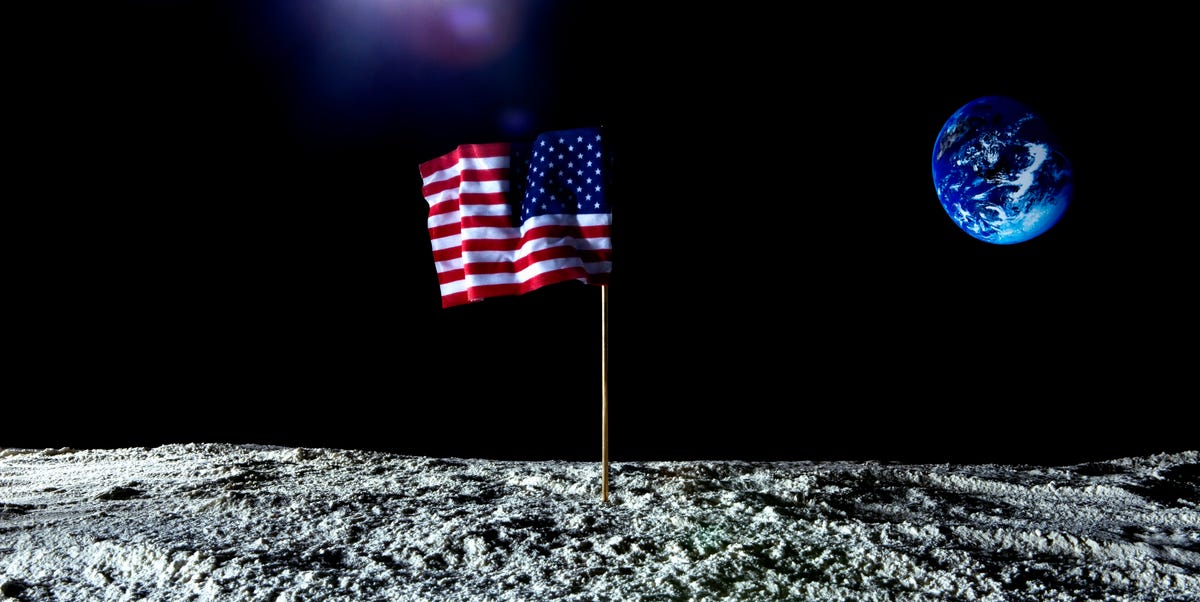
The Moon is suddenly looking less like a poetic nightlight and more like the most exclusive industrial park in the solar system. NASA wants to mine the Moon before China gains a commanding foothold, and this time, the prize is not just national pride, dramatic countdowns, or flags doing awkward things in low gravity. The prize is water ice, oxygen, fuel, construction materials, strategic locations, and the ability to build a permanent human presence beyond Earth.
Welcome to the new space race. It has fewer crew cuts than the Apollo era, more billionaires, more robots, more international paperwork, and a surprising amount of interest in frozen water hiding in permanently shadowed craters. The Moon’s south pole, once a lonely landscape of craters and silence, has become the hottest cold place in the solar system.
NASA’s lunar mining ambition is not about sending astronauts with pickaxes and lunch boxes. It is about in-situ resource utilization, often shortened to ISRU, which means using local materials instead of hauling everything from Earth. In normal human language: do not bring bottled water to the Moon if the Moon has ice. Do not bring every ounce of oxygen if lunar soil can help produce it. Do not launch bricks across 238,855 miles if regolith can be turned into building material.
China understands the same math. Its Chang’e lunar missions and planned International Lunar Research Station are part of a long-term strategy to explore, map, and eventually use lunar resources. The result is a competition that feels like Apollo 2.0, except this sequel has commercial landers, space law debates, and enough acronyms to make a government printer sweat.
Why Moon Mining Suddenly Matters
For decades, the Moon was treated mostly as a scientific destination: a place to study craters, collect rocks, test spacecraft, and inspire children to put glow-in-the-dark stars on their bedroom ceilings. That is still true. Science remains central. But the Moon is also becoming a logistics problem, and logistics can be brutally expensive.
Every kilogram launched from Earth costs money, fuel, time, and engineering effort. If a future lunar base needs air, water, shielding, landing pads, replacement parts, fuel, and roads, shipping all of it from Earth would be like moving into a new house by launching each chair separately with a rocket. Technically possible? Maybe. Financially charming? Absolutely not.
This is where lunar resources become strategic. The Moon contains oxygen bound in minerals, metals in its soil, possible deposits of water ice near the poles, and regolith that may be useful for construction, radiation shielding, and landing infrastructure. Water is especially important because it can support astronauts, grow plants, cool equipment, and be split into hydrogen and oxygen for rocket propellant.
In short, water ice could turn the Moon into a fuel stop, a science base, a training ground for Mars, and the foundation of a cislunar economy. That sounds dramatic, but so did “online shopping” once, and now people order toothpaste from a couch while wearing socks with avocados on them.
The Lunar South Pole: Space Real Estate With a View
The Moon’s south pole is the center of attention because some craters there never see direct sunlight. These permanently shadowed regions can act like natural freezers, trapping water ice and other volatile compounds for billions of years. Nearby high ridges may receive long periods of sunlight, making them attractive for solar power. That combinationpossible ice in the shadows and sunlight on the ridgesis why the south pole has become the lunar equivalent of beachfront property.
The trouble is that everyone knows it. NASA, China, India, private companies, and international partners are all looking closely at the same region. The south pole is not a giant smooth parking lot. It is rugged, dark, cold, and technically nasty. Temperatures in shadowed craters can be brutally low, communications can be tricky, and landing safely requires precision. The Moon may look calm from Earth, but up close it is basically a dusty obstacle course designed by someone who hates wheels.
Still, the strategic appeal is too great to ignore. Whoever first maps, tests, and demonstrates practical use of lunar ice may shape the rules and infrastructure of the next half-century of space activity.
NASA’s Plan: Mine First, Build Smarter, Stay Longer
NASA’s strategy is tied to Artemis, the agency’s broad Moon-to-Mars campaign. Artemis is not just about returning astronauts to the lunar surface. It is about learning how to live and work there sustainably, then applying those lessons to Mars. The Moon is closer, easier to reach, and less rude than Mars, which makes it the perfect testing ground for deep-space survival.
At the heart of NASA’s resource strategy is ISRU. Instead of relying only on Earth resupply, NASA is developing technologies that can locate, extract, process, store, and use materials already available on the Moon. The early priorities are practical: water, oxygen, propellant, power systems, excavation tools, and construction methods.
NASA’s Lunar Surface Innovation Initiative supports technologies for power, mobility, excavation, resource processing, dust mitigation, and autonomous systems. These are not glamorous in the movie-trailer sense, but they are the difference between a short visit and a permanent outpost. A Moon base without power, water, roads, or spare parts is not a base. It is camping with worse weather and no pizza delivery.
What NASA Actually Wants to Extract
The phrase “Moon mining” can make people imagine glittering tunnels full of rare jewels. The real first targets are less flashy but more useful.
Water ice is the superstar. It can become drinking water, oxygen, and rocket fuel. If lunar water can be extracted at useful scale, it may reduce the need to launch propellant from Earth.
Oxygen is another big prize. Lunar regolith contains oxygen locked in minerals. Extracting it could support life support systems and fuel production.
Regolith, the dusty broken rock covering the Moon, may be used for construction, radiation shielding, landing pads, berms, and roads. It is abrasive and annoying, but it is everywhere. In space, “everywhere” is a very attractive supply chain.
Metals and minerals may matter later. Iron, titanium, aluminum, and other materials exist in lunar soil, but processing them economically will require advanced systems. Rare earth elements and helium-3 often get headlines, but they are not the immediate foundation of NASA’s practical lunar economy.
China’s Lunar Strategy: Slow, Steady, and Very Serious
China is not improvising its Moon program with a whiteboard and a motivational playlist. Its Chang’e missions have built a strong record: orbiters, landers, rovers, sample returns, and the historic Chang’e-6 far-side sample return. China has also announced plans to land astronauts on the Moon by around 2030 and to develop the International Lunar Research Station with partners.
Chang’e-7 is designed to investigate the lunar south pole, including the search for water ice. Chang’e-8 is expected to support technology demonstrations for future lunar infrastructure. Together, these missions are part of a methodical path toward a more permanent presence.
That is why U.S. officials and analysts often frame the race as more than symbolic. The first country or coalition to establish reliable infrastructure near key lunar resources may influence landing zones, operating standards, technology partnerships, and future commercial activity. Space is vast, yes, but the most useful places on the Moon are not infinite. The best ridges, light conditions, communication lines, and ice-access areas could become highly contested.
Is This Really a “Race”?
Yes and no. It is not exactly the old Cold War sprint to plant a flag. The Apollo race was about proving technological and ideological power. The new space race is about presence, systems, standards, and staying power. The question is not simply, “Who lands first?” It is, “Who can operate there safely, repeatedly, affordably, and legally?”
NASA has experience, global partnerships, deep technical expertise, and a powerful commercial space sector. China has consistency, long-term planning, and an increasingly capable national space program. The United States relies heavily on contractors such as SpaceX, Blue Origin, Astrobotic, Intuitive Machines, Firefly Aerospace, and other companies. China’s program is more centralized, which can make its timelines more politically stable.
This creates an unusual competition. NASA can move fast when commercial partners succeed, but delays in landers, suits, rockets, or budgets can ripple through the schedule. China may move more quietly, but it has shown the ability to execute complex robotic lunar missions with patience and precision.
The Role of Private Companies
The new space race is not just NASA versus China. It is also a race among companies to build the machines that make lunar industry possible. NASA’s Commercial Lunar Payload Services program lets American companies deliver science and technology payloads to the Moon. These missions test drills, instruments, navigation tools, rovers, communication systems, and landing technologies.
Commercial landers are risky. Some will succeed beautifully. Some will land sideways, fail early, or turn into extremely expensive lessons. That is part of the model. NASA is trying to create a competitive lunar delivery market instead of building every mission in-house. The strategy is messy, but it can accelerate innovation.
Companies are also studying ways to extract oxygen from regolith, mine lunar ice, build landing pads, manufacture materials, and provide power. If lunar mining becomes real, the first profitable businesses may not be the ones “selling Moon rocks.” They may be the ones providing boring but essential services: energy, transportation, excavation, storage, communications, and maintenance. In space, boring is often beautiful.
The Law: Can Anyone Own Moon Resources?
Space law is where the Moon race swaps rockets for footnotes. The 1967 Outer Space Treaty says no nation can claim sovereignty over the Moon. That means the United States cannot simply declare “dibs” on Shackleton Crater, and China cannot plant a sign that says “Reserved Parking: Lunar Base.”
However, the legal treatment of extracted resources is more debated. The United States supports the view that using space resources can be consistent with international law, as long as it does not amount to national appropriation of territory. The Artemis Accords reinforce this position and call for transparency, safe operations, emergency assistance, interoperability, debris mitigation, and the protection of historic sites.
Critics worry about a first-mover advantage, unfair resource control, environmental damage, and conflicts over “safety zones” around operations. Supporters argue that clear rules will make lunar activity safer and more predictable. Either way, law will matter almost as much as engineering. A rover can dig a trench, but it cannot settle a treaty dispute. At least, not unless NASA has been hiding a very persuasive rover.
Why Water Ice Is the Key to Everything
Water is the most practical lunar resource because it touches nearly every part of human survival and transportation. Astronauts need water to drink. Life support systems need oxygen. Rockets need propellant. Greenhouses need water for plants. Industrial systems may need water for cooling, processing, and chemical reactions.
If water ice can be mined, purified, stored, and split into hydrogen and oxygen, the Moon could support fuel depots. Those depots could help spacecraft travel between Earth orbit, lunar orbit, the Moon’s surface, and eventually deeper destinations. The Moon’s lower gravity makes launching from its surface easier than launching from Earth. That is why lunar propellant could become strategically important.
But “could” is doing a lot of work here. Scientists still need better data on how much ice exists, where it is located, how pure it is, how deep it is buried, and whether it can be extracted without turning operations into a comedy of frozen dust and broken machinery. The Moon is not a gas station yet. It is more like a suspected gas station buried under a mountain of gray powder in the world’s worst neighborhood for customer service.
The Hard Problems Nobody Should Ignore
Mining the Moon sounds simple until the Moon gets a vote. Lunar dust is sharp, clingy, electrostatic, and dangerous to equipment. Extreme temperature swings can stress hardware. Radiation is a constant hazard. The low gravity changes excavation physics. Machines must operate with limited maintenance, delayed communications, and no convenient hardware store down the street.
Power is another challenge. Permanently shadowed regions may contain ice, but they are also dark. Solar power works better on illuminated ridges, meaning a mining operation may need cables, wireless power transfer, mobile batteries, nuclear power, or other energy systems. Extracting water from ice is not enough; the whole chain must work: prospecting, excavation, heating, purification, electrolysis, storage, and transfer.
Then there is the environmental question. The Moon has no forests or whales, but it does have scientific value. Craters preserve ancient history. Cold traps may contain clues about the solar system. Apollo landing sites are human heritage locations. Mining must avoid destroying irreplaceable scientific records in the rush to build infrastructure.
What Happens If China Gets There First?
If China demonstrates reliable lunar resource extraction before NASA, it would gain prestige, technical confidence, and diplomatic leverage. It could attract partners to its lunar research station, shape operating norms, and become the country other nations look to for access to the Moon’s south pole.
That does not mean China would “own” the Moon. International law does not allow national ownership of lunar territory. But practical influence often comes from being first to build useful systems. The first roads, power stations, communication relays, landing pads, and resource maps can shape everyone else’s choices.
NASA’s concern is not just losing a headline. It is losing the ability to define the architecture of lunar exploration. If the United States wants its valuesopenness, transparency, commercial competition, international partnership, and science accessto guide the lunar economy, it must do more than talk. It must land, operate, test, and prove.
What Happens If NASA Gets There First?
If NASA and its partners demonstrate practical lunar resource use first, the United States could strengthen the Artemis coalition and establish technical standards for safe operations. A successful ISRU demonstration would also help justify long-term investment in lunar bases, Mars preparation, and commercial cislunar activity.
The biggest win would be credibility. Space plans are easy to announce and hard to execute. If NASA can show that lunar ice or oxygen extraction works beyond PowerPoint, it will change the conversation. Suddenly, “sustainable lunar presence” becomes less of a slogan and more of an engineering roadmap.
It would also energize private industry. Investors are cautious when a market is theoretical. A working lunar resource chain would show that the Moon is not just a destination but a platform. That could lead to more companies building tools for excavation, storage, energy, navigation, robotics, and construction.
The New Space Race Is Bigger Than National Pride
The phrase “space race” can sound like a sporting event, as if the Moon is waiting with a checkered flag and a tiny referee. But the deeper issue is governance. Humanity is moving from visiting space to using space. That transition requires rules, responsibility, and restraint.
The Moon could become a peaceful research hub and stepping-stone to Mars. It could also become a zone of rivalry, suspicion, and resource conflict. The outcome depends on what nations do now. Transparency matters. Shared standards matter. Scientific preservation matters. So does the ability to cooperate even while competing.
NASA wants to mine the Moon before China because leadership in space has always been about more than hardware. It is about setting expectations for how humanity behaves when the frontier expands. The first lunar miners may not get rich quickly, but they may define the habits, laws, and infrastructure of the space economy.
Experience Section: What This Race Feels Like From Earth
Watching the new Moon race unfold feels strangely familiar and completely different at the same time. Anyone who grew up seeing Apollo footage remembers the clean drama of it: white rockets, black sky, a flag, a boot print, and mission control rooms full of serious people wearing headsets. The story felt simple. America went to the Moon, proved it could, collected rocks, and came home. The sequel is not simple. It is a long-running series with multiple nations, private companies, robotic scouts, budget fights, legal debates, delayed landers, and enough technical dependencies to make a spreadsheet burst into tears.
The experience of following NASA’s lunar mining push is less like watching a single heroic launch and more like watching a city being planned before the first road exists. One week, the headline is about Artemis astronauts. The next, it is about a commercial lander carrying a drill. Then comes news about lunar rovers, spacesuits, power systems, China’s Chang’e missions, or debates over who gets to use resources without claiming territory. It can feel messy, but that mess is the point. Permanent exploration is not one mission. It is supply chains, boring infrastructure, maintenance plans, and agreements that prevent everyone from parking on the same crater rim.
There is also a humbling lesson in the technology. On Earth, mining already sounds difficult. On the Moon, everything becomes harder. Dust can damage seals. Shadows can freeze equipment. Sunlight can overheat hardware. A small mistake is not just inconvenient; it can end a mission. When engineers talk about testing drills, rovers, oxygen extraction, or autonomous navigation, it may not sound as exciting as astronauts bouncing across the surface. But those systems are the difference between visiting the Moon and actually living there. The glamorous part of exploration depends on the unglamorous part working perfectly.
For ordinary readers, the most useful way to understand this race is to imagine a camping trip where you must bring every sip of water, every breath of air, every watt of power, every tool, every spare part, and every ounce of fuel from another planet. Suddenly, using local resources stops sounding futuristic and starts sounding like common sense. If the Moon has usable water ice, it could reduce the burden of Earth launches and make deeper space missions more realistic. If it does not exist in the right form or quantity, lunar mining plans will need a serious rewrite.
The competition with China adds urgency, but it should not make the story shallow. This is not only about beating another country to a crater. It is about whether democratic alliances, private innovation, and international norms can build a sustainable space economy before a rival model sets the pace. That makes the Moon feel close againnot just as a glowing object in the night sky, but as a place where decisions made now may shape the next century of exploration. The Moon has always pulled on Earth’s oceans. Now it is pulling on politics, technology, business, and imagination too.
Conclusion: The Moon Is No Longer Just a Destination
NASA wants to mine the Moon before China because the next era of space exploration will be won by those who can stay, not merely arrive. Water ice, oxygen, regolith, power systems, and lunar infrastructure are the building blocks of a permanent presence. China’s steady lunar program has made the competition sharper, while NASA’s Artemis campaign and commercial partnerships aim to prove that the United States can lead a coalition-based space economy.
The new space race will not be decided by one landing. It will be decided by repeated missions, reliable technology, smart law, international trust, and the ability to turn lunar dust into useful infrastructure. The Moon may look quiet, but it is becoming the testing ground for humanity’s future beyond Earth. And yes, the first successful lunar miner will deserve a raise, a medal, and probably the universe’s dustiest pair of boots.














