
Data infrastructure used to be the plumbing nobody wanted to discuss at dinner. It sat in the basement of the enterprise, humming, occasionally leaking, and usually blamed when dashboards took six minutes to load. Today, that same infrastructure is the strategic engine behind artificial intelligence, real-time applications, fraud detection, personalization, global commerce, and executive decision-making. In other words, the pipes have become the product.
The future of data infrastructure is not being shaped by one single technology. It is being shaped by several paradigm shifts happening at once: data is moving to the cloud, artificial intelligence is changing how teams consume information, relationships between data points matter more than ever, and global applications need databases that behave as if geography is merely a mild inconvenience.
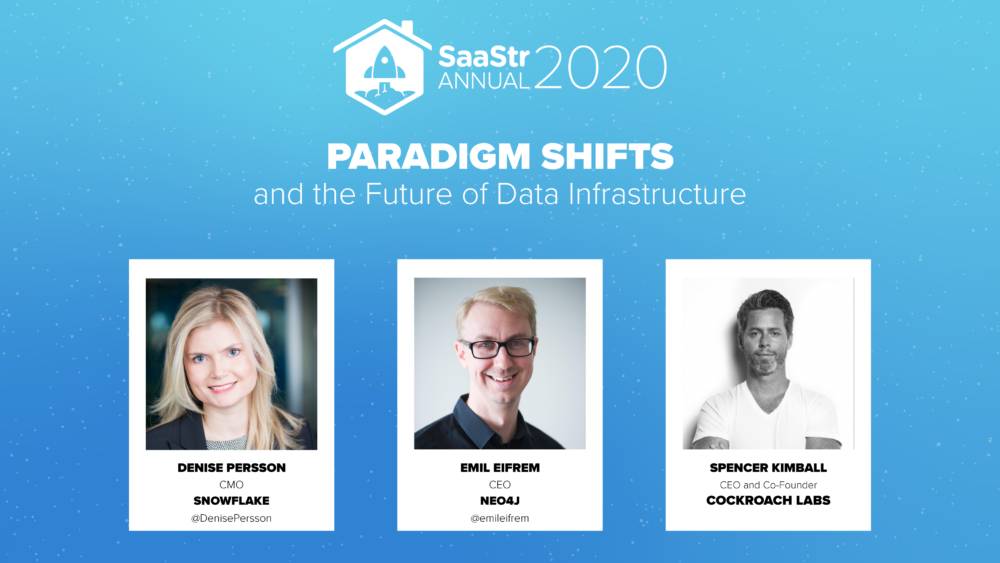
That is why Snowflake, Neo4j, and Cockroach Labs make such an interesting trio. Snowflake represents the rise of the cloud data platform and the governed AI Data Cloud. Neo4j represents the shift from isolated records to connected knowledge graphs. Cockroach Labs represents the need for resilient distributed SQL databases that can support modern, multi-region applications without making engineers sleep under their desks.
Together, they point toward a new data infrastructure future: cloud-native, AI-ready, relationship-aware, globally distributed, and built for speed without sacrificing trust.
The Old Data Infrastructure Model Is Running Out of Road
For years, enterprise data architecture followed a familiar pattern. Companies collected data in operational databases, copied it into warehouses, moved some of it into data lakes, built dashboards on top, and then created a heroic number of spreadsheets because someone in finance did not trust the dashboard. This model worked when analytics was mostly retrospective and business questions moved at a polite jogging pace.
But the modern enterprise no longer asks only, “What happened last quarter?” It asks, “What is happening right now, why is it happening, what should we do next, and can an AI agent handle the first three steps before lunch?” That changes everything.
Traditional data infrastructure struggles because data is fragmented, governance is inconsistent, latency is expensive, and applications now operate across regions, clouds, and regulatory boundaries. Meanwhile, artificial intelligence has raised expectations. Users want natural-language answers, semantic search, automated reasoning, and personalized experiences. They do not want to wait for a six-month data integration project named something cheerful like “Project Phoenix,” which somehow ends in a folder called “final_final_v7.”
The future belongs to platforms that reduce friction between data storage, analytics, application development, machine learning, and governance. That future is already visible in three major shifts.
Paradigm Shift #1: From Data Warehouses to AI Data Clouds
Snowflake began as a cloud data warehouse, but its larger role today is as a unified data platform for analytics, applications, sharing, and AI. The important shift is not simply “put the warehouse in the cloud.” That was the opening act. The real shift is treating enterprise data as a governed, accessible, scalable asset that can power many workloads from one platform.
In the older model, companies moved data into separate systems for reporting, machine learning, sharing, and application development. Each copy introduced cost, delay, security concerns, and the classic meeting question: “Which version of this number is correct?” Snowflake’s broader AI Data Cloud vision is designed to reduce those silos by allowing teams to work with structured and unstructured data, build AI-powered workflows, share data securely, and scale compute independently.
Why Snowflake Matters in the AI Era
Artificial intelligence is only as useful as the data it can safely reach. That makes governance, security, access control, observability, and data quality essential. A chatbot with access to messy enterprise data is not a productivity tool; it is a very confident intern with a flamethrower.
Snowflake Cortex AI reflects the current direction of enterprise AI infrastructure. Instead of forcing teams to export sensitive data into separate AI environments, Snowflake allows organizations to build AI applications closer to governed data. Features such as natural-language analytics, AI functions, document analysis, and search over enterprise text data show how the warehouse is evolving into a platform where analytics and generative AI meet.
One practical example is customer support intelligence. A company can store support tickets, chat transcripts, product usage data, and account information in a governed environment. With AI search and language models operating near that data, teams can summarize recurring issues, detect churn signals, and help support agents find relevant answers faster. The goal is not merely faster dashboards. The goal is operational intelligence.
Data Sharing Becomes a Competitive Advantage
Another Snowflake-driven paradigm shift is secure data sharing. In a world where companies collaborate with suppliers, partners, advertisers, healthcare networks, and financial institutions, moving data through files and brittle pipelines is increasingly outdated. Secure sharing allows data providers and consumers to collaborate while preserving access controls and reducing duplication.
This matters because modern value chains are data chains. Retailers need supplier data. Banks need risk data. Healthcare organizations need compliant collaboration. Media companies need audience insights. AI teams need trusted data sources. The companies that can share data safely and quickly will move faster than those still emailing CSV files with subject lines like “Use this one, not the other one.”
Paradigm Shift #2: From Tables Alone to Connected Data
Relational tables are excellent for many things, but some business questions are not naturally table-shaped. Fraud rings, recommendation engines, supply chain dependencies, identity resolution, cybersecurity threats, biological pathways, social networks, and enterprise knowledge all depend on relationships. This is where Neo4j and graph databases enter the story.
Neo4j is built around the idea that relationships are first-class citizens. Instead of treating connections as expensive joins scattered across tables, graph databases model entities and relationships directly. A customer is connected to accounts, devices, addresses, transactions, products, support cases, and other customers. Those connections are not decorative. They are often where the insight lives.
Graph Databases Make Hidden Patterns Visible
Consider fraud detection. A single transaction may look normal. A single account may look normal. But when several accounts share devices, addresses, payment methods, and suspicious timing patterns, the graph starts waving a tiny red flag. In a traditional system, finding those relationships may require complex joins and slow queries. In a graph database, traversing relationships is the main event.
Neo4j’s graph data platform is useful because modern business problems increasingly involve connected context. “Who bought this?” is useful. “Who bought this, influenced whom, returned what, shared which device, and belongs to which suspicious cluster?” is much more valuable. It is also the kind of question that makes old reporting systems quietly pretend they did not hear you.
GraphRAG: Why Knowledge Graphs Matter for Generative AI
Generative AI has made retrieval-augmented generation, or RAG, a familiar concept. RAG systems retrieve relevant information and provide it to a language model so the model can answer with more context. Basic RAG often relies on vector search, which is powerful for semantic similarity. But similarity is not the same as understanding relationships.
GraphRAG adds connected structure to retrieval. Instead of retrieving isolated text chunks, a graph-powered system can retrieve entities, relationships, paths, communities, and context. This helps AI systems answer multi-hop questions such as, “Which suppliers are connected to delayed shipments affecting our highest-value customers in regulated markets?” That question is not just a keyword search. It is a relationship puzzle wearing a business suit.
Neo4j’s work around GraphRAG, vector indexes, graph algorithms, and Graph Data Science reflects a broader infrastructure trend: AI systems need memory, context, traceability, and explainability. A knowledge graph can show not only an answer, but also the relationships behind the answer. For enterprises nervous about hallucinations, compliance, and auditability, that matters.
Paradigm Shift #3: From Centralized Databases to Distributed SQL
While Snowflake is reshaping analytics and AI infrastructure, and Neo4j is reshaping connected intelligence, Cockroach Labs is focused on another hard problem: how to run transactional applications reliably across regions.
Modern applications are global. Users expect fast performance whether they are in New York, London, Singapore, or a hotel lobby with suspicious Wi-Fi. Businesses also face data residency rules, uptime expectations, and unpredictable traffic. A single-region database can become a bottleneck, a compliance headache, or a single point of failure.
CockroachDB, developed by Cockroach Labs, is a distributed SQL database designed for resilience, horizontal scale, and multi-region deployment. The value proposition is straightforward: keep the familiar SQL model and ACID transaction guarantees while distributing data across nodes and regions. In practical terms, teams get a database that feels familiar to application developers but is built for a less centralized world.
Why Distributed SQL Is Becoming Essential
Distributed SQL matters because modern applications cannot always choose between consistency, availability, and global reach as if ordering from a painful restaurant menu. Banks need accurate balances. E-commerce platforms need inventory correctness. SaaS products need fast regional performance. Gaming platforms need scale. Healthcare systems need compliance and reliability. Nobody wants an app that says, “Your payment probably worked. Check back after consensus emotionally processes the event.”
CockroachDB’s architecture is designed around clusters of nodes that coordinate transactions, rebalance workloads, and provide fault tolerance. Its multi-region capabilities help teams place data closer to users while supporting availability and regulatory goals. This reflects a larger shift in data infrastructure: the database is no longer a single castle. It is a coordinated network of outposts.
For a global fintech app, this could mean keeping European customer data in Europe, serving Asian users from nearby regions, and maintaining strong transactional behavior across the system. For a SaaS company, it could mean surviving regional failures with less drama. For an engineering team, it could mean fewer 3 a.m. incidents, which is the closest thing infrastructure has to poetry.
The New Data Stack Is Not One Stack
One of the biggest misunderstandings about the future of data infrastructure is the idea that one platform will do everything perfectly. The future is not a single magical database wearing a cape. It is a composable architecture where different systems specialize, integrate, and share governance patterns.
Snowflake, Neo4j, and Cockroach Labs are not interchangeable. They solve different problems. Snowflake is strongest for cloud-scale analytics, data sharing, AI workflows, and governed data collaboration. Neo4j is strongest when relationships, graph algorithms, and contextual reasoning are central. CockroachDB is strongest for resilient transactional applications that need distributed SQL and multi-region reliability.
The strategic question is not, “Which one wins?” The better question is, “What kind of data problem are we solving?”
A Practical Architecture Example
Imagine a global digital bank. CockroachDB could power customer-facing transactional systems such as account creation, payment events, and ledger-adjacent workflows that require resilience and low-latency access across regions. Snowflake could serve as the governed analytics and AI platform, bringing together transaction history, customer behavior, compliance records, support data, and external risk datasets. Neo4j could model fraud networks, beneficial ownership structures, device relationships, and suspicious transaction paths.
In this architecture, each platform plays to its strengths. CockroachDB keeps the application running. Snowflake helps the organization analyze, share, and activate data. Neo4j reveals hidden relationships and supports graph-powered AI reasoning. The result is not a trendy architecture diagram. It is a practical operating model for modern data-driven business.
AI Is Forcing Infrastructure to Grow Up
Artificial intelligence has exposed weaknesses in enterprise data systems. Many companies discovered that they wanted AI assistants, predictive systems, and automated agents, but their data was scattered across warehouses, lakes, SaaS tools, ticketing systems, PDFs, and mysterious spreadsheets maintained by someone named Linda who retired in 2021.
AI raises the bar because it needs fresh, trusted, contextual, governed, and accessible data. It also needs infrastructure that can support experimentation without creating security chaos. That is why the next generation of data infrastructure will be judged by several questions:
- Can teams access trusted data without copying it endlessly?
- Can AI systems retrieve context from structured and unstructured sources?
- Can the organization explain how an answer was produced?
- Can transactional systems scale across regions while staying reliable?
- Can governance travel with the data instead of being stapled on later?
Snowflake addresses many of these questions through governed data access, AI functions, search, sharing, and cloud-scale analytics. Neo4j addresses them through knowledge graphs, GraphRAG, vector search, and relationship-aware reasoning. Cockroach Labs addresses them through distributed SQL, resilience, and multi-region transactional architecture.
Data Governance Will Decide the Winners
The future of data infrastructure is not only about speed. Speed without governance is how companies create expensive mistakes at impressive velocity. As AI adoption grows, governance becomes more important, not less.
Companies need to know who can access data, where data lives, how it is used, how models retrieve it, and whether sensitive information is protected. This is especially important in financial services, healthcare, government, retail, insurance, and any industry where compliance teams have both authority and excellent memories.
Snowflake’s governance-centered approach is significant because AI workloads are moving closer to enterprise data. Neo4j’s explainable relationship structures matter because graph paths can help users understand why an answer or risk score exists. CockroachDB’s data placement and multi-region architecture matter because data residency and availability are now board-level concerns.
In the next phase, governance will not be a separate checklist. It will be built into architecture. The winners will be platforms that make the secure path the easy path.
Experiences From the Field: What Teams Learn During the Shift
Organizations rarely modernize data infrastructure in one glorious leap. More often, they begin with a pain point. The dashboard is too slow. The fraud model misses connected patterns. The application struggles during regional outages. The AI pilot works beautifully on demo data and then becomes confused when introduced to the real enterprise data swamp. These moments are frustrating, but they are also useful. They reveal where the old architecture is bending.
One common experience is that teams underestimate data movement. At first, copying data from system to system seems harmless. Then the copies multiply. A data warehouse has one version of customer history, the application database has another, the data lake has raw events, and the machine learning team has a feature store with slightly different definitions. Suddenly, a simple question like “How many active customers do we have?” becomes a philosophical debate with SQL.
This is where platforms like Snowflake can change the operating rhythm. When data is centralized or connected through a governed cloud platform, teams spend less time reconciling numbers and more time building useful products. The experience is not magic; organizations still need modeling, ownership, and discipline. But reducing unnecessary movement creates a calmer data culture. And a calmer data culture is underrated. It means fewer meetings where everyone opens a different spreadsheet and sighs.
Another common lesson is that relationships are usually discovered late. A company may start with standard customer analytics, then realize that the important insight is not inside one customer record. It is in the pattern between customers, accounts, devices, addresses, claims, transactions, and support interactions. Neo4j becomes valuable in these situations because graph thinking matches how the business problem actually behaves. Teams often describe this as a mental shift: they stop asking only about entities and start asking about networks.
GraphRAG introduces a similar lesson for AI projects. Many teams begin with vector search because it is accessible and effective for semantic retrieval. But when questions require multi-step reasoning, lineage, entity resolution, or explainability, vector similarity alone may not be enough. Adding a knowledge graph can make AI responses more grounded and more useful. The experience is like giving the AI a map instead of a pile of sticky notes.
With CockroachDB, the learning curve often appears when applications grow beyond one region or one failure domain. Teams that once treated the database as a central box begin thinking about locality, replication, latency, and resilience. This can feel more complex at first, but it matches the reality of global software. Users are distributed. Regulations are distributed. Failures are distributed. The database must be ready for that world.
The biggest experience across all three technologies is cultural: data infrastructure modernization is not only an engineering project. It changes how product teams build, how analysts explore, how executives make decisions, and how AI initiatives move from experiment to production. The organizations that succeed usually do three things well. They clarify ownership, they design for governance early, and they choose tools based on workload needs rather than vendor hype. Hype is fun at conferences. Architecture has to survive Monday morning.
What the Future of Data Infrastructure Looks Like
The next generation of data infrastructure will be defined by convergence. Analytics, AI, operations, governance, and application development will become more tightly connected. Data platforms will need to support structured tables, unstructured documents, streaming events, vector embeddings, graph relationships, and globally distributed transactions.
This does not mean every company needs every advanced capability immediately. A regional retailer does not need the same architecture as a global bank. A startup should not build a 47-layer data platform just because a conference speaker had nice slides. But every organization should understand the direction of travel.
Data is becoming more strategic. AI is becoming more embedded. Applications are becoming more global. Compliance is becoming more demanding. Users are becoming less patient. That combination makes old infrastructure feel increasingly fragile.
Snowflake, Neo4j, and Cockroach Labs show three answers to the same broad question: how should data infrastructure evolve when data is central to everything? Snowflake says the future is governed, cloud-scale, collaborative, and AI-ready. Neo4j says the future is connected, contextual, and relationship-aware. Cockroach Labs says the future is resilient, distributed, SQL-compatible, and global by design.
Conclusion
The future of data infrastructure is not about replacing one database with another and calling it innovation. It is about recognizing that the old assumptions have changed. Data no longer sits quietly in the back office. It powers customer experiences, AI agents, fraud systems, operational decisions, and global applications.
Snowflake, Neo4j, and Cockroach Labs represent three major paradigm shifts that every data leader should understand. Snowflake shows how the cloud data platform is becoming an AI-ready collaboration layer. Neo4j shows why connected data and GraphRAG matter for contextual intelligence. Cockroach Labs shows why distributed SQL is becoming essential for resilient, multi-region applications.
The organizations that thrive will not simply collect more data. They will build infrastructure that makes data usable, trusted, connected, and available where it is needed. They will treat data architecture as a business strategy, not a basement chore. And if they do it well, the plumbing will not just stop leaking. It might become the most valuable part of the house.
Note: This article is original, web-ready content based on real public information about Snowflake, Neo4j, Cockroach Labs, cloud data platforms, graph databases, GraphRAG, distributed SQL, and modern enterprise data infrastructure.










