
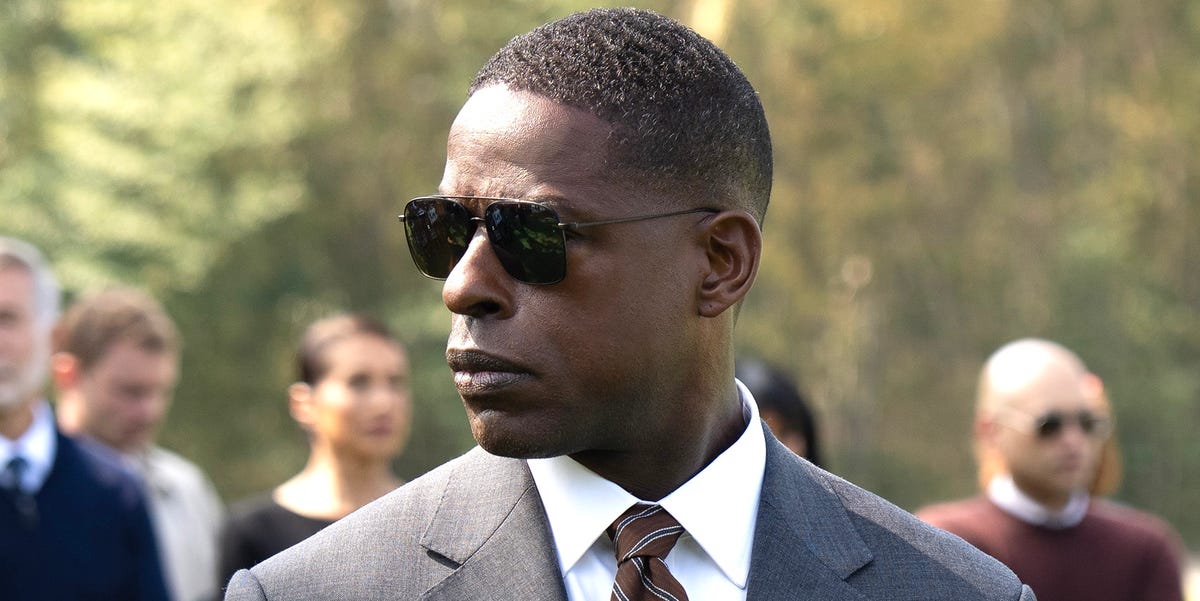
If you thought Paradise was going to quietly disappear into the streaming mist after its first season, congratulations: you underestimated both Hulu and the internet’s ability to obsess over a bunker full of secrets. The Sterling K. Brown-led thriller did not simply return for Season 2; it came back with the kind of surprise that makes fans open Instagram, gasp dramatically, and immediately text someone, “Wait, did you see this?”
The big news began with the reveal that Paradise Season 2 was officially back in production, an unusually fast and confidence-boosting update after the show’s explosive first-season finale. For a series built on misdirection, hidden rooms, political paranoia, and emotional gut punches, that production announcement felt like the show’s first Season 2 twist before a single new episode even aired. Then Hulu followed through: Season 2 premiered on February 23, 2026, with the first three episodes dropping at once, giving fans a generous serving of mystery, survival drama, and “please pause this so I can process what just happened” energy.
And that is the real surprise: Paradise was not treated like a risky one-season experiment. It was treated like a major ongoing story. The show expanded beyond its original bunker setting, added major new cast members, deepened its sci-fi mythology, and pushed Xavier Collins into a world that was far bigger, stranger, and more dangerous than viewers first imagined.
What Was the Big Paradise Season 2 Surprise?
The earliest surprise came when fans learned that Season 2 had already started filming shortly after the show earned its renewal. That might not sound dramatic on paper, but in the streaming era, where even popular shows can spend years floating in “renewed but mysteriously silent” limbo, a fast production update is basically a standing ovation with a call sheet.
Season 1 premiered on Hulu in January 2025 and quickly grabbed attention with its genre-bending premise. At first glance, Paradise looked like a political murder mystery: Secret Service agent Xavier Collins, played by Sterling K. Brown, investigates the killing of President Cal Bradford, played by James Marsden. But the show’s real hook was bigger and weirder. The story was set inside a massive underground bunker called Paradise, built to shelter a carefully selected population after a catastrophic global event.
That twist transformed the series from a Washington thriller into a post-apocalyptic mystery box with emotional stakes. Suddenly, the question was not only “Who killed the president?” It was also “Who built this place, who gets to survive, and how much of the truth has been buried under all that polished bunker architecture?”
Why Fans Were So Ready for Season 2
The Season 1 finale left viewers with the kind of cliffhanger that should come with a complimentary stress ball. Xavier learned that his wife, Teri, whom he believed had died, might still be alive outside the bunker. That revelation changed everything. Instead of being trapped inside Paradise’s controlled environment, Xavier now had a reason to leave it.
Season 2 picked up that emotional thread and pulled hard. Xavier’s mission became personal, dangerous, and deeply human: find Teri, understand what really happened outside, and decide whether the world beyond Paradise was dead, surviving, or something in between. The series also kept viewers inside the bunker, where the social order was beginning to crack after the events of Season 1.
That split structure gave Season 2 a smart engine. On one side, Xavier explored the outside world. On the other, the people left behind in Paradise dealt with the aftermath of violence, secrets, and broken trust. In other words, the show did not abandon the bunker; it made the bunker feel even more fragile by showing what existed beyond it.
Season 2 Expanded the World Beyond the Bunker
One of the best decisions Paradise made in Season 2 was refusing to repeat the exact formula of Season 1. The first season thrived on claustrophobia. The setting felt too perfect, too clean, too controlled. Season 2 opened the doors and asked a scarier question: what if Paradise was never the whole story?
Xavier’s journey outside the bunker introduced viewers to survivors who had lived through the years since “The Day” without the resources, planning, and insulation enjoyed by Paradise residents. That shift gave the show a bigger moral canvas. The bunker was no longer just a clever setting; it became a symbol of privilege, secrecy, and survival politics.
Season 2 also leaned more confidently into science fiction. While Paradise began as a political thriller with a doomsday twist, its second season added more speculative elements, larger mysteries, and a growing sense that the show’s endgame was never just about one murder. The result was a season that felt more ambitious, sometimes stranger, and far more expansive than fans may have expected.
Sterling K. Brown Remained the Emotional Center
It is hard to imagine Paradise working without Sterling K. Brown. Xavier Collins is not simply a man solving a mystery; he is a father, husband, protector, and survivor carrying grief like extra luggage through the apocalypse. Brown gives the show its emotional gravity, even when the plot is juggling bunkers, conspiracies, survival groups, and world-ending secrets.
Season 2 gave Xavier a more active quest. In Season 1, he was uncovering the truth within a system designed to hide it. In Season 2, he stepped beyond that system entirely. The outside world forced him to confront not only physical danger but also the possibility that everything he had been told about survival, loss, and Paradise itself was incomplete.
That is why the Season 2 surprise mattered so much. Fans were not just excited to get more episodes. They were excited to continue Xavier’s emotional journey. His search for Teri gave the show a beating heart beneath all the genre machinery.
New Cast Members Made Season 2 Feel Bigger
Another reason the Season 2 surprise landed well was the cast expansion. Shailene Woodley joined the new season in a major role, bringing a fresh dynamic to Xavier’s journey beyond the bunker. Thomas Doherty also entered the story as Link, a figure connected to the dangerous outside world and the growing mythology around Paradise.
Returning cast members helped keep the show grounded in its original conflicts. Julianne Nicholson’s Samantha “Sinatra” Redmond remained one of the series’ most fascinating figures, a character whose brilliance, ruthlessness, and survival instincts made her impossible to dismiss. Sarah Shahi, Nicole Brydon Bloom, Krys Marshall, Enuka Okuma, Aliyah Mastin, Percy Daggs IV, and others continued to shape the emotional and political fallout from Season 1.
The combination of returning characters and new faces gave Season 2 a useful tension. Fans could hold on to the storylines they already cared about while also stepping into unfamiliar territory. That is exactly what a strong second season should do: reward loyalty without becoming predictable.
Why the ABC Broadcast Detail Also Mattered
Before Season 2 arrived, another fan-friendly surprise helped widen the show’s audience: Season 1 made its way to ABC in April 2025. That gave viewers who missed the Hulu debut a chance to discover the series in a more traditional primetime format. In a streaming landscape where shows can feel trapped behind subscription walls, a broadcast run was a smart visibility boost.
For new viewers, the ABC airing served as a clean entry point. For existing fans, it was a victory lap. It also signaled that Disney and Hulu saw Paradise as more than a niche thriller. The show had enough mainstream appeal to justify a bigger platform, and that helped build anticipation for Season 2.
Season 2 Proved Paradise Had a Larger Plan
The best mystery shows are not just piles of clues. They need architecture. They need the audience to believe that someone behind the curtain knows where the hallway leads. Paradise has benefited from creator Dan Fogelman’s clear sense that the story has a larger arc, with Season 2 functioning as the bridge between the shocking setup and the eventual resolution.
That matters because viewers have been burned before. Mystery-box television can be thrilling, but it can also become a junk drawer of unanswered questions if the writers keep adding locks without keys. Paradise has positioned itself differently by suggesting that its major reveals are part of a planned journey rather than a weekly game of narrative dodgeball.
Season 2’s expansion into the outside world, its deeper sci-fi elements, and its escalating conflicts all helped make the series feel like a story with momentum. The renewal for Season 3 only strengthened that impression. Fans now know the show has room to continue toward a bigger conclusion.
What Makes Paradise So Addictive?
Part of the appeal is tonal whiplash handled well. Paradise can be emotional, pulpy, suspenseful, and surprisingly strange, sometimes in the same episode. It asks serious questions about power, survival, social engineering, and grief, but it also knows how to deliver a cliffhanger with the enthusiasm of someone slamming a door at the exact worst moment.
The show also understands the value of contrast. Paradise, the bunker, is visually controlled and orderly. But the secrets inside it are messy. The outside world looks broken and unstable, yet it may contain truths that the bunker tried to suppress. That contrast keeps the story lively and prevents the setting from becoming stale.
Most importantly, the series gives viewers characters worth arguing about. Xavier inspires empathy. Sinatra invites fascination and suspicion. Jane, Teri, and the newer Season 2 figures add layers of motive and mystery. The best fan discussions happen when nobody can agree on who is right, who is lying, and who is about to make a terrible decision in a very expensive-looking hallway.
How Season 2 Changed the Stakes
Season 1 was driven by a murder. Season 2 was driven by survival, reunion, and revelation. That change in stakes made the show feel less like a closed-room mystery and more like a full-scale dystopian thriller. Xavier was no longer only searching for a killer; he was searching for proof that his family and the world he remembered were not completely gone.
The bunker’s internal politics also became more volatile. Once residents begin to question the story they have been told, Paradise stops being a sanctuary and starts becoming a pressure cooker. Who controls information? Who deserves safety? Who gets sacrificed for the “greater good”? These questions gave Season 2 more thematic weight.
That is the secret sauce of the show: its twists are fun, but its questions stick around. The spectacle pulls viewers in, while the moral discomfort keeps them thinking after the credits roll.
What the Season 3 Renewal Means for Fans
The Season 3 renewal is the cherry on top of the Season 2 surprise sundae. Hulu confirming more episodes means fans do not have to treat the Season 2 finale like a possible goodbye. Instead, they can view it as the next turning point in a larger story.
Reports around Season 3 suggest that the show is continuing to expand its mythology, with new cast additions and even bigger sci-fi possibilities. For a series that began with the murder of a president inside a bunker, that is quite a journey. It is like starting with a locked-room mystery and ending up in a conspiracy board so huge you need extra yarn and possibly a snack break.
Whether Season 3 becomes the planned endpoint or simply the next chapter, the renewal confirms that Paradise has become one of Hulu’s most talked-about genre dramas. Fans wanted more, and the streamer clearly heard them.
Experience: Watching the Paradise Surprise Unfold as a Fan
The best way to describe the Paradise Season 2 surprise is this: it felt like being handed a second flashlight just when the tunnel got darker. Season 1 ended with so many emotional and narrative questions that viewers were left staring at the screen like they had personally been trapped in the bunker’s security office. Was Teri really alive? What was waiting above ground? Could Xavier trust anyone? Was Paradise a refuge, a prison, or the world’s most expensive guilt machine?
As a viewing experience, the speed of the Season 2 update mattered. Fans of streaming shows have learned to be cautious. A series can trend, earn praise, build a fandom, and still vanish for two years while everyone wonders whether the cast has aged into a different genre. So when Paradise revealed that Season 2 was already filming, it created a rare feeling: confidence. The story was moving. The people making it had a plan. The audience was not being left alone in a cliffhanger bunker with only theories and stale popcorn.
That sense of momentum made rewatching Season 1 more rewarding. Suddenly, every detail felt more important. Conversations between Xavier and Sinatra carried extra weight. Flashbacks became puzzle pieces. Even the polished design of Paradise itself felt suspicious, as if the wallpaper knew something and was refusing to talk. A good thriller makes you ask questions; a great one makes you suspicious of furniture.
Season 2 also changed the emotional texture of the series. The outside-world storyline gave Xavier’s grief a direction. Instead of circling the same trauma inside the bunker, he moved through danger with a goal that was painfully simple: find his wife. That kind of motivation is easy to understand, which helps balance the show’s more complicated mythology. Even when the plot grows bigger, Xavier’s mission stays human.
For fans, the most enjoyable part of the Season 2 conversation was watching the show become more than people expected. Some viewers came for Sterling K. Brown. Some came for the political thriller angle. Some came because someone online said, “Do not read anything, just watch the pilot.” By Season 2, those groups had merged into one very committed audience trying to decode every reveal, every new character, and every suspicious line of dialogue.
The surprise also worked because it respected fan investment. Instead of dragging out every Season 1 mystery forever, the show answered major questions and then introduced bigger ones. That creates trust. It tells viewers, “Yes, there are secrets, but we are not just juggling smoke bombs for fun.” In a genre filled with half-solved mysteries and cliffhangers that lead nowhere, that trust is valuable.
There is also something satisfying about watching a show grow in scale without losing its emotional core. Paradise could have become pure apocalypse spectacle in Season 2, but it remained anchored in family, guilt, loyalty, and survival. The action got bigger, the world got wider, and the mythology got stranger, but the reason to keep watching stayed the same: Xavier Collins cares so much that every revelation hurts.
That is why the ultimate Season 2 surprise was not just that production started quickly or that new episodes arrived. The real surprise was that Paradise proved it had more story to telland that the story could get bigger without becoming emptier. For fans, that is the kind of twist worth celebrating.
Conclusion
Paradise fans did not just get a routine Season 2 update; they got proof that Hulu’s twisty thriller had momentum, ambition, and a future. From the early filming announcement to the February 2026 premiere, from Xavier’s journey outside the bunker to the addition of major new characters, Season 2 turned the show into something larger and more daring. The result was a second season that expanded the world, sharpened the emotional stakes, and gave viewers plenty to debate while waiting for what comes next.
For a series built on secrets, Paradise has made one thing clear: the story is not finished. And if Season 2 was the show opening the bunker door, Season 3 may be where the biggest answers finally step into the light.













