
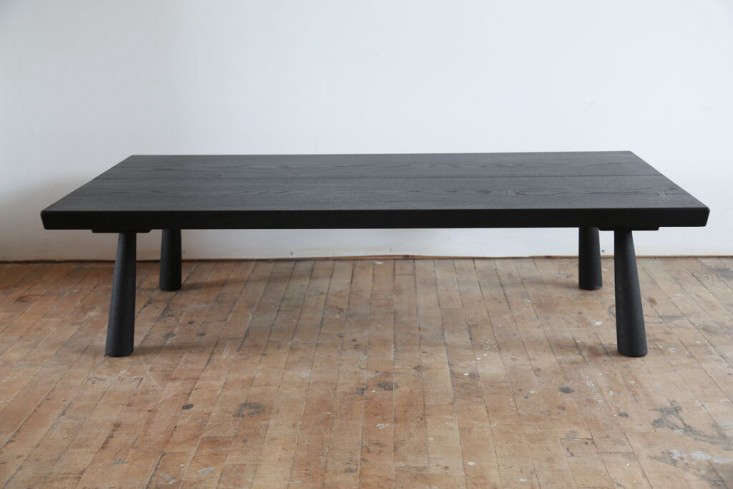
Minimal furniture is easy to draw and surprisingly difficult to make. Remove decorative trim, visible hardware, and upholstery, and every proportion must behave. A leg that is too thick looks clumsy; a weak joint becomes a future wobble; a finish that fights the grain turns a quiet object into a loud apology.
That is why Joshua Vogel’s work for Blackcreek Mercantile & Trading Co. inspires such loyalty. His furniture is spare without feeling sterile, rustic without dressing like a barn, and sculptural without demanding a velvet rope. It looks simple because someone did an unreasonable amount of thinking before making it.
Who Is Joshua Vogel?
Joshua Vogel is an architect-turned-woodworker, furniture designer, and sculptor based in New York’s Hudson Valley. After years in furniture and interiors, including helping establish the acclaimed American furniture company BDDW, he created Blackcreek Mercantile & Trading Co. as a smaller-scale workshop where design, material, and handwork could remain closely connected. The Kingston studio makes furniture and useful objects while also operating as an artist-focused gallery.
The phrase “cult woodworker” is affectionate shorthand for the loyalty surrounding his work. Vogel did not build that following by chasing novelty every six months. His reputation grew through bowls, cutting boards, stools, benches, tables, and sculptural turnings that share a recognizable visual language: substantial wood, calm silhouettes, tactile surfaces, and construction that does not hide how the object stands up.
The Collection That Made Simplicity Feel Substantial
In 2015, a new furniture introduction centered on two deceptively modest forms: a low table and a bench. The original low table measured about 53 inches long, 27.5 inches wide, and 13.5 inches high, while the bench measured roughly 56.5 inches long, 12 inches wide, and 16 inches high. Both could be customized, and the table could be adapted into rectangular, square, or circular versions. The pieces were offered in white oak with bleached, natural, or dark reactive finishes.
The more important decision was to begin with thick timber and reduce the number of components. Fewer parts create fewer visual interruptions and give the wood room to establish the form. All-wood joinery and cross-pinned leg connections add durability while becoming part of the design. There is no hardware confetti and nowhere for mediocre workmanship to take a nap.
The Low Table: Quiet Center of Gravity
Vogel’s low table settles close to the floor, creating a strong visual center of gravity. Its broad top gives the grain room to travel, while the compact height makes its mass feel grounded rather than bulky. It works best with low seating, generous negative space, and restrained accessories. Loading it with twelve decorative objects would be like putting bumper stickers on a cello.
The Bench: Furniture With Excellent Manners
The bench can sit at a dining table, wait at the end of a bed, serve as an entry perch, or stand against a wall as a narrow display surface. Its backless form keeps sightlines open. One person can sit comfortably; two can negotiate; three can become unexpectedly close friends. When empty, it remains useful without pretending to be cabinetry.
Why the Design Looks So Simple
Thick Timber, Fewer Parts
Vogel’s approach uses substantial wood sections so the object gains strength, presence, and clarity from few elements. The thickness allows meaningful joints and lets the material carry both structural and visual responsibility. Here, minimalism does not mean thinness or emptiness. It means removing what is unnecessary, then making what remains exceptionally goodand sturdy enough for daily life, an enthusiastic toddler, and a guest who ignores the coaster.
Joinery Becomes the Ornament
Traditional joinery matters when it matches the material and allows solid wood to respond to humidity. Blackcreek describes its furniture as domestically sourced hardwood joined with time-honored connections and protected by durable, non-toxic finishes. Vogel also discusses wood movement and seasonal checking as realities to address through design, not deny. In these pieces, pinned connections reinforce the structure and provide visual punctuation.
Finishes That Change Mood, Not Identity
Bleached, natural, and blackened white oak create different moods while preserving the form. Pale oak feels airy, natural oak emphasizes warmth, and a reactive dark finish makes the silhouette graphic. Good finishes protect without smothering the grain, allowing small marks to become evidence that the table has met coffee, books, elbows, and life.
Why White Oak Is Such a Strong Choice
White oak is a practical partner for this type of furniture. The U.S. Forest Products Laboratory describes oak as strong, hard, tough, and widely used for furniture and flooring. Properly dried oak machines well, accepts finishes, and offers the strength needed for broad surfaces and substantial joints. Its grain can read as quiet from a distance and richly complex up close, which suits furniture designed to reward long attention.
It also brings cultural familiarity. Oak has appeared in vernacular furniture, Arts and Crafts interiors, Shaker-influenced rooms, and modern American design. Yet it does not force a piece into one historical costume. In Vogel’s hands, white oak can feel old-world and contemporary at oncea useful trick for furniture expected to survive more than one decorating phase.
Handmade Does Not Mean Rough
The collection sits between two tired stereotypes. On one side is factory minimalism: efficient, clean, and sometimes as emotionally stirring as a printer tray. On the other is “handmade” furniture that performs its rusticity with exaggerated knots, saw marks, and the visual equivalent of shouting, “A person touched this!”
Blackcreek’s work occupies a more interesting middle ground. The hand of the maker is present in the sensitivity of the form, the selection of material, and the precision of the jointsnot in forced irregularity. Coverage in design publications has repeatedly emphasized this balance between American craft, sculptural thinking, and refined contemporary design.
That distinction matters because refinement is not the enemy of craft. A surface can be carefully finished and still feel alive. A table can be geometrically controlled and still reveal the tree. The best handmade furniture does not ask buyers to admire labor as a separate performance; the labor is absorbed into the ease of the finished object.
A Hudson Valley Design Language
Vogel’s move from New York City’s furniture world to the Hudson Valley is part of a broader regional story. The area has become home to designers, woodworkers, ceramicists, builders, and artists who combine contemporary aesthetics with local production and material knowledge. Recent reporting on the region describes a thriving woodworking scene in which furniture is treated as both functional equipment and artistic practice.
That setting does not automatically make every stool poetic. Geography is not a finishing technique. Still, the Hudson Valley offers a useful context: proximity to forests, old industrial buildings, skilled trades, city clients, and a culture that values the workshop as much as the showroom. Blackcreek’s work feels connected to that landscape without leaning on country clichés.
How to Style Pared-Down Wood Furniture
Let One Piece Carry the Room
Substantial minimalist furniture needs breathing room. Let a low table become the room’s main horizontal gesture. A ceramic bowl, a small stack of books, or an honest-to-goodness empty surface may be enough.
Mix Textures, Not Competing Statements
Expressive wood pairs well with linen, wool, plaster, stone, leather, and aged metal. Contrast matters: blackened oak against a pale wall feels crisp, while natural oak beside a deep-colored sofa feels warm and grounded.
Use the Bench Beyond the Dining Room
Place a bench under large artwork, at the foot of a bed, or in a wide hallway. In an entry, add one basket underneath and hooks above. Sometimes a place to sit while tying a shoe is already a technological breakthrough.
Respect Scale
Thick timber has visual weight. Mark the footprint with painter’s tape and check circulation before ordering. A low table should leave comfortable paths, and an entry bench should not turn the front door into an obstacle course.
What to Look for When Buying Heirloom Furniture
The term “heirloom quality” has been applied to everything from master-built cabinetry to a particleboard nightstand with optimistic branding. Buyers should look beyond the label. Ask where the wood comes from, whether it is solid or veneered, how the joints are made, what finish is used, whether dimensions can be customized, and how the maker addresses seasonal wood movement.
Responsible sourcing deserves similar scrutiny. Blackcreek states that it uses domestically sourced sustainable hardwoods, while organizations such as the Forest Stewardship Council emphasize credible certification and traceable sourcing as ways to support responsible forest management. “Sustainable” should be more than a decorative adjective placed near a photograph of a fern.
Finally, consider repairability. Solid-wood furniture with understandable construction can often be refinished, tightened, or restored. A good piece is not invulnerable; it is recoverable. That may be the most practical definition of luxury available.
The Experience of Living With Pared-Down Furniture
The first noticeable change is visual quiet. A substantial wood table does not disappear, but it reduces the number of competing decisions in a room. You stop asking whether the coffee table matches the media console, whether the side table needs a partner, and whether a decorative tray requires its own decorative beads. The room begins to feel composed rather than accessorized.
Then comes the tactile experience. Thick oak invites contact. Hands notice the softened edge, the temperature of the surface, and the shift from a smooth top to visible end grain. Unlike a highly polished synthetic surface, wood changes subtly throughout the day. Morning light lifts the grain; evening light compresses it into a darker mass. The furniture is not animated, obviously, but it does a respectable impression.
Daily use also reveals the intelligence of proportion. A low table feels casual because it keeps activity close to seated bodies. A bench feels open because people can approach it from either side. These are small ergonomic decisions, yet they influence how a room is used. Guests move the bench when extra seating is needed. Children turn it into a reading station. A hallway bench catches a bag, then becomes the place where someone sits to open the mail.
There is also an adjustment period. Owners accustomed to pristine surfaces may tense at the first faint ring or scratch. The useful response is not neglect, but perspective. Clean spills, use coasters when sensible, maintain the finish, and accept that honest wear is different from damage. Over time, the surface gains variation. The object becomes less like a showroom sample and more like part of the household record.
Pared-down furniture can also expose clutter elsewhere. A calm table placed in a busy room is remarkably good at pointing toward the nearby cable pile, leaning tower of magazines, and basket of objects whose official category is “deal with later.” This is not the table being judgmental. It is merely very organized and therefore annoying.
The greatest pleasure comes from not needing to replace it when tastes shift. Change the rug, repaint the wall, or swap a modern lamp for an antique one, and the same bench can remain. Its identity comes from proportion, material, and construction rather than a trend-specific flourish. That adaptability is central to long-term value.
Living with such furniture ultimately encourages a different pace of consumption. Instead of filling a room quickly, one might choose a single strong piece and let the rest develop over time. The interior becomes less of a shopping result and more of an accumulation of useful decisions. Pared-down simplicity is therefore not just a look. It is a habit: buy less, notice more, and make the coffee table earn its square footage.
Conclusion
Joshua Vogel’s furniture demonstrates that simplicity is not the absence of design; it is design with nowhere to hide. Thick white oak, traditional joinery, restrained finishes, and carefully judged proportions turn familiar forms into objects with unusual presence. The low table and bench are quiet, but they are not passive. They organize space, invite touch, and improve with use.
That is the enduring appeal of furniture from a cult woodworker. The pieces do not depend on novelty, flashy materials, or decorative gymnastics. They depend on the harder things: material knowledge, disciplined editing, and the patience to make a joint worth looking at. In a market full of furniture designed for the next photograph, this work feels designed for the next generation.
Note: Historical dimensions and collection details reflect the original launch; current products, pricing, finishes, customization options, and availability should be confirmed directly with the maker. This article is an independent synthesis of reporting from leading design publications, maker profiles, regional coverage, and technical references on white oak and responsible wood sourcing.













