
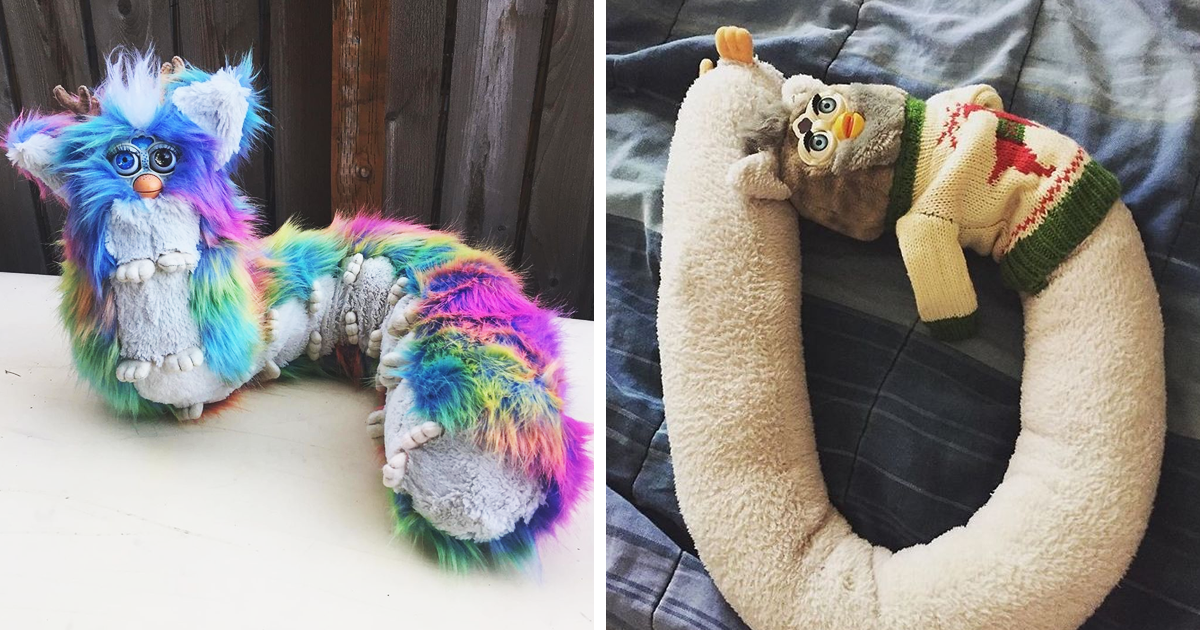
Some internet trends arrive quietly, like a polite knock at the door. Others burst through the wall wearing googly eyes, faux fur, and enough body segments to make an entomologist spill coffee on their clipboard. Welcome to the wonderfully cursed world of people turning Furbies into centipedes: a DIY craft movement that is part nostalgia, part nightmare fuel, and part “why does this plush toy look like it knows my browser history?”
The trend is usually filed under the broader “Long Furby” phenomenon, a strange and oddly beloved corner of online maker culture where classic Furby toys are transformed into elongated, wormlike, caterpillar-like, or centipede-style creatures. Instead of remaining the round, chatty owl-hamster gremlins many people remember from the late 1990s, these modified Furbies gain long fabric bodies, rows of little feet, dramatic spines, or bendy snake-like shapes. The result can be adorable, unsettling, hilarious, or all three at once, depending on your tolerance for plush creatures that appear to have escaped from a children’s toy aisle and joined a gothic circus.
What makes the trend so fascinating is that it is not just random weirdness for weirdness’s sake. Long Furby and centipede Furby creations sit at the intersection of internet humor, nostalgia, craft art, meme culture, and the human urge to take something familiar and make it deeply, gloriously wrong. In other words, it is exactly the kind of thing the internet was built for.
The Furby Was Already Weird Before the Internet Made It Longer
To understand why centipede Furbies work so well as a viral idea, we have to start with the original Furby. Released by Tiger Electronics under Hasbro in 1998, Furby was marketed as an interactive electronic pet. It blinked, talked, reacted to touch, responded to sound, moved its ears, and babbled in a made-up language called Furbish before gradually “learning” English phrases. For kids, it felt like magic. For some parents, it felt like a tiny furry roommate who would not stop speaking at 2 a.m.
The toy became one of the defining holiday crazes of the late 1990s. Millions were sold in its first years, and the demand turned Furby into a pop-culture event. It was cute, collectible, technologically impressive for its time, and just unsettling enough to become memorable. Even before anyone stitched extra limbs onto one, Furby already had the perfect ingredients for online mythmaking: big eyes, a robotic personality, unpredictable noises, and the faint impression that it might be plotting something.
That mixture of sweetness and discomfort is important. Furbies never felt like ordinary stuffed animals. They sat somewhere between toy, pet, gadget, and tiny animatronic oracle. People formed attachments to them, but they also joked about being creeped out by them. The Furby’s strange charm made it ideal material for later internet remixing. When creators began asking, “What if Furby, but longer?” the culture was ready.
How Long Furby Became a Cursed Craft Icon
The Long Furby trend began gaining real traction online around 2018, especially through Tumblr and later through Instagram, Twitter, TikTok, Reddit, and niche craft communities. One of the most commonly cited origin points is a creator known online as Aloe, associated with the Tumblr Furby community sometimes called “Furblr.” The idea was beautifully simple and deeply alarming: take the Furby’s head and give it a long, soft, bendable body.
That one concept unlocked a whole genre. Some Long Furbies looked like plush scarves with faces. Some resembled mystical dragons. Some had elegant, noodle-like bodies. Others became full centipede-style beasts with many tiny legs, multiple textures, bold colors, and the visual energy of something that would politely ask for tea before crawling across the ceiling.
Once images of these creations spread, the reaction was immediate. People online could not decide whether they were looking at art, comedy, horror, or a spiritual test. That uncertainty became the point. A centipede Furby is funny because it is absurd. It is creepy because it takes a familiar childhood toy and stretches it into an unfamiliar body plan. It is cute because it still has those big eyes and soft fur. It is terrifying because those same eyes are now attached to several feet of plush creature.
Why Centipede Furbies Look So Terrifying
The terror of centipede Furbies is not the jump-scare kind. It is slower, sillier, and more psychological. Your brain recognizes the Furby face as something designed to be cute. Then it notices the long body. Then it notices the legs. Then it quietly files a complaint with management.
They Combine Cute and Creepy in One Object
Humans are wired to respond to big eyes, soft textures, and rounded faces as cute. Furby has all of that. But centipedes trigger a very different reaction for many people: surprise, discomfort, or the urgent desire to stand on a chair. When creators combine the two, the result is a visual contradiction. It is a cuddly bug. A plush cryptid. A bedtime toy that looks like it has a side quest in a haunted forest.
They Distort a Familiar Childhood Object
Much of the effect comes from nostalgia. People remember Furbies from childhood, thrift stores, old commercials, family basements, or collector shelves. Turning that memory into a long, many-legged creature creates a playful shock. The object is still recognizable, but its proportions have been rewritten. It feels like a childhood memory that went through a funhouse mirror and came back with a fashion sense.
They Feel Handmade, Which Makes Them More Personal
Centipede Furbies are not slick factory products. They often show the personality of the maker: fabric choices, tiny feet, embroidered details, dramatic names, accessories, wings, horns, beads, or chaotic color palettes. That handmade quality makes them more interesting than mass-produced weird toys. Each one feels like a character. Unfortunately, that character may be named something like Princess Sockbones the Infinite, and she may be staring directly into your soul.
The Internet Loves “Cursed” Objects
Centipede Furbies belong to a larger category of internet content often described as “cursed.” A cursed image or object is not necessarily scary in a traditional horror sense. Instead, it feels wrong in a funny, fascinating, hard-to-explain way. It makes viewers pause and ask, “Who made this, why did they make this, and why am I still looking?”
Long Furby creations fit this mood perfectly. They are strange enough to be shareable, but not so disturbing that most viewers want to look away. They invite captions, jokes, reaction images, and comments like “I hate this,” which on the internet often means “I love this and will now send it to seven friends.”
This is why centipede Furbies thrive on social media. They are instantly understandable in a single image. You do not need a long explanation to get the joke. You see a Furby with a long centipede body, and the emotional journey begins immediately: confusion, laughter, concern, admiration, and finally acceptance.
From Meme to Maker Culture
It would be easy to dismiss centipede Furbies as a quick joke, but the trend has lasted because there is real craft behind it. Many creators treat Long Furbies as plush art. They design patterns, choose fabrics, plan body lengths, add wire armatures, sew tiny legs, style fur, and give each creature a name and backstory. Some sell custom creations through handmade marketplaces. Others share photos, tutorials, repair notes, and design experiments with online communities.
The best examples show a surprising amount of skill. A convincing centipede Furby requires balance: the head has to remain expressive, the body needs enough structure to pose, and the legs must look intentional rather than like a craft drawer exploded. Makers often blend toy customization, soft sculpture, cosplay-adjacent design, and meme humor into one object.
That is one reason the trend resonates beyond Furby collectors. It speaks to a broader DIY movement where people customize old objects instead of throwing them away. Vintage toys become art pieces. Thrift-store finds become conversation starters. A forgotten electronic pet becomes a six-foot guardian of the hallway. Recycling has never looked so suspicious.
Why People Keep Making Them
Part of the appeal is creative freedom. A standard Furby has a fixed shape. A Long Furby can be anything: pastel dream worm, velvet centipede, rainbow dragon, goth caterpillar, clown serpent, fairy bug, space noodle, or royal plush beast with a tiny crown. The format is simple enough to understand but flexible enough to personalize endlessly.
Another appeal is community. Online Furby fans often treat these creatures with affectionate seriousness. They name them, introduce them, photograph them in public places, and speak about them as if they are eccentric pets. This shared language turns the trend into more than a visual gag. It becomes a small social world where the weirdness is not only accepted but celebrated.
There is also a satisfying rebelliousness to it. Furby was designed as a commercial toy with a particular identity. Long Furby makers take that identity and stretch it, literally and culturally. They turn a corporate product into folk art. They make the toy stranger, queerer, softer, scarier, funnier, and more personal. The result is a kind of playful ownership: yes, Hasbro made Furby, but the internet made Furby into a centipede.
The Role of Nostalgia in the Trend
Nostalgia is a major engine behind the Long Furby phenomenon. Adults who grew up during the original Furby craze now encounter the toy with a mix of fondness and irony. They remember wanting one, owning one, being scared by one, or hearing one wake up at the worst possible time. When they see a centipede Furby, it taps into that memory while adding a new layer of absurd adult humor.
The internet is especially good at remixing 1990s and early-2000s nostalgia. Old toys, cartoons, video games, and commercials become raw material for memes. Furbies are perfect for this because they already felt slightly futuristic and slightly haunted. They represented early consumer robotics, virtual-pet culture, and the era’s excitement about interactive technology. Today, turning them into centipedes feels like a loving roast of that optimism.
There is also comfort in making something silly out of something old. A centipede Furby is not just a joke; it is a way of keeping a childhood object alive in a new form. It says nostalgia does not have to be neat, sentimental, or museum-ready. Sometimes nostalgia has 28 legs and a name like Bartholomew Wigglespine.
Are Centipede Furbies Art?
Yes, and also yes in a tiny hat. Centipede Furbies may look ridiculous, but ridiculousness does not disqualify something from being art. In fact, humor is often one of the fastest ways for art to connect with people. These creations use recognizable materials and pop-culture references to produce emotional reactions. They explore cuteness, discomfort, memory, identity, and transformation. That is a lot of heavy lifting for a plush creature that looks like it lives under a wizard’s couch.
Soft sculpture has a long history in contemporary art, and toy customization has become a serious creative practice in online spaces. Long Furbies belong to that lineage, even when they are made for fun. They challenge the idea that craft must be tasteful or practical. They prove that handmade work can be technically skilled, emotionally expressive, and absolutely unhinged in the best possible way.
Why the Trend Works So Well for SEO and Social Media
From a content perspective, “People online are turning their Furbies into centipedes” is almost unfairly clickable. It contains nostalgia, transformation, humor, horror, and curiosity in one sentence. Readers immediately want to know what the creations look like and why anyone would do this. That makes the topic ideal for search engines and social platforms alike.
Search interest around terms like “Long Furby,” “centipede Furby,” “cursed Furby,” “creepy Furby,” “Furby customization,” and “weird DIY toys” reflects several overlapping audiences. Toy collectors want history. Meme fans want funny images. Crafters want inspiration. Nostalgia readers want a trip back to the 1990s. Horror-comedy fans want something delightfully uncomfortable. A strong article can serve all of them without stuffing keywords like a Furby stuffed into a sleeping bag.
The best way to write about the trend is to respect both sides of it: the joke and the craft. Laugh at the absurdity, but do not ignore the creativity. These makers are not simply destroying old toys. They are building new characters from familiar materials and creating a shared visual language that people instantly recognize.
Specific Examples of the Trend
Online examples vary wildly. Some makers create pastel Long Furbies with gentle faces and soft, caterpillar-like bodies. Others lean into horror by adding dark fur, skeletal details, insect legs, extra eyes, or dramatic poses. Some are designed to be wearable, like strange scarves with personalities. Others are displayed like plush pets or photographed in everyday settings, which somehow makes them funnier. A centipede Furby on a shelf is odd. A centipede Furby sitting at a breakfast table looks like it has strong opinions about pancakes.
Handmade marketplaces have also helped the trend grow. Custom Long Furbies and centipede-inspired versions are sometimes sold as art dolls, collectibles, or plush oddities. Prices vary depending on length, detail, materials, and whether the original Furby faceplate or electronic parts are used. Even when people do not buy one, browsing these creations can feel like walking through a tiny museum of internet folklore.
Why Some People Find Them Cute
For all the jokes about terror, many fans genuinely find centipede Furbies adorable. Their long bodies make them seem huggable. Their exaggerated proportions give them cartoon personality. Their handmade details make them feel less like products and more like companions. The same weirdness that scares one viewer may charm another.
This split reaction is what keeps the trend alive. If everyone simply hated them, the joke would burn out. If everyone simply found them cute, they might become ordinary. Instead, centipede Furbies live in the delicious middle ground between “aww” and “absolutely not.” That emotional contradiction is internet gold.
Experiences Related to the Terrifying Long Furby Trend
The experience of encountering a centipede Furby for the first time is almost always memorable. It usually starts with disbelief. Someone scrolls past an image, stops, scrolls back up, and stares. The brain tries to identify the object: Furby face, plush body, too many legs, possible supernatural authority. Then comes the laugh, because the object is so committed to its own absurdity that resistance feels pointless.
For many viewers, the next experience is sharing. Centipede Furbies are highly sendable. They are the kind of images people forward with a message like, “I’m sorry,” or “This made me think of you,” which is both a compliment and a warning. In group chats, they produce immediate reactions: disgust, delight, admiration, fake outrage, and at least one person asking where to buy one. That social energy is part of the trend’s power. The object becomes a conversation starter before anyone has even figured out whether it is cute.
For makers, the experience is more personal. Creating a Long Furby or centipede Furby can feel like adopting a character before it is finished. The choice of fabric changes its personality. Tiny legs make it more buglike. A bright color palette makes it whimsical. Dark velvet or dramatic trim makes it theatrical. A silly name completes the transformation. By the end, the maker has not just altered a toy; they have created a new creature with a mood, a face, and possibly a destiny.
Collectors often describe a different kind of experience: the joy of owning something that refuses to be normal. A centipede Furby on a bookshelf changes the entire energy of a room. Guests notice it instantly. Some laugh. Some step closer. Some step back. Either way, it performs its job beautifully. It turns passive decoration into active storytelling. Instead of saying “I like cute things,” it says, “I like cute things, but I also enjoy a mild sense of cosmic disorder.”
There is also the public experience. When Long Furby fans bring their creations to conventions, meetups, photoshoots, or casual outings, the creatures become mobile performance art. People ask questions. Strangers smile. Phones come out. The Furby centipede becomes a mascot for harmless weirdness, proving that public joy does not always need to be polished or serious. Sometimes it can be fuzzy, floppy, and shaped like a plush insect from another dimension.
Most importantly, the trend gives people permission to be playful. In a digital world that often rewards perfection, centipede Furbies are refreshingly strange. They do not ask to be elegant. They do not ask to be universally understood. They simply exist with confidence, many legs, and a face that says, “I have seen the beginning and end of time, and I would like a snack.” That is why people keep making them, sharing them, and reacting to them. They are terrifying, yes. But they are also funny, creative, communal, and weirdly comforting.
Conclusion: The Internet Did Not Ruin FurbyIt Evolved It
People online turning Furbies into centipedes may sound like a joke headline generated during a fever dream, but the trend reveals something genuinely interesting about modern internet culture. It shows how nostalgia can be remixed, how craft communities can transform mass-produced toys into personal art, and how humor can make even the strangest objects feel lovable.
Centipede Furbies look terrifying because they are designed to scramble expectations. They are cute and creepy, familiar and alien, handmade and meme-ready. They remind us that creativity does not have to be tidy to be meaningful. Sometimes the best art is the kind that makes people laugh, shiver, and ask, “Where can I see more?”
In the end, Long Furby culture is not about ruining childhood memories. It is about giving them extra legs and letting them run wild across the internet. And honestly? Good for them. May they crawl forever.
Note: This original article is synthesized from public information about Furby history, Long Furby maker culture, online DIY toy communities, and the broader “cute but cursed” internet trend. No source links are embedded in the article body.










