
Planting an avocado seed in soil is one of those small kitchen experiments that feels oddly heroic. One minute you are making guacamole; the next, you are holding a glossy brown pit and thinking, “Could you become a tree?” The answer is yesprobably. Will it give you a backyard full of avocados by next Thursday? Absolutely not. Gardening is magic, but it is not a vending machine.
The good news is that learning how to plant an avocado seed in soil is simple, affordable, and surprisingly satisfying. You do not need a greenhouse, a degree in botany, or a dramatic gardening hatalthough the hat is always welcome. With a clean seed, a well-draining potting mix, steady moisture, warmth, and patience, you can grow an avocado plant from a pit right on a sunny windowsill.
This guide focuses on the soil method rather than the famous toothpick-and-water trick. The water method is fun because you can watch the roots develop, but planting directly in soil gives the seed a natural growing environment from the start. Roots do not have to move from water to soil later, and your young avocado plant can settle into its pot like it signed a long-term lease.
Why Grow an Avocado Seed in Soil?
Growing an avocado seed in soil is a practical choice for beginners because it skips the awkward transplant stage. When a seed sprouts in water, its roots adapt to that watery environment. Once moved into potting mix, the plant must adjust again. Direct soil planting lets the root system develop where it will actually live.
The soil method also reduces the chances of forgetting to change the water, growing mystery slime, or knocking over a jar with toothpicks sticking out like a tiny medieval weapon. A pot with drainage holes is quieter, cleaner, and less likely to cause a kitchen-counter tragedy.
That said, avocado seeds are not always speedy. Some sprout in a few weeks; others take several months. If nothing happens right away, do not assume failure. Avocado seeds operate on “plant time,” which is basically regular time wearing fuzzy slippers.
What to Know Before You Start
Your Avocado Plant May Not Produce Fruit
This is the part where we gently place realistic expectations on the table, right beside the potting mix. Avocado trees grown from seed usually do not produce fruit identical to the avocado you ate. A Hass avocado seed, for example, does not grow into a guaranteed Hass tree. The resulting plant is genetically unique.
Even outdoors in warm climates, seed-grown avocado trees may take many years to flower and fruit. Indoors, fruiting is rare because the plant may not receive enough light, space, humidity, pollination, or ideal temperature conditions. In other words, grow it for the handsome leaves and the joy of the process. If fruit happens someday, wonderful. If not, you still get a leafy conversation starter with a dramatic origin story.
Avocados Like Warmth and Drainage
Avocado plants are tropical and subtropical by nature. They prefer warm temperatures, bright light, and soil that holds some moisture without staying wet. The biggest beginner mistake is overwatering. Avocado roots need oxygen. If the soil stays soggy, roots can rot, leaves can curl, and the plant may begin writing its resignation letter.
Keep Pets in Mind
If you share your home with pets, place your avocado plant where curious mouths cannot reach it. Avocado leaves, bark, fruit, and seeds contain compounds that may cause problems for some animals, especially birds, rabbits, horses, and certain livestock. Dogs and cats are generally less sensitive, but chewing the plant or swallowing the pit is still a bad idea. In short: admire the avocado plant; do not let the household parrot turn it into a salad bar.
Supplies You Will Need
You only need a few basic materials to plant an avocado seed in soil:
- One fresh avocado seed
- A 6- to 8-inch pot with drainage holes
- Well-draining potting mix
- Optional perlite, coarse sand, or cactus mix for extra drainage
- A small trowel or spoon
- Room-temperature water
- A warm, bright location
Choose a pot with drainage holes. This is not negotiable. A cute pot without holes is basically a bathtub for roots, and avocado roots are not looking for spa day.
Best Soil for an Avocado Seed
The best soil for an avocado seed is loose, airy, and well-draining. A quality indoor potting mix works well, especially if you improve it with perlite or coarse sand. You can also use a cactus or citrus-style potting mix because those blends usually drain faster than heavy garden soil.
Avoid digging soil from the yard and stuffing it into a pot. Outdoor soil can become compacted in containers, limiting oxygen around the roots. It may also bring pests, weed seeds, or fungi to your windowsill party. Your avocado seed deserves better than surprise gnats.
A simple beginner-friendly mix is two parts potting mix and one part perlite. This keeps the soil moist enough for germination but airy enough to prevent swamp conditions. The goal is damp sponge, not soup.
How to Plant an Avocado Seed in Soil
Step 1: Choose a Healthy Avocado Seed
Start with a seed from a ripe avocado. The fruit should be mature, not rock-hard and not suspiciously mushy. After slicing the avocado, remove the seed carefully. Try not to cut deep grooves into it with a knife. A few surface scratches are usually not fatal, but major damage can invite rot.
If you are choosing between several seeds, pick one that feels firm, plump, and heavy for its size. Avoid seeds that are shriveled, cracked, moldy, or already damaged. A strong seed gives you the best chance of success.
Step 2: Clean the Seed Thoroughly
Rinse the avocado seed under lukewarm water and gently rub away any remaining fruit flesh. A soft brush or cloth can help. This step matters because leftover avocado pulp can mold in soil. Mold loves free snacks, and your seed does not need that kind of roommate.
After cleaning, pat the seed dry. You may remove the thin brown outer skin if it is loose, but do not force it. Some gardeners peel the seed because it makes cracking easier to observe, while others leave it alone. Either approach can work.
Step 3: Identify the Top and Bottom
Avocado seeds usually have a slightly pointed end and a broader, flatter end. The broad end is the bottom, where roots emerge. The pointed end is the top, where the shoot grows. When planting in soil, position the seed upright with the broad end down and the pointed end up.
If your seed looks like a confusing brown egg and refuses to reveal its secrets, look for the flatter area where the fruit attached. That side usually goes downward or partly downward. Do your best; plants are forgiving, but not always impressed.
Step 4: Prepare the Pot
Fill your pot with moistened potting mix. The soil should be damp before planting, not bone dry. Add water slowly and mix until the texture feels evenly moist. If water runs straight through and the mix refuses to absorb moisture, let it sit for a few minutes and try again.
Do not pack the soil down tightly. Roots need air pockets. Gently firm the mix just enough so the seed will stay upright.
Step 5: Plant the Seed
Make a small depression in the center of the pot. Place the avocado seed broad end down. Cover the lower half to two-thirds of the seed with soil, leaving the top portion exposed. This helps reduce rot and lets you observe cracking and sprouting.
Some instructions recommend covering the seed with about half an inch of soil, while others leave the top half exposed. Both methods can work. For indoor beginners, leaving the top visible is helpful because it prevents you from wondering whether anything is happening beneath the surface. Gardening already has enough suspense.
Step 6: Water Gently
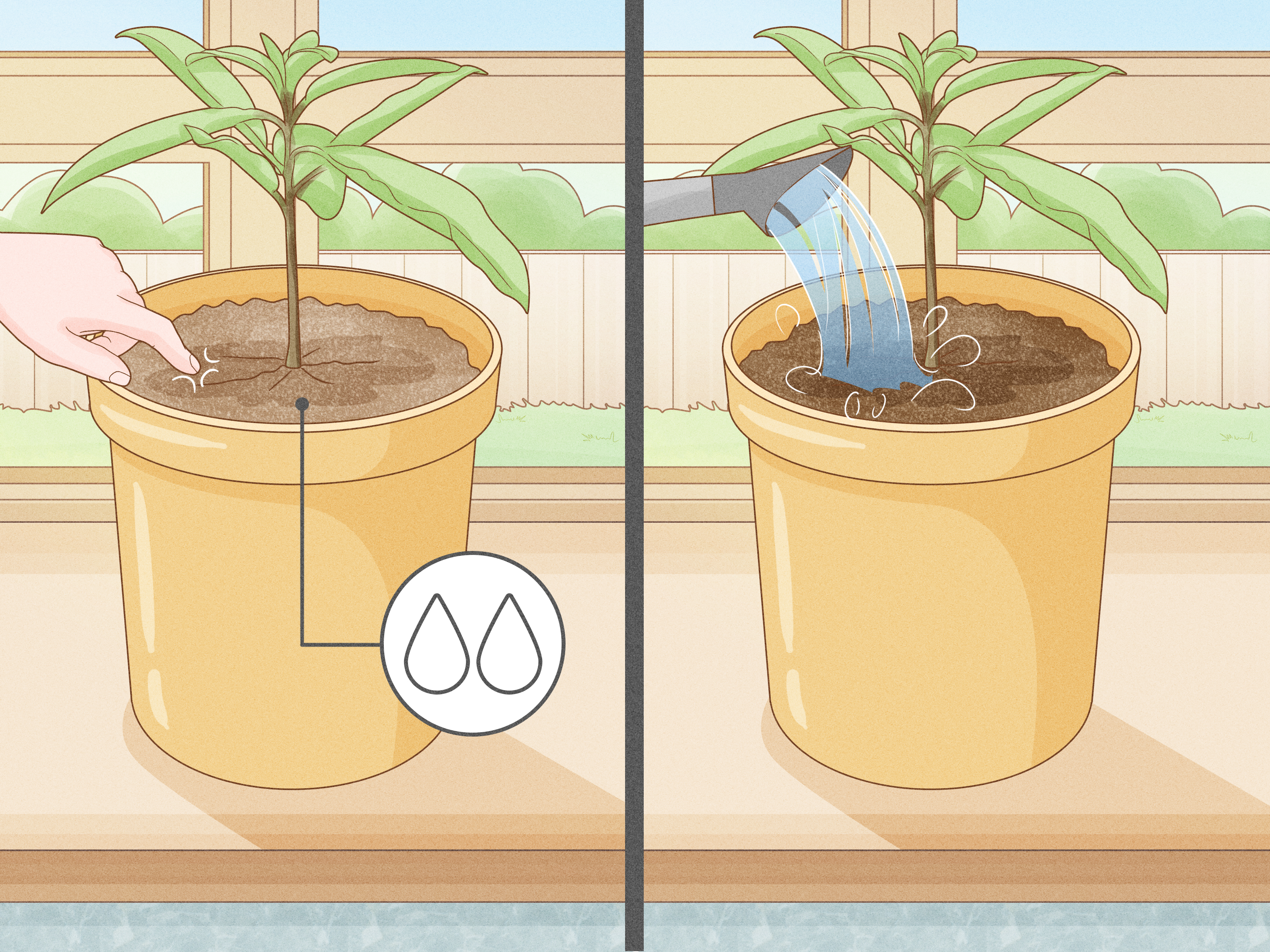
Water the pot slowly until moisture drains from the bottom. This settles the soil around the seed. After watering, empty any saucer beneath the pot. Never let the pot sit in standing water.
From this point forward, keep the soil consistently moist but not wet. Check the top inch of soil with your finger. If it feels dry, water. If it feels damp, wait. The finger test may not be glamorous, but it works better than guessing.
Step 7: Place the Pot Somewhere Warm and Bright
Put the pot in a warm location with bright, indirect light. A sunny windowsill can work, but harsh direct sun may dry the soil too fast or overheat a young sprout. An east- or west-facing window is often ideal. If your home is dim, a grow light can help.
Avocado seeds germinate best with warmth. Normal indoor temperatures are usually fine, but avoid cold drafts, air-conditioning blasts, and chilly windows in winter. A seed sitting in cold, wet soil may sulk for months.
How Long Does an Avocado Seed Take to Sprout?
An avocado seed planted in soil may sprout in a few weeks, but it can also take two to four months. The seed often cracks first. Then a root grows downward, followed by a shoot pushing upward. You may see no action above the soil while important root development is happening below.
Resist the urge to dig up the seed every few days. Checking constantly is tempting, but disturbance can break new roots. If you must inspect, do it gently and rarely. Think of the seed as a shy performer backstage. It will come out when it is ready.
Avocado Seedling Care After Sprouting
Light
Once your avocado seed sprouts, increase the light gradually. Young avocado plants like bright light, and mature indoor plants often need several hours of strong sunlight daily to stay compact and healthy. Without enough light, the stem may become tall, thin, and dramaticbasically a plant version of a teenager during a growth spurt.
Rotate the pot every week so the plant grows evenly. Otherwise, it may lean toward the window like it is trying to eavesdrop on the outdoors.
Water
Keep watering consistent. Avocado plants prefer soil that stays lightly moist but never soggy. Water thoroughly, then allow the top inch of soil to dry before watering again. Yellowing leaves can signal overwatering, while crispy brown tips may point to underwatering, low humidity, salt buildup, or too much direct sun.
Humidity
Indoor air can be dry, especially in winter. Avocado plants appreciate moderate humidity. You can increase humidity by grouping houseplants together, using a pebble tray with water below the pot, or running a humidifier nearby. Misting gives a quick mood boost, but it does not raise humidity for long.
Fertilizer
Do not fertilize before the seed sprouts. The seed contains stored energy for early growth. Once the plant has several leaves and is actively growing, feed lightly during spring and summer with a balanced liquid houseplant fertilizer diluted to half strength. Avoid fertilizing heavily. More fertilizer does not mean more plant; sometimes it means crispy leaf edges and regret.
Pruning
Avocado seedlings naturally grow upright. To encourage a fuller shape, pinch or prune the growing tip once the plant reaches about 12 to 15 inches tall. This encourages side branching. Use clean scissors or pruners and remove only a small amount at a time.
Pruning feels scary the first time, but it is often the difference between a bushy houseplant and a single green antenna. Be brave. The avocado can handle a haircut.
When to Repot an Avocado Plant
Repot your avocado plant when roots circle the bottom of the pot, water runs through too quickly, or growth slows despite good care. Move up only one pot size at a time. A tiny plant in a huge pot is more likely to sit in wet soil, which increases the risk of root rot.
Spring is the best time to repot because the plant is entering active growth. Use fresh, well-draining potting mix and handle the roots gently. After repotting, water thoroughly and keep the plant in bright, indirect light for a few days while it adjusts.
Can You Move an Avocado Plant Outdoors?
You can move a potted avocado plant outdoors in warm weather, but do it gradually. Indoor leaves can burn if suddenly exposed to full sun. Start with a shaded outdoor spot for a few hours a day, then slowly increase sun exposure over one to two weeks.
In warm regions, avocado trees can grow outdoors year-round, but they need excellent drainage, protection from frost, and enough space. Mature avocado trees can become large, so outdoor planting is not a casual “stick it by the mailbox” decision. Choose a sunny, protected location away from buildings and overhead wires.
Common Problems and Easy Fixes
The Seed Is Not Sprouting
Be patient first. If the seed is firm and the soil smells fresh, it may still sprout. Make sure the pot is warm enough and the soil is lightly moist. If the seed becomes soft, smells bad, or grows fuzzy mold, it may be rotting. Start again with a fresh seed and a better-draining mix.
The Leaves Are Yellow
Yellow leaves often mean too much water or poor drainage. Check whether the pot has drainage holes and whether water is sitting in the saucer. Let the top inch of soil dry before watering again. If the soil stays wet for days, repot into a lighter mix.
The Leaf Tips Are Brown
Brown tips can come from inconsistent watering, dry indoor air, fertilizer salts, or harsh direct sunlight. Flush the soil occasionally by watering thoroughly and letting excess water drain away. Avoid overfertilizing, and move the plant away from heat vents.
The Stem Is Tall and Skinny
A leggy avocado plant usually needs more light and pruning. Move it to a brighter spot or add a grow light. Once it is strong enough, pinch the top to encourage branching. Do not worry if it looks awkward for a while. Many houseplants go through a “middle school photo” phase.
Experience Notes: What Growing an Avocado Seed Teaches You
Growing an avocado seed in soil is not just about producing a plant. It teaches patience, observation, and the fine art of not overwatering things you love. The first lesson usually arrives about three days after planting, when nothing has happened and you begin staring at the pot like it owes you money. This is normal. Seeds do not care about our schedules.
One of the best experiences is watching the seed split. That crack can look alarming at first, as if the seed is breaking apart. In reality, it is often a good sign. The root is making room. The shoot is preparing to rise. The avocado pit, once a smooth little leftover from lunch, is quietly reorganizing itself into a living plant. That tiny transformation is the reason many people get hooked on growing kitchen scraps.
The second lesson is moisture control. Beginners often water too much because they are trying to be helpful. Unfortunately, plants can be loved into trouble. With avocado seedlings, the goal is steady moisture, not constant wetness. Checking the soil before watering becomes a habit, and that habit improves your care for nearly every other houseplant too.
Another useful lesson is that light matters more than most people expect. An avocado seedling grown in weak light may survive, but it often stretches into a thin, floppy stem. Move that same plant closer to a bright window or under a grow light, and it becomes stronger. You begin to understand that plants are not decorations that happen to be alive; they are solar-powered organisms with opinions.
Pruning also teaches confidence. Many first-time growers hesitate to pinch back the top of a seedling because cutting a healthy plant feels rude. But once the avocado responds with side shoots, the fear fades. You learn that careful pruning is not punishment. It is guidance. The plant becomes fuller, sturdier, and more attractive.
There is also a charming unpredictability to avocado seeds. Two seeds planted on the same day, in the same soil, on the same windowsill, may behave completely differently. One may sprout in a month. Another may wait so long you assume it has retired, then suddenly push up a shoot like nothing happened. This variety keeps the process interesting. Every seed is its own tiny science experiment.
If you are growing with kids, an avocado seed is a wonderful project because the seed is large, easy to handle, and visibly changes over time. Children can record dates, measure growth, draw leaves, and learn why plants need water, light, warmth, and air. If you are growing as an adult, the experience is still satisfying for the same reason: it turns an ordinary grocery-store avocado into a slow, green reminder that nature is constantly doing clever things.
The final lesson is expectation. Most indoor avocado plants will not produce fruit, and that is perfectly fine. Not every plant needs to be useful in the kitchen to be worth growing. Some plants are useful because they make a room feel alive. Some are useful because they give you something calm to care for. And some are useful because they let you point to a leafy tree in your living room and say, “That started as guacamole.” Honestly, that is a pretty strong achievement.
Conclusion
Learning how to plant and grow an avocado seed in soil is a simple project with a big payoff. Start with a clean, healthy seed. Plant it upright in a well-draining potting mix, keep the soil lightly moist, place it somewhere warm and bright, and practice patience like a gardening monk with better snacks.
Your avocado plant may never produce fruit indoors, but it can become a beautiful houseplant and a rewarding long-term project. The real harvest is not always avocados. Sometimes it is confidence, curiosity, and the strange joy of turning lunch leftovers into leaves.














