
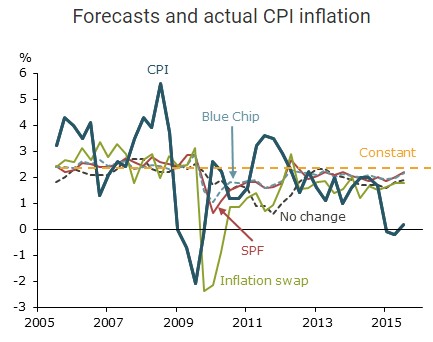
Predicting inflation is hard in the same way predicting the weather is hard, except the clouds are made of oil prices, wages, rent, shipping costs, central bank speeches, consumer psychology, and one mysterious grocery receipt that somehow makes eggs feel like luxury jewelry. Economists build models. Central banks publish projections. Wall Street runs dashboards. Then the real world walks in wearing muddy boots and says, “Nice spreadsheet. Shame if a supply shock happened to it.”
Inflation forecasting matters because inflation touches nearly every corner of daily life. It affects how much families pay for food, how businesses set prices, how workers negotiate wages, how investors value assets, and how the Federal Reserve decides whether interest rates should rise, fall, or sit still like a suspicious cat. Yet even with decades of data, powerful computers, and teams of economists who can say “disinflationary impulse” without blinking, inflation remains stubbornly difficult to predict.
The reason is simple: inflation is not one thing. It is a moving blend of many forces, and those forces do not always move politely in the same direction. Sometimes prices rise because demand is hot. Sometimes they rise because supply is broken. Sometimes consumers expect higher prices, so businesses raise prices, which makes consumers expect higher prices. That loop is about as relaxing as a smoke alarm with a podcast.
What Inflation Really Measures
Inflation is the rate at which prices rise over time. In the United States, two of the most watched inflation measures are the Consumer Price Index, or CPI, and the Personal Consumption Expenditures price index, or PCE. CPI tracks the average change in prices paid by urban consumers for a basket of goods and services. PCE, produced by the Bureau of Economic Analysis, covers a broad range of consumer spending and reflects changes in consumer behavior, such as switching from expensive steak to cheaper chicken when budgets get tight.
The Federal Reserve prefers PCE inflation for monetary policy because it captures a wider picture of household spending and adjusts more naturally when people change what they buy. But consumers often feel CPI more directly because it resembles the everyday shopping basket: groceries, rent, gasoline, utilities, medical care, clothing, and transportation.
That difference is one reason inflation forecasting gets tricky. A model may correctly identify cooling prices in one category while missing a sudden jump in another. A lower price for used cars may look comforting until rent, insurance, or gasoline decides to climb the economic staircase two steps at a time.
Why Inflation Forecasts Go Wrong
Inflation forecasts fail for many reasons, but most mistakes fall into a few big buckets: surprise shocks, bad assumptions, changing consumer behavior, data revisions, and the delightful human habit of being unpredictable at scale.
1. Supply Shocks Can Arrive Without RSVP
A supply shock happens when the economy suddenly cannot produce or deliver goods and services as expected. The pandemic offered a master class in supply shock chaos. Factories closed. Ports jammed. Shipping costs jumped. Consumers stuck at home shifted spending from services to goods, buying desks, computers, furniture, appliances, and enough home workout gear to briefly convince America it was becoming a nation of kettlebell philosophers.
When supply chains are tangled, prices can rise even if demand is not booming in the usual way. This is why inflation models that focus too heavily on labor-market overheating can miss the story. During the pandemic-era inflation surge, many analysts underestimated how much supply disruptions, commodity prices, delivery delays, and sector-specific bottlenecks could push inflation higher.
2. Energy Prices Are Economic Drama Queens
Oil and gas prices can move quickly because they respond to geopolitics, weather, production decisions, refining capacity, transportation issues, and financial market expectations. When energy prices jump, the effect does not stay politely at the gas pump. It can raise shipping costs, airline costs, production costs, heating bills, and food prices.
Energy is also psychologically powerful. Consumers may not know the latest PCE reading, but they absolutely know when filling the gas tank feels like paying ransom to a small robot attached to a pump. That visible price change can shape inflation expectations, even if other categories are calmer.
3. Housing Costs Move Slowly, Then Matter A Lot
Housing is one of the most important parts of inflation measurement. Rent and owners’ equivalent rent can keep inflation elevated even after other prices cool. The challenge is that housing inflation often lags real-time market conditions. New lease prices may slow before official inflation data fully shows it. That creates a timing problem: forecasters may know housing pressure should ease, but not exactly when it will appear in the official numbers.
In other words, housing inflation is like a slow elevator. You press the button, you hear machinery, you believe something is happening, and then you wait long enough to question your life choices.
The Forecasting Models Are Smart, But the Economy Is Sneaky
Economists use many tools to forecast inflation. Some models rely on historical relationships between unemployment, wages, output, and prices. Others use market data, surveys, commodity prices, real-time indicators, or nowcasting techniques that update frequently as new information arrives.
These tools are useful. They are not magic. A model trained mostly on a stable period can struggle when the economy enters a new regime. Before the pandemic, the United States had spent years in a low-inflation environment. That experience shaped expectations. Many models and forecasters were used to inflation that stayed muted despite strong labor markets. When a very different inflation environment arrived, the old playbook did not work as well.
This is one of the deepest lessons of inflation forecasting: the past is helpful until the future stops acting like it. Historical data is a map, not a GPS. It shows where the economy has been, but it does not always warn that the bridge ahead has been replaced by a flaming parade float.
Inflation Expectations: The Forecast That Can Change the Forecast
Inflation expectations matter because they can influence actual inflation. If workers expect prices to rise, they may ask for higher wages. If businesses expect costs to rise, they may raise prices earlier. If consumers expect prices to rise, they may buy sooner, increasing demand. Expectations can become a self-reinforcing loop.
That does not mean expectations control everything. People can expect cheaper groceries all they want, but lettuce will not consult their mood board. Still, expectations influence behavior, and behavior influences prices. This is why central banks pay close attention to surveys from households, businesses, and professional forecasters.
The Federal Reserve’s 2% inflation goal is partly about anchoring expectations. If households and businesses believe inflation will return to 2% over time, temporary price shocks are less likely to spiral into lasting inflation. If expectations become unanchored, the central bank’s job gets harder, and everyone suddenly becomes an amateur monetary theorist at dinner.
Why Professional Forecasters Still Miss
Professional forecasters are not guessing blindly. They use detailed data, sophisticated models, and serious economic judgment. But they still miss because inflation depends on variables that are hard to know in advance.
Will oil prices spike next month? Will consumers keep spending? Will wage growth cool? Will tariffs raise import prices? Will supply chains normalize? Will rent data slow faster or slower than expected? Will businesses absorb costs or pass them on? Will the central bank tighten too much, too little, or just enough? Each question is difficult. Together, they form an economic escape room.
Forecasting also becomes harder during turning points. It is easier to project a trend than to identify the moment when a trend breaks. Inflation may look sticky until it suddenly cools. Or it may look temporary until it becomes persistent. The hardest part is not drawing a line forward. The hardest part is knowing when the line is about to bend.
Headline Inflation vs. Core Inflation
Another reason inflation conversations get confusing is the difference between headline inflation and core inflation. Headline inflation includes everything, including food and energy. Core inflation excludes food and energy because those categories can swing sharply from month to month.
Core inflation can be useful for seeing underlying trends. But households do not live on core inflation. Nobody walks into a grocery store and says, “Good news, snacks are expensive, but at least this is volatile food inflation, so emotionally I am fine.” People experience the full basket.
Forecasters watch both. Headline inflation tells us what consumers are feeling right now. Core inflation helps reveal whether price pressure is spreading across the economy. When headline inflation jumps because gasoline rises but core inflation stays calm, policymakers may be less alarmed. When both rise together, the inflation story gets more serious.
The Federal Reserve’s Difficult Job
The Federal Reserve tries to keep inflation near 2% over the longer run while also supporting maximum employment. That balance is difficult because monetary policy works with delays. Interest rate changes do not hit the economy instantly. They ripple through borrowing costs, mortgages, credit cards, business investment, hiring, asset prices, and consumer confidence over time.
This creates a major forecasting problem. The Fed must make decisions today based on where inflation may be months or years from now. Raise rates too much, and the economy may slow sharply. Raise rates too little, and inflation may stay high. Pause too long, and critics complain. Move too fast, and different critics complain. Central banking is basically driving a bus where the windshield shows last month, the mirrors show revised data, and every passenger has a newsletter.
Real-Time Data Helps, But It Does Not Solve Everything
Modern forecasters use real-time data to improve inflation predictions. The Cleveland Fed’s inflation nowcasting tools, for example, update near-term estimates using incoming data such as oil prices, gasoline prices, and other price indicators. Market-based measures, survey data, card spending, rent trackers, shipping indexes, and commodity prices can all help analysts see inflation pressure before official reports arrive.
Still, more data does not automatically mean better forecasts. Real-time data can be noisy. It can point in different directions. It can be revised. A sudden move in gasoline prices may dominate one month and disappear the next. A rent tracker may capture new leases but not the full rental market. A shipping index may signal stress in goods inflation but say little about services.
The problem is not a lack of data. The problem is interpretation. Inflation forecasting requires knowing which signals matter, which signals are temporary, and which signals are politely waving from the wrong train.
Lessons From Recent Inflation Surprises
The pandemic-era inflation surge taught several important lessons. First, supply shocks can be much more powerful than many models assumed. Second, sector-specific price spikes can spread if they last long enough. Third, expectations matter, but they are not the only story. Fourth, a long period of low inflation can make forecasters slow to recognize a new inflation regime.
It also showed that humility is not optional. Many public and private forecasters underestimated inflation. That does not mean economics is useless. It means the economy is complex, and forecasting should be treated as a range of possibilities rather than a single glowing number carved into stone.
How Businesses Can Think About Inflation Forecasts
Businesses should use inflation forecasts as planning tools, not crystal balls. A smart business does not ask, “What will inflation be?” and then build one plan. It asks, “What if inflation cools? What if it stays high? What if energy costs jump? What if wages rise faster than expected?”
Scenario planning is more useful than pretending one forecast is guaranteed. Companies can review supplier contracts, adjust pricing strategies, manage inventory carefully, and watch wage trends. They can also communicate transparently with customers. A price increase explained clearly is rarely loved, but it is usually better than a surprise increase that arrives like a raccoon in the pantry.
How Households Can Think About Inflation Forecasts
For households, inflation forecasts can help with budgeting, but they should not create panic. Families cannot control national inflation, but they can control some financial habits: comparing prices, building emergency savings when possible, reducing high-interest debt, delaying nonurgent big purchases when prices are unfavorable, and reviewing recurring subscriptions.
The practical question is not whether an economist can predict inflation perfectly. The practical question is whether you can make your own finances more resilient when prices move in annoying ways. Inflation may be hard to forecast, but a budget with breathing room is easier to manage than one held together by hope, tape, and three forgotten free trials.
Why “Soft Landing” Forecasts Are So Difficult
A soft landing means inflation falls without a severe recession. It is the economic equivalent of landing a plane smoothly while passengers are balancing soup. It can happen, but it is hard to engineer because inflation and growth respond to policy with delays and uncertainty.
If inflation falls because supply improves, that is good news. If inflation falls because demand collapses, that is painful news. Forecasters must distinguish between healthy disinflation and recessionary disinflation. Both can lower inflation, but they feel very different in real life.
That is why policymakers look beyond a single inflation number. They watch employment, wages, productivity, consumer spending, credit conditions, business investment, and financial markets. Inflation is the headline, but the supporting cast determines the plot.
The Future of Inflation Forecasting
Inflation forecasting will likely improve as economists use better real-time data, machine learning, broader global indicators, and more detailed sector-level analysis. But no tool will eliminate uncertainty. The future contains policy changes, wars, weather events, financial shocks, technological shifts, demographic trends, and consumer behavior that refuses to fit neatly into a cell in Excel.
The best inflation forecasts will be probabilistic. Instead of saying, “Inflation will be 2.4%,” a better forecast says, “Here is the most likely path, here is the range, here are the risks, and here is what would change our view.” That approach is less flashy, but more honest. It also has the advantage of being correct more often than pretending the future is a vending machine.
Experiences Related to “Predicting Inflation is Hard”
In everyday life, the difficulty of predicting inflation shows up in small, memorable moments. A family plans a grocery budget in January, only to find by spring that the same cart costs noticeably more because meat, cereal, fruit, or eggs changed price. A commuter thinks gas prices are finally easing, then a global event pushes fuel costs higher again. A renter expects relief because online listings show softer rents, but their lease renewal still arrives with a painful increase. These experiences make inflation feel personal, not theoretical.
For small business owners, inflation forecasting can be even more stressful. Imagine running a neighborhood bakery. Flour, butter, eggs, labor, electricity, packaging, delivery fees, and rent all affect the price of a muffin. If the owner raises prices too early, customers may complain. If the owner waits too long, profit margins shrink. The bakery does not need a perfect macroeconomic model; it needs a practical answer to a very human question: “Can I sell this blueberry muffin without losing money or becoming the villain of breakfast?”
Workers experience inflation forecasting through wages. If prices are expected to rise, employees may push for higher pay. Employers may worry about labor costs. But both sides are negotiating under uncertainty. If inflation cools quickly, a large wage increase may pressure a company’s budget. If inflation stays high, a small raise may feel like a pay cut. This is why inflation can affect workplace morale long before it appears in a textbook chart.
Investors also learn humility from inflation forecasts. Bond yields, stock valuations, mortgage rates, and savings returns all react to inflation expectations. A single inflation report can move markets because investors are constantly updating their guesses about Federal Reserve policy. Sometimes markets celebrate a tiny improvement in core inflation as if the economy just brought cupcakes. Other times they panic over a hot monthly number that may later prove temporary. The reaction is real, even when the signal is noisy.
The biggest experience-based lesson is that inflation rarely feels average. Official inflation might be 3%, but one household with rising rent and high medical bills may feel much more pressure. Another household with a fixed mortgage and lower transportation costs may feel less. That gap between measured inflation and lived inflation is one reason the topic creates so much debate.
So yes, predicting inflation is hard. It is hard for central banks, professional forecasters, businesses, households, and anyone who has ever stared at a grocery receipt with the emotional intensity of a detective in a crime drama. The goal is not perfect prediction. The goal is better preparation, wider margins of safety, and enough humility to admit that the economy has a mischievous personality.
Conclusion: Inflation Forecasting Requires Humility
Predicting inflation is hard because inflation is not a single mechanical process. It is shaped by supply chains, energy markets, housing, wages, expectations, policy decisions, global shocks, consumer behavior, and time lags. Forecasts are useful, but they are not promises. They are informed estimates in a world that keeps changing the exam questions.
The smartest way to read an inflation forecast is to ask what assumptions sit underneath it. Does it depend on energy prices falling? Does it assume wage growth cools? Does it expect rents to slow? Does it rely on consumers staying calm? Once you understand the assumptions, you understand the risk.
Inflation forecasting will never be perfect, but it can become more honest, more flexible, and more useful. The best forecasters are not the ones who pretend to know the future. They are the ones who explain the range of outcomes clearly, update their views when facts change, and keep a sense of humor nearby. In inflation analysis, humility is not a weakness. It is survival gear.














