
When Prince Harry and Meghan Markle announced their engagement in November 2017, the world reacted exactly as expected: royal-watchers screamed, fashion blogs zoomed in on the coat, jewelry experts examined the ring, and everyone with Wi-Fi suddenly became a constitutional scholar. But tucked inside the sparkle was a surprisingly serious historical wrinkle: Meghan Markle had Catholic connections through her education at Immaculate Heart High School, an all-girls Roman Catholic school in Los Angeles.
Now, before anyone drops their teacup, Meghan Markle was not entering the royal family as a practicing Roman Catholic queen-in-waiting. Still, the phrase “Catholic connections” matters because the British monarchy has a long, complicated, and sometimes extremely dramatic relationship with Catholicism. We are talking centuries of laws, religious conflict, succession rules, and enough royal paperwork to make a palace secretary beg for a quiet lunch.
So why was Prince Harry’s engagement to a woman with Catholic-school ties such a big deal? The answer sits at the intersection of romance, religion, royal law, and modern Britain’s attempt to look less like it is still running on 1701 software.
The Engagement That Made Royal History Feel Suddenly Modern
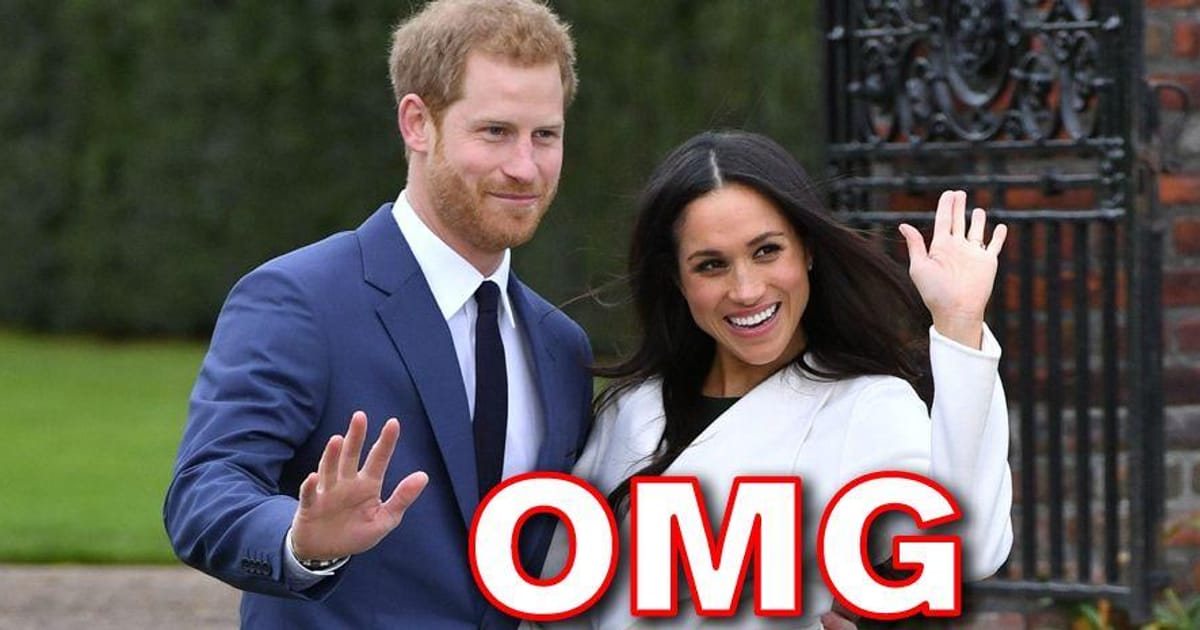
Prince Harry and Meghan Markle’s engagement was officially announced by Clarence House on November 27, 2017. The statement said the couple had become engaged earlier that month in London and would marry in spring 2018. On the surface, it was classic royal news: polished announcement, happy photos, a gorgeous ring, and global excitement.
But Meghan was not a typical royal bride by old palace standards. She was American, divorced, biracial, an actress, and already known for her role in Suits. She also had attended a Roman Catholic high school, even though her personal religious identity was more complex than a single school label. Each of those details carried cultural weight, but the Catholic connection raised a particularly interesting constitutional question: would this have mattered under older royal rules?
The short answer: yes, absolutely. The long answer: pour the tea, because history has entered the chat.
Why Catholicism Has Been Such A Sensitive Issue For The British Crown
To understand why this topic made headlines, you have to go back to the English Reformation. The British monarch is not just a ceremonial figure wearing crowns and waving from balconies. The monarch is also the Supreme Governor of the Church of England. That role connects the Crown directly to Anglican identity, which historically stood apart from Roman Catholic authority.
The Church of England was born from one of history’s messiest breakups: King Henry VIII’s split from Rome in the 16th century. Since then, religion and monarchy have been tightly linked in Britain. For centuries, the idea of a Catholic monarch was treated not merely as a private faith issue but as a political and constitutional problem.
The Act of Settlement of 1701 reinforced that boundary. It required future monarchs to be in communion with the Church of England and helped exclude Roman Catholics from the throne. It also created problems for royals who married Catholics. In plain English: love was allowed, but only if it did not make the succession line look too Catholic for Parliament’s comfort.
The Old Rule: Marrying A Catholic Could Cost A Royal Their Place
For centuries, a British royal who married a Roman Catholic risked losing their place in the line of succession. That rule sounds strange today, especially to Americans used to treating religion as a private matter, but royal succession is not an ordinary family tree. It is a legal machine with velvet curtains.
Under the older system, the concern was not simply whom a royal loved. The fear was that a Catholic spouse might influence a future monarch, future heirs, or the religious identity of the Crown itself. Since the monarch serves as Supreme Governor of the Church of England, Parliament wanted the throne protected from Catholic influence.
That is why Harry’s engagement invited so much discussion. Meghan’s Catholic connection was not the same as being Catholic, but it reminded people that royal marriage used to be governed by rules that could turn romance into a constitutional obstacle course.
The Big Change: The Succession To The Crown Act 2013
Here is where the story gets modern. The Succession to the Crown Act 2013 changed several major royal rules. Most famously, it ended male-preference primogeniture for those born after October 28, 2011. That means a younger brother no longer jumps ahead of an older sister in the line of succession simply because he is male. Progress: now available in crown form.
The act also removed the automatic disqualification that came from marrying a Roman Catholic. In other words, a royal could marry a Catholic and remain in line to the throne. That was a huge symbolic shift. It did not mean a Catholic could become monarch, because the sovereign still must be in communion with the Church of England. But it did mean marriage to a Catholic was no longer treated as a succession-ending disaster.
This change mattered for Prince Harry. At the time of the engagement, he was close enough to the throne that his marriage needed formal royal consent. Queen Elizabeth II later gave that consent. But the Catholic connection itself no longer carried the old automatic penalty.
Was Meghan Markle Catholic?
This is where accuracy matters. Meghan Markle attended Immaculate Heart High School in Los Angeles, a Roman Catholic all-girls school. That fact is often shortened into “Catholic connections,” but school background and personal faith are not the same thing. Many students attend religious schools for academics, discipline, community, or family choice without identifying as lifelong members of that faith.
Meghan’s Catholic-school education still became part of the conversation because royal history is allergic to simple details. In a normal engagement, “she went to a Catholic school” might be a biographical footnote. In a royal engagement, it becomes a doorway into 300 years of monarchy, religion, and succession law.
Later, before the royal wedding, Meghan was reportedly baptized and confirmed into the Church of England. That step fit with royal tradition and the religious setting of the wedding at St George’s Chapel, Windsor Castle. It also reflected the continuing connection between the royal family and the Anglican Church.
Why Prince Harry’s Position Made The Issue More Interesting
Prince Harry was not the direct heir to the throne, but he was still high-profile and high enough in the succession line for the rules to matter. The closer a royal is to the Crown, the more their marriage becomes a constitutional matter rather than just a family celebration with excellent cake.
The 2013 law requires the first six people in line to the throne to obtain the monarch’s consent before marrying. If they marry without consent, they and their descendants from that marriage are disqualified from succession. Harry was within that range at the time, which meant Queen Elizabeth II’s approval was not just grandmotherly affection. It was legally important.
So while the public focused on the romance, the palace also had to follow rules. Royal love stories may look like fairy tales, but behind the scenes, they come with legal departments.
Why Americans Found The Catholic Angle So Surprising
For many Americans, the idea that someone’s spouse’s religious background could affect royal succession sounds odd, outdated, or even unbelievable. In the United States, public office is not supposed to depend on religious tests. So the British monarchy’s religious requirements can feel like discovering that a modern smartphone is powered by a tiny Victorian steam engine.
But monarchy is different. The British Crown is not only a family institution; it is a constitutional and religious symbol. That is why discussions about Catholicism, Anglicanism, and succession remain relevant even in the 21st century.
Harry and Meghan’s engagement highlighted the contrast between modern celebrity culture and ancient constitutional rules. On one side, you had a California-born actress with a humanitarian profile and a Hollywood career. On the other, you had a royal institution shaped by Reformation history, parliamentary law, and centuries of tradition. No wonder the headlines had extra caffeine.
A Symbol Of A More Flexible Monarchy
The engagement was also seen as a sign that the royal family was evolving. Meghan represented a broader, more global, more diverse image of modern Britain and the Commonwealth. Her background challenged old assumptions about who could marry into the royal family and what a royal bride was supposed to look like, sound like, or have on her résumé.
The Catholic-school connection was only one part of that bigger picture. But it helped show how much had changed. A few generations earlier, a royal marriage with even a Catholic spouse could have triggered legal consequences. By 2017, the law had shifted enough that the discussion was more historical than prohibitive.
That does not mean the monarchy became instantly modern overnight. Institutions with crowns tend not to sprint. They glide slowly while someone carries a folder. Still, the engagement showed that the royal family was operating in a new social reality.
The Difference Between “Catholic Connections” And A Succession Crisis
It is important not to exaggerate the issue. Meghan’s Catholic-school background did not create a succession crisis. She was not barred from marrying Harry because of it. Harry did not lose his place in line because of it. The 2013 reforms had already removed the old automatic disqualification for marrying a Roman Catholic.
But the connection mattered because it pointed to a dramatic historical shift. The very fact that people asked the question showed how deep the old anxieties ran. In royal history, religion has never been just religion. It has been power, identity, legitimacy, and national symbolism all wrapped together.
What This Story Reveals About Royal Marriage
Royal marriage is never only personal. It is public, symbolic, and sometimes political. When a senior royal gets engaged, the future spouse becomes part of a national institution. Their background, education, religion, nationality, family history, and public image all become topics of debate.
That can feel unfair, and often it is. But it is also how monarchy works. The royal family exists as a public symbol, so private milestones become public moments. Harry and Meghan’s engagement was romantic, yes, but it was also a mirror reflecting Britain’s changing attitudes toward religion, race, divorce, celebrity, and tradition.
The Catholic connection became a “big deal” not because it blocked the marriage, but because it reminded everyone that royal rules had once been far stricter. In that sense, the engagement was not just a love story. It was a constitutional progress report wearing a diamond ring.
The Role Of The Church Of England In The Wedding Story
The wedding itself took place at St George’s Chapel, Windsor Castle, a deeply traditional royal venue. The service reflected Church of England traditions, but it also included elements that felt fresh and personally meaningful, including American religious and cultural influences.
That blend mattered. It showed a monarchy trying to honor tradition while speaking to a wider world. The ceremony was not a rejection of history; it was a remix. Think ancient chapel, royal protocol, gospel choir, global television audience, and millions of people suddenly Googling “Who is the Archbishop of Canterbury?”
In this context, Meghan’s background made the wedding feel less like a sealed royal ritual and more like a meeting point between different cultures. That was part of the fascination, and part of the controversy.
Why The Headline Still Grabs Attention
The phrase “Prince Harry is engaged to a woman with Catholic connections” still grabs attention because it sounds like the opening line of a palace drama. It hints at forbidden romance, ancient law, and royal scandal. The reality is calmer but still fascinating.
The big deal is not that Harry broke the rules. He did not. The big deal is that the rules had changed enough for the engagement to proceed without the old religious penalty. Meghan’s Catholic-school background became a reminder that Britain’s monarchy had moved, however slowly, away from some of its most rigid restrictions.
That is why the story matters. It is about more than one couple. It is about how institutions adapt, how old laws linger in public memory, and how a modern royal engagement can reopen debates that began centuries ago.
Experiences And Reflections Related To This Royal Moment
For many people watching from the outside, Harry and Meghan’s engagement felt like one of those rare royal moments that belonged both to history books and group chats. It had all the classic ingredients: a prince, a proposal, a palace announcement, a sparkling ring, and a bride-to-be whose life story did not fit the old royal mold. But what made it especially memorable was the way ordinary people could see their own questions reflected in it.
Anyone who has ever introduced a partner to a family with strong traditions can understand a tiny piece of the pressure. Now imagine that the “family tradition” involves Parliament, the Church of England, international media, and several centuries of religious tension. Suddenly, meeting the grandparents sounds like a relaxing picnic.
The engagement also sparked conversations among people from mixed-faith or culturally blended families. Many couples know what it feels like to navigate different religious backgrounds, school traditions, family expectations, and public assumptions. Meghan’s Catholic-school connection may not have defined her identity, but it showed how quickly people attach labels to a person’s past. A school, a church, a family custom, or even a childhood neighborhood can become part of the story others tell about you.
That is one reason the topic remains relatable. Most people are not marrying into royal protocol, but many people do understand the experience of being reduced to one detail. “She went to a Catholic school.” “He comes from that kind of family.” “They were married before.” “They are from another country.” Labels can be convenient, but they rarely capture a whole person.
Harry and Meghan’s engagement also highlighted how public institutions struggle with private lives. A royal family depends on tradition, but real families are messy, modern, blended, and complicated. The monarchy had to make room for someone who did not arrive from the expected background. That made the engagement feel refreshing to some and unsettling to others.
From an observer’s perspective, the most interesting lesson is that progress often looks less dramatic in law than it does in headlines. The Succession to the Crown Act did not erase centuries of religious history. It did not make every royal rule disappear. But it did remove a major barrier connected to marrying a Catholic. By the time Harry and Meghan got engaged, the legal landscape had already shifted. The romance became a public symbol of that shift.
There is also a media lesson here. The coverage proved how one biographical detail can become a massive narrative hook. Meghan’s Catholic-school background became a gateway into discussions about royal succession, Anglican identity, and Britain’s religious past. That is not necessarily bad; good historical context can help readers understand why a story matters. But it also shows why careful wording is important. “Catholic connections” is accurate as a broad phrase, while “Catholic bride” would risk oversimplifying the facts.
For readers, the experience of following this story was a reminder that royal news is rarely just gossip. Beneath the glamour, there are legal structures and cultural meanings. Beneath the ring photo, there are questions about who belongs inside old institutions. Beneath the wedding excitement, there is a long history of religion, identity, and power.
And yes, there is also the simple human part: two people got engaged. Before the debates, documentaries, headlines, and think pieces, there was a proposal. That personal moment became public property because of who Harry was and who Meghan was becoming. The Catholic connection made the story historically interesting, but the larger fascination came from watching a very old institution meet a very modern love story.
Conclusion
Prince Harry’s engagement to Meghan Markle was a major royal moment not simply because it was romantic, glamorous, or heavily photographed. It mattered because Meghan’s background, including her Catholic-school connection, touched a sensitive nerve in British royal history. For centuries, Catholicism and the Crown existed in a tense constitutional relationship. Older rules could punish royals for marrying Catholics, while the monarch’s role as Supreme Governor of the Church of England kept religion at the center of succession debates.
By the time Harry and Meghan announced their engagement, the law had changed. The Succession to the Crown Act 2013 meant that marrying a Roman Catholic no longer automatically removed a royal from the line of succession. That reform turned what might once have been a serious legal barrier into a historical talking point. Still, the conversation mattered because it showed how far the monarchy had come, and how much history still shadows every royal romance.
In the end, the “big deal” was not that Meghan’s Catholic connections threatened the monarchy. They did not. The big deal was that her engagement to Prince Harry revealed a monarchy trying to balance old laws, modern values, religious tradition, and a changing public image. That is a lot for one engagement ring to carry, but royal jewelry has always enjoyed a challenge.










