
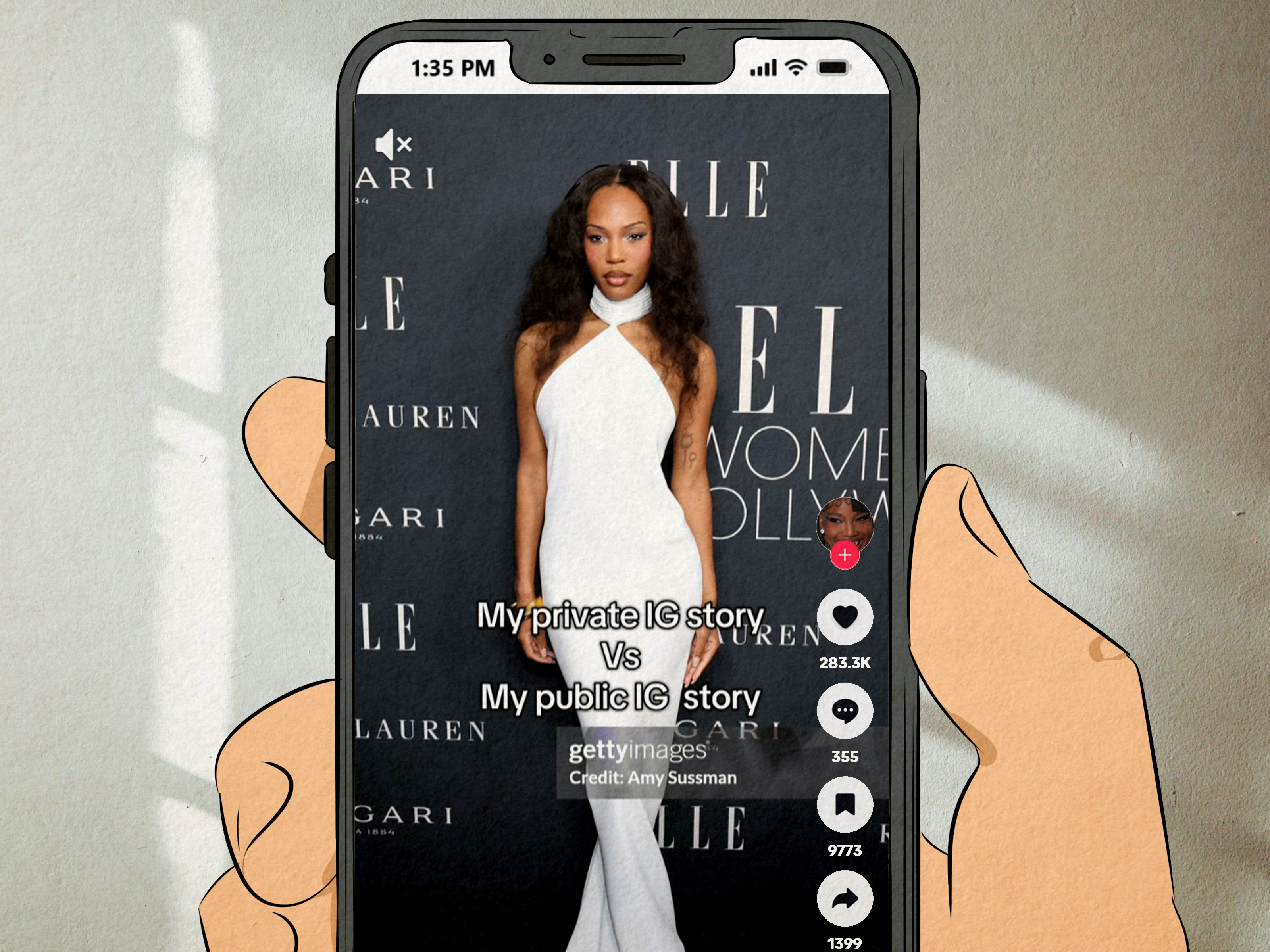
Every generation invents a new way to say, “I contain multitudes.” For today’s TikTok crowd, that phrase often arrives as a quick, funny, brutally honest comparison: Private Story vs. Main Story. One side is the version of you that looks calm, stylish, hydrated, emotionally balanced, and possibly sponsored by good lighting. The other side is the version your closest friends see: crying over a playlist, eating cereal from a mug, posting blurry updates at midnight, and narrating life like a reality show that lost its budget but gained personality.
The Private Story vs. Main Story TikTok trend is funny because it exposes a truth almost everyone understands: we do not post the same version of ourselves everywhere. Your main story is the “public lobby” of your life. Your private story is the group chat with curtains. TikTok users have turned that contrast into a shareable meme format, usually showing the difference between a polished public image and an unfiltered close-friends personality.
But the trend is more than a joke. It says a lot about online identity, social media privacy, Gen Z humor, platform culture, and the way people manage different audiences across TikTok, Snapchat, Instagram, and other social apps. Let’s unpack what it means, why it spread, and why your “main story” might be wearing a blazer while your “private story” is dancing in socks at 2:11 a.m.
What Does “Private Story vs. Main Story” Mean?
Private Story vs. Main Story is a social media trend where users compare what they would post publicly with what they would only share with a smaller, trusted audience. The “main story” represents the content that is safe for everyone: classmates, coworkers, family members, acquaintances, casual followers, and that one person who still watches everything but never reacts. The “private story” represents the more personal, messy, funny, dramatic, or intimate version shared with close friends.
The phrase originally makes the most sense in the world of Snapchat and Instagram. Snapchat has long offered Private Stories, where users choose which friends can view certain story posts. Instagram has Close Friends, a similar idea that lets people share stories, posts, reels, or notes with a selected audience. TikTok also has privacy controls and Stories that disappear after 24 hours, but the phrase “private story” in the trend is often used culturally rather than as a strict TikTok feature name.
In other words, the trend is not always about pressing one specific TikTok button. It is about the social behavior behind the button: audience control. People are making jokes about the different versions of themselves they show depending on who is watching.
How the TikTok Trend Usually Works
The format is simple, which is exactly why it travels well. A creator usually posts a short video with text overlays such as:
- “Me on my main story”
- “Me on my private story”
- “What my followers see vs. what my close friends see”
- “Public story me vs. private story me”
The “main story” clip might show a cute outfit, a pretty coffee, a sunset, a gym selfie, or a tasteful mirror picture. The “private story” clip might show the creator making a chaotic face, venting dramatically, oversharing a mildly embarrassing situation, or acting like the lead detective in a personal mystery no one asked to investigate.
The joke works because the contrast is immediate. Public-facing content tends to be controlled, curated, and digestible. Private-facing content tends to be spontaneous, emotional, and packed with inside jokes. The main story says, “Life is beautiful.” The private story says, “I just dropped my entire burrito and I need a committee meeting.”
Why the Trend Became So Relatable
1. Everyone Has Different Social Circles
Most people do not speak to every audience the same way. You probably text your best friend differently than you email a teacher, boss, client, or landlord. Social media works the same way. A public post has to survive a much larger and less forgiving audience. A private story can be more specific, sillier, or emotionally honest because it is aimed at people who already understand the context.
This is the core of the trend. It turns audience management into comedy. It says, “Here is the version of me suitable for public distribution, and here is the director’s cut.”
2. Polished Feeds Can Feel Exhausting
Social platforms reward presentation. Nice lighting, clean rooms, aesthetic food, smooth edits, and carefully chosen captions tend to perform well. That does not mean users are fake; it means public posting naturally encourages people to select the most presentable slice of a moment.
The private story trend pokes fun at that pressure. It reminds viewers that behind every polished post may be a pile of laundry, a weird snack combination, three deleted captions, and a person wondering whether “haha” sounds too formal.
3. Close-Friends Content Feels More Authentic
Private stories feel intimate because they are selective. When someone adds you to a private story or close-friends list, it can feel like a tiny velvet rope has been lifted. You are not just seeing content; you are being trusted with a less edited version of someone’s day.
That feeling is powerful. It is why creators, influencers, and everyday users increasingly value smaller, more engaged audiences. A post to everyone may get views. A post to close friends may get real replies, jokes, support, and actual conversation. One is a billboard. The other is a booth at a diner.
Private Story vs. Main Story: The Real Difference
The difference between a private story and a main story is not only technical. It is emotional, social, and strategic.
Main Story: The Public Version
Your main story is the content you are comfortable showing to a broad audience. It may include vacations, birthdays, outfits, meals, milestones, concerts, pets, selfies, announcements, or funny moments that do not require too much explanation. Main story content usually follows one important rule: it should make sense to people who do not know your full life lore.
For creators and brands, the main story is also part of public identity. It can shape reputation, aesthetics, audience expectations, and discoverability. A main story is often more polished because it represents the “front page” of someone’s social presence.
Private Story: The Inner-Circle Version
A private story is for a smaller, chosen group. It may include jokes, casual updates, awkward moments, emotional vents, random thoughts, low-stakes drama, or niche references that would confuse the general public. Private story content is often more relaxed because the audience is already familiar with the poster’s personality.
Think of it this way: the main story is a movie trailer. The private story is the blooper reel, director commentary, deleted scenes, and possibly a dramatic monologue filmed from the passenger seat of a parked car.
How TikTok Changed the Way People Talk About Private Posting
TikTok thrives on formats that make private feelings public in a funny way. A creator can take a tiny social observation, attach it to a recognizable sound or caption structure, and suddenly thousands of people are saying, “Wait, that is literally me.” The Private Story vs. Main Story trend fits perfectly into that ecosystem because it turns a common online habit into a performance.
What makes TikTok different is the speed of recognition. Users do not need a long explanation. The second they see the contrast between “public me” and “close friends me,” they understand the joke. TikTok’s short-form video style also makes the comparison easy to dramatize. A creator can switch facial expressions, outfits, locations, or editing styles in seconds.
The trend also overlaps with broader TikTok themes: “main character energy,” “social battery,” “delulu humor,” “POV” storytelling, and the constant comedy of trying to appear normal online while being a deeply unserious person in private. TikTok did not invent audience segmentation, but it made it funnier, faster, and more meme-friendly.
Why “Private Story” Culture Matters
Private story culture is not just about being silly. It reflects a real shift in how people use social media. Many users are moving away from broadcasting everything to everyone. Instead, they are choosing smaller circles, limited audiences, private accounts, and more controlled sharing.
This shift makes sense. The internet has a long memory, screenshots exist, and a joke that lands perfectly with five friends may collapse like a folding chair in front of 5,000 strangers. Private posting gives users more control over context. It lets people share without feeling like every update needs to be ready for public review.
At the same time, “private” does not mean completely safe. A private story can still be screenshotted, recorded, shared, misunderstood, or brought up later by someone with the emotional maturity of a wet paper towel. The smartest users treat private stories as smaller audiences, not invisible vaults.
Examples of the Trend in Everyday Life
The Vacation Version
Main story: A beach photo with a clean horizon, cute sunglasses, and a caption like “needed this.”
Private story: A video of someone fighting with a beach umbrella, losing a flip-flop, and announcing that sand is “nature’s glitter but with betrayal.”
The School or Work Version
Main story: A neat desk, laptop open, coffee nearby, captioned “productive morning.”
Private story: A zoomed-in face at 11:48 p.m. whispering, “I have become one with the deadline.”
The Night Out Version
Main story: A stylish group photo where everyone looks coordinated and socially successful.
Private story: A shaky clip of the same group arguing over where the car is parked, who has the charger, and why someone ordered fries “for the table” but guarded them like national treasure.
For Creators and Brands: What the Trend Teaches
Creators can learn a lot from this trend. Audiences like polish, but they also crave personality. A creator who only posts perfect content may look impressive, but a creator who occasionally shares relatable behind-the-scenes moments can feel more human.
That does not mean everyone should overshare. The better lesson is balance. Use main content for clarity, value, and consistency. Use more casual content to build trust, humor, and connection. The best social media presence often feels intentional without feeling robotic. Nobody wants to follow a person who sounds like a press release wearing lip gloss.
Brands can apply this too. A “main story” might be a polished product launch, campaign video, or customer announcement. A “private story” style post might show behind-the-scenes packing, a team mistake turned into a joke, a founder explaining a decision, or a casual look at how something is made. The goal is not to pretend to be messy. The goal is to be more human where appropriate.
Privacy Tips Before You Join the Trend
The Private Story vs. Main Story TikTok trend is fun, but it is still social media. Before posting, remember that audience settings are helpful, not magical. If a video would seriously harm your reputation, relationships, safety, or future opportunities if shared outside the intended audience, it may be better kept offline.
Here are a few smart rules:
- Do not post someone else’s private moment without permission.
- Avoid sharing addresses, school details, travel plans, or personal documents.
- Do not assume a private story can never be saved or shown to others.
- Keep jokes clear enough that they will not easily be misread as harassment or cruelty.
- Review your close-friends or private-story list regularly.
- Remember that “funny now” and “fine later” are not always the same thing.
Private story humor works best when it is self-aware, harmless, and honest without becoming reckless. The goal is to make people laugh, not create a digital artifact that returns three years later like a raccoon in the attic.
The Psychology Behind the Trend
Part of the appeal comes from what psychologists and communication researchers often describe as self-presentation. People naturally adjust how they present themselves depending on the setting. You might be professional in a meeting, sarcastic with siblings, soft-spoken around new people, and completely unhinged in a group chat named something that should never appear in court.
Social media simply turns these normal identity shifts into visible categories. Main story. Private story. Public account. Private account. Close Friends. Finsta. Group chat. Each space has its own tone and rules.
The trend is funny because it admits that identity is layered. It gives people permission to laugh at the gap between how composed they look and how chaotic they feel. That gap is not necessarily hypocrisy. Often, it is just being human.
Is the Trend Good or Bad?
Like most internet trends, it depends on how people use it. At its best, Private Story vs. Main Story is playful and relatable. It encourages people to admit that nobody’s life is as polished as their public posts suggest. It can reduce the pressure to appear perfect and remind viewers that social media is edited by nature.
At its worst, the trend can encourage oversharing, exclusion, or posting content that should remain private. It can also make people feel left out if they realize they are not on someone’s private list. In social media culture, even a green ring, padlock icon, or private audience label can become a tiny social status symbol. Humans are incredible creatures: we invented space travel and still manage to feel emotionally complicated about story settings.
The healthiest approach is to enjoy the joke without turning private access into a measure of worth. Being on someone’s private story can be fun, but it is not a federal ranking of friendship value. Sometimes people make lists based on context, comfort, or random organization. Sometimes they forgot. Sometimes they are just tired. The algorithm is not the only mysterious force online; people are too.
How to Make a Great “Private Story vs. Main Story” TikTok
If you want to create your own version, focus on contrast. The trend works when the difference between the two sides is clear, quick, and specific.
Choose a Relatable Situation
Pick something people recognize: getting ready for a date, studying, going to the gym, attending a wedding, traveling, cooking, working, or pretending to have your life together on a Monday.
Make the Main Story Polished
Use a clean clip, calm expression, nice lighting, or simple caption. This is the “acceptable for public viewing” version.
Make the Private Story Honest and Funny
Then exaggerate the behind-the-scenes truth. Show the chaos, the overthinking, the weird snack, the dramatic reaction, or the unfiltered commentary. Keep it funny, not harmful.
Use Text Overlays Clearly
Label each side so viewers instantly understand the setup. TikTok moves fast. If people need a map, a legend, and a committee to understand the joke, they will scroll.
What the Trend Says About the Future of Social Media
The popularity of this trend points to a larger future: social media is becoming more layered. People do not want only one giant public stage. They want different rooms for different versions of themselves. One room for professional content. One room for family-safe updates. One room for close friends. One room for niche jokes. One room for drafts that should never see daylight but somehow heal the soul.
Platforms are responding to this behavior with more privacy controls, audience filters, close-friends features, and messaging-based sharing. The public feed is still important, but private and semi-private spaces are increasingly where real connection happens.
That is why the Private Story vs. Main Story trend resonates. It captures the modern internet mood: public enough to perform, private enough to be real, and funny enough to make the whole thing worth posting.
Final Thoughts
Private Story vs. Main Story is more than a TikTok joke about polished photos and chaotic behind-the-scenes clips. It is a snapshot of how people manage identity online. The trend works because it is honest: most of us have a public version and a close-friends version. The main story is curated. The private story is candid. Both can be real, but they serve different audiences.
Whether you are a casual TikTok user, a creator, a brand, or someone who simply enjoys observing internet culture from a safe distance with snacks, this trend offers a useful reminder: social media is not one single truth. It is a collection of chosen moments. Some are ready for the main stage. Some belong in the private booth. And some should probably stay in the camera roll until further notice.
Extra Experiences: Living the “Private Story vs. Main Story” Difference
The funniest thing about the Private Story vs. Main Story trend is that it does not require fame, influencer status, or a ring light bright enough to guide ships home. Almost everyone has experienced the difference in real life. You take one nice photo at brunch and post it publicly. The plate looks perfect, the drink has a garnish, and the caption is casual enough to suggest you did not spend eight minutes thinking about it. Meanwhile, the private story shows the truth: someone spilled syrup, the table was wobbling, your friend was laughing with spinach in their teeth, and the “candid” public photo required seven attempts and a motivational speech.
That gap between public and private sharing can actually make social media healthier when handled well. A main story gives you control. It lets you share a version of the moment that feels appropriate for a larger audience. That matters because not every follower deserves full access to your personal life. Your former lab partner, your cousin’s roommate, your manager, and a stranger who followed you after one funny comment do not all need the same level of detail.
The private story, however, creates room for personality. It is where people often feel free to be funnier, softer, weirder, or more honest. It is the place for the small updates that would not make sense to everyone but mean everything to the right people. A blurry picture of a grocery store aisle might be boring on a main story, but hilarious on a private story if your friends know you went in for toothpaste and left with pickles, batteries, and a seasonal candle called “Autumn Whisper Accountant.”
Many users also experience the private story as a pressure release valve. Public posting can feel like building a tiny personal brand, even when you are not trying to be a brand. You start wondering if the photo matches your feed, whether the caption sounds too eager, whether the joke will land, or whether someone will misread it. A private story lowers the stakes. The audience already knows you. They are less likely to judge a half-formed thought, a messy room, or a dramatic complaint about slow Wi-Fi.
Still, the best experience comes from using private stories with boundaries. A private story should not become a dumping ground for every emotion in real time. It should not be used to embarrass others, expose secrets, or create social pressure. The most enjoyable private story content usually has a sense of play: harmless chaos, inside jokes, small life updates, relatable complaints, and moments that make friends reply, “Why are you like this?” in the most loving way possible.
The trend also teaches a practical lesson for anyone creating content online: audiences connect with contrast. People enjoy seeing the polished version, but they often remember the human version. A creator who posts only perfect content may be admired. A creator who shares a funny behind-the-scenes moment may be liked. That difference matters. Admiration is distant; relatability invites people closer.
For everyday users, the biggest takeaway is simple: you are allowed to have layers. You do not owe every follower the same access. You can be polished in one place and goofy in another. You can post the sunset publicly and the chaotic walk to find the sunset privately. You can enjoy the main story without pretending it is the whole story.
In that sense, Private Story vs. Main Story is not just a TikTok trend. It is a small comedy routine about digital life. We are all editing, choosing, filtering, protecting, and occasionally posting something so oddly specific that only six people understand it. And honestly, those six people are often the best audience anyway.
Note: This article is original, fully rewritten, and based on current social media platform behavior, privacy features, and observed short-form video culture. It does not include source links so it can be copied cleanly for web publication.













